

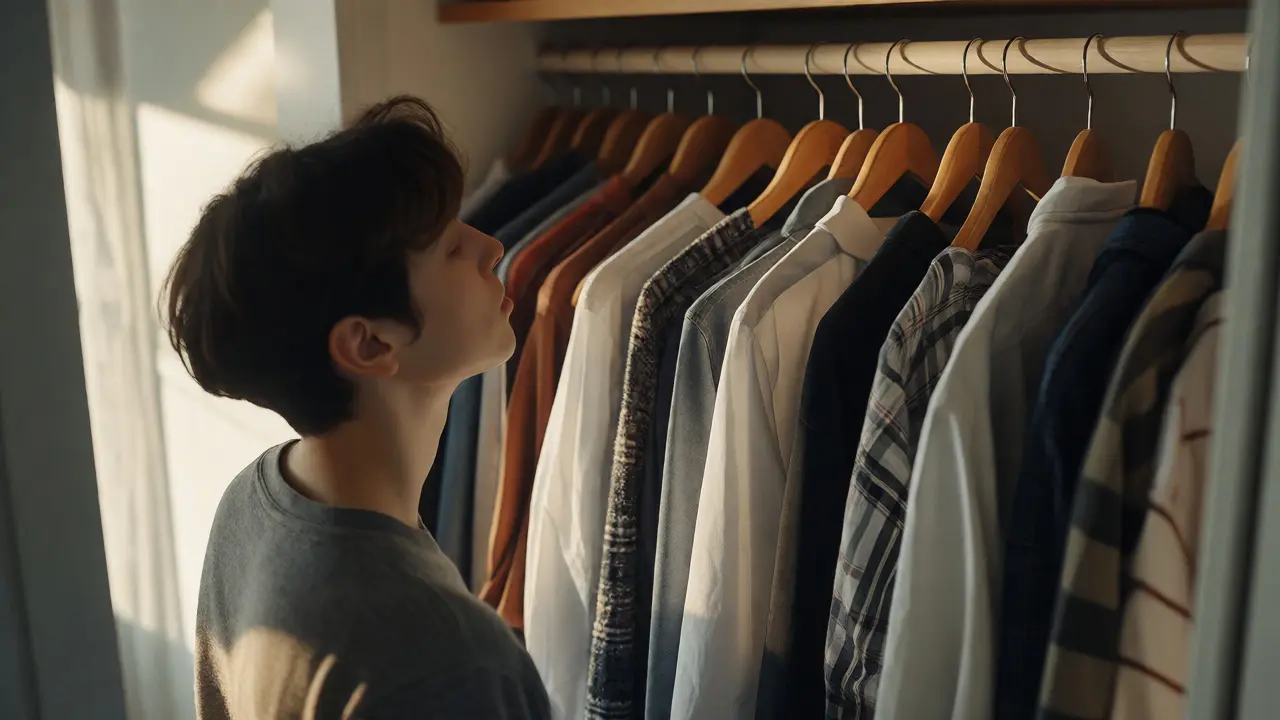
You’re standing in front of your closet, staring at clothes that feel like they belong to someone else. You know what you don’t want-fast fashion trends that fade after two washes or outfits that make you look like a generic mannequin-but figuring out what you do want feels like trying to solve a puzzle with half the pieces missing. Most advice tells you to "find your vibe" or "dress for your body type," which sounds nice but leaves you paralyzed when it’s time to actually buy something.
The truth is, personal style isn’t some mystical talent you’re born with. It’s a skill. And like any skill, you can accelerate the learning curve by using specific, actionable techniques rather than waiting for inspiration to strike. Whether you’re starting from zero or just feeling stuck in a rut, these five concrete methods will help you build a cohesive look faster than trial-and-error ever could.
Start With Visual Curation, Not Shopping
Most beginners make the mistake of opening their wallets before they’ve opened their eyes. They see a shirt on sale and buy it because it’s cheap, not because it fits their emerging aesthetic. This creates a closet full of disjointed items that don’t talk to each other. The first step to accelerating your style is to stop buying and start collecting references.
Pinterest or Instagram Saves are powerful tools here, but only if you use them correctly. Don’t just save random pretty pictures. Create three distinct boards: one for colors you’re drawn to, one for silhouettes that make you feel confident, and one for textures or details you admire. Spend two weeks saving images without analyzing them too much. Then, step back and look for patterns. Do you keep saving oversized blazers? Earth tones? Minimalist jewelry?
This process, often called visual curation, helps you identify your subconscious preferences. According to behavioral psychology, we often gravitate toward visual cues that align with our self-image, even if we can’t articulate why yet. By externalizing these preferences into a digital mood board, you create a roadmap for future purchases. You’ll notice that certain brands or styles appear repeatedly. That’s your clue. When you finally go shopping, you’re not guessing; you’re matching reality against a pre-established standard.
The "Uniform" Method to Reduce Decision Fatigue
Steve Jobs wore a black turtleneck every day. Mark Zuckerberg wears gray hoodies. This isn’t just about being eccentric; it’s about reducing cognitive load. For a beginner, having too many choices leads to paralysis. The "Uniform" method involves picking one reliable formula that works for 80% of your daily situations. Think of it as training wheels for style.
Identify the core activity where you spend most of your time. If you work in an office, your uniform might be tailored trousers, a high-quality knit sweater, and loafers. If you’re a student or freelancer, it might be dark denim, a plain white tee, and clean sneakers. The key is consistency. Wear this combination for a month. Notice how people react to you. Notice how you feel. Does the silhouette make you feel powerful? Relaxed? Approachable?
Once you have a base uniform, you can experiment with variables. Change the color of the top. Swap the shoes. Add a jacket. But keep the foundation stable. This technique prevents you from reinventing yourself every morning. It builds muscle memory for dressing well. Over time, you’ll refine the uniform until it becomes uniquely yours, but you won’t start from chaos.
Analyze Fit Before Fabric
Here is a hard truth: a $20 shirt that fits perfectly looks better than a $200 shirt that doesn’t. Beginners often obsess over brands or fabric quality while ignoring the single most important factor: fit. A garment should skim your body, not cling to it or hang off it like a tent.
To accelerate your understanding of fit, learn the three critical measurement points for your body type:
- Shoulder Seam: On jackets and shirts, the seam should sit exactly at the edge of your shoulder bone. If it hangs over, the item is too big. If it pulls inward, it’s too small.
- Inseam Length: Pants should break slightly at the shoe. Too long, and you look sloppy; too short, and you look like you outgrew them last season.
- Waistband Gap: There should be no gap between your waist and the band of your pants. If you can slide more than two fingers in easily, it’s too loose.
Use a tape measure on your current favorite items. Write down those numbers. Keep them in your phone notes app. When shopping online, compare these measurements to the size chart. This data-driven approach removes the guesswork of "S/M/L." Sizes vary wildly between brands. Knowing your exact inches saves you from return shipping fees and frustration.
| Garment Area | Good Fit Indicator | Common Beginner Mistake |
|---|---|---|
| Shirts | Collar sits flat against neck; sleeves end at wrist bone | Sleeves too long covering hands; collar gaping open |
| Trousers | Waistband sits at natural waist; slight taper toward ankle | Bulging pockets (too tight); excess fabric pooling at ankles |
| Jackets | Shoulders structured but not padded; chest allows movement | Shoulders extending past arm bone; buttons pulling apart |
Build a Capsule Wardrobe Around Neutrals
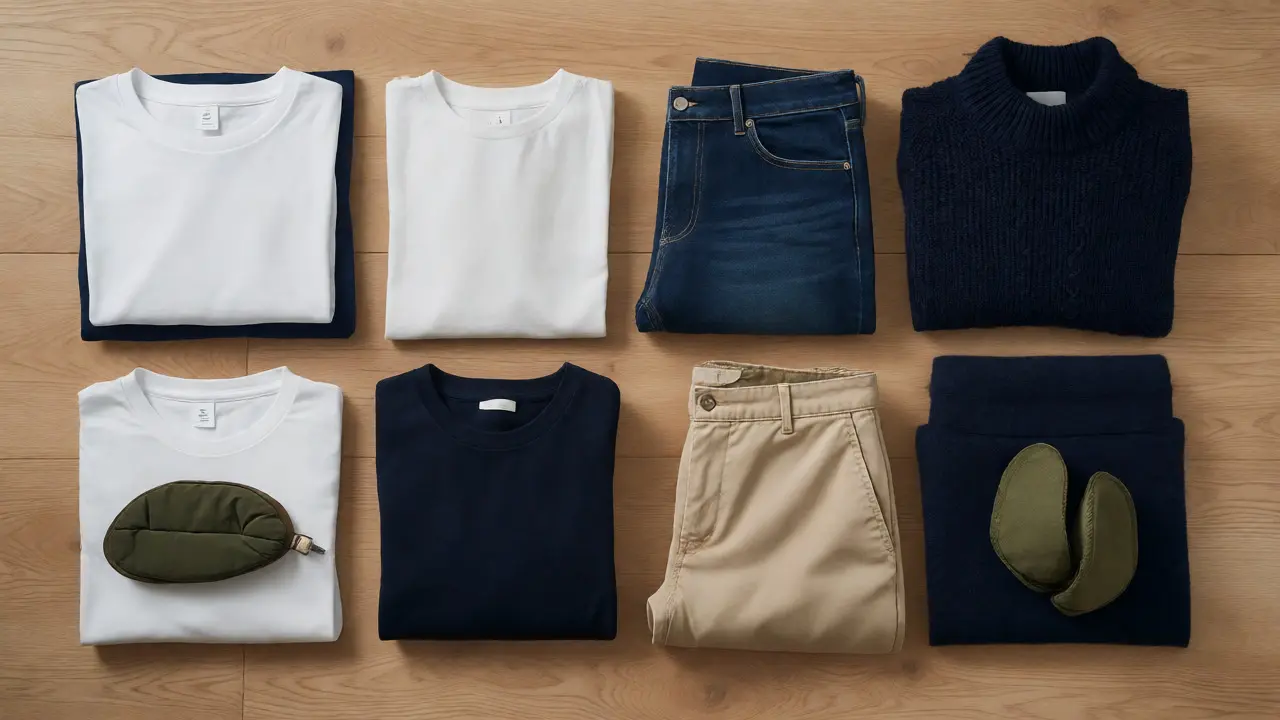
Color theory scares people. Beginners often think they need to find their "seasonal palette" immediately. While helpful later, it’s not necessary for day one. Instead, focus on neutrals. Black, white, navy, grey, beige, and olive green mix effortlessly. They reduce the risk of clashing outfits and allow you to focus on shape and texture.
A Capsule Wardrobe is a curated collection of essential clothing items that can be mixed and matched to create a variety of outfits. Start with 10-15 items. Why so few? Because constraints breed creativity. When you have limited options, you learn how to combine pieces effectively. You discover that your navy chinos work with your grey sweater and your white sneakers. You realize you don’t need ten different jeans; you need two pairs that fit well.
Once you master neutral combinations, introduce one accent color. Maybe it’s a burgundy scarf or a teal bag. Keep it small. This gradual introduction prevents you from buying bright yellow pants that you wear once and then hide in the back of the closet. Neutrals provide the canvas; accents provide the personality. Build the canvas first.
Solicit Specific Feedback, Not General Compliments
You cannot develop style in a vacuum. You need external data. However, asking friends "Do I look good?" usually yields polite lies or vague answers. To get useful feedback, ask specific questions. Instead of "Does this work?", ask "Does this outfit make me look professional?" or "Is this color washing me out?" or "Does this silhouette look balanced?"
Find one person whose style you respect-not necessarily the best-dressed person, but someone whose aesthetic aligns with where you want to go. Ask them to critique one outfit per week. Be thick-skinned. If they say the pants are too baggy, believe them. We all have blind spots. We get used to seeing ourselves in mirrors every day, so we stop noticing flaws. An outside eye sees what you miss.
Also, pay attention to non-verbal cues. Do people engage with you more when you wear certain clothes? Do you feel more energetic? Style affects behavior. When you feel put-together, you stand taller and speak more clearly. Track these internal feelings alongside external comments. Your goal isn’t to please everyone; it’s to find clothes that amplify your best self.
Putting It All Together: A 30-Day Action Plan
Knowing the techniques is one thing; executing them is another. Here is a simple schedule to integrate these habits into your life without overwhelming yourself.
- Week 1: Observation. No shopping. Create your Pinterest boards. Measure your best-fitting items. Identify your daily "uniform" concept.
- Week 2: Audit. Go through your closet. Remove anything that doesn’t fit the criteria from Week 1. Donate or sell it. See what remains.
- Week 3: Targeted Shopping. Buy only what fills gaps in your neutral capsule. Stick to your measured sizes. Try things on. Check the shoulder seams.
- Week 4: Integration. Wear your new uniform. Ask for specific feedback. Adjust based on comfort and compliments. Refine the next purchase list.
This cycle repeats. Each month, you add one or two quality pieces that strictly adhere to your evolving visual map. Within six months, you’ll have a closet that reflects who you are, not who the magazines said you should be.
Frequently Asked Questions
How do I know my body type?
You don't need to memorize complex charts like "rectangle" or "hourglass" right away. Instead, look in a mirror wearing fitted clothes. Note where your widest point is (shoulders, waist, or hips) and where your narrowest point is. Also, observe your height relative to your proportions. Use this visual assessment to choose silhouettes that balance your frame, such as adding volume to the bottom if you have broad shoulders.
Is it okay to copy someone else's style initially?
Yes, absolutely. Copying is a valid learning tool. Pick a celebrity or influencer whose lifestyle and body type resemble yours. Try to recreate three of their outfits using affordable alternatives. As you wear these copies, note what feels authentic and what feels like a costume. This experimentation helps you distill elements you truly love, eventually leading to a unique style that is inspired by others but defined by you.
What if I hate shopping?
Minimize the frequency, not the intentionality. Use online shopping with strict filters for size and color. Save items to a cart and wait 48 hours before buying. If you still want them, purchase. Consider hiring a personal stylist for a single session to build a base wardrobe. Many offer virtual consultations where they send you links to buy, removing the physical labor of browsing stores.
How much money do I need to start?
Style is not about budget; it's about fit and cohesion. You can start with under $100 by focusing on thrift stores or sales for basics like well-fitting jeans and plain tees. Invest in one high-quality outerwear piece or pair of shoes if possible, as these elevate cheaper items. Avoid fast-fashion trends that lose shape quickly, as replacing them costs more in the long run.
When should I break the rules?
Break the rules once you understand them. Master the basics of fit and neutral coordination first. Once you feel confident in your foundational wardrobe, experiment with mixing patterns, bold colors, or unconventional accessories. Rule-breaking should feel intentional, not accidental. If you're unsure, test the risky item in low-stakes environments before wearing it to important events.


Write a comment