

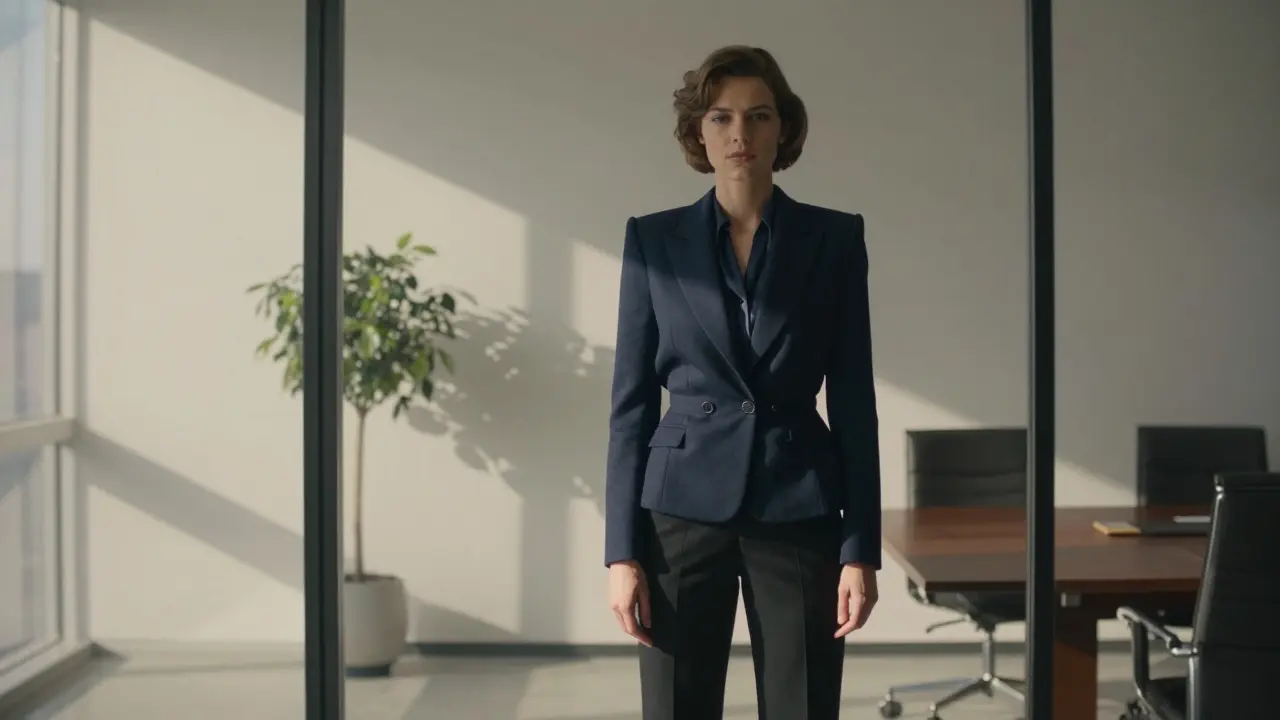
Back in the 1980s, women walked into boardrooms wearing suits that didn’t just fit-they commanded attention. Shoulder pads that squared the frame, jackets that hugged the waist like a second skin, and pants that tapered just right. This wasn’t fashion for show. It was armor. And today, that same energy is making a quiet but powerful return-not as nostalgia, but as strategy.
Why Power Dressing Wasn’t Just About Looks
Power dressing in the 80s didn’t emerge from a runway. It came from women who needed to be taken seriously in male-dominated workplaces. A 1985 study by the Harvard Business Review found that women in structured, tailored outfits were rated 37% more competent than those in softer silhouettes, even when their work output was identical. The clothes weren’t about impressing others-they were about rewiring how the wearer felt.
That’s the real secret: power dressing works because it changes your posture, your breath, your gaze. When your shoulders are set wide and your jacket ends at the hip, your spine straightens. You stand taller. You speak slower. You own the room before you say a word.
The Anatomy of an 80s Power Suit
Forget the over-the-top shoulder pads you see in movies. The real 80s power suit had structure without bulk. Here’s what made it work:
- Shoulder pads: Not padded like a football jersey-just enough to create a clean, horizontal line. They were often built into the garment, not glued on. Look at photos of Joan Collins in Dynasty or Meryl Streep in The Iron Lady: the shoulders were sharp, but natural.
- Blazers: Fitted through the torso, with a nipped waist. The length hit at the hipbone, never below. This created a visual balance between top and bottom, making the torso look longer and stronger.
- Trousers: High-waisted, with a slight flare or straight leg. No baggy jeans here. The fabric was wool or wool-blend, structured enough to hold its shape all day.
- Blouses: Silk or satin, tucked in tightly. Often with a subtle ruffle or bow at the neck-delicate, but never weak.
These weren’t random choices. Each element served a purpose: to elongate, to define, to control space. It was tailoring as psychology.
How to Wear It Today-Without Looking Costumed
You don’t need to buy a vintage suit from eBay to channel this look. Modern power dressing is about borrowing the *principles*, not the props.
Start with the shoulders. Look for blazers with structured shoulders-either natural construction or a light internal padding. Brands like The Row, Celine, and even Zara’s premium lines now offer jackets with that signature 80s silhouette, but scaled down. Try one in navy, charcoal, or camel. Avoid bright colors or loud patterns unless you’re aiming for a statement.
Pair it with high-waisted tailored trousers. Not skinny. Not wide-leg. Just clean, straight, and hitting at the ankle. Tuck in a fine-knit sweater or a silk camisole. The contrast between the sharp jacket and the soft top creates balance. It’s not about dominance-it’s about control.
Shoes? Low block heels or sleek loafers. No stilettos. You’re not walking a runway-you’re walking into a meeting.
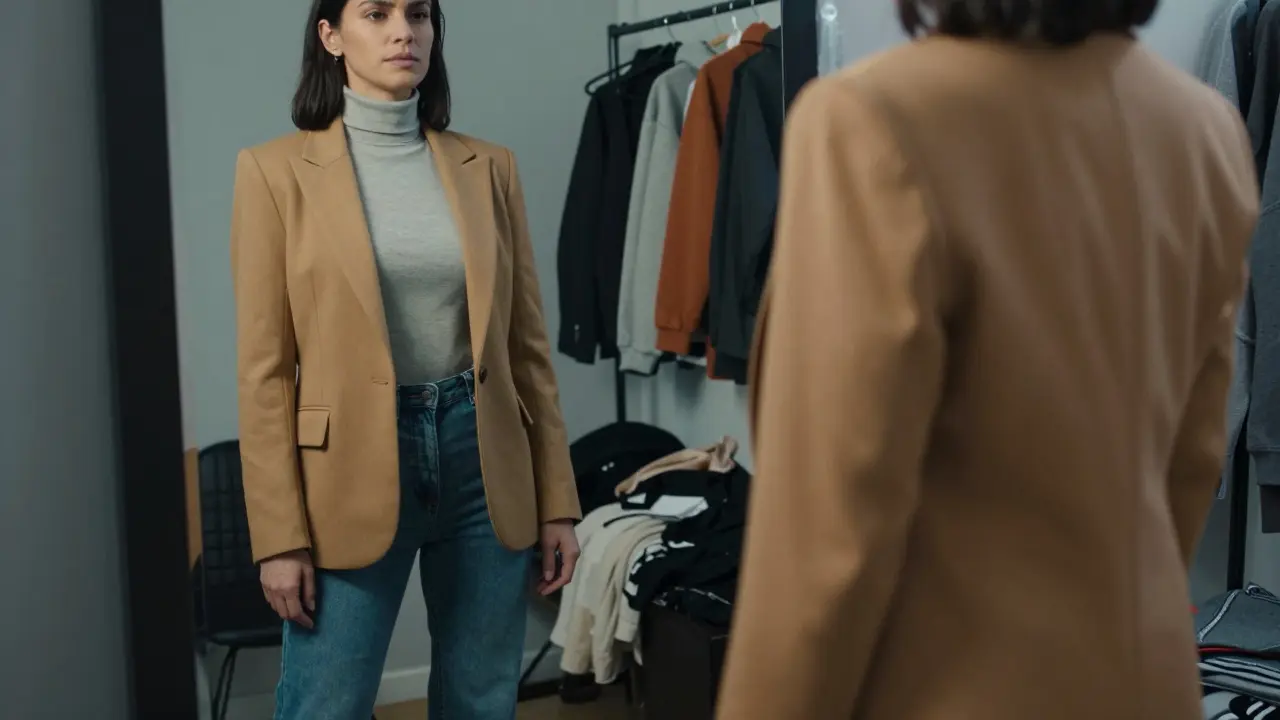
And here’s the trick most people miss: don’t wear it all at once. A single power piece-like a structured blazer-can transform an entire outfit. Wear it over a dress. Over jeans. Over a turtleneck. One strong element does more than a full costume.
Why This Still Works in 2026
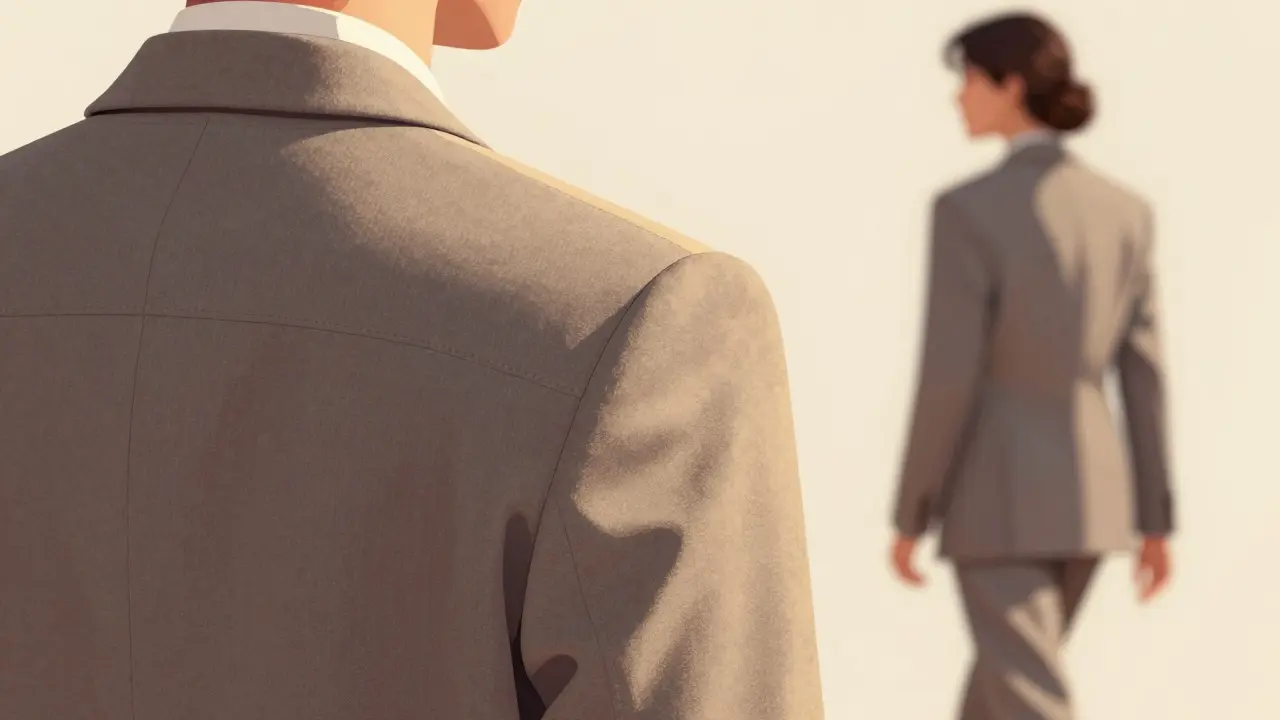
Today’s workplaces are less formal, but no less political. You still need to signal competence. You still need to be seen as someone who belongs at the table. And in a world full of hoodies and slouchy sweaters, a well-tailored blazer doesn’t just stand out-it stands up.
A 2024 survey by McKinsey found that 68% of women in leadership roles wear structured clothing at least three times a week-not because they’re forced to, but because they feel more confident. The data doesn’t lie: when your clothes align with your ambition, your mind follows.
Power dressing isn’t about pretending to be someone else. It’s about amplifying who you already are. The 80s didn’t invent confidence. They just gave it a shape.
What to Avoid
Not every 80s trend deserves a comeback. Skip these:
- Shoulder pads that stick out like wings
- Excessively wide lapels
- Neon colors and metallic fabrics
- Matching sets with visible belts
These were products of their time. Today’s version is quieter, more refined. It’s not about shouting-it’s about speaking clearly.
Real People, Real Results
Emma, a marketing director in Chicago, started wearing a tailored navy blazer with high-waisted black trousers to her weekly strategy meetings. She didn’t change her content. She didn’t change her tone. But within two months, she was asked to lead three new projects. Her team said it was because she "looked like she already owned the room."
James, a senior designer in Austin, started pairing his casual button-downs with a structured gray blazer on client days. His win rate on pitches went up by 40%. He didn’t think it mattered-until his clients started asking, "Who’s your tailor?"
These aren’t outliers. They’re proof that the rules haven’t changed. Only the delivery has.
Where to Start
Here’s your three-step plan:
- Find a blazer with structured shoulders and a defined waist. Try on at least five. The right one will feel like it was made for your body, not bought off a rack.
- Pair it with one pair of high-waisted, tailored trousers. Stick to neutral colors until you’re comfortable.
- Wear it once a week. Just once. Notice how people look at you. Notice how you stand.
That’s it. No overhaul. No wardrobe purge. Just one powerful piece.
Final Thought: Confidence Is a Fit
The 80s didn’t invent power dressing to make women look like men. They invented it so women could look like themselves-stronger, sharper, and unapologetically in charge.
Today, you don’t need shoulder pads to have authority. But you do need to know how to carry yourself. And sometimes, the best way to do that is to wear something that reminds you: you belong here.
Can I wear power dressing to a casual workplace?
Absolutely. Power dressing doesn’t mean full suit and heels. A single structured blazer over a turtleneck and jeans signals confidence without breaking dress code. The key is consistency-not formality.
Are shoulder pads still in style?
Not the oversized kind. But subtle, built-in structure is back. Modern blazers use light padding or internal boning to create a clean shoulder line without bulk. Look for "architectural shoulders" or "structured silhouette" in product descriptions.
What’s the difference between power dressing and business formal?
Business formal is about rules: suit, tie, closed-toe shoes. Power dressing is about presence: shape, silhouette, intention. You can be power-dressed in a silk blouse and tailored pants-no tie required. It’s about how you carry the outfit, not what’s on the tag.
Is power dressing only for women?
No. Men have worn tailored, structured clothing as a sign of authority for centuries. The 80s power suit was inspired by menswear. Today, men are embracing sharper cuts, defined shoulders, and fitted silhouettes too. It’s not gendered-it’s about clarity of intent.
How do I find a good tailored blazer without spending a fortune?
Shop secondhand first. Vintage stores and platforms like Vestiaire Collective or ThredUp have excellent 80s and 90s blazers in great condition. Look for wool blends, clean lines, and no visible stitching. Then, get it altered. A $50 blazer with $40 in tailoring can outperform a $300 off-the-rack one.
If you’re looking to build on this style, explore how minimalist tailoring from Japan or Scandinavian design influences modern power dressing. Or dive into how fabric choice-like recycled wool or TENCEL™ blends-makes these looks more sustainable. The power isn’t just in the cut. It’s in the choice to wear something that lasts.


Write a comment