

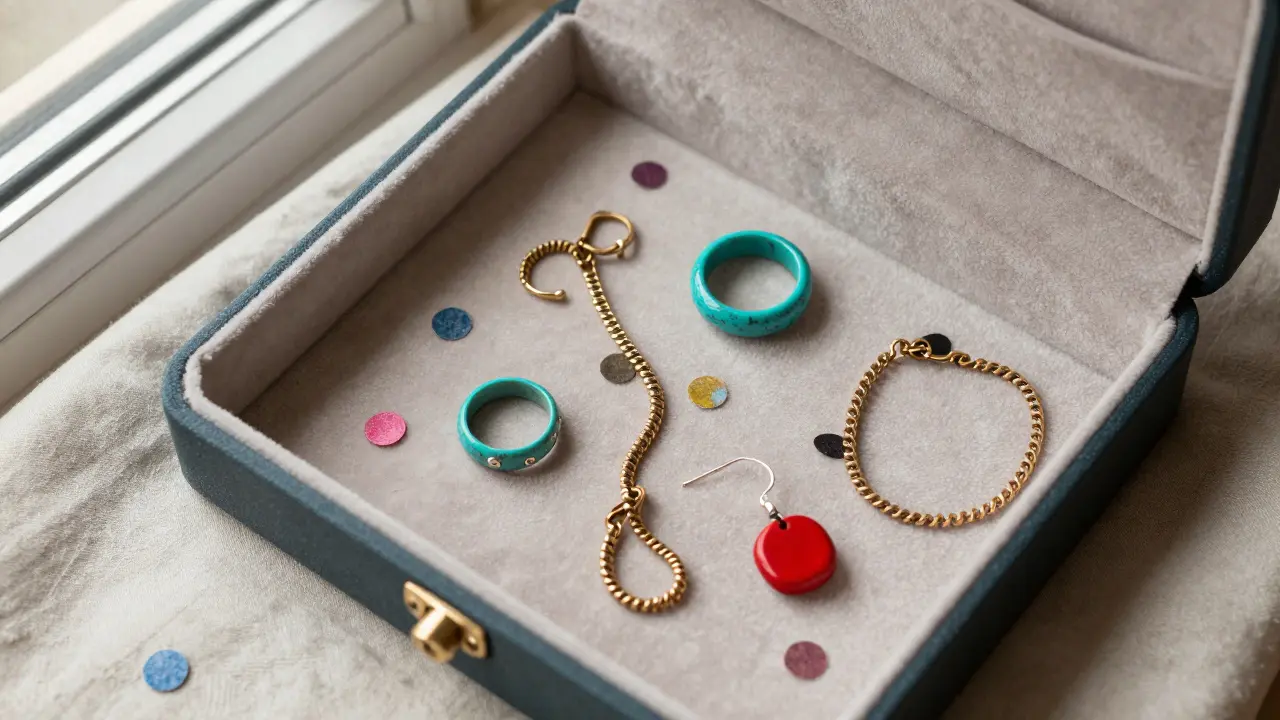
Most people have a closet full of neutral clothes but a jewelry box that looks like a confetti explosion. You have a gold necklace from three years ago, a bright turquoise ring you bought on vacation, and maybe a pair of red earrings that only work with one specific dress. The problem isn't that you have too many accessories; it's that they don't talk to each other. When your accents clash, you spend twenty minutes staring at your reflection wondering why a simple outfit feels "off."
Quick Wins for Your Accent Set
- Stick to one primary accent family per capsule (e.g., warm tones vs. cool tones).
- Limit your set to 5-7 high-quality pieces to avoid decision fatigue.
- Balance bold colors with a reliable base of metallic neutrals.
- Prioritize versatility; if a piece only works with one outfit, it doesn't belong in a capsule.
What Exactly is an Accessory Color Capsule?
Think of a standard capsule wardrobe as your foundation-the blacks, whites, navys, and beiges. An accessory color capsule is a curated micro-collection of accessories designed to add cohesive pops of color to those neutrals without overwhelming the look. Unlike a full wardrobe, this is a strategic kit of belts, scarves, bags, and jewelry that share a specific color palette, ensuring that no matter which piece you grab, it fits the overall vibe.
Why do this? Because color triggers a psychological response. A deep emerald green bag suggests sophistication and stability, while a bright coral scarf screams energy and friendliness. By controlling your accent colors, you're essentially choosing the mood you want to project each day. Instead of guessing, you're using a system.
Picking Your Power Palette
You can't just pick colors you like; you need colors that work together. This is where Color Theory is the science of how colors interact and the visual effects they create when combined which becomes your best tool. If you're starting from scratch, don't try to do everything. Pick one of these three strategic approaches:
- The Monochromatic Blend: Pick one hue, like blue, and get various shades of it. Think navy leather, a sky-blue silk scarf, and a royal blue handbag. It's the safest bet and looks incredibly polished.
- The Complementary Contrast: Use colors opposite each other on the wheel. For example, a deep forest green paired with soft gold or burnt orange. This creates a high-energy look that feels intentional.
- The Analogous Flow: Pick colors that sit next to each other, like burgundy, plum, and deep purple. This creates a rich, sophisticated gradient that feels organic and expensive.
A great rule of thumb: if you're unsure, look at your skin's undertone. If you have cool undertones (veins look blue), lean toward silver-based accents and jewel tones. If you're warm (veins look green), go for gold-based accents and earth tones. Mixing them haphazardly is where the "confetti effect" happens.
The Essential Pieces for a Small Set
You don't need twenty items. A powerful set usually consists of about five to seven pieces. If you add more, you're just building a collection, not a capsule. To make this work, you need a mix of "statement" and "supporting" pieces.
The statement piece is your anchor-usually a bag or a bold scarf. The supporting pieces are the jewelry and belts that tie the look together. For instance, if your statement is a cobalt blue leather tote, your supporting pieces might be a simple blue sapphire stud earring or a navy skinny belt. This prevents the color from looking like a random spot of paint on a white canvas.
| Palette Theme | Statement Piece | Supporting Jewelry | Supporting Texture | Vibe |
|---|---|---|---|---|
| The Executive Red | Crimson Structured Bag | Gold Hoops | Red Silk Pocket Square | Powerful, Bold |
| The Earthy Sage | Olive Green Tote | Bronze Bangles | Sage Linen Scarf | Calm, Natural |
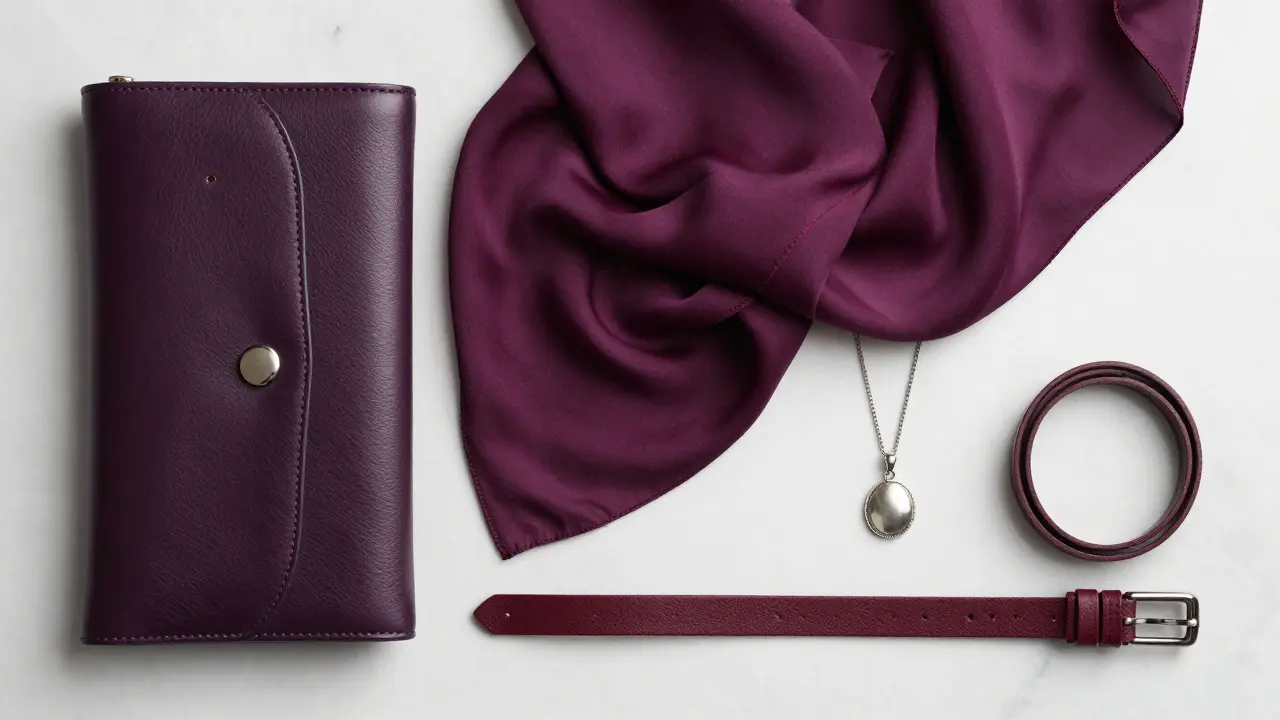
| The Midnight Plum | Deep Purple Clutch | Silver Pendant | Plum Pashmina | Mysterious, Elegant |
How to Mix and Match Without Clashing
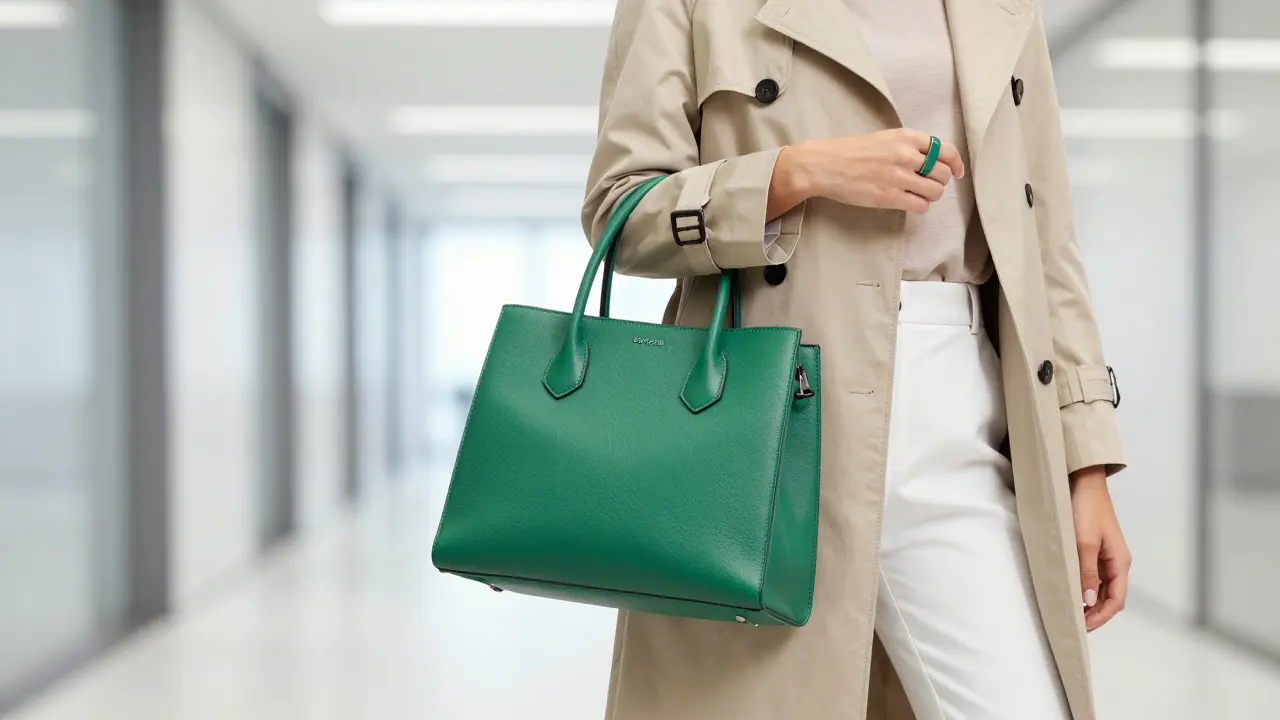
The biggest fear people have is looking like they're wearing a costume. The secret is the 80/20 rule: 80% of your outfit should be neutral, and 20% should be your accent capsule. If you wear a beige trench coat and white trousers, a single pop of emerald green via a bag and a matching ring is enough to transform the look from "boring" to "curated."
When you use multiple colors from your capsule, avoid putting them all in one spot. Don't wear the colored scarf, the colored bag, and the colored shoes all at once unless you're walking a runway. Instead, spread them out. Put the color at the neck (scarf) and the wrist (bracelet). This leads the eye across your body and creates a balanced visual flow.
Also, consider the Texture is the physical feel and visual surface quality of a fabric or material of your accessories. A matte leather bag in burgundy looks very different from a shiny patent leather bag in the same color. Matte textures are more understated and professional; glossy textures are more playful and aggressive. Match the texture to the occasion, not just the color.
Avoiding Common Styling Pitfalls
One mistake I often see is the "matching set" trap. Buying a matching belt, bag, and shoe set from a brand often looks dated and stiff. It lacks a human touch. Instead, aim for "coordinated, not identical." A navy bag and a midnight blue shoe are in the same family, but they aren't identical twins. That slight variation is what makes an outfit look like it was styled by a pro rather than bought off a mannequin.
Another pitfall is ignoring the lighting. A color that looks like a sophisticated mauve in your bedroom might look like a bright purple under office fluorescent lights. Always test your accessory capsule in the environment where you'll actually be wearing it. If you spend your day in a bright corporate office, lean toward more saturated tones that won't wash out.
Maintaining and Evolving Your Set
Your taste will change, and that's fine. The beauty of a small capsule is that it's easy to pivot. Instead of purging your entire jewelry box, simply swap out your "Accent Color of the Season." In the fall, you might move from a bright turquoise set to a burnt sienna set. Since your base wardrobe remains neutral, the transition is seamless.
Keep your pieces in a dedicated organizer. When your accent set is physically separated from your random "one-off" accessories, you're less likely to grab a clashing piece in a rush. This simple habit reduces decision fatigue in the morning. You don't have to wonder "does this go?" because you already built the system to ensure it does.
Can I have more than one color capsule?
Absolutely. Most people have a "Day" capsule (softer tones, neutrals, light blues) and an "Evening" capsule (bold reds, deep blacks, metallics). The key is to keep them separate so you don't mix an office-appropriate sage green scarf with a high-drama midnight purple clutch unless you're intentionally going for a bold contrast.
Do metallics count as a color in my capsule?
Metallics like gold, silver, and rose gold act as "bridge neutrals." They aren't a primary accent color but rather the glue that holds the colors together. If your capsule is based on warm tones (oranges, yellows, olive greens), gold is your bridge. If you're using cool tones (blues, purples, greys), silver is your best bet.
What if I love two colors that clash?
You can still use them, but introduce a neutral buffer. If you love hot pink and lime green, don't let them touch. Wear a white blazer or a beige dress to create a visual break between the two. This prevents the clash from becoming overwhelming and makes the contrast look like a deliberate style choice.
How many accessories are too many for a capsule?
Once you hit 10-12 pieces in one color family, you're no longer in a capsule; you're in a collection. The goal of a capsule is efficiency. If you have three different red bags, ask yourself if they serve different purposes (e.g., a tote for work, a clutch for dinner, a crossbody for errands). If they all do the same job, trim them down.
How do I choose the right accent color for my skin tone?
Check your veins in natural light. Blue or purple veins usually mean cool undertones, which pop beautifully with silver and jewel tones like emerald or sapphire. Greenish veins indicate warm undertones, which pair perfectly with gold and earth tones like terracotta or olive. If you can't tell, you're likely neutral and can pull off almost any color in the spectrum.


Write a comment