

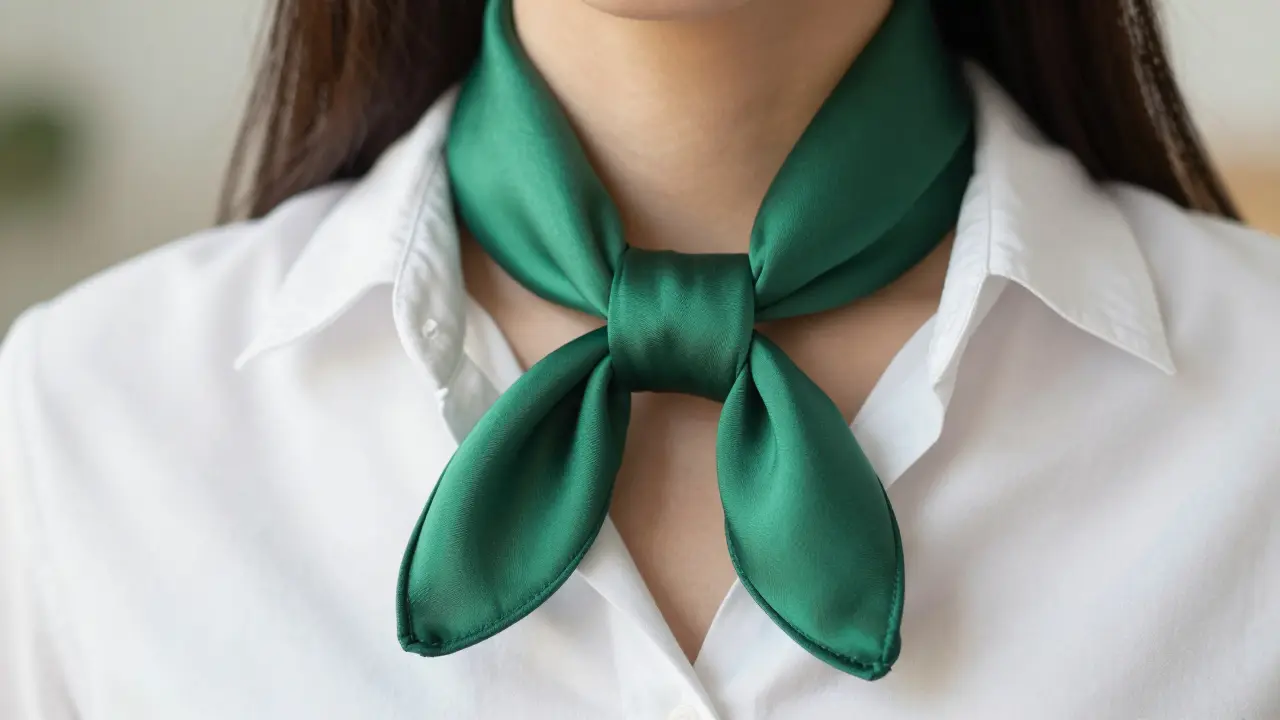
There is a specific moment in every winter wardrobe crisis when you look at your favorite cashmere wrap and realize it looks less like an accessory and more like a sleeping bag. You are not alone. Most people treat scarves as insulation devices rather than structural elements of an outfit. The result? A bulky, shapeless silhouette that swallows your frame.
The goal here is not just to keep warm. It is to use the fabric to create lines, angles, and definition. We are moving away from the double-looped messes of the past decade toward techniques that add architectural interest without adding volume. Think of your scarf as a belt for your neck-it should define, not disguise.
The Principle of Negative Space
To understand why most scarf ties fail, you have to look at density. When you bunch thick wool or heavy knit around your neck, you eliminate negative space. Negative space is the visible skin or clothing between layers. Without it, the eye has nowhere to rest, creating a visual block that reads as "bulk." Advanced tying relies on exposing the collar, the neckline, or even a sliver of skin to break up the mass of the fabric.
The French Twist: Minimalist Definition
This is the gold standard for structure. It works because it uses tension to hold the fabric flat against the chest rather than letting it drape loosely. It turns a long rectangular scarf into a sleek, horizontal band.
- Drape the scarf around your neck with one end hanging about six inches longer than the other.
- Cross the ends over each other once, then twist them together two or three times depending on the desired tightness.
- Bring the twisted bundle back around your neck, tucking the ends into the loop created by the initial drape.
- Pull gently to tighten. The key is to keep the twist compact near the collarbone.
Why this works: It creates a clean horizontal line across the torso. This draws the eye sideways, which can visually broaden narrow shoulders or balance out a long neck. Use a medium-weight silk or cotton blend for best results. Avoid chunky knits here; they will look like a knot in a rope.
The One-Loop Drape: Controlled Volume
If you need warmth but hate the "muffler" look, the one-loop drape is your solution. Unlike the classic loop-and-tuck, this method keeps the tail loose and intentional.
- Wrap the scarf around your neck once, leaving both ends hanging down.
- Take the right end and pull it through the loop from underneath, but do not pull it all the way through.
- Leave a large, relaxed loop on the right side. Let the left tail hang straight down, slightly shorter than the loop.
- Adjust the loop so it sits off-center. Asymmetry creates visual interest and breaks up the bulk.
This style shines with lightweight wools or linen blends in transitional weather. The asymmetry prevents the outfit from looking boxy. It adds a touch of movement without requiring you to carry excess fabric weight.
The Shawl Fold: Architectural Draping
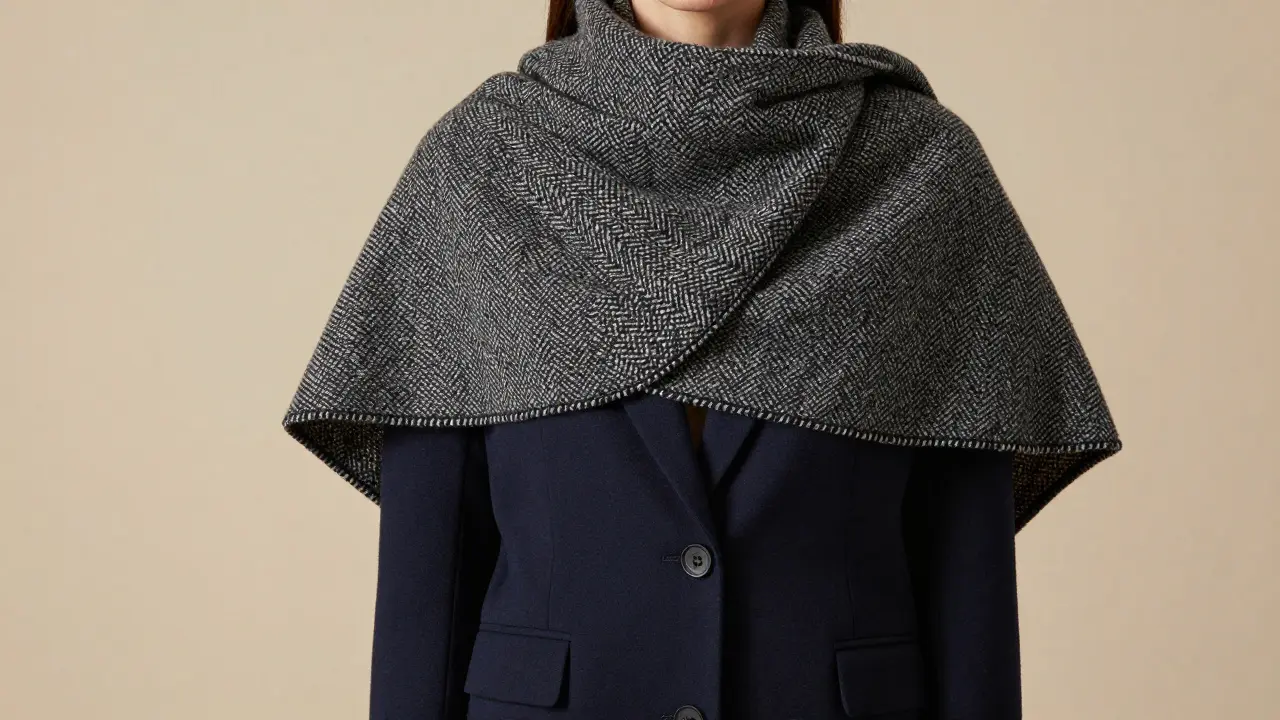
For larger square or triangular scarves, folding is everything. The mistake most people make is folding diagonally and wrapping tightly. Instead, try the shawl fold for a cape-like effect that adds structure to the shoulders.
- Fold a large square scarf diagonally to form a triangle.
- Place the folded edge along your collarbone, letting the point hang down your back.
- Bring the two corners forward and cross them over your chest.
- Tie them loosely behind your back or let them hang if the scarf is long enough.
This technique transforms a soft piece of fabric into a structured garment element. It mimics the look of a tailored jacket lapel. It is particularly effective with stiff fabrics like tweed or heavy silk. The rigidity of the material holds the shape, providing a crisp outline to your upper body.
The Belt Wrap: Cinching the Silhouette
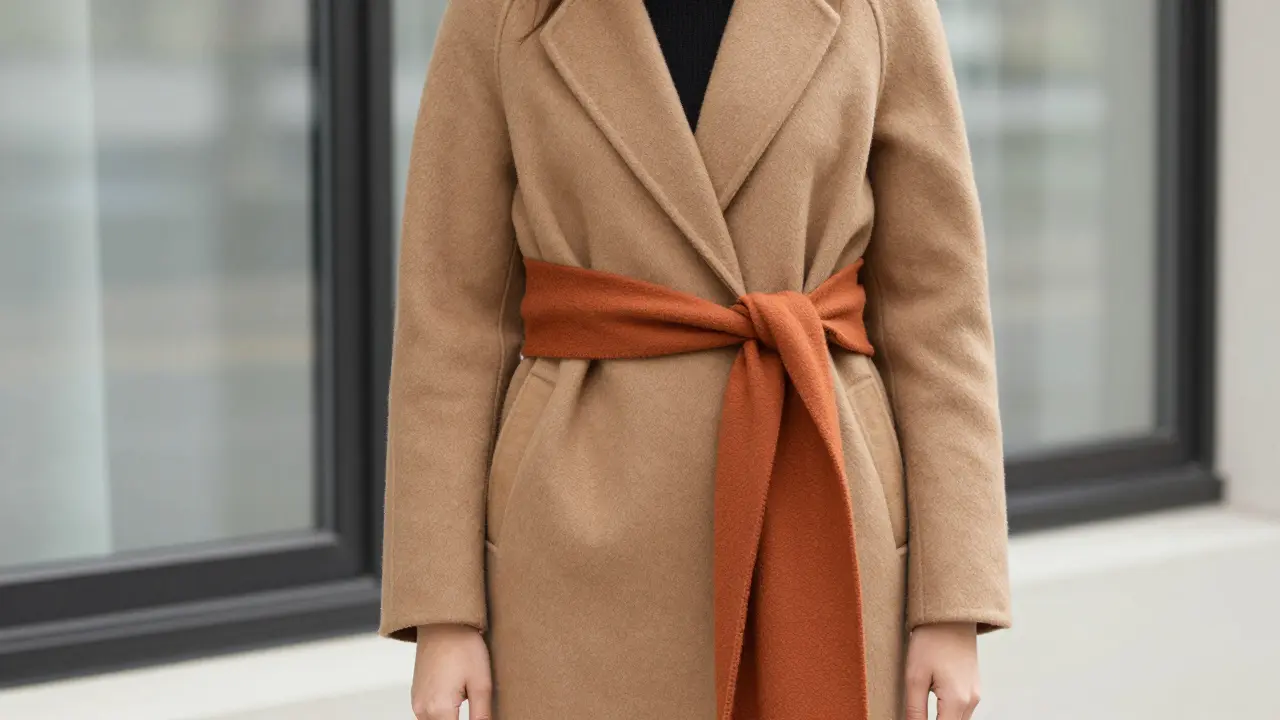
When wearing oversized coats or cardigans, a scarf can act as a waist-defining tool. This is not just a neck accessory; it becomes part of the outerwear's structure.
- Put on your coat or blazer.
- Wrap a thin, long scarf around your waist over the garment.
- Tie it in a simple bow or a single knot at the side, not the center.
- Let the tails hang down, breaking the vertical line of the coat.
Side knots are crucial here. Center knots can make you look top-heavy. A side tie draws the eye to the hip, creating a flattering curve. This works best with slim materials like jersey or fine merino wool. It adds a pop of color and texture without adding any actual bulk to your neck area.
| Fabric Type | Best For | Avoid | Structural Impact |
|---|---|---|---|
| Silk / Satin | French Twist, Belt Wrap | Chunky Loops | High sheen, low volume, defines lines |
| Merino Wool | One-Loop Drape, Shawl Fold | Tight Knots | Medium warmth, soft drape, moderate structure |
| Chunky Knit | Loose Drape Only | Twists, Tight Knots | High volume, minimal structure, cozy aesthetic |
| Linen / Cotton | All Techniques | Heavy Winter Wear | Crisp folds, holds shape well, breathable |
Common Pitfalls to Avoid
Even with advanced techniques, certain habits will undo your hard work. First, stop doubling up. Wearing two scarves rarely looks intentional unless you are going for a very specific, high-fashion avant-garde look. Usually, it just looks cold and confused. Stick to one quality piece.
Second, ignore the length. If your scarf is too short, you cannot create proper loops or twists without choking yourself. Aim for scarves that are at least 70 inches long for most advanced knots. If your scarf is too long, roll the edges before tying. Rolling a wide scarf into a thinner strip reduces bulk instantly and makes the knot sit tighter and neater.
Third, match the fabric weight to the occasion. A heavy wool scarf with a summer dress creates a visual disconnect. The scarf should complement the weight of your clothing. Light clothes call for light scarves; heavy coats can handle heavier textures. This balance ensures the scarf enhances the outfit rather than overwhelming it.
Maintaining Shape and Texture
A scarf only adds structure if it holds its shape. Cheap fabrics wrinkle and lose their form after ten minutes. Invest in natural fibers that have memory. Silk retains its smoothness. Wool resists wrinkling. Linen gets better with wear. Synthetic blends often pill and stretch, leading to a sloppy appearance no matter how perfectly you tie it.
Storage matters too. Do not crumple your scarves in a drawer. Hang them on wide hangers or fold them neatly. Creases are the enemy of structure. If your scarf arrives wrinkled, steam it lightly before styling. A crisp scarf looks expensive and intentional. A wrinkled scarf looks like an afterthought.
How do I stop my scarf from slipping?
Slippage usually happens with smooth fabrics like silk. To fix this, use small, invisible fashion tape to secure the inner layer of the scarf to your shirt collar. Alternatively, choose a fabric with a bit of texture, like ribbed cotton or wool, which naturally grips itself and your clothing better.
Can I use these techniques with infinity scarves?
Infinity scarves are limited because they lack ends to tie. However, you can achieve some structure by twisting the loop once before pulling it over your head, creating a figure-eight shape. This adds dimension without needing knots. For true advanced structuring, rectangular scarves offer far more versatility.
What is the best scarf size for advanced tying?
Aim for dimensions of 180cm x 50cm (70 x 20 inches) for long rectangular scarves. This length provides enough fabric for multiple wraps and knots without being unwieldy. For square scarves, 90cm x 90cm (35 x 35 inches) is ideal for shawl folds and drapes.
How do I make a bulky scarf look thinner?
Roll the edges of the scarf inward to create a narrower strip before tying. This technique, called "rolling," compresses the fabric and reduces its visual width. It also helps the knot sit tighter and cleaner, preventing the fluffy, undefined look of loose bulk.
Should I match my scarf color to my outfit?
Not necessarily. While matching creates a monochromatic, elongating effect, contrasting colors can add focal points and break up bulk. A dark scarf with a light coat creates a clear boundary line, defining the neck area. Choose contrast if you want to highlight the scarf as a structural element, and match if you want seamless integration.