

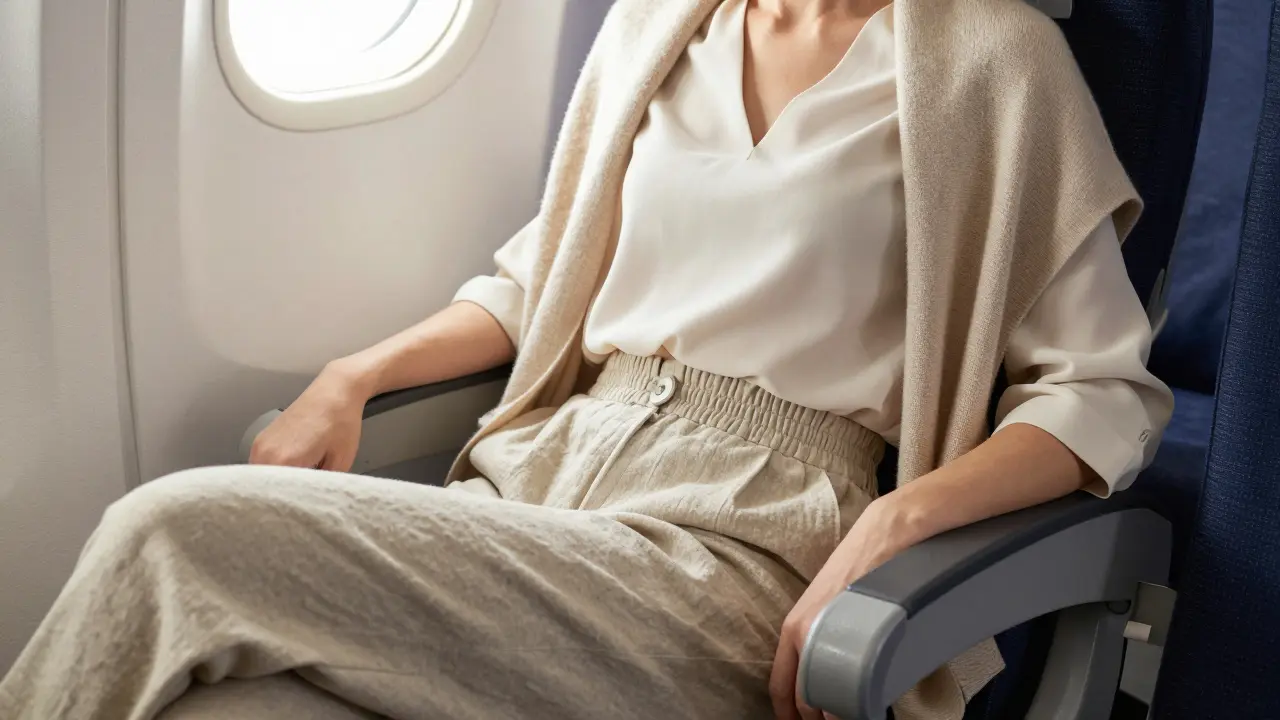
There is a specific kind of misery that comes from sitting in economy class for six hours. You are cramped, the air is dry, and your jeans feel like they are slowly turning into iron shackles. We have all been there. You look at the person next to you, who is wearing sweatpants and a hoodie, and then you look down at your own stiff blazer and wonder why you tried so hard. The goal of airplane dressing isn't just about looking good for Instagram; it is about engineering an outfit that survives the physical torture of a flight while keeping you looking polished enough to walk straight into a meeting or dinner upon landing.
Travel fashion is the strategic selection of clothing that balances comfort, functionality, and aesthetics for transit scenarios. It requires thinking in layers, choosing fabrics that breathe, and prioritizing ease of movement over rigid structure. If you get this right, you arrive feeling human, not battered.
The Fabric First Rule
Before you worry about colors or silhouettes, you need to talk about textiles. Cotton is comfortable, yes, but it is also heavy and slow-drying if you spill coffee on it. Denim is durable, but it restricts movement and holds onto heat. For airplane dressing, you want materials that offer stretch, breathability, and temperature regulation.
Bamboo fabric is a soft, breathable textile derived from bamboo pulp, known for its moisture-wicking properties and natural antibacterial qualities. It feels like silk against the skin but moves like jersey. Another excellent option is Modal, which is a semi-synthetic fiber made from beech tree pulp, offering exceptional softness and drape without retaining odors. These fabrics keep you cool when the plane cabin overheats and don’t make you sweat through your shirt during security checks.
If you prefer natural fibers, look for linen blends. Pure linen wrinkles aggressively, which can ruin your "put-together" vibe before you even land. A blend of linen with Tencel or rayon gives you that breezy, relaxed aesthetic without looking like you slept in a dryer.
Building the Base Layer
Your base layer is what touches your skin for most of the journey. This needs to be forgiving. Tight waistbands are the enemy of long-haul flights. As you digest food and sit in a confined space, your body expands slightly. You need room.
- Elastic Waistbands: Choose trousers or skirts with hidden elastic or wide, soft waistbands. They provide support without digging in.
- Seamless Underwear: Rough seams create friction marks that last for days. Seamless styles prevent chafing and disappear under fitted tops.
- Breathable Socks: Your feet will swell. Wear socks that are thin enough to fit inside your shoes but thick enough to cushion your arches. Avoid cotton socks if you tend to get cold feet; wool blends regulate temperature better.
A great trick is to wear a tank top or camisole as your true base, then layer everything else over it. This allows you to adjust your temperature without exposing too much skin if the AC is blasting.
The Power of Layers
Temperature control on a plane is unpredictable. One minute it is freezing near the vent; the next, it is stifling because someone turned off their personal fan. Layers are your best friend here. They allow you to adapt to micro-climates within the cabin.
A lightweight cardigan is a versatile knit layer that provides warmth without bulk, easily removable when temperatures rise. Look for one that is machine washable. A cashmere-blend sweater adds a touch of luxury and looks expensive even if you are wearing leggings underneath. Alternatively, a structured denim jacket or a utility vest can add shape to an otherwise loose outfit without adding weight.
Think of your outer layer as armor. It protects you from the drafty aisle air and hides any wrinkles in your shirt. When you land, you can remove it to reveal a crisp, fresh look. This transition is key to maintaining your confidence throughout the day.
Footwear Strategy
This is where most people fail. High heels are impractical and painful. Flip-flops are unsafe and unhygienic in airports. You need shoes that are secure, supportive, and easy to slip on and off for security checkpoints.
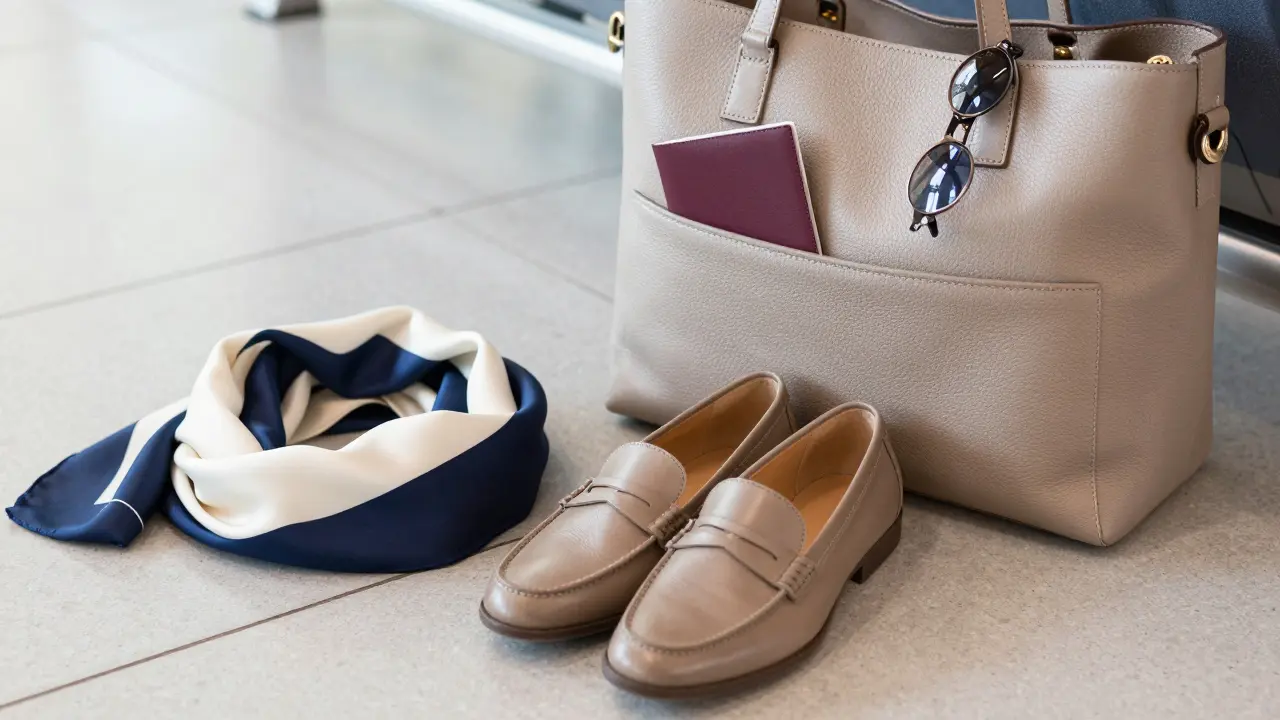
Loafers are slip-on shoes with a flat sole, offering a balance of professional appearance and casual comfort. They look polished with trousers or dresses but are easy to manage. Another excellent choice is Sneakers, specifically minimalist leather or canvas sneakers that provide cushioning and stability for walking long distances. Brands like Allbirds or Vejas offer styles that look clean and modern, avoiding the bulky "gym shoe" aesthetic.
If you must wear boots, choose ankle boots with a zipper rather than laces. Laces come undone, and zippers stay secure. Ensure there is enough room in the toe box for swelling. Your feet can increase in size by up to half a shoe size during a flight due to fluid retention.
Accessories That Work Hard
Accessories should serve a purpose beyond decoration. On a plane, clutter is your enemy. Every item you carry should earn its place.
- Scarf: A large, lightweight scarf can double as a blanket, a pillow, or a sun shield. Silk or modal scarves pack small but provide significant warmth.
- Tote Bag: Instead of a backpack, try a structured tote. It keeps your laptop and essentials organized and looks more professional. Make sure it has a pocket for your passport and boarding pass.
- Glasses Case: If you wear glasses, bring a protective case. Condensation can fog lenses, and rough surfaces can scratch them. Sunglasses are also essential for bright terminals and sunny destinations.
Jewelry should be minimal. Delicate necklaces can tangle, and rings can catch on seat belts. Stick to stud earrings and a simple watch. Gold vermeil holds up better than silver, which tarnishes quickly in humid environments.
The Color Palette Trick
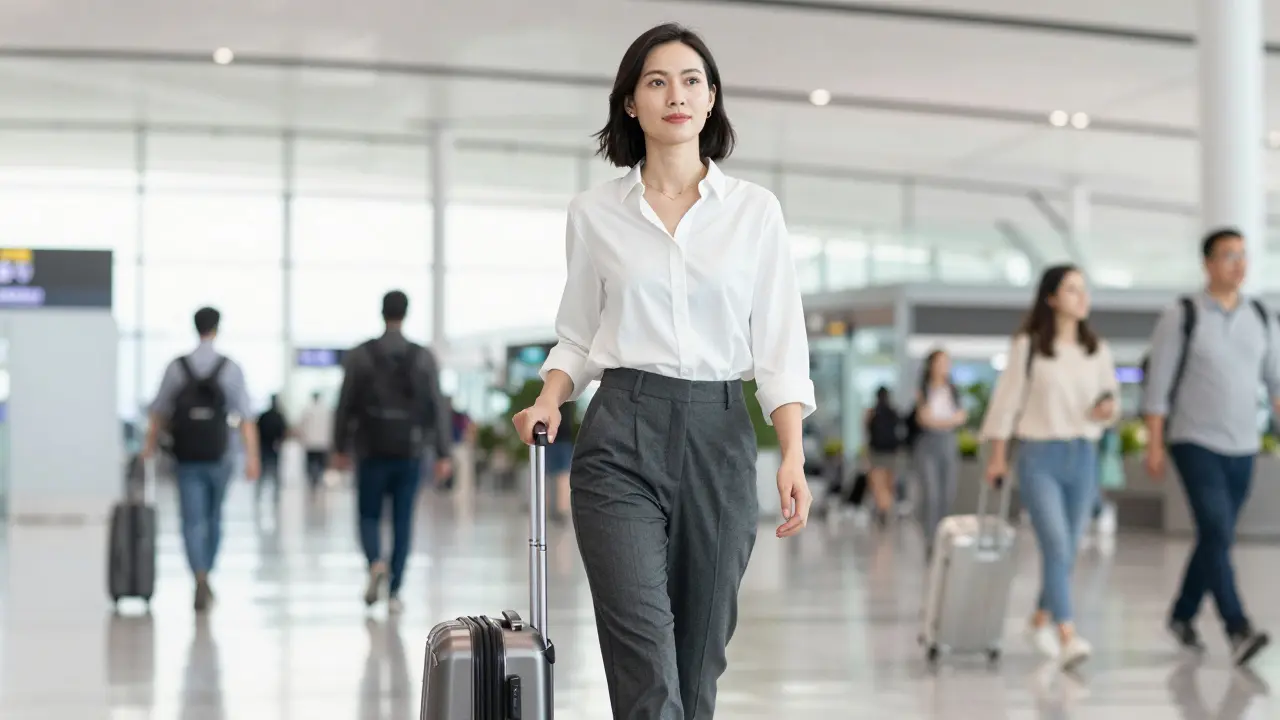
When you are tired, dark colors hide stains and wrinkles better than light ones. Navy, charcoal, and black are forgiving. However, all-black outfits can look severe. Break it up with a pop of color in your accessories or inner layers.
Monochromatic dressing creates a streamlined silhouette that elongates the body. Wearing shades of beige, taupe, or cream together looks intentional and chic, even if you are slightly rumpled. It signals effort without requiring precision. If you spill coffee on a white shirt, it shows immediately. On a light grey shirt, it is less noticeable.
Packing Light for Versatility
The best travel outfits are part of a capsule wardrobe. Bring pieces that mix and match. A neutral pair of trousers can go with a striped tee, a silk blouse, or a chunky knit. This reduces decision fatigue when you are jet-lagged.
Roll your clothes instead of folding them to save space and reduce wrinkles. Use packing cubes to keep categories separate. Keep your top layer and accessories in an easy-to-reach pocket so you can change quickly if needed. Some travelers wear their heaviest items on the plane and pack lighter evening wear for later.
| Fabric | Comfort Level | Wrinkle Resistance | Best For |
|---|---|---|---|
| Bamboo | High | Medium | Base layers, hot climates |
| Modal | High | High | Dresses, blouses |
| Linen Blend | Medium | Low | Casual shorts, shirts |
| Denim | Low | High | Short trips, cool weather |
| Wool Blend | Medium | High | Sweaters, coats |
Final Thoughts on Arrival
The moment you step off the plane, your outfit sets the tone for the rest of your trip. A wrinkled, sweaty appearance makes you feel sluggish. A crisp, comfortable outfit makes you feel ready to tackle whatever comes next. By focusing on fabric quality, strategic layering, and practical footwear, you transform the stress of travel into a seamless experience. You are not just surviving the flight; you are mastering it.
What is the best fabric to wear on a long flight?
Bamboo and Modal are excellent choices because they are breathable, moisture-wicking, and soft against the skin. They help regulate body temperature and resist odors better than cotton or synthetic blends.
Can I wear jeans on a plane?
You can, but avoid stiff, non-stretch denim. Opt for jeggings or denim with a high percentage of elastane (spandex) for flexibility. Dark washes are more forgiving of wrinkles and stains.
What shoes are best for airport security?
Slip-on shoes like loafers or minimalist sneakers are ideal. They are easy to remove and put back on quickly, saving time at security checkpoints while providing enough support for walking long distances.
How do I prevent my clothes from wrinkling in my bag?
Roll your clothes tightly to minimize creases. Use packing cubes to keep items compressed and organized. Place heavier items at the bottom of your suitcase and lighter, wrinkle-prone items on top.
Is it okay to wear pajamas on a plane?
While comfortable, traditional pajamas may not look polished upon arrival. Instead, opt for lounge-worthy separates like soft joggers and a nice t-shirt that blur the line between sleepwear and daywear.