

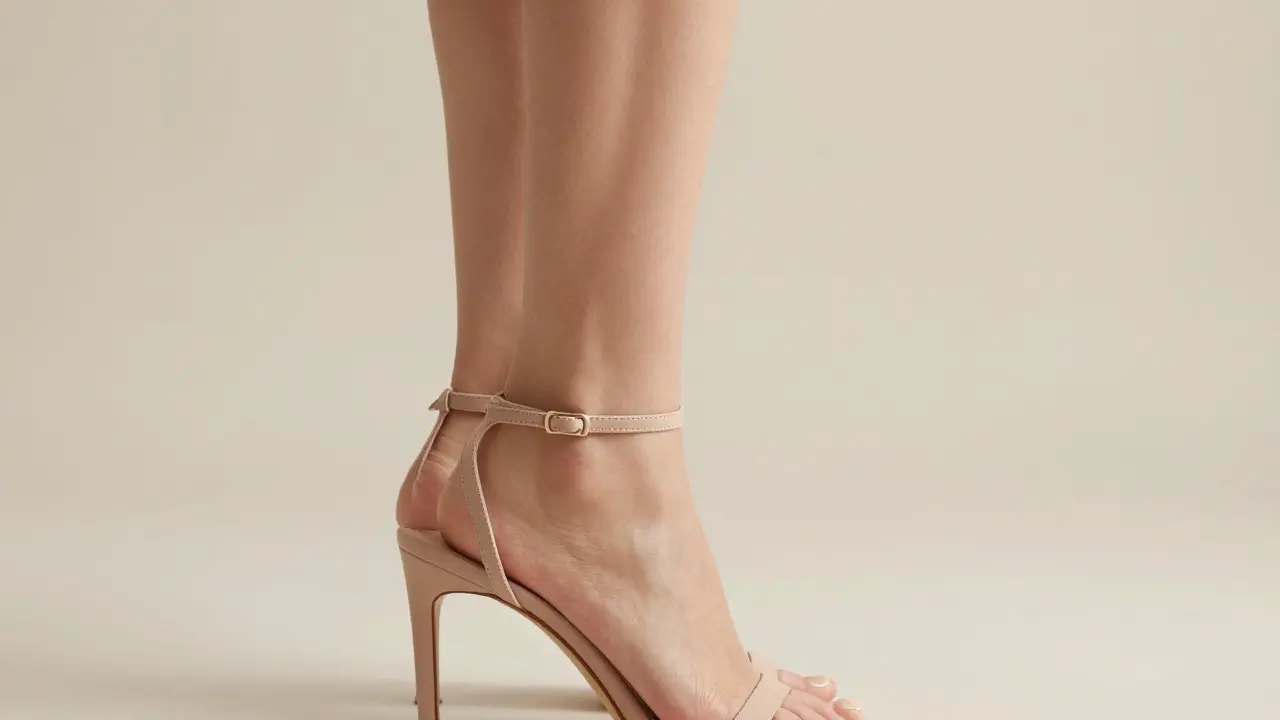
Have you ever put on a pair of beautiful sandals with an ankle strap and felt like your legs suddenly shrank? You are not alone. It is one of the most common frustrations in footwear styling. We buy the perfect shoe, step into it, and look down to find that our calves look shorter and thicker than usual. The culprit is rarely the shoe itself; it is usually where that strap sits on your foot.
The way we place an ankle strap a band that wraps around the ankle to secure a shoe can completely change how your body looks. It acts like a horizontal line across your lower leg. In fashion theory, horizontal lines cut vertical space. If that line is in the wrong spot, it chops off your leg length right at the thickest part of your calf. But if you get the placement right, you can actually create an illusion of longer, leaner limbs. Let’s break down exactly how this works and what you should look for when shopping or styling your current wardrobe.
The Anatomy of the Ankle Strap Illusion
To understand why some straps shorten your legs while others don’t, we have to look at basic geometry and human anatomy. Your leg is not a straight cylinder; it has curves, bulges, and narrow points. The goal of any leg-lengthening style hack is to guide the eye up and down without interruption. Think of your leg as a continuous column. Any strong horizontal element breaks that column.
When an ankle strap sits directly across the widest part of your calf or just below the knee, it creates a "stop sign" effect. Your eye hits the strap and stops there. This draws attention to the width of your lower leg rather than its length. On the other hand, if the strap is positioned strategically, it can blend into the negative space of your outfit or align with natural body lines that elongate rather than truncate.
This isn't just about vanity; it's about proportion. Most adults have a specific ratio between their torso and leg length. By manipulating where the eye rests, you can trick the brain into perceiving a different ratio. A well-placed strap makes the lower leg appear as an extension of the upper leg, creating a seamless flow from hip to toe.
Where Should the Strap Sit?
So, where exactly does the magic happen? The golden rule for visual leg-lengthening is to avoid the middle of the calf. Here is the breakdown of the three main zones for shoe placement the strategic positioning of footwear elements relative to body proportions:
- The Too-High Zone (Above the Malleolus): If the strap sits more than two inches above the bony bump on the outside of your ankle (the lateral malleolus), you are likely cutting into your calf muscle. This is the danger zone. It highlights the girth of your lower leg and shortens the visible line of the shin.
- The Sweet Spot (At the Malleolus): The ideal placement is right at the bone. When the strap hugs the ankle bone, it emphasizes the narrowest part of your lower leg. This creates a tapered effect. Because the ankle bone is naturally slender, drawing attention to it makes the entire leg look thinner and longer by comparison.
- The Low Zone (On the Instep): Some designs feature straps that wrap around the instep rather than the ankle. These are generally safe because they sit closer to the foot, leaving the entire lower leg exposed. However, if the strap is too thick or high-contrast, it can still draw the eye downward, anchoring your look to the ground rather than lifting it.
If you are trying on shoes in a store, pay attention to where the buckle or closure sits. Does it rest on the bone, or does it float higher up? If it floats, try tightening the strap so it sits snugger against the ankle bone. Even a half-inch difference can change the silhouette significantly.
Color Contrast and Visual Weight
Placement is only half the battle. The second major factor is color contrast. Imagine wearing white pants and black ankle-strap heels. That dark band of black against the light fabric creates a harsh boundary. It slices your leg off at the ankle. Now imagine wearing nude-colored straps with those same white pants. The lack of contrast allows the eye to travel further up the leg before hitting a visual barrier.
Here is how to manage color contrast the difference in hue or brightness between adjacent clothing items effectively:
- Match Your Skin Tone: Nude or skin-toned straps are the ultimate cheat code. They disappear visually, making it seem like you are barefoot but elevated. This extends the line of your leg all the way to the tip of your toes.
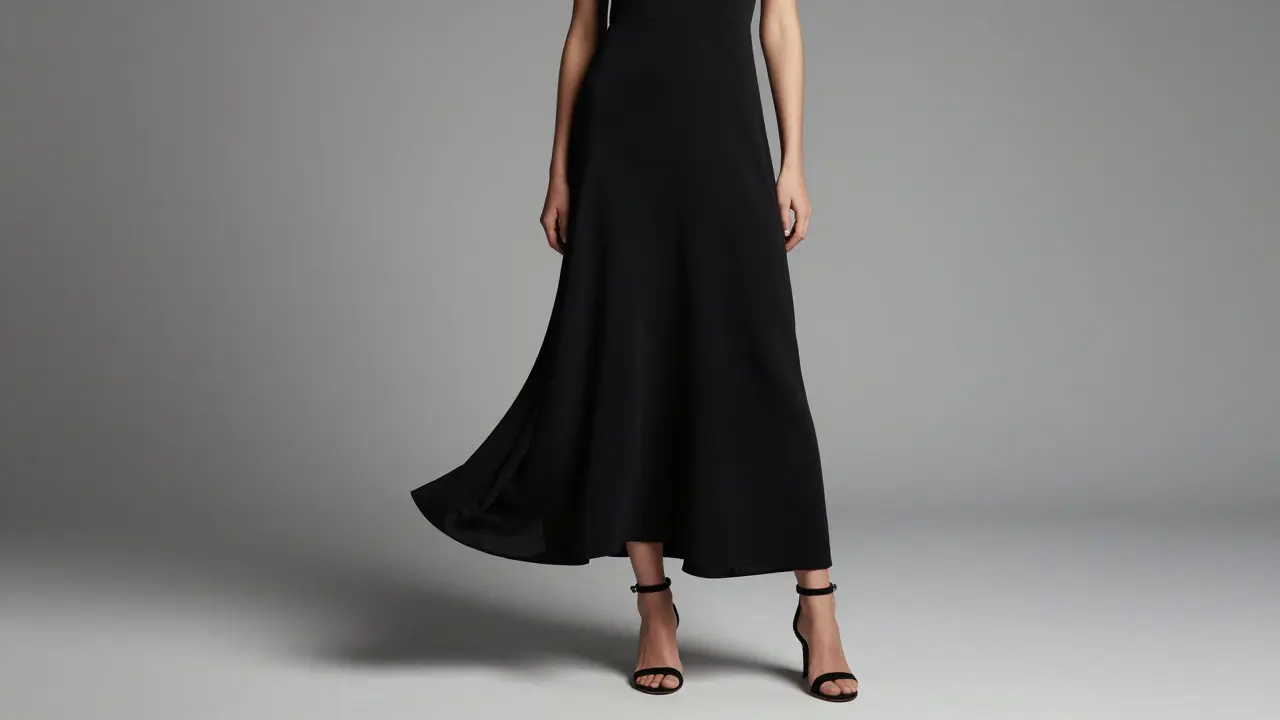
- Match Your Outfit: If you are wearing a monochromatic look-say, an all-black dress or black jeans-black ankle straps will blend in. The eye won’t stop at the ankle because there is no sharp contrast to signal a break in the line.
- Avoid High Contrast at the Calf: If your strap is high up on the calf, avoid pairing it with shorts or skirts that end right above the strap. This sandwiches your calf between two horizontal lines (the hemline and the strap), making it look even shorter and wider.
Think of your outfit as a canvas. You want the background (your legs) to be as uninterrupted as possible. Straps act as foreground elements. If they stand out too much, they dominate the composition. If they recede, they support the overall shape.
Shoe Style Matters: Heels vs. Flats
The type of shoe you wear changes how the ankle strap functions. A high heel footwear with an elevated rear sole that alters posture and leg angle naturally stretches the calf muscle and raises the arch, which already contributes to a longer-looking leg. Adding an ankle strap to a heel requires more caution because the heel itself is doing a lot of the heavy lifting for elongation.
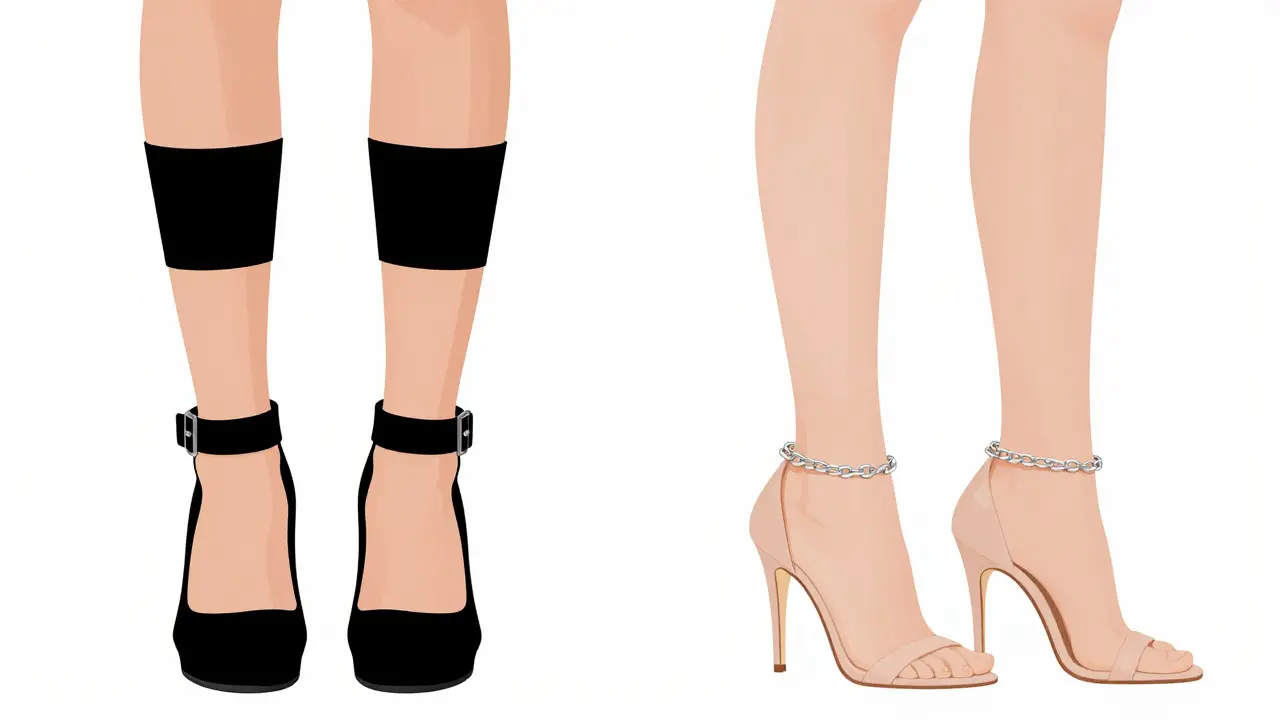
With heels, the strap can sometimes counteract the lengthening effect if it is too bulky. Look for thin, delicate straps on heels. Thick, wide straps add visual weight and bulk to the ankle area. A thin chain or a slim leather band is much more flattering than a wide, padded cuff.
Flats and loafers tell a different story. With flats, your foot is parallel to the ground, so the leg line is less stretched. Here, an ankle strap can actually help define the ankle if placed correctly. However, avoid chunky platform soles with high ankle straps. Platforms add height but also bulk. If you combine a thick platform with a high, wide strap, you risk looking like you are wearing snow boots rather than stylish footwear. Stick to low-profile soles with minimal hardware for the best results.
| Feature | Leg-Lengthening Effect | Why It Works (or Doesn't) |
|---|---|---|
| Thin Strap at Ankle Bone | High | Emphasizes the narrowest point; minimal visual interruption. |
| Wide Strap Above Calf | Low/Negative | Cuts off the leg at its widest point; adds bulk. |
| Nude/Skin-Tone Strap | Very High | Blends with skin, creating an unbroken vertical line. |
| High-Contrast Black Strap | Medium/Low | Creates a hard stop for the eye unless matched with black clothing. |
| Chain Strap | High | Allows skin to show through; less solid visual blockage. |
Hemlines and the Horizontal Line Rule
You cannot talk about ankle straps without talking about what you are wearing on top. The interaction between your skirt or pant hem and the shoe strap is critical. If you wear a mini-skirt that ends mid-thigh and an ankle strap that sits high on the calf, you have created two strong horizontal lines framing your calf. This is known as the "framing effect," and it magnifies the space between the lines-in this case, your lower leg.
To combat this, follow these pairing guidelines:
- Maxi Skirts/Dresses: These are your best friends. A long hemline covers the calf entirely, so the ankle strap becomes a subtle detail rather than a structural element. The focus remains on the vertical flow of the fabric.
- Midi Skirts: Be careful here. If the skirt ends right where the strap begins, you create a double-barrier effect. Opt for midi lengths that fall below the knee, allowing the strap to sit isolated at the ankle.
- Shorts: Avoid very short shorts with high ankle straps. Instead, choose slightly longer shorts or capris that taper toward the ankle, guiding the eye down to the narrow strap at the bone.
- Pants: Cropped pants can work if they end above the ankle bone, exposing the slimmest part of your leg before the strap. Wide-leg trousers that skim over the shoe hide the strap entirely, neutralizing its impact.
The key is to avoid competing horizontal lines. If the shoe has a strong horizontal element (the strap), keep the rest of your lower half simple and vertical.
Material and Texture Considerations
Beyond color and placement, the material of the strap plays a role in visual weight. Shiny materials like patent leather reflect light, which can make them stand out more. Matte finishes absorb light and tend to recede visually. If you are worried about a strap being too noticeable, opt for matte leather or suede.
Additionally, consider the hardware. Large, ornate buckles draw the eye. Small, discreet clasps or elastic bands are less intrusive. Elastic straps are particularly forgiving because they conform to the shape of your ankle without adding rigid structure. They hug the bone closely, ensuring the "sweet spot" placement stays accurate even as you move.
Texture also matters. Embossed patterns or thick stitching add dimension and bulk. Smooth, flat surfaces are sleeker and take up less visual space. When in doubt, simplicity wins. A plain, thin strap is almost always more flattering than a decorative, wide one.
Practical Tips for Shopping and Styling
Now that you know the theory, how do you apply this in the real world? Here are some actionable steps to take next time you are shopping or getting dressed:
- Try Before You Buy: Never buy ankle-strap shoes online without checking reviews for photos. See how the strap sits on real feet. Look for comments mentioning "cuts into calf" or "flattering fit."
- Adjust the Fit: Many ankle straps are adjustable. Don't leave them loose. Tighten them until they sit securely on the ankle bone. Loose straps slide up during walking, landing in the dreaded calf zone.
- Use Fashion Tape: If you have a favorite pair that sits slightly too high, you can use double-sided fashion tape to adhere the strap closer to your skin, pulling it down toward the bone. This is a quick fix for special occasions.
- Consider Customization: For expensive pairs, a cobbler can often move the position of the strap or replace a wide strap with a thinner one. It’s worth the investment if you love the shoe but hate the silhouette.
- Test in Natural Light: Store lighting can be deceptive. Check your reflection in a window or outside. Natural light shows true contrast and how the strap interacts with your skin tone and outfit.
Remember, these are guidelines, not strict laws. Fashion is personal. If you love a bold, high-contrast look, wear it with confidence. But knowing these principles gives you the power to choose when to break the rules and when to follow them for the most flattering effect.
Common Mistakes to Avoid
Even with the best intentions, it is easy to slip up. Here are the most frequent errors people make with ankle straps:
- Ignoring Proportion: Wearing a tiny, delicate strap with a massive, bulky bootie. The scale is off, and the strap gets lost or looks awkward. Match the strap thickness to the shoe's overall volume.
- Over-accessorizing the Ankle: Adding an anklet under an ankle strap creates clutter. Pick one focal point. Either the strap or the jewelry, not both.
- Wrong Sock Choice: If you must wear socks with open-toe or strappy shoes, ensure the sock color matches the strap or the shoe. White athletic socks with formal ankle-strap heels create a jarring break in the line.
- Focusing Only on Height: Sometimes we prioritize heel height over strap placement. A 4-inch heel with a poorly placed strap will look worse than a 2-inch heel with a perfectly placed strap. Prioritize the line over the lift.
By avoiding these pitfalls, you can ensure that your footwear enhances your natural proportions rather than fighting against them.
Do ankle straps really make legs look shorter?
Yes, if they are placed incorrectly. Ankle straps that sit high on the calf create a horizontal line across the widest part of the lower leg, which visually cuts off length. However, straps placed precisely at the ankle bone can emphasize the narrowest part of the leg, creating a lengthening effect.
What is the best color for an ankle strap to lengthen legs?
Nude or skin-tone shades are the most effective because they blend with your skin, creating an unbroken vertical line. Alternatively, matching the strap color to your outfit (e.g., black strap with black pants) prevents visual interruption.
Can I wear ankle straps with shorts?
You can, but be cautious. Avoid pairing high ankle straps with very short shorts, as this frames the calf. Opt for slightly longer shorts or ensure the strap sits low at the ankle bone to minimize the shortening effect.
Are thin straps better than thick ones?
Generally, yes. Thin straps create less visual weight and interruption. Thick straps add bulk to the ankle area, which can make the lower leg appear heavier. Delicate chains or slim leather bands are the most flattering options.
How tight should an ankle strap be?
It should be snug enough to stay in place at the ankle bone without digging into the skin. Loose straps tend to slide up onto the calf during walking, which ruins the lengthening effect. Adjust them before you leave the house.