

Walking into an art opening shouldn’t feel like you’re wearing a costume-or worse, like you’re underdressed for a job interview. The vibe is casual but intentional, elevated but not stiff. You want to look like you belong among the canvases, not like you raided your cousin’s wedding guest closet. The right outfit doesn’t scream "I’m here for the free wine"-it whispers, "I get this art."
What Makes an Outfit Gallery-Appropriate?
There’s no official dress code for art openings, but there are unspoken rules. Think of it as a hybrid: part urban explorer, part minimalist curator. You’re not here to outshine the art. You’re here to move through it with quiet confidence.Gallery spaces are often cold-high ceilings, concrete floors, dim lighting. Your outfit needs to work in that environment. Too much fabric? You’ll sweat. Too little? You’ll shiver. Too many accessories? You’ll look like a walking art installation. The goal is balance: texture over pattern, structure over looseness, and a single bold element that ties you to the space without competing with it.
Look around at the crowd. You’ll see tailored trousers with a silk camisole. A long wool coat over a black turtleneck. A structured blazer with wide-leg jeans. Minimalist jewelry-maybe a single geometric earring or a thin chain. No logos. No flip-flops. No athletic wear, even if it’s "elevated athleisure." That’s not the vibe.
Core Elements of a Gallery-Ready Outfit
Forget trends. Focus on foundation pieces that work every time. Here’s what actually matters:
- Neutral base: Black, navy, charcoal, cream, or taupe. These colors disappear in the background, letting the art take center stage-and letting your silhouette stand out cleanly.
- Textured fabrics: Wool, linen, silk, cashmere, or raw denim. Texture adds depth without color. A ribbed knit, a slightly slubbed cotton, or a brushed wool coat all say "thoughtful" without saying a word.
- One statement piece: A sculptural handbag, a pair of angular sunglasses, a bold ring, or a pair of standout boots. This is your only permission to be loud. One thing. Not three.
- Footwear that moves: You’ll be standing for hours, walking between rooms, maybe even stepping over spilled wine. Choose sleek loafers, ankle boots with low heels, or minimalist sneakers in black or white. No sandals. No high stilettos that sink into hardwood floors.
- Layering that works: A longline coat, a draped shawl, or a cropped jacket. Layers give you flexibility as you move from a chilly lobby to a warm gallery space.
What to Avoid at All Costs
Some outfits scream "I Googled "art gallery outfit" five minutes ago." Here’s what not to wear:
- White clothes: Seriously. Even if you think it’s "clean" or "minimal," white gets stained by wine, coffee, or charcoal dust from the artist’s hands. Black, navy, or gray are safer.
- Over-accessorizing: Three necklaces? A hat? A belt with a giant buckle? You’re not the exhibit. Keep it to one or two pieces max.
- Brand-heavy pieces: No visible logos, no giant monograms. This isn’t a runway show. The art is the brand.
- Too-trendy items: Y2K miniskirts, cargo pants with 12 pockets, or neon sneakers. They date you faster than the artist’s 2018 Instagram post.
- Matching sets: A full suit or coordinated dress-and-jacket set feels like you’re trying too hard. Break it up. Mix textures. Let your outfit feel curated, not bought from one aisle.
Real Outfits That Actually Work
Let’s get specific. Here are three real combinations that have worked at openings in Brooklyn, Chicago, and LA this year:
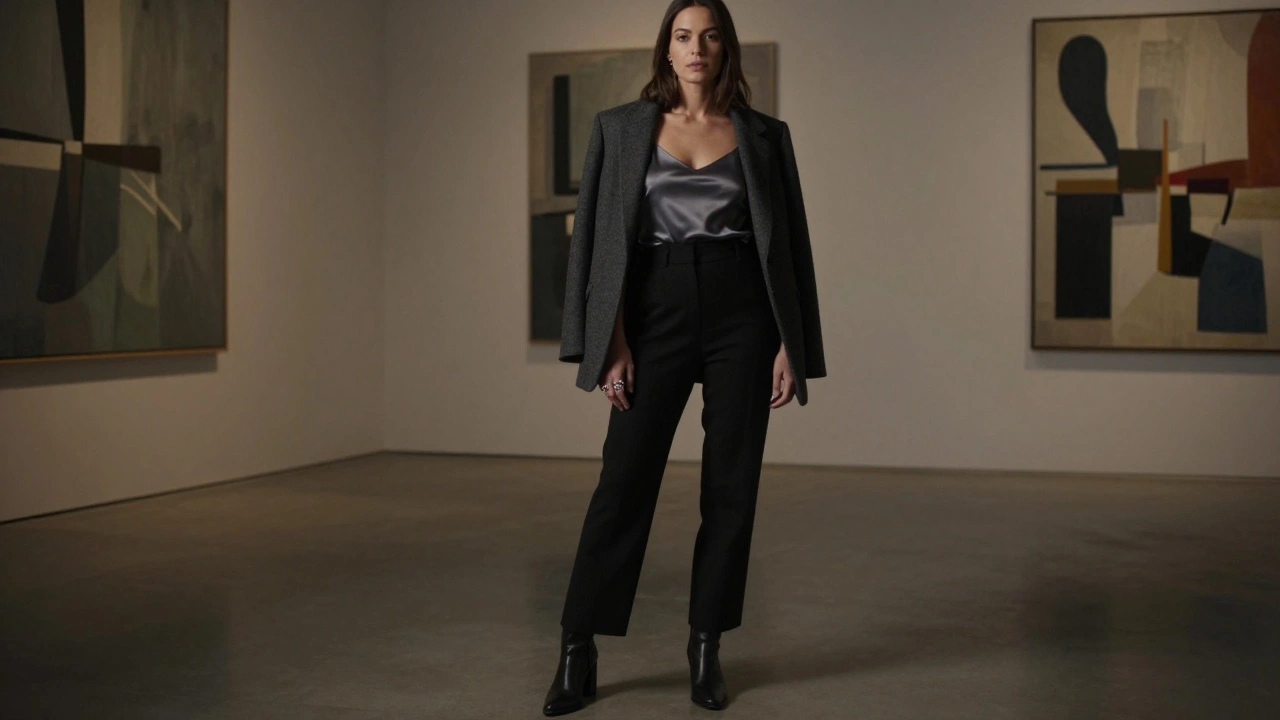
- Black high-waisted wool trousers + slim silk camisole + oversized charcoal blazer + black leather ankle boots + one chunky silver ring. Add a small structured clutch. No coat needed unless it’s freezing outside.
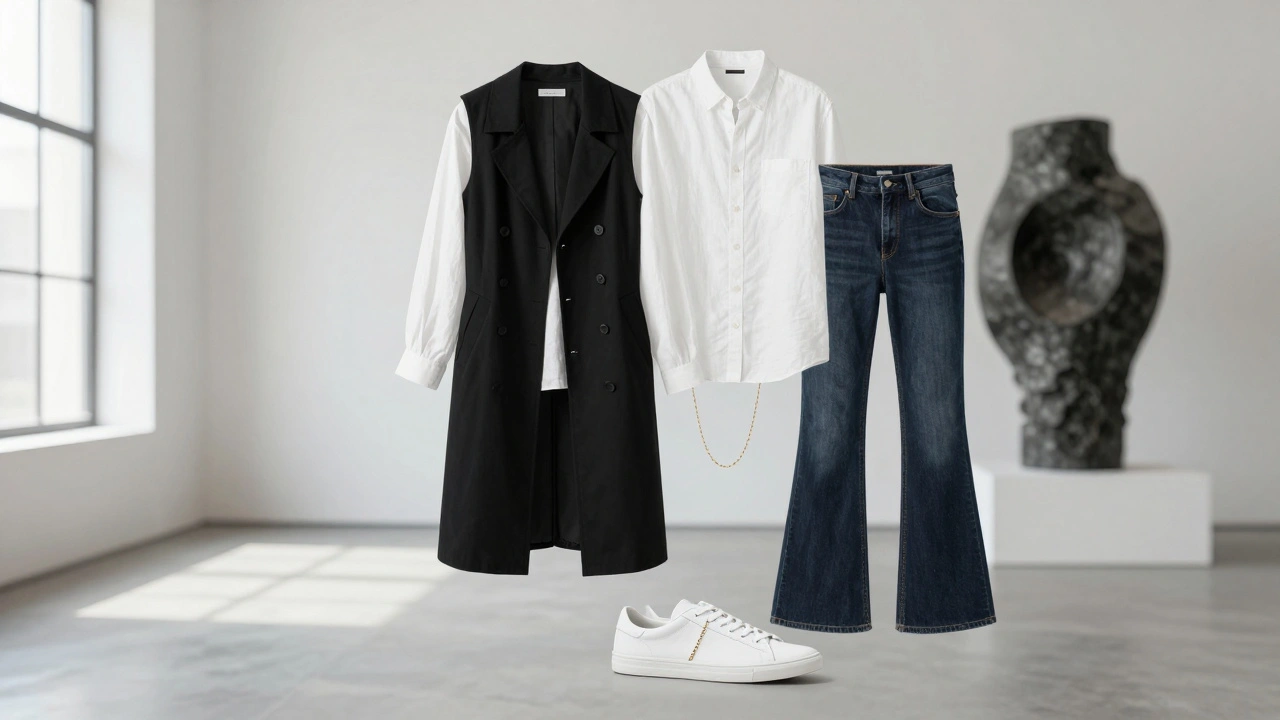
- Dark denim with a slight flare + white linen button-down (tucked, sleeves rolled) + long black vest (unbuttoned) + white low-top leather sneakers + thin gold chain. Looks casual but intentional. Perfect for indie galleries.
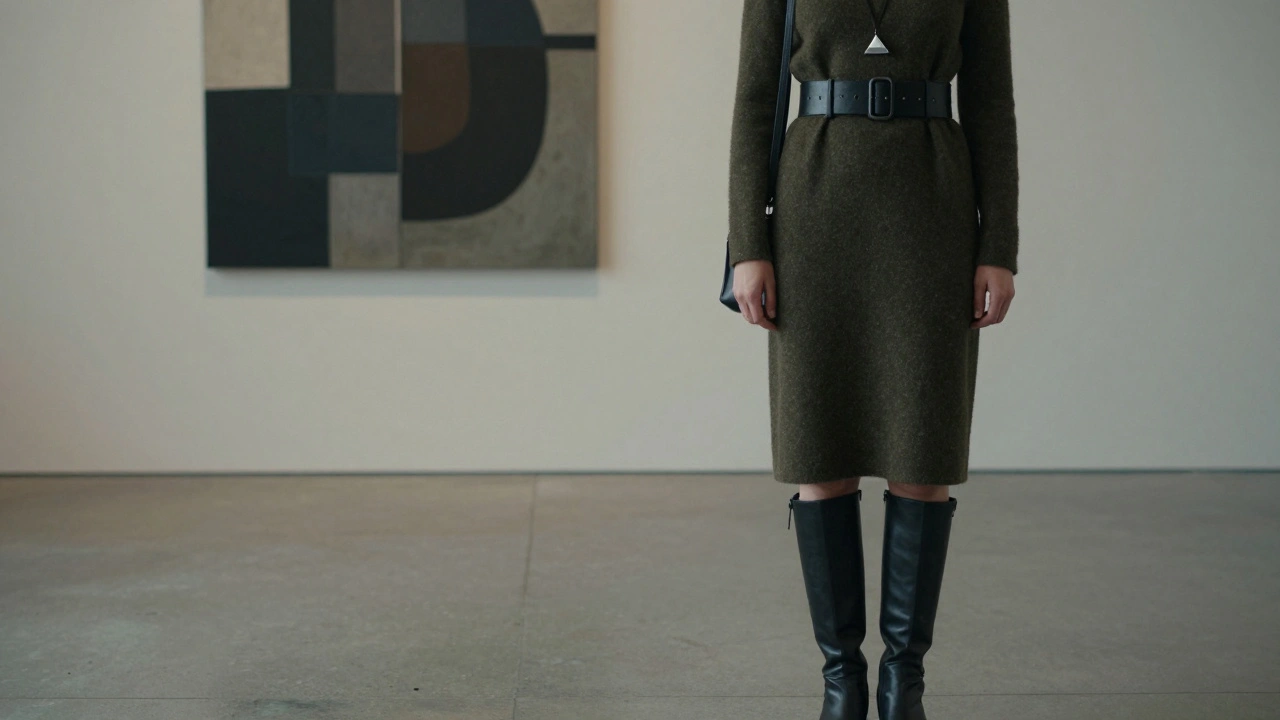
- Mid-length wool dress (in deep olive or slate) + structured leather belt at the waist + black knee-high boots + small crossbody bag + one geometric earring. No jacket. No extra layers. Just quiet confidence.
Notice what’s missing? No prints. No ruffles. No sequins. No visible logos. No mismatched socks. The focus is on shape, fabric, and restraint.
How to Adjust for Different Types of Galleries
Not all art spaces are the same. A downtown SoHo gallery isn’t the same as a warehouse show in Detroit or a nonprofit space in Portland.
- High-end commercial galleries: Lean into tailoring. Think wool, silk, minimal jewelry. Dark tones. Polished shoes. This is where you can wear a trench coat or a tailored midi dress.
- Indie or artist-run spaces: You can be more relaxed. Dark jeans, a vintage tee under a blazer, or a secondhand leather jacket. Still no sneakers with socks. Still no logos.
- Museum openings: Slightly more formal. A midi dress, a turtleneck with wide-leg pants, or a long coat. Avoid anything too edgy. Think "art historian meets modernist."
- Outdoor or pop-up shows: Weather matters. Bring a coat. Wear boots. Layer up. A wool scarf or a structured cape works better than a puffer jacket.
Accessories That Elevate, Not Distract
Accessories are your secret weapon. But only if you use them wisely.
Choose one standout piece and leave the rest quiet. A sculptural ring from a local artist. A vintage brooch pinned to your lapel. A single long pendant. A minimalist watch with a leather strap. A small, structured bag in black or tan.
Forget statement necklaces unless they’re truly unique-like a hand-cast resin piece from the artist themselves. Even then, wear it with a simple top. Don’t stack it with earrings and a bracelet. One element. One moment.
Shoes matter more than you think. A pair of black leather loafers with a slight block heel? Perfect. White sneakers? Only if they’re clean, minimalist, and all leather. No mesh, no neon laces, no logos.
What to Bring (Besides Your Outfit)
Art openings aren’t just about what you wear-they’re about how you move through the space. Pack these essentials:
- A small clutch or crossbody bag (big enough for your phone, wallet, lipstick, and a business card if you’re networking).
- Portable breath mint or gum. No one wants to smell garlic or coffee at 8 p.m. in a quiet gallery.
- A small handkerchief or tissue. Wine spills happen. Paper towels aren’t always available.
- Comfortable insoles. You’ll be standing for hours. Don’t wait until your feet ache to regret your choices.
Why This Matters Beyond the Outfit
Wearing the right thing isn’t about impressing strangers. It’s about respecting the artist’s work-and your own presence in the space. When you dress with intention, you signal that you’re there to engage, not just to be seen.
Art openings are where ideas are born. They’re where collectors, curators, and creators connect. If you look like you’re trying too hard, you’ll blend into the background. If you look like you belong, people will stop and talk to you. And that’s how relationships start.
It’s not about being trendy. It’s about being present. The art doesn’t need you to scream. It just needs you to show up-quietly, clearly, and with care.
Can I wear white to an art opening?
It’s not recommended. White shows stains easily-from wine, coffee, or even dust from art materials. Stick to black, navy, gray, or cream. They’re safer, more forgiving, and still look intentional.
Are sneakers okay at art openings?
Only if they’re clean, minimalist, and made of leather or canvas-no logos, no neon, no mesh. Think Common Projects or Axel Arigato. Avoid athletic sneakers with visible tech or bright colors. They signal casual, not curated.
Do I need to wear heels?
No. Heels aren’t required. In fact, many people wear loafers, ankle boots, or even sleek sneakers. Comfort matters more than height. You’ll be standing for hours. Choose shoes that let you move freely.
What if I don’t own any of these pieces?
You don’t need to buy new clothes. Look at what you already own. A black blazer, dark jeans, a silk top, or a wool coat can be repurposed. Swap accessories. Layer differently. Sometimes, all it takes is a new belt or a different pair of shoes to make an old outfit feel gallery-ready.
Is it okay to wear vintage or thrifted clothing?
Absolutely. Vintage pieces often have better texture, cut, and detail than fast fashion. A 90s wool coat, a 70s silk blouse, or a 60s leather belt can elevate your look and feel more authentic than something new. Just make sure it’s clean, fits well, and doesn’t overpower the space.


Write a comment