


Belt widths aren’t just about holding up your pants. They’re a silent style statement that can make or break your whole look. A too-thin belt on a pair of wide-leg trousers looks lost. A too-thick belt on slim chinos looks like you’re trying to carry a toolbox. The right width doesn’t just fit your waist-it fits your outfit.
What belt width means for your silhouette
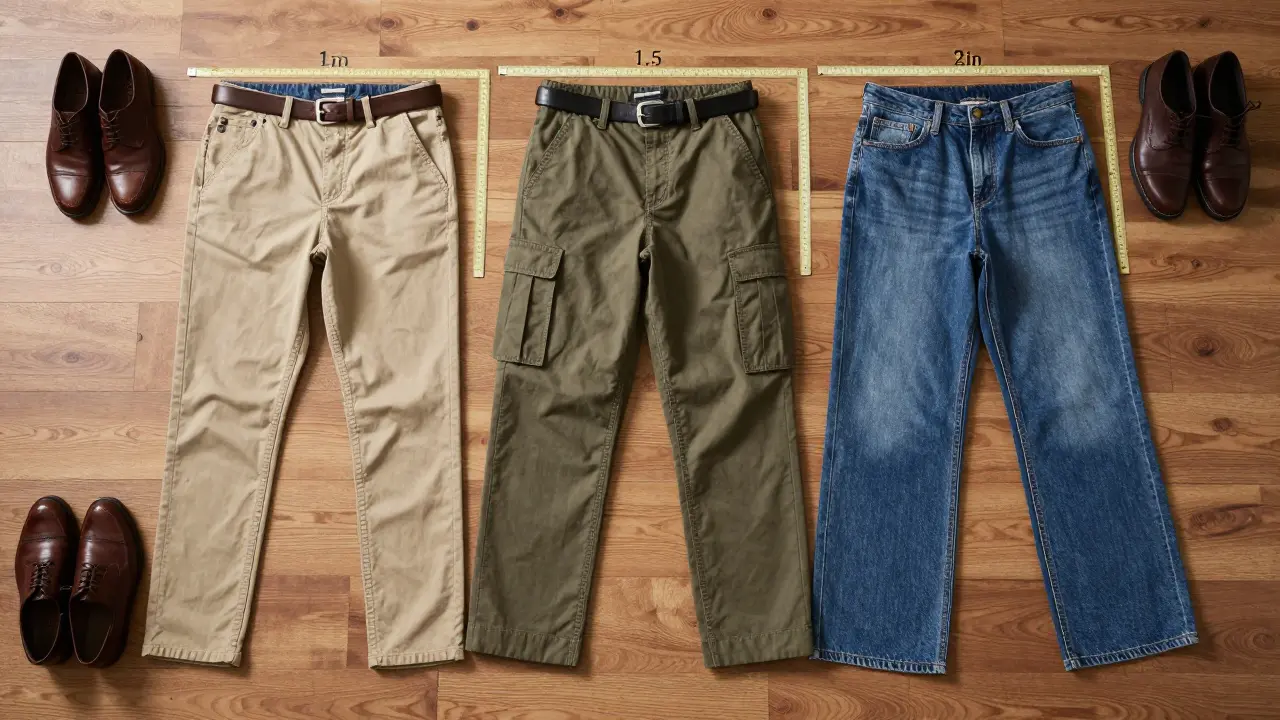
Belt width changes how your body is visually divided. A 1-inch belt (2.5 cm) draws attention to your waistline, making it appear narrower. That’s why it’s the go-to for dress pants and tailored suits. A 1.5-inch belt (3.8 cm) is the sweet spot for most everyday wear-jeans, chinos, casual trousers. It’s wide enough to look intentional, but not so wide it overwhelms.Then there’s the 2-inch belt (5 cm) and up. These are statement pieces. They’re not for everyday use unless you’re going for a bold, retro, or workwear-inspired look. Think 1970s denim, cargo pants, or heavy-duty boots. These belts anchor your look, not just hold your pants.
Here’s the truth: most people wear belts that are too wide or too narrow for their pants. It’s not about what’s trendy-it’s about proportion. If your belt is wider than the belt loops on your pants, it looks sloppy. If it’s thinner than the loops, it disappears.
Skinny belts: 0.75 to 1 inch
Skinny belts are the quiet achievers. They’re perfect for formal wear. Wear one with a tailored suit, a button-down shirt, and dress shoes. The narrow profile doesn’t compete with the clean lines of the suit. It tucks neatly into the waistband and keeps the focus on your jacket’s cut.They also work surprisingly well with high-waisted skirts and dresses. A 0.75-inch belt in black leather or woven fabric can define your waist without adding bulk. It’s especially effective with flowy silhouettes-think A-line dresses or linen pants-where you want structure without heaviness.
But don’t pair a skinny belt with wide-leg jeans or cargo pants. It looks like an afterthought. And avoid them with bulky sweaters or oversized jackets. The belt needs space to breathe. If your top is chunky, your belt should be too.
Wide belts: 1.5 inches and up
Wide belts are the opposite of invisible. They demand attention. A 1.5-inch belt is the most versatile wide option. It works with straight-leg jeans, utility trousers, and even some tailored trousers if you’re going for a modern, slightly rugged look. Brands like Belstaff and Filson popularized this width for workwear-inspired fashion.Go wider-2 inches or more-and you’re stepping into fashion territory. Think 1980s power dressing, cowboy belts, or the current wave of utilitarian streetwear. Wide belts on wide pants create balance. On a pair of baggy cargo pants, a 2.25-inch belt keeps them from looking like you’re wearing sackcloth.
They’re also great for cinching coats. A long trench coat or a wool peacoat looks sharper when you add a wide belt at the waist. It breaks up the vertical line and adds shape. This trick works whether you’re wearing it over a sweater or a suit.
But wide belts aren’t for everyone. If you have a shorter torso or a fuller midsection, a belt wider than 1.75 inches can make you look wider, not slimmer. Stick to the lower end of the range or avoid belts altogether in those cases.
Where to wear each width
- 0.75-1 inch: Formal suits, tailored trousers, high-waisted dresses, minimalist outfits.
- 1.25-1.5 inches: Everyday jeans, chinos, casual blazers, workwear-inspired pants.
- 1.75-2.25 inches: Cargo pants, wide-leg denim, trench coats, heavy boots, retro or streetwear looks.
- 2.5 inches and up: Western wear, festival outfits, costume styling-rare for daily use unless it’s intentional.
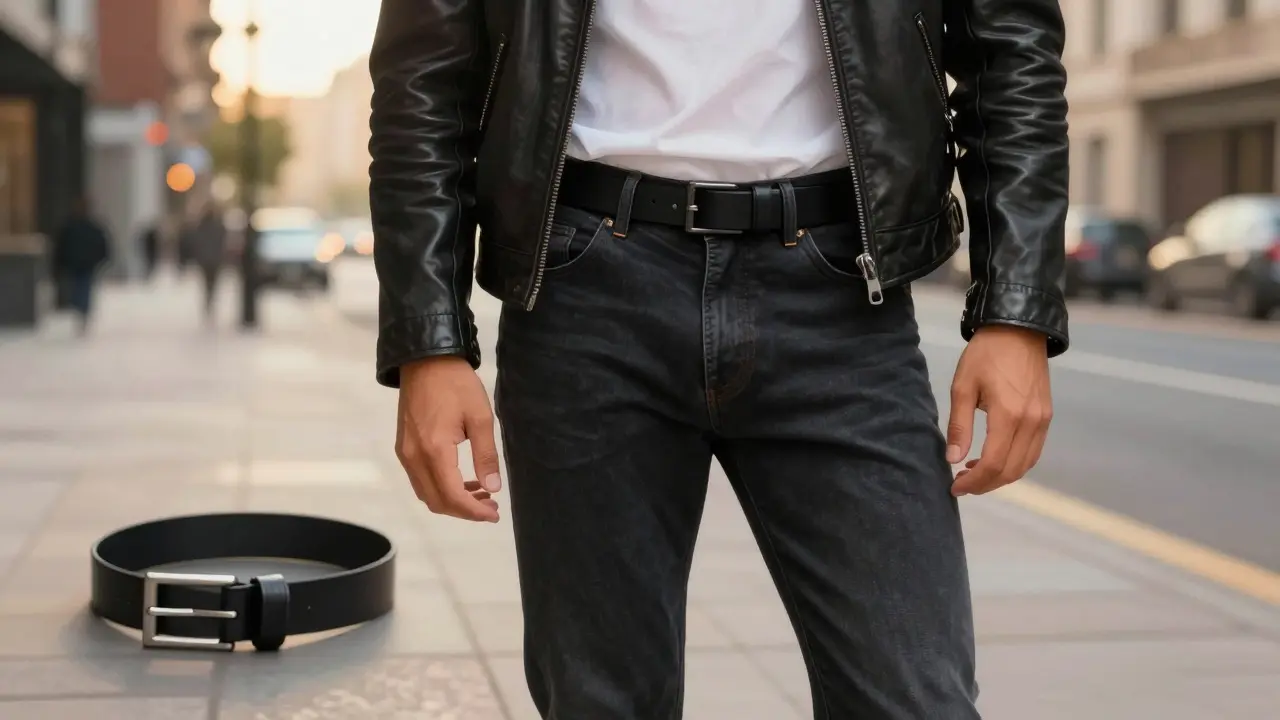
Here’s a real-world example: You’re wearing dark slim-fit jeans, a white tee, and a black leather jacket. A 1.25-inch belt in black matte finish ties it all together. Too thin? It vanishes. Too wide? It fights the jacket’s lines.
Another: You’ve got a navy wool blazer, beige linen pants, and loafers. A 1-inch brown belt in smooth leather adds polish without distraction. A 2-inch belt here would look like you’re trying to wear a horse bridle.
Material matters too
Belt width isn’t the only thing that matters-material plays a role. A thin belt made of stiff leather looks cheap. A wide belt made of soft suede looks sloppy. Match the material to the width.For skinny belts: Smooth, supple leather. Patent leather for formal events. Woven fabric for summer. Avoid bulky buckles-keep them slim and low-profile.
For wide belts: Sturdy full-grain leather. Tooling or embossing adds character. Buckles should be substantial-square, rectangular, or rounded metal. Avoid plastic or chrome on wide belts unless you’re going for a costume look.
Don’t pair a delicate silver buckle with a 2-inch belt. It looks like an afterthought. And don’t wear a heavy brass buckle with a 0.75-inch belt. It’s like putting a truck tire on a bicycle.
Common mistakes and how to fix them
- Mistake: Wearing a wide belt with skinny jeans. Fix: Stick to 1-1.25 inches. Or ditch the belt entirely.
- Mistake: Wearing a skinny belt with cargo pants. Fix: Use a 1.75-inch belt. If your pants have multiple loops, match the belt width to the widest loop.
- Mistake: Wearing a belt that’s too long. Fix: The belt should end at the second hole from the end when buckled. If it’s hanging past your hip, it’s too long.
- Mistake: Wearing a belt that doesn’t match your shoes. Fix: Leather belt color should match or complement your footwear. Black belt with black shoes. Brown with brown. Avoid mixing unless it’s intentional contrast.
One more thing: belts aren’t just for pants. Wear a 1.5-inch belt over a long sweater or tunic to create shape. It’s a trick fashion editors use to avoid looking shapeless. A belt can turn a bulky knit into a styled look.
What to buy next
If you only own one belt, make it a 1.25-inch black leather belt with a simple square buckle. It works with jeans, chinos, and even dress pants. It’s the most flexible tool in your wardrobe.If you’re building a belt collection, start with these three:
- 1-inch black smooth leather-formal and minimalist.
- 1.5-inch brown full-grain leather-everyday versatility.
- 2-inch black tooling leather-for rugged or statement looks.
Don’t buy five belts. Buy three that cover your needs. Quality matters more than quantity. A $40 well-made belt lasts longer than three $15 ones.
Final rule: Match the belt to the pants, not the trend
Trends come and go. Skinny belts were everywhere in 2015. Wide belts dominated 2023. But your body and your pants don’t change with the season.Look at your pants. Check the belt loops. Match the width to the loop width. Then match the color to your shoes. That’s it. No need to overthink it.
Wearing the right belt width doesn’t make you a fashion expert. It just makes you look put together. And that’s all anyone really notices.
Can I wear a wide belt with skinny jeans?
Technically, yes-but it rarely looks good. A wide belt on skinny jeans creates visual imbalance. Your legs look shorter, and the belt competes with the slim silhouette. Stick to a 1 to 1.25-inch belt, or skip it entirely. If you want to add style, try a subtle chain or a decorative buckle instead.
What belt width is best for a suit?
For a suit, always choose a 1-inch belt. It’s narrow enough to stay hidden under the jacket and doesn’t interrupt the clean lines of tailored clothing. Use smooth leather in black or dark brown, depending on your shoes. Avoid buckles with logos or heavy detailing-keep it simple.
Do belt widths vary by brand?
Yes. Some brands label belts inconsistently. A belt marked as "1.5 inches" might actually be 1.3 or 1.7. Always measure with a ruler if precision matters. For suits and formal wear, go by the actual measurement, not the tag. Most high-quality brands like Belstaff, Red Wing, or Hermès are accurate. Fast fashion brands often round up or down.
Can I wear a belt with shorts?
Only if the shorts have belt loops and you’re going for a casual, utilitarian look. Stick to 1-inch or smaller widths. Avoid wide belts-they make shorts look like they’re from a 1990s workout video. A thin woven belt in tan or navy works best with linen or cotton shorts.
Is there a belt width for plus-size men?
Yes, and it’s often wider than you think. A 1.5-inch belt can actually be more flattering than a skinny one because it distributes pressure evenly and avoids digging into the waist. Avoid belts wider than 2 inches unless you’re styling a specific look. Focus on fit: the belt should lie flat, not bunch or twist. Leather with some give works better than stiff material.
If you’re unsure what width to choose, start with a 1.25-inch belt in black or brown. It’s the most forgiving option. Once you know how it looks on your body, you can experiment with wider or narrower styles. But don’t chase trends-chase proportion.


Write a comment