

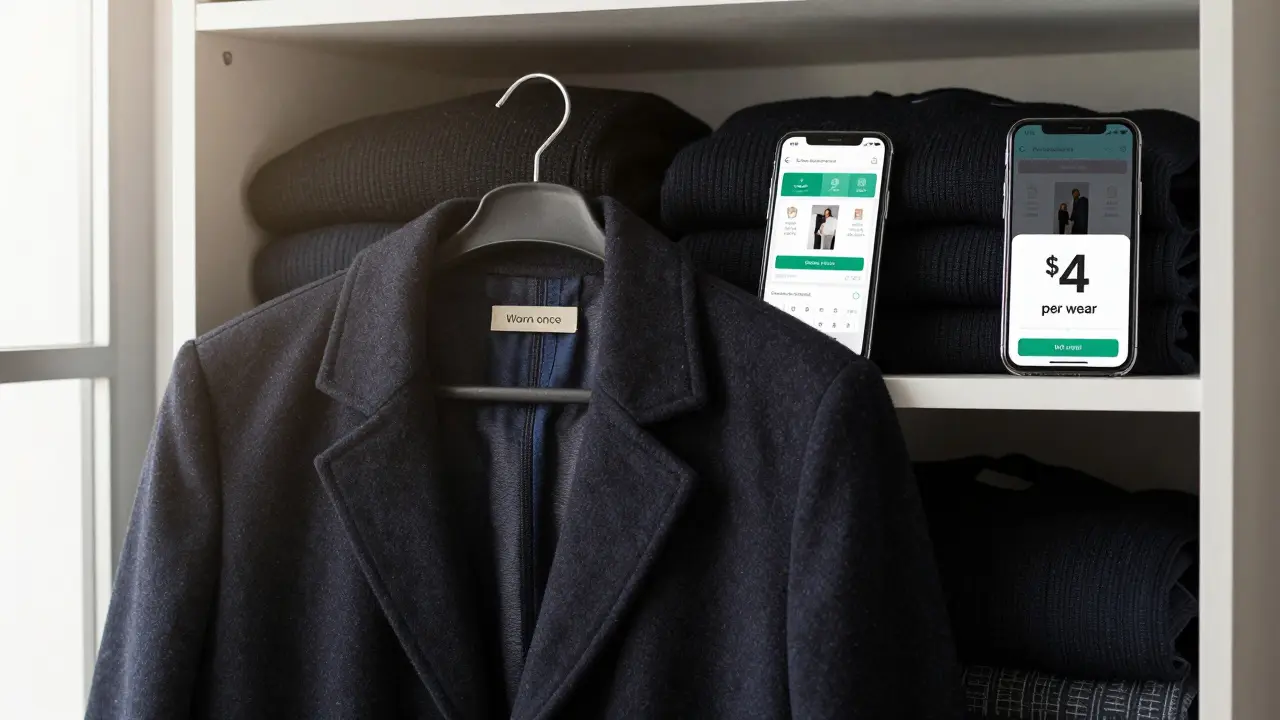
How many times have you bought a shirt, wore it once, and realized you already had three like it? Or bought boots because they were on sale, only to find they don’t match anything in your closet? If this sounds familiar, you’re not alone. Most people overspend on clothing without even realizing it. The average American spends over $1,700 a year on apparel, according to the U.S. Bureau of Labor Statistics. But here’s the twist: you don’t need to stop shopping-you just need to start tracking.
Why Your Wardrobe Needs a Budget
A budget isn’t just for rent or groceries. Your wardrobe is a financial asset, and like any asset, it needs management. Without tracking, you’re flying blind. You might think you’re saving by shopping sales, but if you’re buying things you don’t need, you’re just moving money around-wasting it.
Think of your closet like a bank account. Every item you buy is a deposit. But if you keep depositing without withdrawing (wearing), your balance gets cluttered. The goal isn’t to own less-it’s to own what you love and use. Budgeting apps for wardrobes help you do exactly that.
How These Apps Work
Wardrobe budgeting apps are built for one thing: helping you see what you own, what you spend, and what you actually wear. Unlike general finance apps like Mint or YNAB, these tools focus on clothing. They let you log each purchase, assign it to a category (like “work shirts” or “winter coats”), and track how often you wear it. Some even scan barcodes or pull data from your credit card to auto-log buys.
Here’s how a typical user’s journey looks:
- You download the app and take photos of every item in your closet.
- You tag each piece: brand, price, season, occasion.
- When you buy something new, you scan the receipt or enter the cost.
- The app reminds you: “You bought two black sweaters last month. You haven’t worn your navy one in 89 days.”
- At the end of the month, you see your total clothing spend and which items got the most use.
This isn’t about guilt. It’s about awareness. Once you see your spending patterns, you start making smarter choices.
Top 5 Budgeting Apps for Wardrobes in 2026
Not all apps are made equal. Some are clunky. Others ignore real-life needs. Here are the five that actually work for people living in cities like New York, where space is tight and style matters.
1. Cladwell
Cladwell is the OG of wardrobe budgeting. It started as a capsule wardrobe planner but now includes spending tracking. You upload your clothes, and the app builds a personalized wardrobe plan based on your lifestyle. It tells you what to wear each day and flags when you’re overbuying in a category. For example: “You’ve spent $420 on tops this quarter. You only wear 3 of them regularly.”
Best for: People who want a daily outfit guide and hate decision fatigue.
2. Stylebook
Stylebook is all about visuals. You take photos of your clothes, tag them with colors and occasions, and the app creates virtual outfits. It also tracks your spending by category and shows you a monthly report: “You spent $180 on shoes, but only wore 2 pairs.”
It syncs with your calendar. If you have a meeting on Friday, it suggests an outfit based on what you’ve worn before and what’s clean. No more last-minute panic.
3. My Wardrobe HD
My Wardrobe HD is simple, powerful, and ad-free. It’s been around since 2012 and still works like a charm. You can log purchases manually or import from Apple Wallet receipts. It calculates your cost per wear for each item. That’s right-cost per wear. If you paid $120 for a coat and wore it 30 times, that’s $4 per wear. Compare that to a $30 coat worn twice: $15 per wear. Suddenly, the expensive coat looks like the better deal.
Best for: Data lovers who want to see real numbers, not just vibes.
4. Clutch
Clutch is newer but growing fast. It uses AI to analyze your photos and guess what you own. No manual tagging needed. Just snap a picture of your closet, and it sorts everything. It also links to your bank account (with permission) and flags suspicious spending. “You bought three identical jeans in two weeks. Are you sure you need another?”
It’s especially useful if you have a messy closet. You don’t need to be perfect-just consistent.
5. Trunk Club (by Nordstrom)
Wait-Trunk Club? Isn’t that a styling service? Yes. But here’s the trick: after each box, you get a detailed spending report. It shows you how much you spent, what you kept, and what you returned. Over time, you learn what fits, what colors suit you, and what you keep buying and returning.
It’s not a tracker by design, but if you use the service even once a quarter, you get free insights into your buying habits. For people who rely on professional styling, this is gold.

What to Track (and What to Ignore)
Not every purchase matters. Here’s what you should track:
- Price of each item
- Category (tops, bottoms, shoes, outerwear)
- When you bought it
- How many times you wore it (estimate or log it)
Here’s what you can skip:
- Brand names (unless you’re tracking luxury spending)
- Store names (unless you’re comparing shopping habits)
- Color (unless you’re trying to fix a color imbalance)
Why? Because tracking too much leads to burnout. The goal is clarity, not perfection.
Real Results: One Month, One User
Lena, 32, lives in Brooklyn. She used to spend $200 a month on clothes. She downloaded My Wardrobe HD and logged everything for 30 days.
Here’s what she found:
- She bought 11 tops. Only 3 got worn more than twice.
- She spent $420 on shoes. Three pairs accounted for 80% of her wear.
- She hadn’t worn her black blazer in 11 months-yet kept buying similar ones.
She stopped buying for 60 days. Instead, she mixed and matched what she had. She rediscovered pieces she forgot about. At the end of two months, she spent $47 total on clothing. Not because she was deprived-but because she finally saw what she already owned.

How to Start Today
You don’t need to overhaul your closet. Start small.
- Pick one app from the list above. Cladwell or My Wardrobe HD are easiest to start with.
- Take 20 minutes today and photograph 10 items you wear often.
- Log the last three purchases you made. Enter the price and date.
- Set a monthly clothing budget. Try $75 for the first month. Just to test.
- At the end of the month, check your report. Did you stick to it? What surprised you?
That’s it. No need to be perfect. Just consistent.
Common Mistakes (and How to Avoid Them)
People try these apps. Then quit. Here’s why-and how to fix it.
- Mistake: You log everything once, then forget. Solution: Set a weekly 5-minute reminder. “What did I buy this week?”
- Mistake: You feel guilty when you overspend. Solution: Reframe it. This isn’t about punishment-it’s about insight. Every over-spend tells you something about your habits.
- Mistake: You think you need to buy less. Solution: You don’t. You need to buy better. Focus on cost per wear, not total items.
What Comes Next
Once you’ve tracked for three months, you’ll start noticing patterns. Maybe you always buy when you’re stressed. Maybe you overbuy in one color. Maybe you keep buying jeans that don’t fit because they’re on sale.
That’s when you shift from tracking to planning. You’ll start saying no to sales. You’ll wait 48 hours before buying. You’ll ask: “Does this fit my current style? Do I have something similar? Will I wear this at least 10 times?”
That’s not frugality. That’s style intelligence.
Do budgeting apps for wardrobes really work?
Yes-if you use them consistently. Apps like Cladwell and My Wardrobe HD have helped users cut clothing spending by 40-60% within three months. The key isn’t the app-it’s the habit of reviewing your spending and asking, "Do I really need this?" The data doesn’t lie.
Can I use a regular budgeting app like Mint for my wardrobe?
You can, but it’s not ideal. Mint and YNAB treat clothing as a single category. They won’t tell you that you bought five black turtlenecks and never wore one. Wardrobe-specific apps track wear frequency, fit, and style relevance-something general apps can’t do.
Are these apps free?
Most have free versions with basic tracking. Cladwell and Stylebook offer free plans with photo logging and category tagging. My Wardrobe HD is free with no ads. Premium plans ($3-$8/month) unlock spending reports, AI outfit suggestions, and syncing with your bank. For most people, the free version is enough to start.
What if I don’t take photos of my clothes?
You don’t need to. Apps like Clutch and Trunk Club let you log purchases manually. You can just enter the item, price, and date. The real value comes from tracking spending and reflecting on what you wear-not from having perfect photos.
How long until I see results?
Most users notice changes in 30 days. You’ll start seeing patterns: which items you ignore, which sales you fall for, which colors you avoid. After 90 days, spending typically drops 30-50%. The real win? You stop feeling overwhelmed by your closet.


Write a comment