

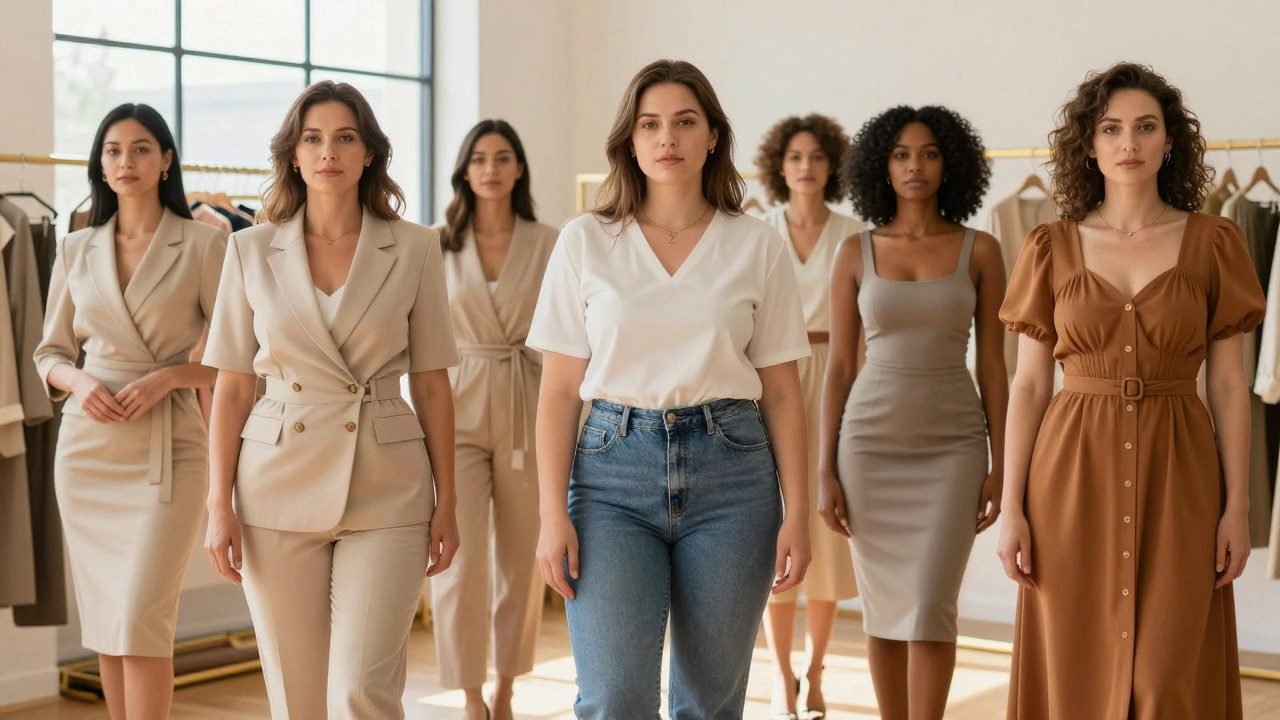
Most clothing brands still act like there are only two body types: standard and plus. But if you’re under 5’3" and need more fabric in the torso, or you’re 5’10" and can’t find pants that don’t look like capris, you know that’s not true. The fashion industry is slowly waking up to the fact that bodies come in more shapes and sizes than a size chart can capture. That’s where petite-plus, tall-plus, and other specialized categories are making real difference-not just as marketing buzzwords, but as actual solutions for people who’ve been ignored for decades.
What Petite-Plus Really Means (And Why It’s Not Just ‘Petite’ + ‘Plus’)
Petite-plus isn’t a size. It’s a fit system. It’s designed for people who are both shorter in stature and carry weight in ways that standard petite sizing doesn’t account for. Most petite lines are made for women under 5’4" with shorter torsos, narrower shoulders, and arms that don’t drag. But if you’re a size 16 and 5’2", you’re stuck. A regular petite size 16 might fit your arms and legs, but the waist will sit too high, the sleeves will be too long, and the jacket will pool at your hips like a tent.
Petite-plus solves that. Brands like Eileen Fisher, Universal Standard, and Lane Bryant’s Curvy Petite line cut their patterns with a shorter rise, adjusted shoulder seams, and proportionally shorter sleeves-while keeping the fullness in the hips and bust that plus-size bodies need. It’s not just shrinking a plus-size pattern. It’s rebuilding it from the ground up. A 2024 survey by the Inclusive Fashion Coalition found that 68% of women who identified as petite-plus had given up on shopping online because standard sizes simply didn’t work. Those who switched to true petite-plus brands reported a 72% increase in satisfaction with fit.
Tall-Plus: When You’re Long and Curvy
Tall-plus is even rarer. You might think being tall means you have more fabric to work with, but that’s not how it works. Tall women often have longer torsos, longer limbs, and higher waistlines. When you add curves to that, most tall lines fall apart. A regular tall size 18 might have the length you need, but the bust and hip measurements will be too tight. And if you try a regular plus-size pant, the inseam might be 30"-which means your ankles are bare, and the fabric bunches at your knees.
Tall-plus brands like Torrid’s Tall Collection, ASOS Tall Plus, and Dia & Co’s Tall+ line fix this by extending the torso by 2-4 inches, lengthening inseams to 32-34", and adjusting armholes so they don’t ride up when you reach. One customer, a 5’11" size 20 from Ohio, told a fashion blog: “I wore the same pair of jeans for five years because I couldn’t find anything else that didn’t look like I was wearing my grandma’s pants.” Now, she owns four pairs from a tall-plus line-and they fit her waist, hips, and legs without a single alteration.
The Hidden Categories Nobody Talks About
It’s not just petite-plus and tall-plus. There are other specialized fits that are quietly changing the game:
- Full-bust plus: Designed for women with D+ cup sizes who need more room in the chest without excess fabric in the waist. Brands like Elila and Curvy Kate specialize in this.
- Maternity plus: Not just stretchy fabric. These are cut with room for growing bellies, adjustable waistbands, and nursing access-without looking like a hospital gown. Seraphine and H&M’s maternity plus line have led here.
- High-waisted plus: For people who carry weight around the midsection and need waistbands that sit above the hips, not on them. This isn’t just a trend-it’s a functional need. Brands like Good American and Universal Standard build their entire silhouettes around this.
- Curvy athletic: Designed for women with curves who work out. Regular athletic wear either gapes at the hips or digs into the thighs. Brands like Fabletics’ Curvy Fit and Girlfriend Collective’s Plus line use compression panels and gussets to keep everything in place during movement.
These aren’t niche products. They’re necessities. The 2025 Body Positivity Index found that 74% of women who wear sizes 16 and up have altered clothing at least once in the past year-mostly because nothing fit right. That’s not a fashion problem. That’s a design failure.
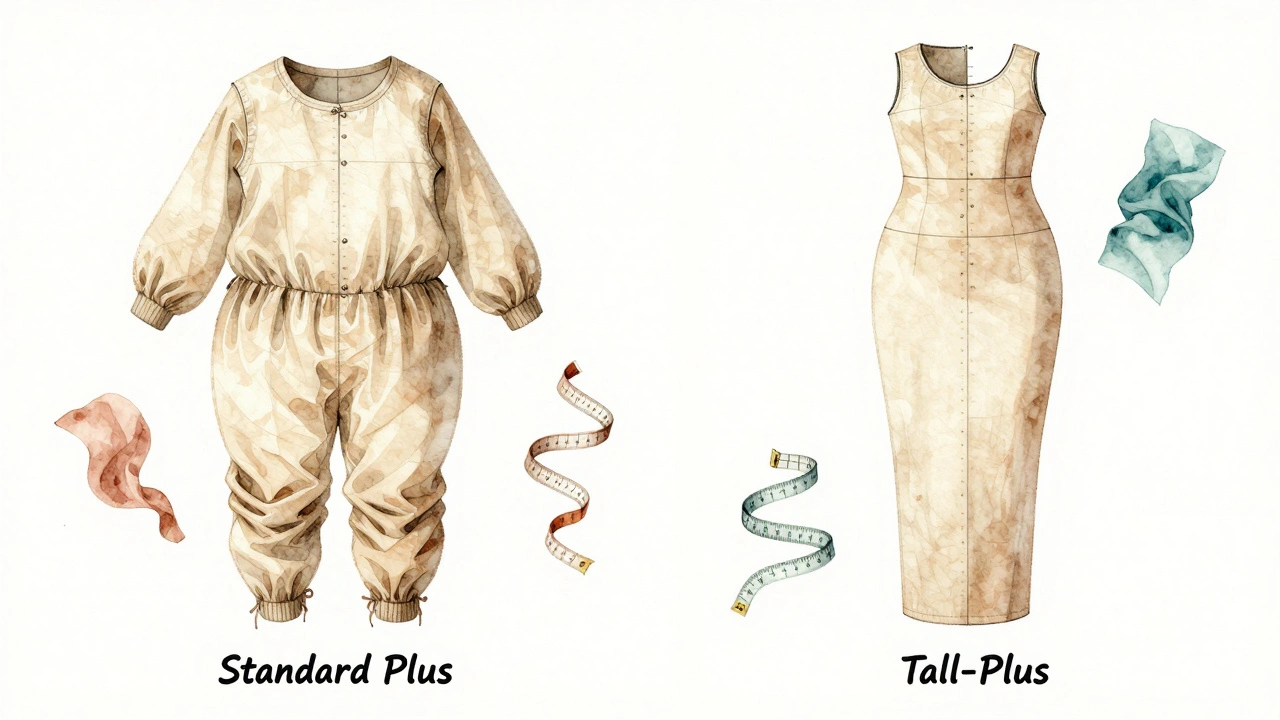
Why Standard Sizing Still Fails Everyone
Most brands still use a single pattern block and scale it up or down. That’s like taking a small car and stretching it into an SUV. The wheelbase doesn’t change. The suspension doesn’t adjust. The result? Poor handling.
True inclusive sizing isn’t about adding more sizes. It’s about building multiple fit systems. A size 18 for a 5’4" woman is not the same as a size 18 for a 5’10" woman. Their proportions are different. Their center of gravity is different. Their movement patterns are different. And yet, most brands treat them as identical.
Even when brands claim to be “inclusive,” they often just add a few extra sizes to the same pattern. That’s not inclusion. That’s tokenism. Real inclusion means re-engineering patterns for specific body types. It means hiring pattern makers who actually wear the sizes they’re designing for. It means testing garments on real people-not just mannequins.
How to Find the Right Fit-Without Wasting Time
If you’re tired of returns and disappointed fits, here’s how to cut through the noise:
- Know your measurements: Don’t rely on size labels. Measure your bust, waist, hips, torso length, and inseam. Write them down. Use a tape measure, not your phone’s ruler app.
- Look for fit descriptors, not just sizes: Search for “petite-plus,” “tall-plus,” “full-bust,” or “high-waisted plus.” These terms matter more than the number.
- Check the model’s stats: If a brand shows a model wearing a size 18, look for her height and measurements. If she’s 5’8" and you’re 5’2", that photo means nothing to you.
- Use fit filters: Sites like ASOS, Nordstrom, and Dia & Co let you filter by height, bust, and waist. Use them.
- Read reviews with measurements: Look for comments like “I’m 5’10", size 20, and these fit perfectly” or “I’m 5’1", size 16, and the sleeves were too long.” Real people give real info.
It takes more time upfront, but you’ll save money, frustration, and time in the long run. One woman from Portland told me she spent $400 on returns last year. This year, after learning how to search properly, she spent $120-and kept everything she bought.
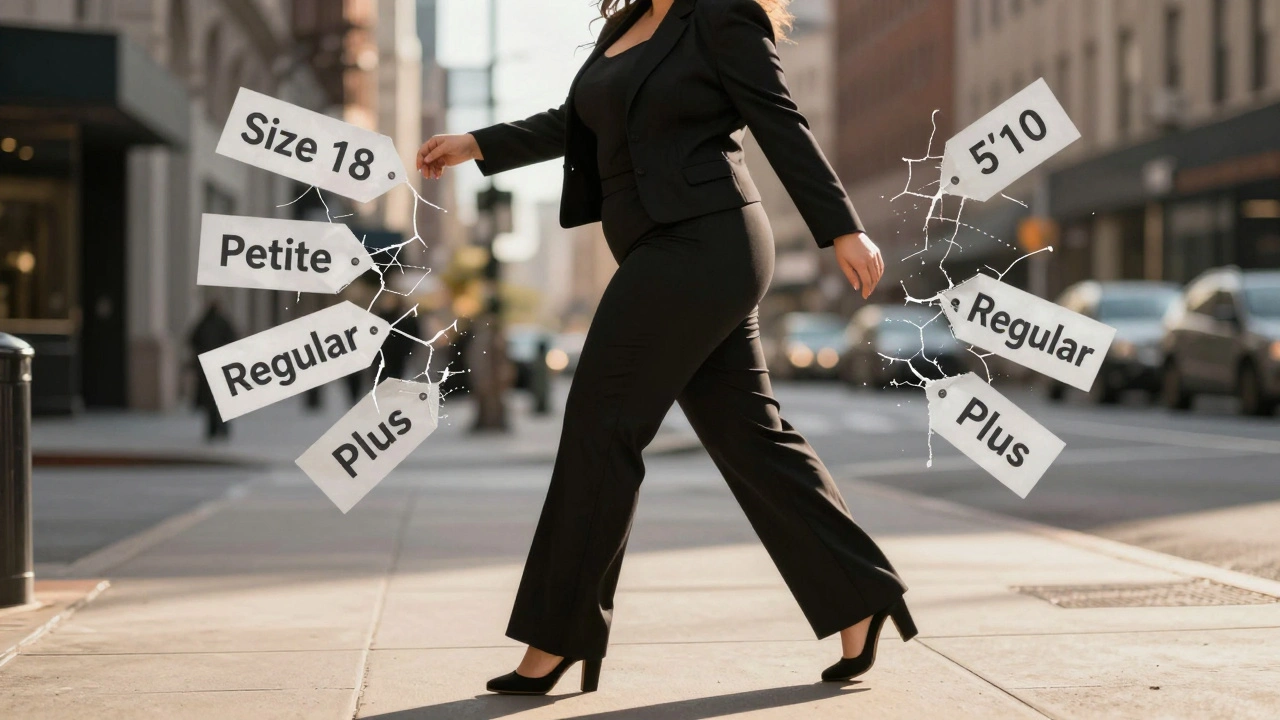
The Future Is Specialized, Not Just Bigger
The next wave of inclusive fashion won’t be about adding size 26 to a standard line. It’ll be about creating dedicated fit systems that respect how different bodies move, sit, and live. Brands that do this won’t just win customers-they’ll build loyalty. People don’t just want to be seen. They want to be understood.
And if you’ve ever stood in front of a mirror, holding up a pair of pants that look good from the front but turn into a hammock from the side? You’re not broken. The system is.
Frequently Asked Questions
What’s the difference between petite and petite-plus?
Petite sizing is designed for shorter women, typically under 5’4", with smaller proportions-but it’s usually only available in sizes 0-14. Petite-plus is the same shorter proportions, but extended to sizes 16 and up. It’s not just a bigger petite-it’s a different pattern built for fuller figures with shorter frames.
Do tall-plus clothes cost more?
Sometimes, but not always. Tall-plus garments require more fabric and more pattern development, which can raise costs. But many brands like ASOS Tall Plus and Torrid offer them at the same price as their regular lines. You’re paying for better design, not just more material.
Are petite-plus and tall-plus only for women?
Most brands still target women, but the need exists across genders. Non-binary and trans customers are increasingly demanding these fits. Brands like Universal Standard and Wildfang are starting to offer gender-neutral tall-plus and petite-plus lines. The market is expanding beyond traditional binaries.
Why don’t more stores carry these sizes?
Because it’s expensive. Creating multiple fit systems requires more pattern-making, more sample production, and more inventory management. Many retailers stick to one-size-fits-all because it’s cheaper-even though it leaves millions of customers behind. The brands that invest in specialized sizing are seeing higher retention and lower return rates.
Can I find petite-plus or tall-plus in thrift stores?
It’s rare, but possible. Look for brands known for inclusive sizing-like Eileen Fisher, Lane Bryant, or Torrid-even in secondhand shops. Check the tags for size and height descriptors. Sometimes you’ll find vintage pieces that fit better than new ones because older brands used more varied patterns before mass production took over.
Next Steps
If you’re shopping now, start with one item-a pair of jeans or a top-and search using the exact terms: “petite-plus” or “tall-plus.” Don’t settle for “extended sizing” unless you check the measurements. If you’re a brand owner or designer, talk to your customers. Ask them what doesn’t fit. Then rebuild your patterns around their answers-not your assumptions.
The clothes you wear shouldn’t make you feel like you need to change your body. They should make you feel like your body is enough-just as it is.


Write a comment