

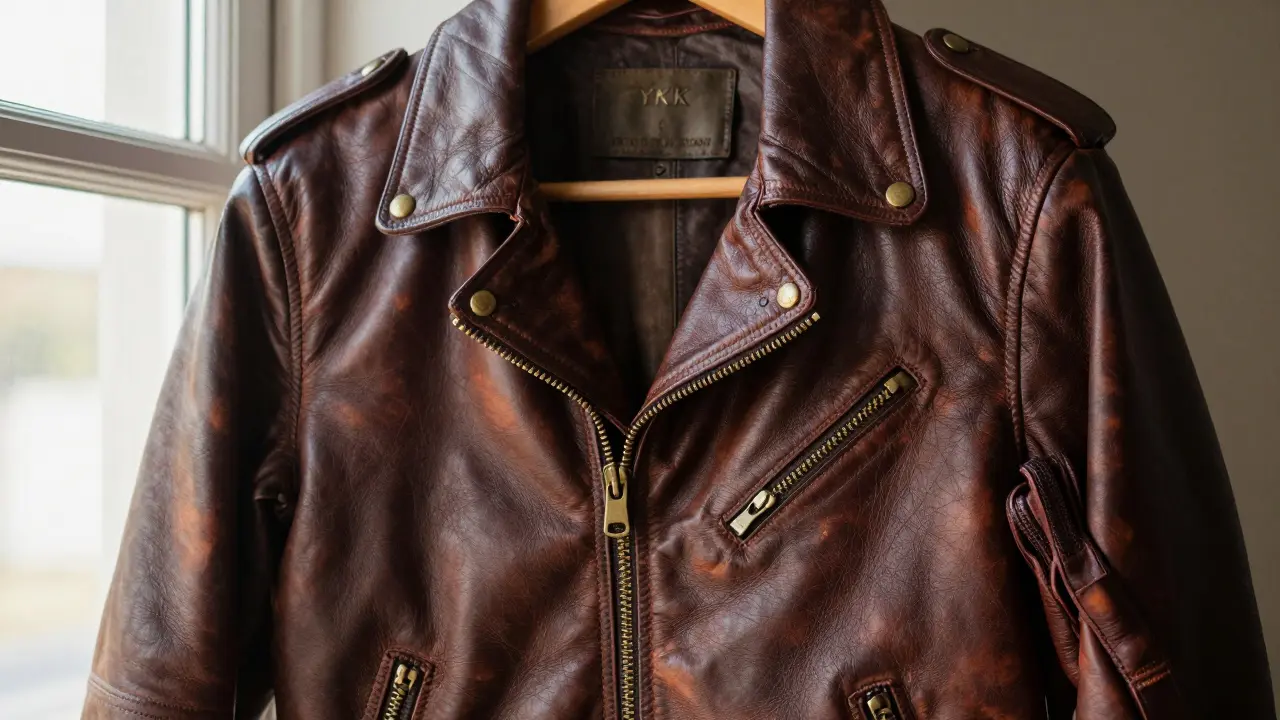
Think biker style is just about leather jackets and boots? It’s more than that. It’s a language made of leather, hardware, and moto details - each piece telling a story of grit, freedom, and quiet luxury. You don’t need to ride a motorcycle to wear this look. You just need to understand what makes it work.
Leather Isn’t Just Material - It’s a Statement
Not all leather is created equal. Biker style demands full-grain, vegetable-tanned leather that ages like fine wine. It’s thick, stiff at first, and gets softer with wear. You’ll know it by the smell - earthy, rich, unmistakable. Synthetic faux leather doesn’t cut it. It cracks after a few months and never develops that patina.
Real biker leather comes from hides that have been through a 6-8 week tanning process. Brands like Schott, Belstaff, and even lesser-known workshops in Italy and Japan still use this method. The result? A jacket that looks better after five years than it did on day one. A 2024 study by the Leather Working Group found that 78% of consumers who owned real leather motorcycle jackets kept them for over seven years - compared to 29% for faux alternatives.
Color matters too. Jet black is classic. But dark brown, olive, and even charcoal gray are gaining ground. These shades don’t scream "I’m a biker" - they whisper "I know what I’m wearing."
Hardware: The Silent Power Players
Hardware isn’t just zippers and buckles. It’s the backbone of the tough-luxe look. Look closely at a real moto jacket: the zippers are YKK #5 or #8, not cheap plastic. They’re brass or nickel-plated, with a weight to them. You can feel the difference when you pull it open. It doesn’t stick. It glides.
Studs? Yes - but only when they’re hand-set, not glued. Rivets? They should be copper or solid brass, hammered in with a mallet, not stamped out by a machine. The best pieces have hardware that looks like it was forged for function first, then styled second.
Take the classic asymmetrical zipper. It’s not just for show. It was designed so riders could open the jacket one-handed while wearing gloves. Now it’s a signature detail. Same with the storm flap over the zipper - it keeps wind out. In fashion terms, it adds depth, texture, and a sense of purpose.
And don’t overlook the hardware on the cuffs. Adjustable straps with double-stitched leather and metal sliders? That’s the real deal. Cheap versions use plastic sliders that snap off after a few winters.
Moto Details That Actually Serve a Purpose
Biker style didn’t come from a runway. It came from the road. Every detail has a reason.
- Articulated elbows - they let you bend your arms without the jacket pulling up. Look for pre-curved seams or stretch panels hidden under the leather.
- Reinforced shoulders - not just for looks. They protect against road rash if you fall. Some jackets have hidden armor inserts that slide into pockets.
- Back vent - a slit at the lower back with snap closures. Lets air flow through on long rides. Also creates a subtle drape when you’re standing still.
- Internal pockets - designed for gloves, maps, or a small wallet. No flimsy zippered pockets that sag. These are sewn into the lining with double stitching.
These aren’t decorative. They’re functional. And that’s what makes the style feel authentic. When you wear something that was built to survive a crash, it carries a different kind of confidence.
How to Wear It Without Looking Like a Costume
Wearing biker style doesn’t mean you need a full leather ensemble. The trick is balance.
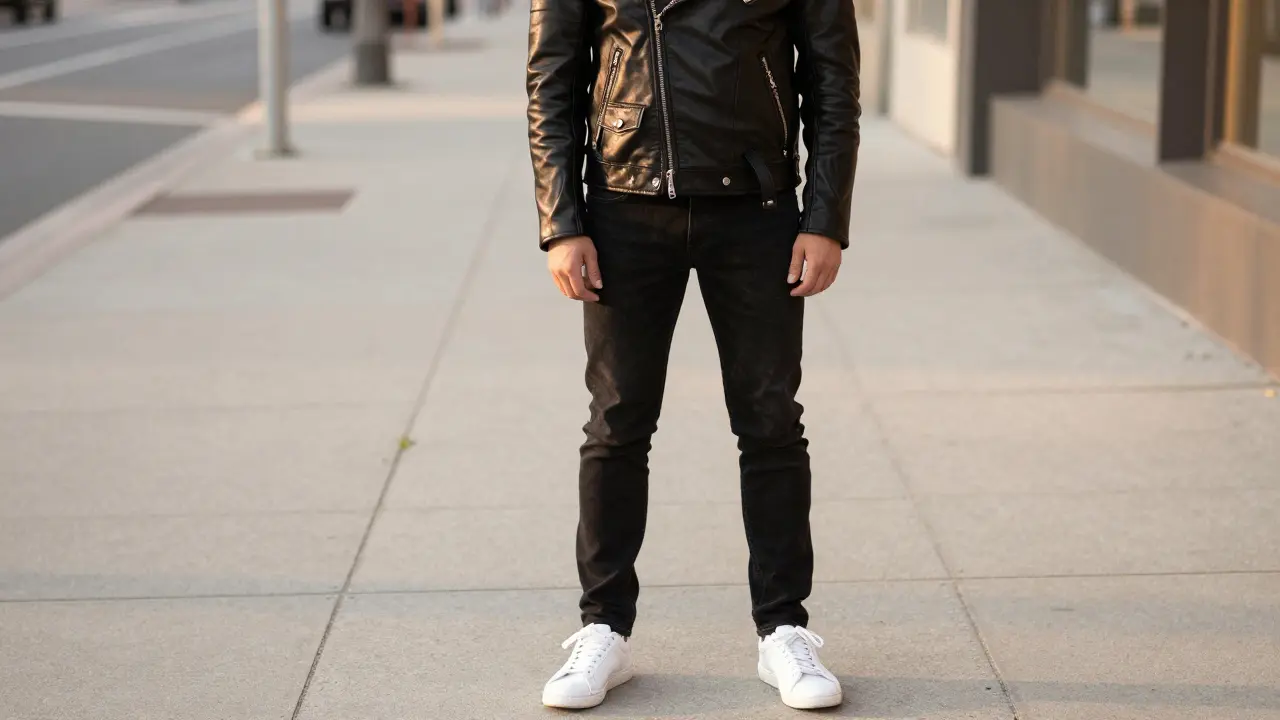
Start with one key piece - a well-fitted leather jacket. Pair it with slim jeans, a simple tee, and clean white sneakers. No boots. No chains. No patches. Let the jacket do the talking.
Want to go further? Try a leather vest over a button-up. Or a moto-style belt with a heavy buckle. Even a pair of leather gloves can pull the look together. The goal isn’t to look like you’re about to hit the highway. It’s to look like you could, if you wanted to.
Women’s biker style often leans into tailored cuts. A cropped leather jacket with high-waisted pants creates a sharp contrast. Men’s versions work best when they’re slightly oversized - not baggy, but not tight. Think of it as armor that’s been tailored for everyday life.
Where to Find Real Biker Style (Not the Fast Fashion Version)
Most big brands sell "biker-inspired" jackets. They look right from a distance. Up close? Thin leather, plastic hardware, flimsy lining. You’ll regret it in six months.
Look for brands that list their materials: "Full-grain cowhide," "YKK zippers," "Hand-finished hardware." If they don’t say it, they’re hiding it.
Smaller makers are often better. Check out shops in Detroit, Portland, or Berlin that build jackets to order. Some offer customization - choose your leather, hardware finish, even the stitching color. These pieces cost $400-$800. They last a decade.
Secondhand markets are goldmines. Vintage Schott Perfecto jackets from the ’80s are still out there. They’ve been worn, repaired, loved. They’ve got soul.
Why This Look Still Matters in 2026
Fast fashion dies fast. Biker style endures. It’s the opposite of disposable. It’s built to be repaired. To be passed down. To be worn until it fits like a second skin.
In a world of trend-chasing, this look is a quiet rebellion. It doesn’t shout. It doesn’t change every season. It says: I value quality. I value craft. I value things that last.
It’s not about looking tough. It’s about knowing what you’re made of - and dressing like it.
Can I wear biker style if I’ve never ridden a motorcycle?
Absolutely. Biker style is about aesthetics, not activity. The leather jacket, hardware details, and moto-inspired cuts were adopted by fashion long ago because they work. You don’t need to ride to wear them - you just need to understand the craftsmanship behind them.
Is faux leather ever acceptable in biker style?
Not for the real look. Faux leather lacks the texture, weight, and aging process that define biker style. It looks flat, it cracks, and it doesn’t develop character. If you’re going for tough-luxe, real leather is non-negotiable. There are ethical alternatives like mushroom leather or recycled materials, but they must still have the same thickness and finish to hold up visually.
How do I care for a leather biker jacket?
Clean it once a year with a damp cloth and a pH-neutral leather cleaner. Condition it every 6-8 months with a natural wax-based balm - never oil-based. Store it on a wide, padded hanger in a cool, dry place. Never hang it in direct sunlight or in a plastic bag. If it gets wet, let it air dry naturally. Never use a hairdryer.
What’s the difference between a biker jacket and a regular leather jacket?
Biker jackets have functional details built for riding: asymmetrical zippers, storm flaps, articulated elbows, reinforced shoulders, back vents, and internal pockets. Regular leather jackets are styled for looks - they’re often lighter, smoother, and lack protective features. The biker version is heavier, more structured, and designed to last decades, not seasons.
Are biker styles only for men?
No. Women have worn biker jackets since the 1940s - think Marlon Brando’s co-star in "The Wild One," or modern icons like Patti Smith. Today, brands like Belstaff and Schott offer tailored cuts that hug the waist, shorten the sleeves, and adjust the shoulder line for a feminine silhouette. The hardware and leather are the same - the fit is what changes.


Write a comment