

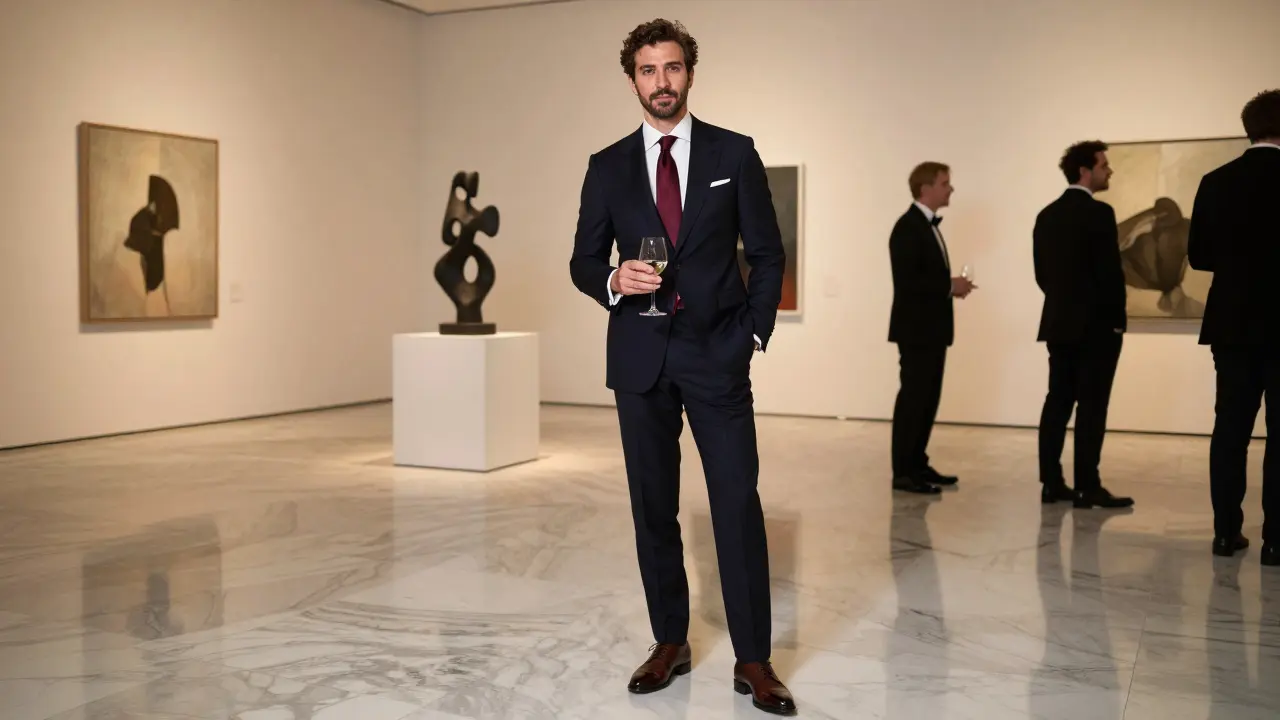
Let’s be real: not every fancy event needs a tuxedo. You’ve been invited to a wedding, a gala, or a high-end dinner party, and the invitation says black tie optional. Now what? Do you show up in a full tux? Or can you skip the bow tie and still look polished? The answer isn’t as simple as "yes" or "no." It’s about context, culture, and confidence.
What "Black Tie Optional" Actually Means
"Black tie optional" is one of the most misunderstood dress codes out there. It doesn’t mean "wear whatever you want." It also doesn’t mean "wear a tuxedo if you feel like it." It’s a middle ground - a polite nudge to dress up, but without the pressure of strict rules.
Here’s what it really signals: "We’re having a formal event, but we don’t want people to feel awkward or over-dressed." Think of it as a soft upgrade from cocktail attire but a step below the rigid formality of mandatory black tie.
In the U.S., this code became popular in the 1990s as weddings and galas started shifting from stiff, traditional settings to more personal, relaxed venues - think vineyards, rooftop terraces, or historic homes. Today, it’s common in cities like Seattle, New York, and San Francisco, where style matters, but comfort does too.
When to Go Full Black Tie
You should still wear a tuxedo if:
- The event is held in a grand ballroom, opera house, or luxury hotel ballroom
- You’re the groom, a wedding party member, or a keynote speaker
- Most guests are already dressed in tuxedos (you’ll notice quickly)
- The invitation includes phrases like "elegant evening," "evening reception," or "formal dinner"
There’s something powerful about a well-fitted tuxedo. The satin lapel, the crisp white shirt, the bow tie - it says you respect the occasion. If you’re unsure, err on the side of full black tie. It’s easier to be overdressed than underdressed.
When to Dial It Down
Here’s where you can breathe easy: if the event feels more intimate, modern, or outdoorsy, you can skip the tux and still look formal. You’re not breaking rules - you’re following the spirit of them.
Choose this path if:
- The venue is a garden, art gallery, or cozy restaurant
- The event starts after 7 p.m. but ends before midnight
- The guest list includes creatives, entrepreneurs, or younger professionals
- You’re traveling or it’s a warm climate
Instead of a tuxedo, go for a dark navy or charcoal suit - not black, but close. Pair it with a solid dress shirt (white or light blue), a necktie (not a bow tie), and polished leather oxfords. Skip the cummerbund. Skip the pocket square unless you’re confident it adds elegance, not clutter.
Men: You don’t need a bow tie. A silk tie in deep burgundy, forest green, or midnight blue works better here. It’s sophisticated without shouting.
Women: A floor-length gown is still safe, but a sleek cocktail dress in velvet, satin, or silk is perfectly appropriate. Think structured silhouette, minimal jewelry, and closed-toe heels. No sequins unless the invitation says "glamorous."

What Not to Wear
Even with "black tie optional," some things cross the line. Avoid:
- Dark suits with white sneakers
- Open-toe sandals or loafers
- Patterned shirts (stripes, checks, or loud prints)
- Blazers over t-shirts
- Anything too casual - no jeans, no hoodies, no athletic shoes
Here’s a real example: I attended a charity gala in late 2025 at a converted warehouse in Seattle. Half the men wore tuxedos. The other half wore dark suits with ties. No one looked out of place. But there was one guy in a navy blazer, khakis, and boat shoes. He stood out - not because he was underdressed, but because he ignored the unspoken rule: even when you dial down, you still elevate.
The Psychology Behind the Dress Code
Why does "black tie optional" exist? Because formal events are no longer just about status. They’re about belonging. The goal isn’t to impress with wealth - it’s to show you care enough to put in effort.
Studies from the Journal of Social Psychology (2023) found that guests who dressed slightly below the strictest standard but still with intention were perceived as more approachable and confident - not less respectful. The key word? Intention.
When you choose a dark suit over a tuxedo, you’re not rejecting formality. You’re redefining it. You’re saying, "I respect this event, but I also respect my comfort, my identity, and the modern way we connect."

Seasonal and Regional Considerations
Dress codes shift with location and season. In Seattle, where rain is common and indoor heating is hit-or-miss, a wool suit with a lightweight overcoat is smarter than a tuxedo with thin lapels. In Miami? A linen blend suit with a silk tie makes more sense. In Boston? Stick closer to tradition.
Winter events? Go for heavier fabrics: wool, tweed, velvet. Summer? Lighter weaves, breathable linings, and darker colors that don’t absorb heat. The rule stays the same: formal doesn’t mean hot. It means refined.
How to Confirm Your Choice
Still unsure? Do this:
- Check the venue’s website - look at photos from past events
- Ask the host directly: "I’m trying to figure out the right level of formality - is a dark suit okay?" Most people will say yes
- Look at the guest list - if there are celebrities, CEOs, or cultural figures, they’ll likely be in tuxedos. If it’s a mix of artists, tech founders, and local influencers, you’re safe with a suit
- When in doubt, text a friend who’s going - "What are you wearing?" works better than overthinking it
Final Rule: Confidence Over Checklist
At the end of the day, "black tie optional" isn’t about rules. It’s about alignment. Are you dressing to match the energy of the event? Or are you dressing to follow a rigid template?
The most stylish people at any formal gathering aren’t the ones in tuxedos. They’re the ones who look like they belong - whether that’s in a classic suit, a velvet blazer, or a tailored dress. They didn’t guess. They read the room.
So next time you see "black tie optional," don’t panic. Don’t overpack. Just ask yourself: "What would someone who respects this event wear - without needing to prove anything?"
Then wear that.
Can I wear a tuxedo to a "black tie optional" event?
Yes, absolutely. A full tuxedo is always acceptable at a "black tie optional" event. It’s the safest choice if you’re unsure. Most hosts expect at least a few guests to go full formal, and it’s never seen as overdressed.
Is a dark suit okay for men?
Yes, a dark navy or charcoal suit is not just okay - it’s often preferred. Pair it with a dress shirt, a silk tie, and polished oxfords. Skip the bow tie and cummerbund. This look is modern, sharp, and fits the "optional" spirit perfectly.
What about women? Can I wear a cocktail dress?
Yes, a sophisticated cocktail dress in silk, satin, or velvet is appropriate. Aim for floor-length or knee-length with elegant details - no sequins, no strapless unless it’s structured. Closed-toe heels and minimal jewelry keep it refined. Many women choose this option because it’s comfortable and still formal.
Does "black tie optional" mean I can skip shoes?
No. Footwear matters. Men should wear leather oxfords or loafers - never sneakers, boat shoes, or sandals. Women should wear closed-toe heels or elegant flats. Barefoot or open-toe shoes in cold weather or indoor venues will look out of place, even if the dress code is "optional."
Is this dress code the same everywhere?
No. In cities like New York or London, "black tie optional" leans closer to full black tie. In places like Seattle, Austin, or Portland, it’s more relaxed. Always consider local culture. If you’re unsure, check photos from past events at the venue - that’s your best guide.


Write a comment