

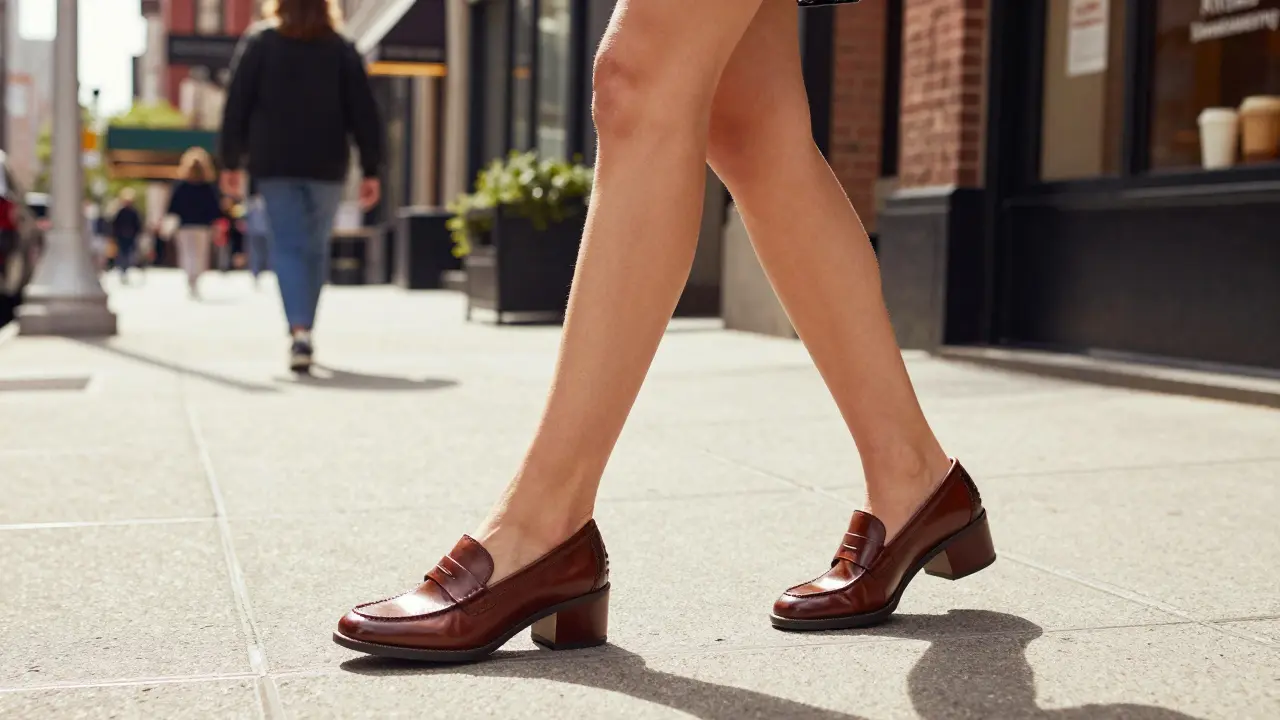
Walking into a store and seeing a pair of shoes you love-only to realize they’ll make your bunion scream-is a feeling too many people know too well. You don’t want to give up style just because your feet hurt. And you shouldn’t have to. The truth is, bunion-friendly shoes aren’t just clunky orthopedic blocks anymore. Today’s best options look like the shoes you’d wear to a dinner date, a job interview, or a weekend brunch. The trick? Knowing what to look for-and where to look.
Why Most Shoes Make Bunions Worse
Bunions form when the big toe joint gets pushed out of alignment, often from years of pressure. Tight toe boxes, high heels, and narrow designs squeeze the forefoot, forcing the bone to angle inward. That’s why flip-flops, pointed pumps, and even some ‘fashion-forward’ sneakers are worst-case scenarios. A 2024 study from the American Orthopaedic Foot & Ankle Society found that 87% of women who wore shoes with a toe box narrower than 3.5 inches reported increased bunion pain within two weeks. It’s not just about width, either. Heels over one inch shift your weight forward, putting 70% more pressure on the ball of your foot. Thin soles offer zero cushioning. Flexible uppers don’t support the arch. All of this adds up to daily discomfort-and long-term damage.What Actually Works: The 5 Key Features
Forget vague advice like ‘wear comfy shoes.’ You need specifics. Here’s what real relief looks like:- Wide toe box - At least 0.5 inches wider than your foot at the widest point. Brands like Altra and Vionic measure this in millimeters. Look for ‘wide’ or ‘extra-wide’ (2E, 4E) sizing.
- Zero heel drop - The sole should be flat from heel to toe. No elevation. This keeps your foot in neutral alignment.
- Flexible forefoot - The front of the shoe should bend where your toes bend. Try twisting the shoe-it shouldn’t feel like you’re bending a brick.
- Memory foam or gel insole - Not just any cushion. It needs to mold to your foot shape. Brands like Hoka and Clarks use proprietary foam that lasts longer than generic EVA.
- Adjustable closure - Laces, straps, or elastic panels let you loosen the shoe over the bunion. Velcro is great for quick adjustments on the go.
Top 5 Stylish Bunion Shoes You Can Actually Wear Out
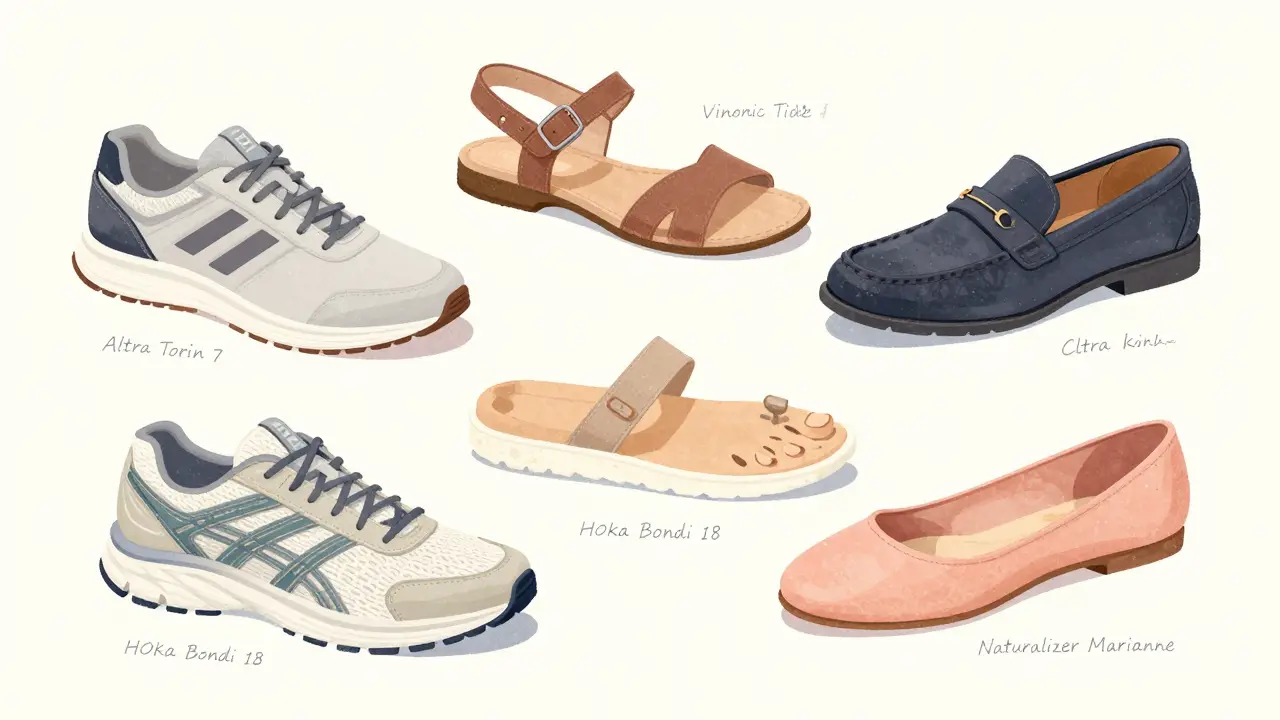
You don’t need to sacrifice aesthetics. Here are five real-world options that look good and feel better:- Altra Torin 7 - A running shoe that looks like a sleek sneaker. Zero heel drop, foot-shaped toe box, and a cushioned midsole that absorbs impact without feeling bulky. Perfect for walking the city or working from home.
- Vionic Tide II - Looks like a minimalist sandal, but has a contoured footbed that supports your arch and reduces bunion pressure. The strap is adjustable, and the sole is grippy enough for wet sidewalks.
- Clarks Unstructured Collection - These loafers and oxfords are designed for all-day wear. The leather stretches slightly over time, and the toe box is roomy without looking like a boat. Ideal for office settings.
- Hoka One One Bondi 8 - A luxury walking shoe that looks like a high-end trainer. Thick, soft midsole, wide platform, and a breathable upper. They’re not for formal events, but they’re the most comfortable option for long days on your feet.
- Naturalizer Marianne - A pointed-toe flat that doesn’t pinch. The toe box is wider than it looks, thanks to a hidden stretch panel. The heel is just 1 inch, and the sole has a slight rocker to reduce pressure on the big toe joint.
How to Try Them Without Wasting Time
Buying shoes online for bunions is risky. But you can minimize the risk:- Measure your feet at the end of the day-they swell. Use a Brannock device or a printable foot tracing from the American Podiatric Medical Association.
- Order two sizes: your regular size and one full size up. Compare how each fits across the ball of your foot and around the bunion.
- Look for free returns and try them on a carpeted floor. Walk for at least 10 minutes. If your bunion feels pressure even after 15 minutes, return them.
- Check for ‘bunion-friendly’ filters on sites like Zappos, Nordstrom, or PhysioShop. They label shoes by toe box width and arch support.
What to Avoid at All Costs
Some brands market ‘fashionable comfort’ but still fail the bunion test. Here’s what to skip:- Any shoe labeled ‘slip-on’ with no adjustable strap
- Platforms with narrow toe boxes (even if they’re 2 inches high)
- Shoes with decorative stitching or seams directly over the bunion
- ‘Stretchy’ fabrics that don’t have internal support
- Any shoe under $60 that claims to be ‘orthopedic’-chances are it’s just a cheap shoe with a foam insert
Pro Tips for Daily Comfort
Even the best shoes won’t fix everything overnight. Add these habits:- Use a bunion pad (silicone, not gel) to reduce friction. Brands like Dr. Scholl’s make ones that fit inside most shoes.
- Stretch your feet daily. Roll a tennis ball under your arch for two minutes each morning.
- Rotate your shoes. Don’t wear the same pair every day. Let them air out and recover their shape.
- Consider custom orthotics if pain persists. Insurance often covers them if prescribed by a podiatrist.
Can You Still Wear Heels?
Yes-but only if you’re smart. A 1-inch block heel with a wide platform and a stretchy upper can work. Look for styles from Naturalizer, Rockport, or Ecco. Avoid stilettos, slingbacks, or any heel that forces your foot forward. And limit them to special occasions.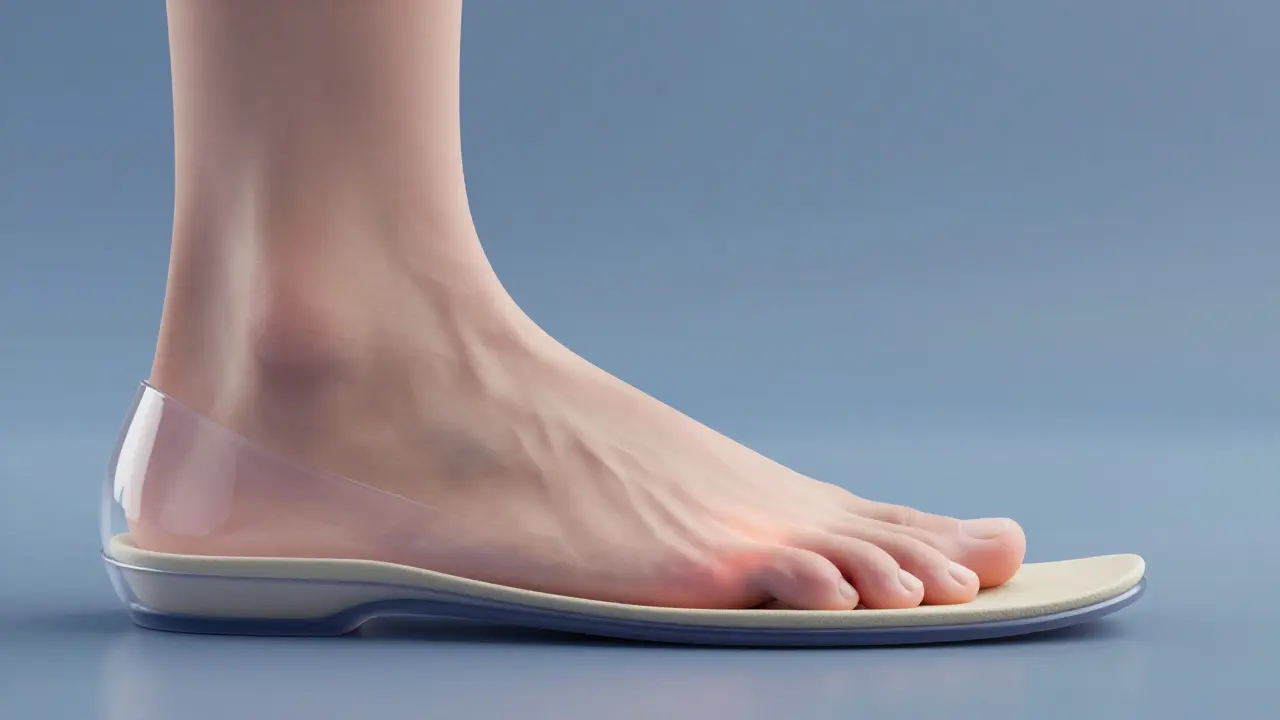
Where to Shop (Online and In-Person)
New York has a few great options:- PhysioShop NYC - Specializes in medical-grade footwear with fashion-forward designs. Staff are trained podiatry assistants.
- Zappos - Free shipping and returns. Filter by ‘wide width’ and ‘bunion-friendly’.
- Amazon - Use filters for ‘wide toe box’ and read reviews with photos from users with bunions.
- Local independent shoe stores - Ask if they carry Vionic, Hoka, or Altra. Many small shops let you try shoes barefoot on a foam pad.
Real People, Real Results
Sarah, 42, a graphic designer from Brooklyn, switched from designer flats to Vionic Tide IIs after years of pain. ‘I thought I’d have to give up looking put together,’ she says. ‘Now I wear them to client meetings and no one knows they’re ‘medical.’ They just think I have great taste.’ Mark, 58, a retired teacher, swapped his worn-out sneakers for Altra Torins. ‘I walk 8 miles a day now. I didn’t think I’d ever enjoy walking again.’ This isn’t about giving up style. It’s about choosing footwear that doesn’t punish you for wearing it.Can I wear sandals with bunions?
Yes, but only if they have a wide toe box, adjustable straps, and arch support. Avoid flip-flops with thin straps that dig into the bunion. Look for sandals with a contoured footbed like Vionic Tide II or Birkenstock Arizona. The key is support, not just openness.
Do bunion correctors work?
Bunion splints or separators worn at night might reduce discomfort and slow progression, but they won’t reverse the bone deformity. They’re a supplement, not a cure. Pair them with proper shoes and stretching for best results.
Are wide shoes only for people with bunions?
No. Wide shoes benefit anyone with swollen feet, hammertoes, or flat feet. Even people without foot pain find them more comfortable for long days. They’re not a medical necessity-they’re a better design.
How do I know if my shoe has enough width?
Stand in the shoe and wiggle your toes. You should be able to pinch a little skin on the side of your foot between your thumb and finger. If you can’t, it’s too tight. Also, your big toe shouldn’t be touching the front of the shoe when standing.
Can I stretch my current shoes to make them bunion-friendly?
Leather shoes can be stretched slightly with a shoe stretcher or professional service, but only if the material is flexible. Synthetic fabrics won’t stretch reliably. Don’t rely on this-it’s a temporary fix. Better to invest in a shoe designed for width from the start.


Write a comment