

Have you ever bought a dress that looked perfect on the hanger, only to have it gape at the neckline or pull awkwardly across your torso when you put it on? If you have a fuller bust, this is likely a familiar frustration. The fashion industry often designs clothes for a straighter silhouette, leaving those of us with curves to deal with gaping buttons, stretched fabric, and silhouettes that don't quite match our vision. But here’s the good news: you don’t need to hide your body or settle for ill-fitting clothes. With a few strategic adjustments and smart choices about necklines, you can highlight your shape in a way that feels confident and comfortable.
This guide breaks down exactly how to style for a larger bust. We’ll look at specific necklines that work, common fit issues and how to fix them, and the types of fabrics and cuts that actually flatter rather than fight against your body. Whether you’re shopping off-the-rack or considering minor tailoring, these practical tips will help you build a wardrobe that works as hard as you do.
The Right Bra Is Non-Negotiable
You might be thinking, "I already wear a bra." Sure, but wearing *any* bra isn’t the same as wearing the *right* one. For women with a fuller bust, the bra acts as the foundation of your entire outfit. If the foundation is shaky, even the most expensive designer top will hang poorly.
A properly fitted bra does three things: it lifts the breast tissue up and away from the ribcage, it creates a smoother line under clothing, and it prevents the dreaded "quad-boob" effect where tissue spills over the cup edges. According to recent fitting studies by brands like ThirdLove and True&Co, nearly 70% of women wear the wrong bra size. For curvy women, this error is often more pronounced because standard sizing charts assume a smaller band-to-cup ratio.
- Check the Band: Most support comes from the band, not the straps. If your band rides up your back, it’s too loose. It should sit parallel to the floor and feel snug but not painful.
- Look for Encapsulation: Avoid push-up bras if you want a natural silhouette. Look for encapsulated cups (separate cups for each breast) which provide better separation and shape definition under tight tops.
- Strap Placement: Wide, cushioned straps prevent digging into shoulders, especially important if you carry weight in your upper body. Racerback styles can also help stabilize the bra under tank tops or sleeveless dresses.
Investing in a professional fitting once a year can save you hundreds of dollars in wasted clothing purchases. When your breasts are supported high and centered, your waist appears smaller, and your posture improves instantly.
Necklines That Flatter vs. Those That Fight You
The neckline is the frame for your face and the focal point of your upper body. Choosing the right shape can elongate your torso and draw attention upward, while the wrong shape can make your chest look boxy or overwhelming.
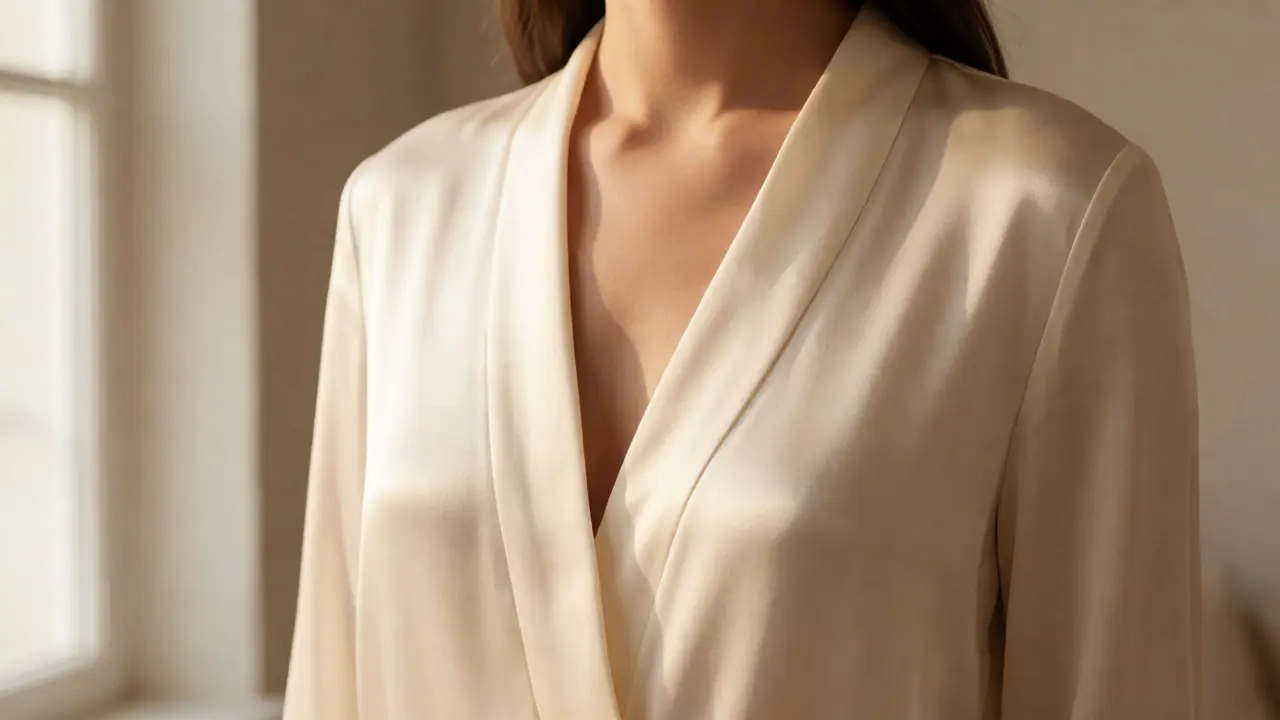
V-Necks and Deep V-Necks are your best friends. They create a vertical line that draws the eye down, breaking up the expanse of fabric across the chest. This optical illusion makes your torso appear longer and your bust proportionate to the rest of your body. A deep V-neck, perhaps paired with a camisole underneath for modesty, adds elegance without adding bulk.
Sweetheart Necklines mimic the natural curve of the bust. Because they dip in the center and curve around each breast, they follow your body’s architecture rather than cutting across it. This style is incredibly flattering for formal events or date nights because it highlights the décolletage without exposing too much skin.
Square Necklines offer structure. Unlike round necklines, which can sometimes emphasize width, square necks create horizontal lines at the collarbone and vertical lines down the sides. This geometric shape provides a clean, modern look that balances a heavier lower half well.
On the flip side, High Boat Necks and Turtlenecks can be tricky. While they aren’t forbidden, they tend to erase the waistline and add visual volume to the upper body. If you love turtlenecks, try pairing them with open jackets or vests to break up the solid block of color. Similarly, avoid Crew Necks that sit too close to the base of the throat; opt instead for wider scoop necks that show a bit of collarbone space.
| Neckline Type | Why It Works (or Doesn't) | Best Pairing |
|---|---|---|
| V-Neck | Elongates torso, reduces visual bulk. | Blazers, statement necklaces. |
| Sweetheart | Follows natural breast curve, supports cleavage. | Fitted bodices, evening wear. |
| Square | Adds structure, frames collarbones. | Puff sleeves, structured blouses. |
| Boat Neck | Can widen shoulders, hide collarbones. | Long pendants, open cardigans. |
| High Crew | Adds volume, shortens neck appearance. | Layered chains, scarves. |
Mastering Fit: The Button-Down Challenge
If there’s one garment that causes more stress than any other, it’s the button-down shirt. The classic issue is "gaping": the fabric pulls apart between the buttons, creating unsightly triangles of skin or undershirt exposure. This happens because standard shirts are cut for a flat chest, so the distance between buttons is too short for a fuller bust.
You have two main options here: buy for fit now, or tailor for perfection later.
The Tailoring Fix: If you find a shirt you love but it gaps, take it to a tailor. Ask them to add "darts" or adjust the placket spacing. Darts are folds sewn into the fabric to give it shape. By adding darts below the bust line, the shirt can accommodate your curves without pulling at the buttons. Some tailors can also move the buttons slightly outward to increase the circumference across the chest.
The Shopping Hack: Look for brands that offer "curvy" or "full-bust" fits specifically. Brands like Universal Standard, ELOQUII, and Torrid design their tops with extra room in the chest and narrower waists. If you stick to mainstream brands, consider buying a size up in the chest area and having the waist taken in. It’s cheaper to take in a waist than to let out a chest.
Another quick trick? Wear a camisole underneath. A silk or satin camisole fills the gap visually and adds a layer of sophistication. Alternatively, use clear fashion tape to secure the placket to your bra or undershirt, preventing accidental flashes when you lean forward.
Fabric Choices: Structure vs. Drape
Fabric behavior changes everything. Thin, clingy fabrics like jersey knit or lightweight chiffon will hug every curve, which can be great if you want to emphasize your shape, but problematic if you’re worried about showing bra lines or lack of support. Conversely, stiff fabrics like heavy denim or structured cotton twill hold their own shape, smoothing over lumps and bumps.
For everyday wear, aim for medium-weight fabrics with some stretch. Cotton blends with 5-10% spandex offer comfort and recovery-they stretch when you move but snap back to shape, preventing sagging. Knits with texture, such as ribbed knits or cable knits, can also be very forgiving because the pattern distracts the eye from minor fit imperfections.
Avoid ultra-thin silks unless you’re wearing a high-quality slip or lining. These fabrics tend to cling to sweat and body heat, revealing more than intended. Instead, choose crepe de chine or georgette, which have a slight weight and drape elegantly without sticking to the skin.
Dresses and Jumpsuits: Emphasize the Waist
One of the biggest mistakes people with fuller busts make is hiding behind oversized tunics or shapeless shift dresses. While comfortable, these styles often make you look larger overall because they obscure your natural proportions. The key to looking slim and stylish is defining your waist.
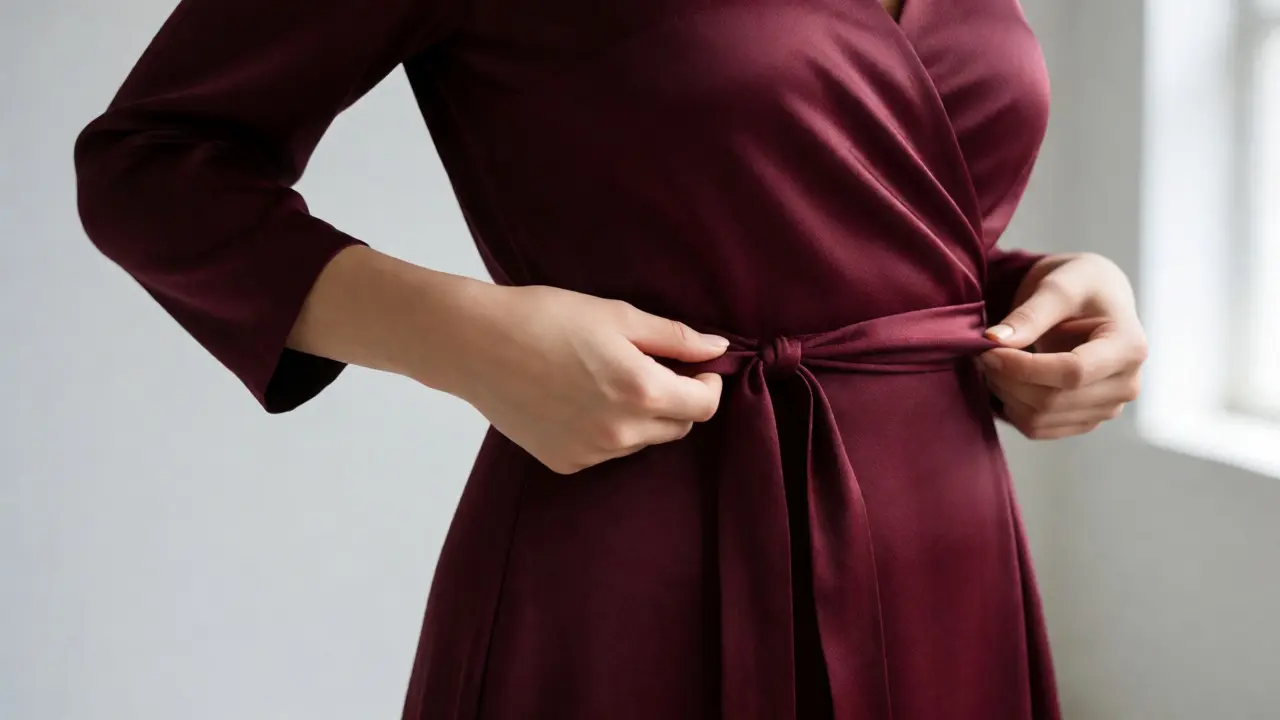
Wrap Dresses are iconic for a reason. The crossover front allows you to adjust the fit across the bust precisely, ensuring no gaping. The tie belt cinches the waist, creating an hourglass silhouette that highlights your curves rather than hiding them. Plus, the adjustable nature means you can loosen it after a big meal without sacrificing style.
Empire Waists are another excellent option. The seam sits just below the bust, allowing the fabric to flow freely over the midsection. This style is particularly helpful if you carry weight in your stomach or hips, as it draws attention upward to the face and décolletage.
When choosing jumpsuits, look for styles with defined seams at the waist. Unstructured jumpsuits can look like sacks on curvier bodies. Belted jumpsuits or those with built-in shirring at the back allow for movement while maintaining shape. Darker colors on the bottom and lighter patterns on top can also balance proportions if you feel your bust is dominant compared to your legs.
Proportion Play: Balancing Your Silhouette
Styling isn’t just about the top; it’s about the whole picture. If you have a larger bust, you might feel self-conscious about your upper body. Counteracting this requires balancing your proportions.
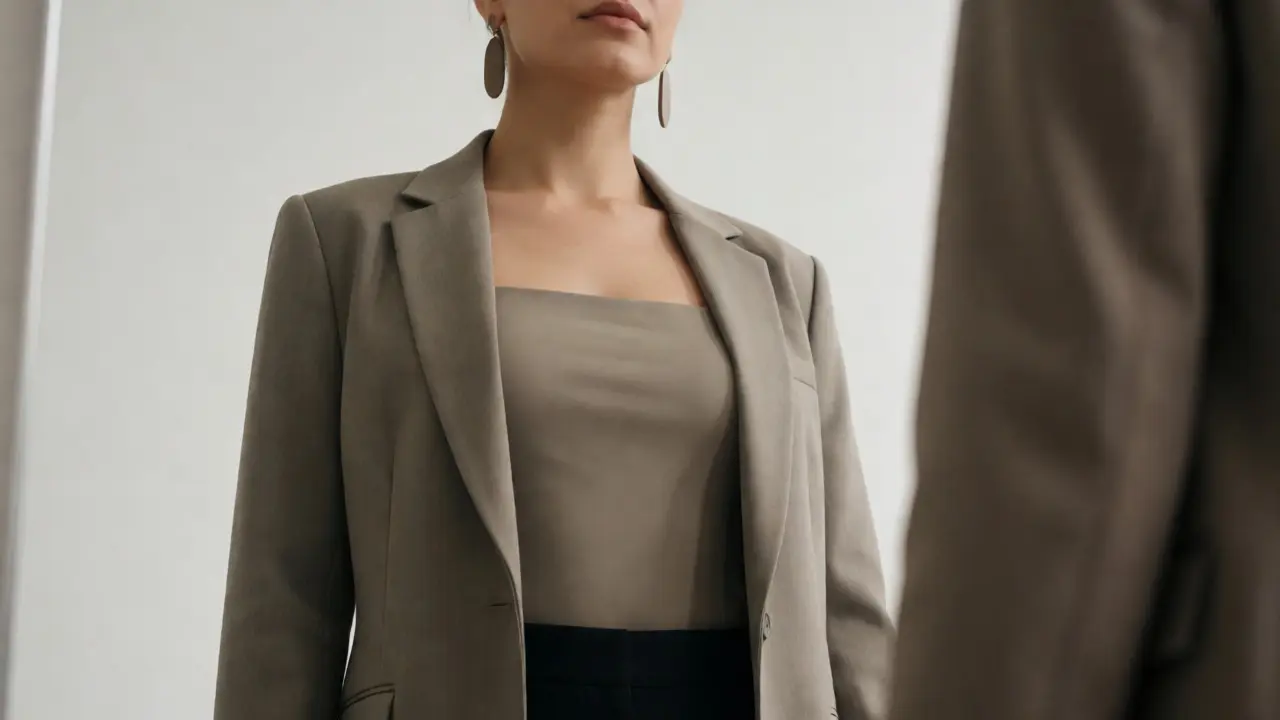
If your bust is large relative to your hips, you can create balance by adding volume to your lower half. A-line skirts, wide-leg trousers, or bootcut jeans broaden the hip line, making your waist look smaller by comparison. This creates a harmonious X-shape that is visually pleasing and statistically associated with health and vitality in evolutionary psychology terms.
Conversely, if you are pear-shaped (smaller bust, wider hips), you can emphasize your bust with ruffles, peplums, or bold prints on top. But for those of us with fuller chests, the goal is usually equilibrium. Avoid bulky shoulder pads or excessive ruffles on the chest, as these add unnecessary volume to an area that already has plenty.
Accessories play a crucial role here. Long necklaces (pendants that hit mid-chest or lower) continue the vertical line started by a V-neck. Statement earrings draw attention to your face, keeping eyes up. Belts worn over dresses or coats reinforce the waistline, reminding the viewer of your actual shape beneath the layers.
Confidence is the Best Accessory
At the end of the day, clothes are tools. They should serve you, not dictate your mood. Many women spend years trying to shrink themselves to fit sample sizes, but the trend in 2026 is shifting toward inclusive sizing and celebrating diverse bodies. Retailers are finally realizing that designing for curves isn’t a niche-it’s the majority.
Experiment with what makes you feel powerful. Maybe it’s a bold red wrap dress for meetings. Maybe it’s a tailored blazer over a simple tee for casual Fridays. The rules above are guidelines, not laws. If you love a crew neck and it makes you happy, wear it! Just know how to manage the fit with proper undergarments and accessories.
Remember, a fuller bust is a feature, not a flaw. With the right neckline, a supportive bra, and fabrics that respect your shape, you can walk into any room feeling polished and prepared. Start small: check your bra size this week, try a V-neck top tomorrow, and notice the difference. Your wardrobe-and your confidence-will thank you.
What is the best neckline for a large bust?
V-necks and sweetheart necklines are generally considered the most flattering. V-necks create a vertical line that elongates the torso and reduces visual bulk, while sweetheart necklines follow the natural curve of the bust, providing support and a balanced look without excessive exposure.
How do I stop my button-down shirt from gaping?
You can prevent gaping by wearing a camisole underneath, using fashion tape to secure the placket, or getting the shirt tailored. Tailors can add darts or adjust button placement to accommodate a fuller bust. Alternatively, shop for brands that offer specific 'curvy' or 'full-bust' fits designed with extra room in the chest.
Do high necklines make large busts look bigger?
Yes, high necklines like boat necks and turtlenecks can add visual volume to the upper body and shorten the appearance of the neck. However, they can still be worn if paired with long necklaces or open outerwear to break up the solid block of fabric and create vertical lines.
What fabrics should I avoid with a full bust?
Avoid ultra-thin, clingy fabrics like lightweight jersey or cheap silk, as they reveal bra lines and lack structure. Instead, choose medium-weight fabrics with some stretch, such as cotton-spandex blends, crepe, or textured knits, which drape well and smooth out the silhouette.
Are wrap dresses good for plus-size figures?
Absolutely. Wrap dresses are highly recommended because the crossover front allows for adjustable fit across the bust, eliminating gaping. The tied waist defines the midsection, creating an hourglass shape that flatters curvy bodies by emphasizing the waist and balancing the bust.


Write a comment