

Key Takeaways
- Focus on "Cost Per Wear" to determine the true value and impact of a garment.
- Track the "Utilization Rate" to identify waste in your current closet.
- Prioritize material longevity and biodegradability over marketing claims.
- Measure success by the reduction of new acquisitions, not just the brand of the clothes.
When we talk about capsule sustainability metrics is the quantitative way we track the reduction of our environmental footprint by limiting the number of clothing items we own and maximizing their use. It's not about guessing if you're being eco-friendly; it's about using data to see if your lifestyle choices actually lower the amount of waste going into landfills.
The Math of Slow Fashion: Cost Per Wear
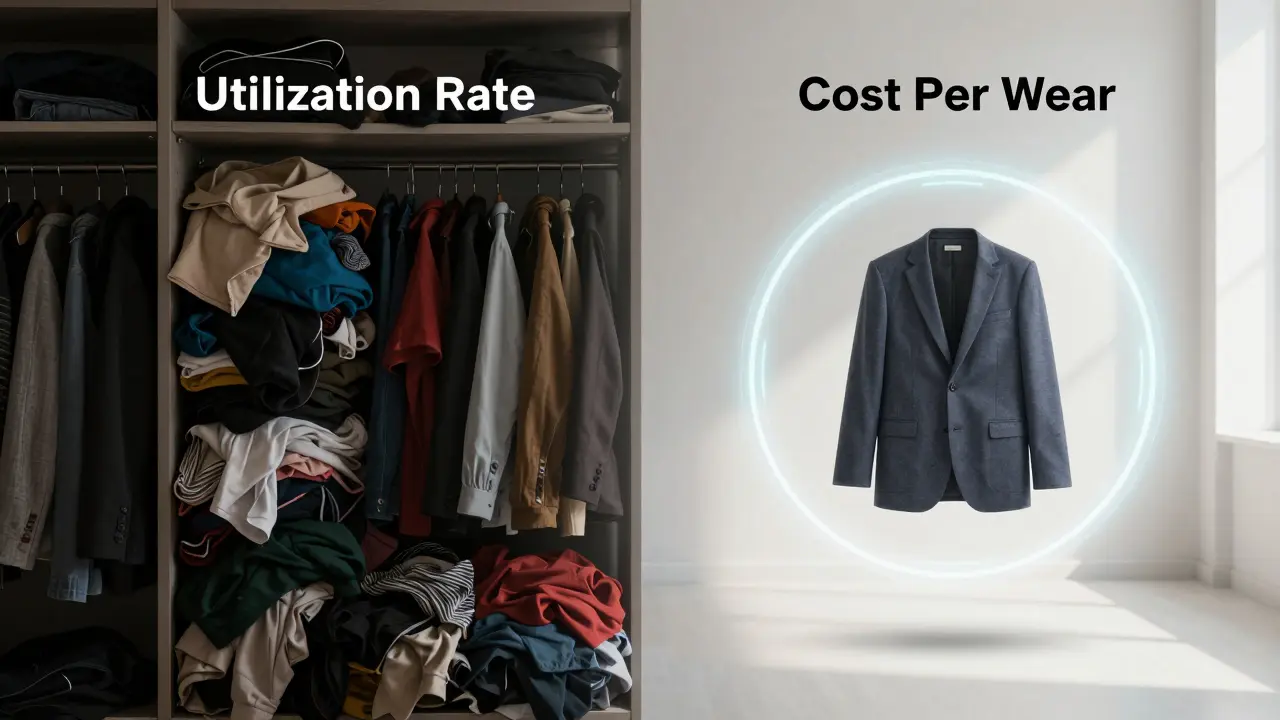
If you buy a cheap $20 fast-fashion dress and wear it twice before it falls apart or goes out of style, that dress cost you $10 per wear. If you invest $200 in a high-quality, timeless piece that you wear 100 times over three years, the cost drops to $2 per wear. This is the foundation of Slow Fashion, a movement that prioritizes quality and longevity over speed and volume.
Calculating this isn't just for your wallet. Every single garment has an embedded carbon cost-the water used to grow the fiber, the energy to weave the fabric, and the fuel to ship it across the ocean. By lowering the cost per wear, you are effectively diluting the environmental impact of that item over a longer period. Instead of replacing a cheap item five times, you buy one item once. You've just cut your production footprint by 80% for that specific category of clothing.
Tracking Your Wardrobe Utilization Rate
Have you ever looked at a full closet and felt like you had nothing to wear? That's a utilization problem. Your utilization rate is the percentage of your wardrobe that actually gets worn on a regular basis. Most people have a "dead zone" of 30% to 50% of their clothes that simply sit there, gathering dust.
To measure this, try a simple audit. For one month, keep a tally of every item you wear. At the end of the month, divide the number of unique items worn by the total number of items in your closet. If you own 100 items but only wore 20, your utilization rate is 20%. A true capsule wardrobe aims for a rate of 70% or higher. When you increase utilization, you eliminate the perceived need to buy "something new" for a specific occasion, which is the primary driver of impulsive shopping.
Material Integrity and the End-of-Life Metric
Not all "better pieces" are created equal. A high-quality polyester blend might last a long time, but it will never biodegrade. This is where we look at material composition. To truly measure impact reduction, you have to look at the Circular Economy, an economic system aimed at eliminating waste and the continual use of resources.
| Material | Durability | Biodegradability | Water Impact |
|---|---|---|---|
| Organic Linen | High | Excellent | Low |
| Recycled Polyester | Very High | None | Medium |
| Conventional Cotton | Medium | Good | Very High |
| Tencel/Lyocell | Medium | High | Low |
When auditing your capsule, assign a value to your fabrics. Natural fibers like linen and hemp are the gold standard because they are durable and can eventually return to the earth. Synthetic fibers, even recycled ones, shed microplastics into the water system every time you wash them. A "better piece" is one that balances high durability (so it doesn't need replacing) with a low end-of-life impact (so it doesn't pollute for 200 years).
Reducing the Acquisition Rate
The most sustainable garment is the one you already own. The most powerful metric in any capsule system is the Acquisition Rate: how many new items enter your life per year. In the era of Fast Fashion, some consumers buy new clothes weekly. A sustainable capsule approach targets a drastic reduction-perhaps only 2 to 5 high-quality additions per year.
Why does this matter more than where the clothes come from? Because the energy required to produce a garment is astronomical. Consider the thousands of liters of water needed for a single cotton shirt. Even if that shirt is "ethically made," the sheer act of production consumes resources. By shifting your goal from "buying sustainable brands" to "reducing the number of purchases," you move from mitigating harm to actually preventing it.
Practical Steps to Implement Your Metrics
You don't need a spreadsheet to start, but a little bit of tracking helps. If you want to see real progress, follow these steps to transition your wardrobe into a measurable system:
- The Inventory Phase: List every item you own. Note the fabric and the brand. This creates your baseline.
- The Wear Test: Use a hanger trick. Turn all your hangers backward. When you wear an item, turn the hanger forward. After three months, see which ones never moved.
- The Value Calculation: For any new purchase, ask: "Will I wear this at least 50 times?" If the answer is no, the cost per wear is too high, and the environmental cost is unjustified.
- The Disposal Audit: When you finally let go of a piece, track where it goes. Does it go to a textile recycling center, a consignment shop, or the trash? Aim for 0% landfill rate.
This approach shifts the power back to the consumer. You stop being a target for marketing and start being a curator of your own environment. You'll find that as your utilization rate goes up, your stress about "what to wear" goes down, and your impact on the planet shrinks proportionally.
Does a capsule wardrobe actually save money?
Yes, in the long run. While the initial cost of "better pieces"-like a high-quality wool coat or leather boots-is higher, the cost per wear is significantly lower than buying cheap alternatives every season. You stop the cycle of constant replacement, which saves hundreds of dollars annually.
What if I love fashion and variety?
Sustainability doesn't mean wearing the same gray outfit every day. It means focusing on versatile pieces that can be styled in multiple ways. You can either rotate your capsule seasonally or engage in a "clothing swap" with friends to get the variety you crave without triggering new production.
Are recycled synthetics better than virgin plastics?
They are better in terms of waste diversion (keeping plastic out of oceans), but they still contribute to microplastic pollution during washing. For a truly sustainable capsule, prioritize natural, organic fibers over any synthetic, even recycled ones, unless the item requires extreme technical performance (like waterproof gear).
How many items should be in a sustainable capsule?
There is no magic number. Some people thrive with 33 items, others need 70. The metric that matters is utilization. If you have 100 items and use 90 of them, you are more sustainable than someone with 30 items who only wears 10. Focus on the ratio of use, not the arbitrary count.
How do I handle clothes that are too worn to be worn but not biodegradable?
Avoid the trash can. Look for specialized textile recycling programs that can break down synthetic fibers for use in insulation or car upholstery. Many cities now have designated drop-off points for "unwearable" textiles to ensure they don't end up in a landfill.
Next Steps for Your Sustainable Journey
If you're feeling overwhelmed, start with one category. Perhaps focus on your t-shirts or your shoes. Try to reach a 100% utilization rate for that one category before expanding. If you find you have too many duplicates, consider donating them to a local shelter or selling them via a resale app to keep them in circulation.
For those who want to go deeper, start tracking your "Acquisition Gap." This is the time between when you feel the urge to buy something and when you actually purchase it. By implementing a 30-day waiting period, you'll find that most "needs" disappear, further lowering your acquisition rate and cementing your commitment to a lower-impact lifestyle.


Write a comment