

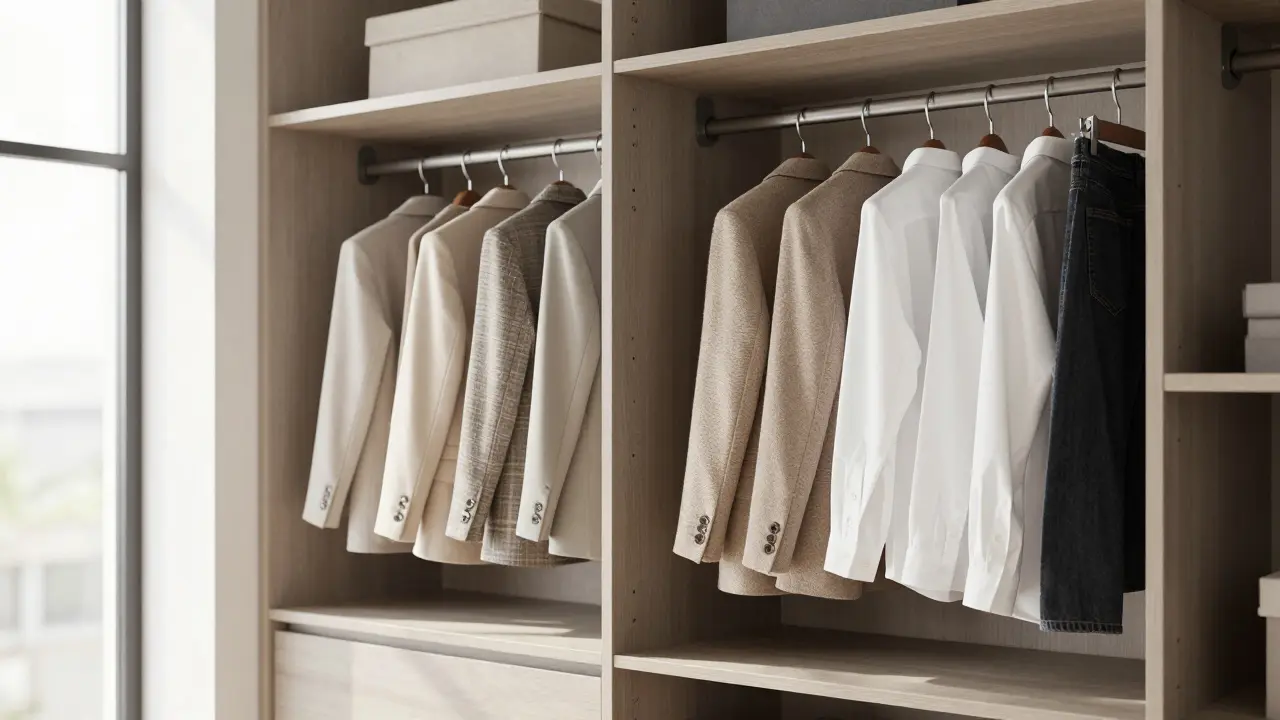
You probably know the feeling. You stand in front of your open closet, staring at a sea of hangers, and think, I have nothing to wear. It’s not that you’re broke. In fact, you’ve likely spent hundreds-maybe thousands-on clothes this year alone. But instead of a wardrobe that works for you, you have a pile of unworn items taking up space and draining your bank account. This is the paradox of modern shopping: we buy more to feel better prepared, but end up less satisfied and poorer.
The solution isn’t another shopping trip. It’s a shift in how you view clothing as an asset rather than a disposable commodity. This is where capsule wardrobe economics comes into play. By focusing on fewer, higher-quality pieces, you stop bleeding money on trends that fade in weeks and start investing in garments that last for years. Let’s look at the math behind why buying less actually saves you more.
The Math Behind Cost Per Wear
To understand why a capsule wardrobe makes financial sense, you need to change how you calculate the price of a garment. Most people look at the sticker price. If a pair of jeans costs $100, they see $100 gone. That’s it. But that number is misleading because it ignores usage.
The real metric is Cost Per Wear (CPW). This is simple division: Price divided by the number of times you wear the item. Here is how it plays out in real life:
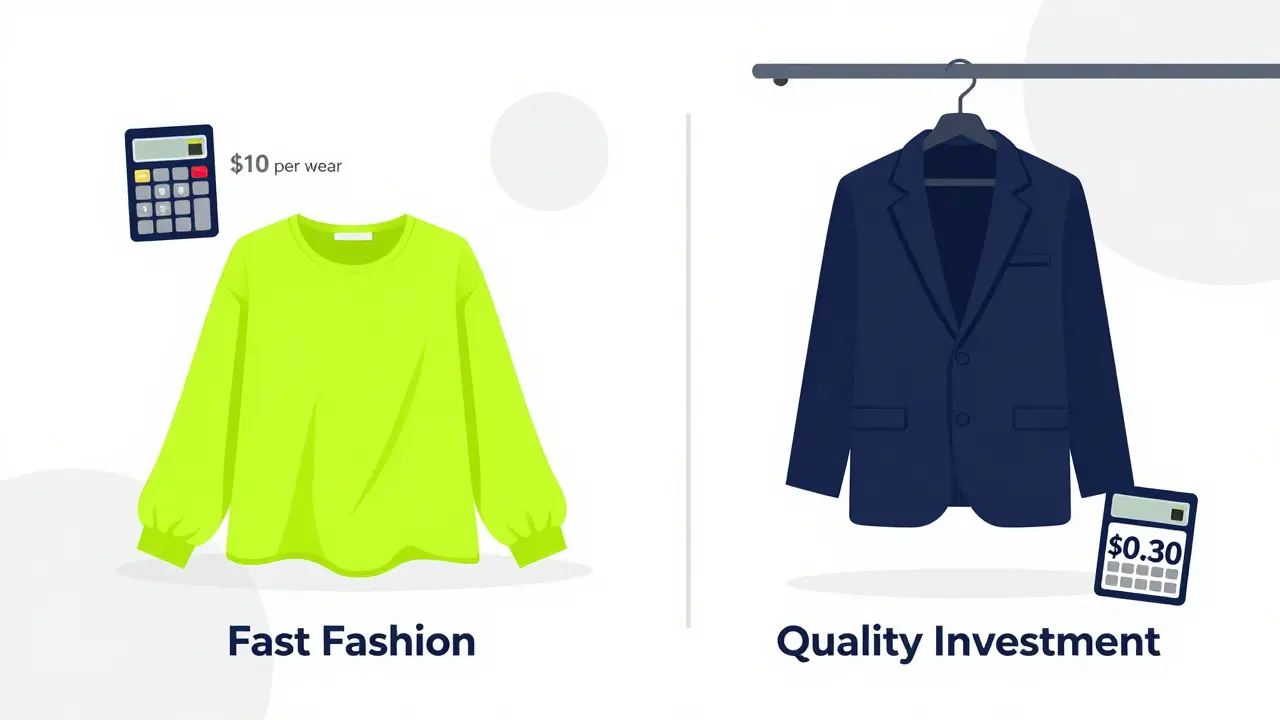
- The Fast Fashion Trap: You buy a trendy blouse for $30. You love it, so you wear it three times before the seams unravel or the fabric pills. Your CPW is $10 ($30 / 3 wears). That is expensive for a single night out.
- The Quality Investment: You buy a classic wool blazer for $150. It fits perfectly, looks sharp, and survives five years of regular use. You wear it twice a week for work and social events. Over five years, that’s roughly 500 wears. Your CPW is $0.30.
When you switch from volume to value, the economics flip. A $200 coat worn 200 times is cheaper per use than a $50 coat worn ten times. The initial hit to your wallet hurts more, yes, but the long-term savings are massive. You aren’t just saving money; you are stopping the cycle of constant replacement.
The Hidden Costs of Fast Fashion
Beyond the direct cash outflow, there are hidden economic drains associated with constant accumulation. These are the costs that don’t show up on your credit card statement but impact your budget significantly.
| Cost Type | Description | Impact on Budget |
|---|---|---|
| Decision Fatigue | Time spent choosing outfits daily | High (lost productivity/mental energy) |
| Storage & Space | Rent for closets, bins, or extra rooms | Medium (especially in cities like NYC) |
| Maintenance | Dry cleaning, repairs, laundry supplies | Low to Medium (adds up over time) |
| Depreciation | Items losing value/resale potential quickly | High (fast fashion has near-zero resale value) |
Consider decision fatigue. Every morning, if you have 100 options, you spend mental energy filtering through them. If you have 40 curated pieces, you get dressed in seconds. In a high-pressure job, that saved time has monetary value. Then there is storage. In New York, space is premium. Do you really need a second closet or plastic bins under your bed for clothes you haven’t touched since 2023? That clutter often leads to renting larger spaces or paying for storage units, which is pure waste.
Maintenance is another factor. Cheap clothes require delicate handling or fall apart after one wash. Quality staples, like dark denim or merino wool sweaters, are often machine-washable and durable. You spend less on detergents and dry cleaning when your clothes are built to withstand regular use.
Building Your Economic Capsule
Creating a capsule wardrobe isn’t about throwing everything away today. It’s a strategic transition. Start by auditing what you currently own. Pull everything out. Be honest: when was the last time you wore this? If it’s been over a year, it’s likely dead weight. Donate or sell it. Selling even a small portion can fund your first quality purchase.
Next, identify your core categories. These usually include tops, bottoms, outerwear, and shoes. For a professional in a city environment, this might look like:
- Tops: 5-7 versatile shirts/blouses (mix of casual and formal)
- Bottoms: 3-4 pairs of trousers/jeans/skirts
- Outerwear: 1-2 coats/jackets suitable for the climate
- Shoes: 3-4 pairs (commuter, office, casual)
The key is versatility. Every top should go with every bottom. This creates maximum outfit combinations from minimum pieces. If you buy a bright neon shirt that only matches one pair of pants, it fails the economic test. Stick to neutral colors-black, white, navy, gray, beige-and add texture or fit for interest. This ensures that every dollar you spend contributes to multiple outfits.
Quality vs. Quantity: What to Look For
How do you spot a piece that will survive the test of time? You need to look beyond the brand logo. Focus on construction and materials.
Check the fabric content. Natural fibers like cotton, wool, linen, and silk generally age better than synthetics like polyester or acrylic, which can pill, retain odors, and degrade faster. Look for tight weaves and sturdy stitching. Seams should be reinforced, especially at stress points like armholes and pockets. Zippers should glide smoothly without catching.
Don’t shy away from mid-range prices. The sweet spot for durability often lies between fast fashion and luxury designer labels. Brands that focus on craftsmanship rather than marketing hype offer the best return on investment. Read reviews specifically mentioning longevity. If someone says, "I’ve had this jacket for three years and it still looks new," that is the data point you need.
The Psychological Benefit of Less
Economics isn’t just about dollars; it’s about satisfaction. Studies in behavioral psychology show that having too many choices leads to anxiety and regret. When you curate your wardrobe, you reduce the cognitive load of getting ready. You wake up knowing exactly what works for your body and your lifestyle.
There is also a confidence boost. Wearing clothes that fit well and are made of good materials changes how you carry yourself. You feel put together without trying hard. This subtle shift can impact your performance at work or your comfort in social situations. It’s a return on investment that doesn’t appear on a spreadsheet but affects your daily life.
Furthermore, decluttering brings a sense of control. In a world where we are constantly bombarded with ads telling us we need more, owning less is a rebellious act. It signals that you value your time, your money, and your environment. You break free from the treadmill of seasonal trends.

Maintaining the System
A capsule wardrobe requires maintenance, but it’s easier than managing a chaotic closet. Adopt a "one in, one out" rule. If you buy a new pair of shoes, an old pair must leave. This prevents accumulation from creeping back in.
Take care of what you have. Mend small tears immediately. Clean stains properly. Store clothes correctly-hang heavy items, fold knits to prevent stretching. Proper care extends the life of your garments, keeping your CPW low. If an item reaches the end of its life, replace it with something similar that fits your current needs, rather than impulse-buying something different.
Seasonal adjustments are normal. Swap out summer dresses for winter coats, but keep the core neutral base consistent. This way, you don’t need to overhaul your entire wardrobe every few months. You simply layer differently.
Is It Worth the Initial Investment?
Yes. While building a quality capsule takes upfront capital, the total cost over five years is significantly lower than continuous fast fashion shopping. You stop wasting money on items that disappear after a season. You gain time, clarity, and confidence. More importantly, you contribute less to the environmental crisis caused by textile waste. Ethical consumption aligns your spending with your values, creating a deeper sense of fulfillment than any fleeting trend ever could.
How many pieces should be in a capsule wardrobe?
A typical capsule wardrobe contains 30-40 items, including shoes and accessories, but excluding underwear and workout gear. The exact number depends on your lifestyle and climate. The goal is enough variety to avoid boredom but few enough to ensure everything gets worn regularly.
Can I build a capsule wardrobe on a tight budget?
Absolutely. Start by using what you already own. Identify gaps and fill them slowly. Thrift stores and consignment shops are great sources for high-quality, pre-owned items. Prioritize spending on items you wear most frequently, like jeans and jackets, and save on accessories.
What colors work best for a capsule wardrobe?
Neutral colors like black, white, navy, gray, beige, and denim blue are the foundation. They mix and match easily. You can add 1-2 accent colors that complement your skin tone for personality, but keep the majority neutral to maximize versatility.
How do I handle special occasions with a capsule wardrobe?
Keep a separate "special occasion" section for items you wear rarely, like evening gowns or formal suits. Alternatively, invest in one versatile dress or suit that can be dressed up or down with accessories. Renting for unique events is also a cost-effective option.
Does a capsule wardrobe limit my style expression?
Not necessarily. Style comes from fit, confidence, and accessorizing, not just quantity. A well-curated capsule allows you to refine your personal aesthetic. You can rotate accessories, jewelry, and scarves to create new looks without adding more clothing items.