

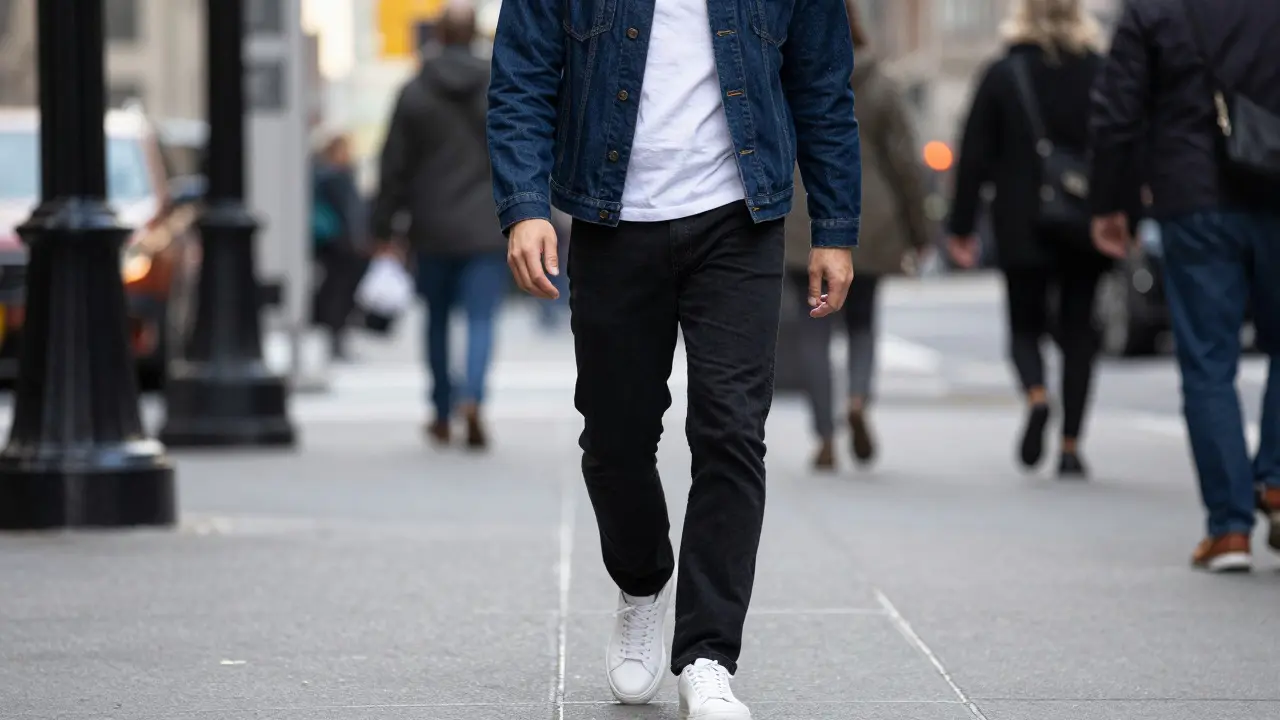
Walking down the street in New York City, you see it everywhere. A person in a well-fitted denim jacket, clean white sneakers, and a simple t-shirt looks sharper than someone struggling with an ill-fitting suit. That is Casual Style at its peak. It is not about wearing less; it is about choosing better. Casual style is a relaxed aesthetic that prioritizes comfort, functionality, and timeless silhouettes over rigid formal rules. It allows you to move freely while looking intentional. If you have ever felt like your clothes are working against you, this approach will change how you dress.
The core of this aesthetic lies in balance. You do not need expensive labels to look good. You need understanding. Understanding how fabrics feel, how cuts interact with your body type, and how to mix textures without creating visual chaos. This guide breaks down the mechanics of casual dressing so you can stop guessing and start curating a wardrobe that feels like it was made for you.
The Foundation: Why Comfort Is Not Sloppy
Many people confuse casual with careless. They think if it is comfortable, it must be baggy or wrinkled. That is a myth. True casual style relies on Fit, which is the single most important attribute of any outfit. A $20 t-shirt that fits your shoulders correctly looks more polished than a $100 shirt that is too tight across the chest. Fit ensures that clothes follow your natural lines rather than fighting them.
Comfort comes from fabric choice. Natural fibers like cotton, linen, and wool breathe better than synthetics. In hot weather, linen keeps you cool. In cooler months, merino wool regulates temperature without itching. When you prioritize breathable materials, you stop adjusting your clothes throughout the day. You just live in them. This passive ease is what makes the style look effortless to observers.
Signature Pieces Every Wardrobe Needs
You do not need a closet full of items. You need a few high-quality staples that work together. These are the building blocks of casual dressing. Each piece should be versatile enough to pair with at least three other items in your rotation.
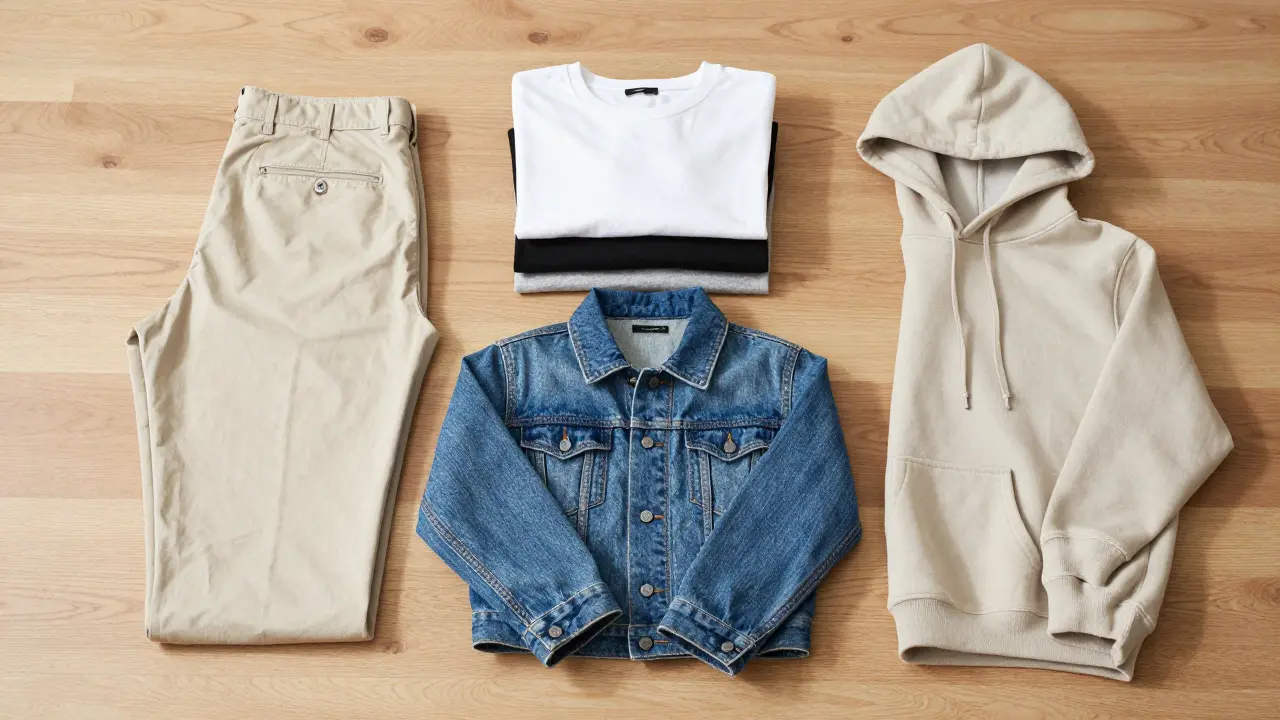
- Well-Fitted Jeans: Choose straight or slim cuts in dark indigo or black. Avoid excessive distressing unless it matches your personal vibe. Dark denim acts as a neutral base similar to chinos but offers more durability.
- Plain T-Shirts: White, black, grey, and navy are essential. Look for heavyweight cotton (at least 6 oz) that holds its shape after washing. Thin shirts cling and show every contour, which often looks less put-together.
- Chinos: These bridge the gap between jeans and trousers. Beige, olive, and navy chinos offer color variety without pattern noise. They work with sneakers for weekends and loafers for casual Fridays.
- Denim Jacket: A classic blue denim jacket adds structure to soft fabrics. It works over t-shirts, hoodies, or button-downs. The rigidity of the denim contrasts nicely with softer layers underneath.
- White Sneakers: Clean leather or canvas sneakers are the ultimate casual footwear. They keep the look fresh and grounded. Keep them clean; scuffed shoes ruin an otherwise sharp outfit.
- Oversized Hoodie: For colder days, a neutral-colored hoodie provides warmth without bulk. It pairs well with joggers or tapered pants for a relaxed silhouette.
Notice that none of these items require logos or loud patterns. Simplicity is key. When your basics are solid, adding statement pieces becomes easier because there is no visual competition.
Mastering Texture and Color Balance
Color coordination is simpler than most people think. Stick to a limited palette. Neutrals like black, white, grey, beige, and navy form the backbone. Add one accent color per season, such as rust, forest green, or burgundy. This prevents your wardrobe from looking chaotic while still allowing personality.
Texture adds depth. Mixing different fabrics creates visual interest even when colors match. For example, pairing a smooth cotton t-shirt with a chunky knit sweater and raw denim creates a layered look that feels rich. Avoid mixing multiple heavy textures at once. If you wear a thick wool coat, keep the inner layers smoother. This contrast guides the eye and makes the outfit look thoughtfully assembled.
| Fabric | Best Season | Comfort Level | Maintenance |
|---|---|---|---|
| Cotton | Spring/Fall | High | Easy wash |
| Linen | Summer | Very High | Wrinkles easily |
| Merino Wool | Winter | Medium-High | Dry clean recommended |
| Denim | All Seasons | Medium | Low frequency wash |
Building Outfits Without Thinking
The goal is to reduce decision fatigue. By establishing a few go-to combinations, you save mental energy for other parts of your life. Here are three reliable formulas that work for almost anyone:
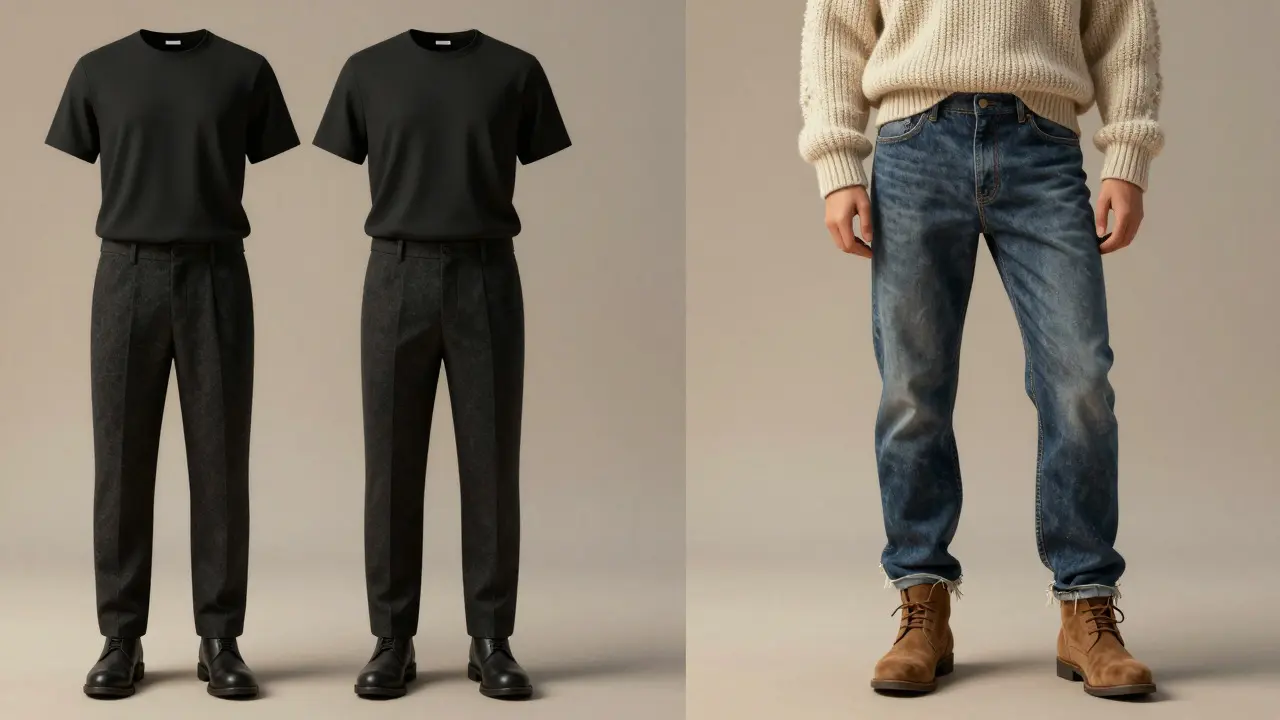
- The Monochrome Mix: Wear all-black or all-grey outfits. Vary the textures. A black t-shirt, black chinos, and black boots look sleek. Adding a grey cardigan introduces subtle contrast.
- The Classic Triad: White t-shirt, blue jeans, and white sneakers. This is the universal casual uniform. Add a denim jacket or a watch to elevate it.
- The Layered Neutral: Beige chinos, a cream crewneck sweater, and brown leather boots. This earth-tone combination feels warm and sophisticated. Perfect for autumn evenings.
When you master these templates, dressing takes less than five minutes. You are not searching for inspiration; you are executing a plan. This efficiency is the true power of casual style.
Common Mistakes to Avoid
Even experienced stylists make errors. Watch out for these pitfalls that undermine casual looks:
- Too Many Logos: One branded item is fine. Three or more looks like a catalog advertisement. Let the fit speak, not the label.
- Poorly Fitted Shoes: Shoes anchor the outfit. If they are too large or worn out, the whole look drags. Invest in quality footwear.
- Ignoring Grooming: Casual does not mean unkempt. Clean nails, neat hair, and fresh clothes are non-negotiable. The style relies on cleanliness.
- Over-Layering: More is not always better. Three layers maximum is usually sufficient. Excess fabric creates bulk and hides your shape.
Adapting Casual Style to Your Body Type
Your body shape influences how clothes drape. If you have a broader shoulder, avoid boxy jackets. Opt for tailored fits that taper slightly at the waist. If you have a longer torso, shorter hemlines on shirts help balance proportions. If you are petite, monochromatic outfits create a continuous line that elongates your frame. These adjustments are subtle but impactful. They ensure the clothes serve you, not the other way around.
Casual style is not a trend. It is a mindset. It values substance over spectacle. By focusing on fit, fabric, and function, you build a wardrobe that lasts years, not seasons. Start with the basics listed above. Refine your choices over time. Soon, getting dressed will feel less like a chore and more like a routine you enjoy.
What is the difference between casual and smart casual?
Smart casual elevates the look by incorporating structured elements like blazers, oxfords, or leather shoes. It maintains comfort but adds a layer of polish suitable for business-casual environments. Pure casual focuses entirely on relaxation and everyday utility.
How many pieces do I need to start a casual wardrobe?
You can start with six to eight core pieces. This includes two pairs of jeans, two t-shirts, one pair of chinos, one jacket, and two pairs of shoes. From there, expand based on gaps in your daily needs.
Is casual style appropriate for the office?
It depends on the company culture. In creative or tech industries, yes. In traditional finance or law, you may need to add smart elements like a blazer or dress shoes to meet expectations.
What shoes work best with casual outfits?
Clean white sneakers are the safest bet. Leather loafers, suede desert boots, and minimalist running shoes also work well. Avoid athletic sandals or heavily worn gym shoes unless going to the gym.
How do I maintain my casual clothes?
Wash jeans less frequently to preserve color and shape. Use cold water for t-shirts to prevent shrinking. Store knits folded to avoid stretching. Regular care extends the life of your garments significantly.


Write a comment