


There’s something quiet and mysterious about coastal mornings when the fog rolls in-damp air clinging to your skin, the world muffled, the horizon gone. You step outside with your coffee, and suddenly, your usual jacket feels too thin. Your light sweater does nothing against the chill that seeps through your bones. This isn’t winter. It’s not summer either. It’s that in-between time when the sun doesn’t quite trust itself to show up, and the air stays cool no matter what the calendar says.
Why Your Regular Clothes Don’t Work in Coastal Fog
Most wardrobes are built for extremes: heavy coats for freezing temps, tank tops for 80°F days. But coastal fog doesn’t care about seasons. It hangs around in spring, fall, even early summer, especially near the Pacific, the Northeast, or the Great Lakes. The temperature might hover around 50-60°F, but the humidity makes it feel colder. Wind off the water cuts through cotton like it’s not even there. You’re not just chilly-you’re uncomfortable, damp, and stuck.
What you need isn’t more layers. It’s the right layers. Not bulky. Not flashy. Just smart, quiet pieces that adapt as the day shifts from foggy to sunny to foggy again.
The Three Rules of Fog-Ready Dressing
Forget trends. Forget matching sets. Here’s what actually works:
- Start with moisture-wicking base layers. Cotton holds water. Merino wool or synthetic blends pull sweat away and dry fast. Even in fog, your body heats up. You don’t want to be stuck in a wet shirt all day.
- Mid-layers need breathability. A chunky knit sweater traps heat but doesn’t let moisture escape. Look for thin, open-weave merino or lightweight fleece. It traps warmth without suffocating you.
- Outer layers must block wind, not just rain. A raincoat might keep you dry, but if it doesn’t stop wind, you’ll still feel cold. Look for wind-resistant fabrics like Pertex Shield, ripstop nylon, or tightly woven cotton canvas.
These aren’t fancy rules. They’re physics. Fog isn’t just water in the air-it’s cold, wet, moving air. Your clothes have to manage heat, moisture, and wind at once.
Top 5 Transitional Pieces for Coastal Fog
These five items make up the core of a fog-proof wardrobe. They’re not expensive. They’re not trendy. But they work, every time.
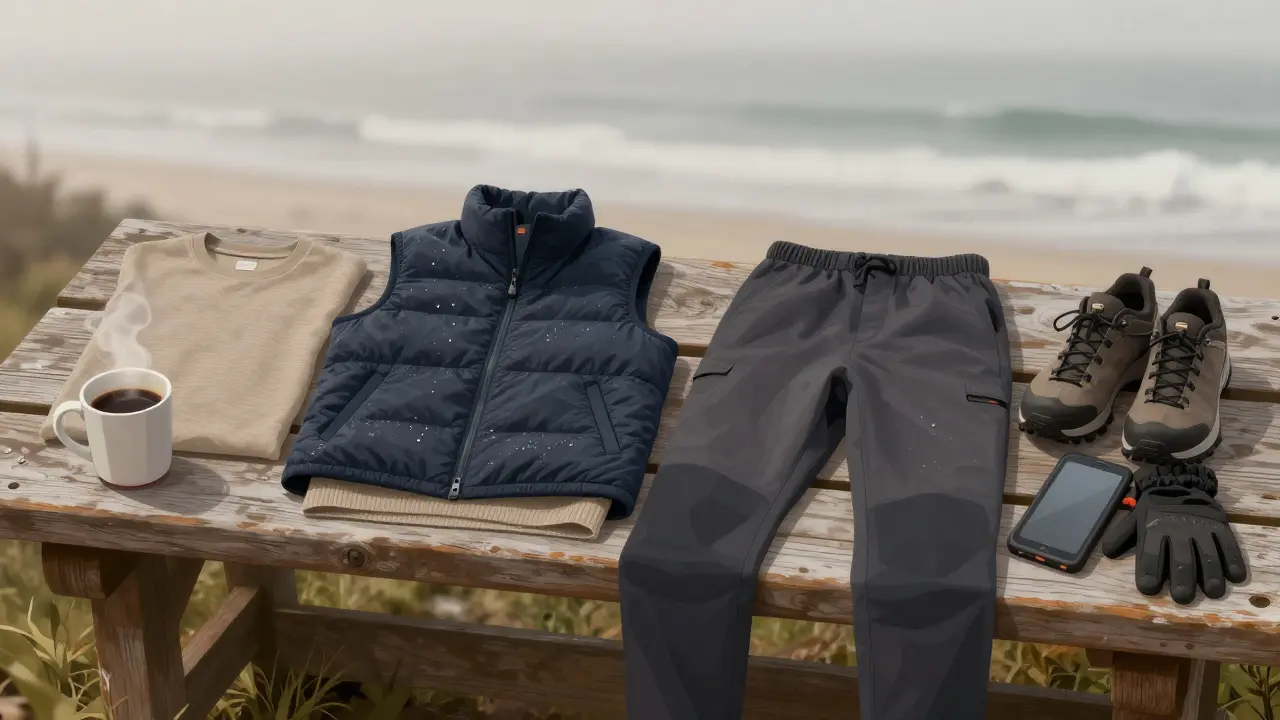
- Merino wool turtleneck - Thin, warm, and odor-resistant. Wear it alone under a jacket or layered under a vest. Brands like Smartwool and Icebreaker make them in neutral tones that blend with everything.
- Water-resistant trench coat (lightweight) - Not the heavy, double-breasted kind. Look for one under 2 pounds, with a hood and adjustable cuffs. The Barbour Bedale is a classic, but even Uniqlo’s Ultra Light Down Trench works if you’re on a budget.
- Lightweight insulated vest - No sleeves means you can move freely, and the insulation stays trapped over your core. Down or synthetic fill both work. Avoid puffer vests-they’re too bulky for foggy city walks.
- Water-repellent trousers - Forget jeans. They get heavy, cold, and take forever to dry. Try nylon-blend pants with a DWR finish (durable water repellent). Brands like Arc’teryx and Prana make them that look like chinos but behave like outdoor gear.
- Waterproof gloves with touchscreen tips - Your hands are the first to go numb. Thin, windproof gloves made from materials like GORE-TEX Invisible Fit let you scroll your phone without taking them off.
That’s it. Five pieces. No more. No less. Everything else you own can be swapped out depending on the day.
What to Avoid
Some things seem like they should work-but they don’t.
- Heavy parkas - You’ll overheat by 10 a.m. and still feel cold at 7 a.m.
- Denim jeans - They soak up moisture like a sponge. Even dark washes won’t hide the damp streaks.
- Cotton hoodies - They’re cozy until they get wet. Then they’re just cold, heavy fabric stuck to your chest.
- Open-toed shoes or loafers - Damp ground + damp air = cold feet. Always wear closed-toe shoes with a water-resistant finish.
One mistake I see too often: people wear one thick layer and think that’s enough. Fog doesn’t care how warm you think you are. It creeps in through gaps-sleeves, collars, hems. That’s why layering isn’t optional. It’s survival.
How to Layer Like a Pro
Here’s what a real foggy morning outfit looks like, step by step:
- Start with a merino wool long-sleeve base layer (turtleneck or crewneck).
- Add a lightweight insulated vest over it. This keeps your core warm without restricting your arms.
- Throw on a water-resistant trench coat with a hood. Button it up to your neck if the wind picks up.
- Wear water-repellent trousers-not jeans, not leggings. Something with a bit of stretch.
- Feet: waterproof walking shoes with wool socks. No sneakers. No sandals.
- Hands: touchscreen gloves. Always.
- Optional: A thin, breathable scarf in merino or silk. Don’t wrap it too tight. Let it drape.
That’s it. No puffers. No scarves that look like you’re trying to be a 1940s spy. Just quiet, functional pieces that disappear under the fog.
Colors That Work in Fog
Fog doesn’t just chill you-it flattens color. Brights get swallowed. Pastels look washed out. You want tones that hold their own in low light.
- Charcoal gray
- Deep navy
- Forest green
- Warm taupe
- Black (but only if the fabric has texture-flat black looks dead)
These colors don’t scream. They blend. They look intentional, not accidental. And they don’t show dirt or damp spots as badly.
Real People, Real Fog Mornings
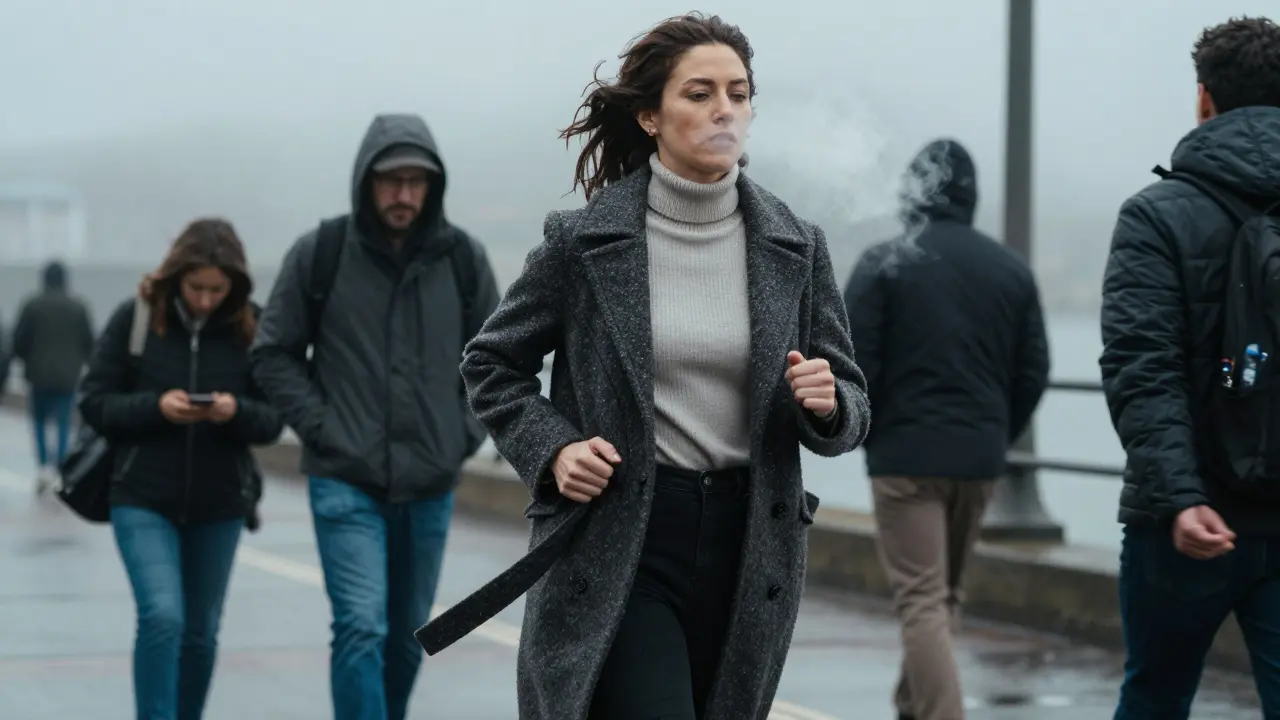
I’ve watched commuters in Portland, San Francisco, and even coastal New England. The ones who look comfortable? They’re not wearing designer coats. They’re wearing thrifted merino sweaters, waterproof jackets from REI’s sale rack, and sturdy boots from Wolverine. They don’t care about Instagram aesthetics. They care about staying dry and warm without sweating.
One woman I saw last October in Half Moon Bay wore a $35 wool blend coat from Target, paired with a $12 merino turtleneck from Uniqlo, and waterproof hiking pants from Columbia. She looked put-together. She didn’t shiver. She walked into her café with dry hair and warm hands.
That’s the goal. Not looking like a catalog model. Looking like you’ve got it figured out.
Where to Shop (Without Breaking the Bank)
You don’t need to spend $300 on a jacket. Here’s where to find the right pieces:
- Uniqlo - Merino wool basics, lightweight down vests, water-resistant trousers. Affordable, consistent quality.
- REI Co-op - Their house brand, REI Co-op, has wind-resistant shells and moisture-wicking layers that outperform pricier brands.
- Thrift stores - Look for wool coats, trench coats, and wool sweaters. Check the seams. If they’re intact, they’ll last 10 more years.
- Amazon Essentials - Surprisingly good for basic merino turtlenecks and thermal tops. Read reviews with keywords like “not itchy” and “holds up after washing.”
Don’t buy for the brand. Buy for the fabric. If it says “100% merino wool” or “DWR-treated nylon,” you’re on the right track.
What Happens When You Get It Right
When your outfit works with the fog, not against it, something changes. You stop checking the weather app every five minutes. You don’t dread stepping outside. You move through the mist like it’s part of the day-not an obstacle.
You notice things. The way the fog clings to the branches. The sound of a distant foghorn. The smell of wet pavement and salt air. You’re not just dressed. You’re present.
That’s the real win. Not looking good. Feeling good. In a world that pushes you to be loud, bright, and always ready for summer, sometimes the most powerful thing you can wear is quiet.
Can I wear jeans in coastal fog?
Jeans aren’t ideal. They absorb moisture, take hours to dry, and feel heavy and cold when damp. Opt for water-repellent trousers made from nylon blends instead. They look like regular pants but handle fog better. If you must wear jeans, pair them with thermal leggings underneath and waterproof boots to reduce the chill.
Do I need a raincoat or just a windbreaker?
A windbreaker blocks wind but won’t stop light drizzle. A raincoat stops water but can trap sweat. For coastal fog, you need something that does both: a water-resistant, breathable shell. Look for terms like “DWR-treated,” “windproof,” and “breathable membrane.” A lightweight trench or hybrid jacket works best.
Is merino wool itchy?
Lower-quality merino can be, but most modern versions use fine-gauge fibers (17.5-19.5 microns) that feel soft against the skin. Look for brands that specify micron count. Icebreaker, Smartwool, and Uniqlo’s merino lines are consistently soft. Avoid blends with synthetic fibers if you’re sensitive.
What shoes work best in damp coastal mornings?
Water-resistant walking shoes or boots with a rubber sole and breathable lining are ideal. Brands like Clarks, Ecco, and Merrell make models that look casual but handle wet ground well. Avoid leather sneakers-they soak up moisture. Look for shoes with a DWR finish or GORE-TEX lining.
Can I use a regular scarf instead of a merino one?
Cotton or acrylic scarves hold moisture and get cold quickly. A merino wool or silk-blend scarf is better because it wicks sweat and retains warmth even when damp. If you only have a cotton scarf, wear it loosely-not wrapped tightly-and remove it if you start to sweat. Better yet, skip it and rely on a high-collar jacket.
Next Steps: Build Your Fog Kit
Start small. Pick one piece-maybe a merino turtleneck-and wear it for a week in the fog. Notice how your body feels. Then add a wind-resistant jacket. Then waterproof pants. Don’t buy everything at once. Test what works for you.
Coastal fog isn’t going away. But your outfit can adapt. You don’t need to suffer through it. Just dress smarter.


Write a comment