


Ever look in the mirror after getting dressed and feel like something’s just… off? Your outfit looks fine on paper, but your face looks tired, washed out, or even a little greenish? You’re not imagining it. More often than not, the culprit isn’t your makeup or lack of sleep-it’s the colors you’re wearing. Color analysis isn’t about following trends or what’s popular on Instagram. It’s about finding the exact shades that work with your natural pigmentation to make your skin glow, your eyes pop, and your whole look feel effortless. And yet, so many people make the same mistakes-mistakes that leave them feeling drained instead of energized.
You’re Using ‘Neutrals’ Wrong
Everyone hears: ‘Wear neutrals-they go with everything.’ But not all neutrals are created equal. A beige sweater that looks perfect on someone else might turn your skin ashy if it’s too warm or too cool. Neutral doesn’t mean gray or taupe. It means a color that harmonizes with your undertone. If you have cool undertones, a pure white or soft gray will lift your complexion. But if you wear a beige that leans yellow (like most off-whites sold in stores), it’ll make your skin look dull or sallow. The same goes for black. True black can be too harsh for warm skin tones, making veins look more prominent and shadows under the eyes deeper. Instead, try deep charcoal or navy. These offer the same contrast without the harshness.
Believing ‘Cool’ or ‘Warm’ Is All You Need
Color analysis isn’t a binary. You’re not just ‘cool’ or ‘warm.’ There’s depth, intensity, and contrast. Someone with pale, pink skin and dark hair might be a cool winter, while someone with the same skin tone but light blonde hair could be a cool spring. Mixing up these subcategories leads to choosing colors that clash instead of complement. A common mistake? A warm-toned person wearing jewel tones like emerald or sapphire. These colors are saturated and cool, and they can make warm skin look muddy. Instead, warm skin tones look best in golden yellows, terracottas, and olive greens. Cool skin tones? They thrive in icy blues, true reds, and pure pinks. The difference isn’t subtle-it’s the difference between looking vibrant and looking like you need a nap.
Testing Colors Under Fluorescent Lights
You’ve probably tried on a dress in a department store, thought it looked amazing, and then felt like a ghost when you got home. That’s because most retail lighting is harsh and cool-toned. It washes out warmth and exaggerates blue undertones. If you’re testing colors under fluorescent lights, you’re not seeing your true skin reaction. Natural daylight is the only reliable test. Stand by a window during the day. Hold the fabric up to your face. Does your skin look brighter? Are your eyes more vivid? Or does everything flatten out? If you can’t get to daylight, use a daylight bulb (5000K-6500K) at home. Don’t trust the lighting in dressing rooms. They’re designed to make you buy, not to help you see the truth.
Ignoring Your Hair and Eyes
Color analysis isn’t just about your skin. Your hair color and eye color play a huge role. If you have dark brown hair and blue eyes, you might assume you’re cool-toned. But if your skin has golden undertones, you’re actually warm. Wearing cool blues might make your eyes look dull because they’re not enhancing your natural contrast. The goal isn’t to match your eyes-it’s to create harmony. A warm peach top near your face will make blue eyes look startlingly clear. A cool lavender might make them look gray. Same with hair. If your hair has red or golden highlights, even if it’s mostly dark, you’re likely warm. Forcing yourself into cool colors because your hair is ‘dark’ is a recipe for looking drained.

Thinking One Color Works for Everything
Some people hear, ‘You’re a summer,’ and then buy every single item in pale blue. But summers aren’t just pale blue-they’re soft, muted, and slightly cool. A dusty rose, a sage green, or a lavender-gray might be even more flattering. The mistake? Limiting yourself to one color family. You’re not a single shade. You’re a range. A true spring can wear coral, peach, and mint-all of which are warm but vary in saturation. A true autumn can wear rust, mustard, and olive. If you’re only wearing one color because you think it’s ‘your color,’ you’re missing out on a whole palette that could make you look radiant. Your best colors aren’t just one shade-they’re a group of shades that work together.
Following Online Quizzes Blindly
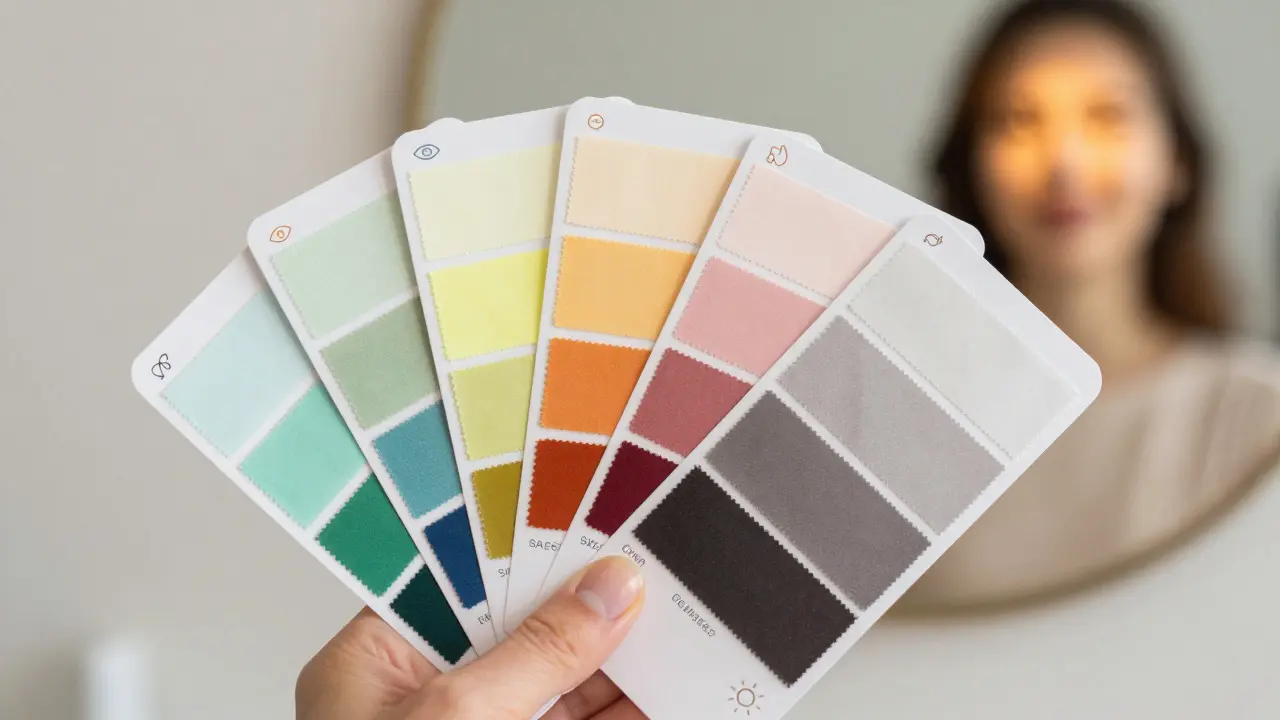
There are hundreds of color analysis quizzes online. ‘Take this 5-question quiz to find your season!’ They’re fun, but they’re not accurate. Most rely on hair color alone or ask you to pick between ‘blue veins’ or ‘green veins’-which is unreliable because lighting, diet, and even time of day affect how veins look. A real color analysis uses draping: placing swatches of fabric directly on your face in natural light. It’s not about guessing. It’s about observing how light reflects off your skin. If a peach swatch makes your skin look luminous, that’s your color-not what a quiz told you. Relying on quizzes without real-life testing is like trying to pick glasses based on a blurry photo.
Not Considering Seasonal Changes
Your skin tone changes with the seasons. In winter, you might be paler. In summer, you tan slightly. That doesn’t mean your whole color season changes-but it does mean your best colors might shift slightly. A cool spring might find that coral looks better in spring, while a soft peach works better in fall. You don’t need to overhaul your wardrobe every season. But if you notice your go-to colors suddenly look dull, try adding a few seasonal accents. A rust scarf in October or a mint headband in June can refresh your look without buying everything new.
You’re Avoiding ‘Your Colors’ Because They’re Not ‘Fashionable’
I’ve seen people refuse to wear their best color because it’s ‘not in style.’ They’ll wear black because it’s ‘timeless,’ even though it makes them look exhausted. Or they’ll wear a trendy gray blazer that washes them out because it’s everywhere on Pinterest. Fashion changes. Your natural coloring doesn’t. A color that flatters you will always look better than a ‘trendy’ one that doesn’t. If your best color is a soft rose, wear it. It’s not about being loud-it’s about looking like the best version of yourself. People notice when you glow. They don’t notice what you’re wearing.
How to Fix This
Start simple. Buy three fabric swatches: one warm, one cool, and one neutral. Drape them against your face in daylight. Look for the one that makes your eyes look brighter, your skin look smoother, and your face look more defined. That’s your starting point. Then, look at your current wardrobe. Pull out the pieces that make you feel tired. Replace them one by one with colors from your palette. You don’t need to buy everything at once. Just start with your top three worn items: a shirt, a jacket, and a pair of pants. Once you see the difference, you’ll never go back.
What Happens When You Get It Right
When you wear colors that match your natural tone, you look rested. You look healthier. You look like you didn’t even try. Your skin glows. Your eyes look clearer. Your makeup looks more natural. People comment on how good you look-but they can’t pinpoint why. That’s the magic. It’s not about looking different. It’s about looking like the most vibrant, confident version of the person you already are.
Can I still wear black if it’s not my best color?
Yes, but not as a base. Black can be too harsh for many skin tones. If it’s not your best color, wear it as an accent-like a belt, shoes, or outer layer-rather than a top or dress. Pair it with a color that flatters your skin to balance it out. For example, if you’re warm-toned, pair black with a gold necklace or a terracotta scarf.
Do I need to buy all new clothes to follow color analysis?
No. Start by identifying your best colors, then look through your existing wardrobe. You’ll likely find a few items that already work. Replace worn-out pieces one at a time with colors from your palette. It’s about smarter shopping, not a full closet overhaul.
What if my hair dye changes my color season?
Your natural coloring is what matters most. Hair dye is temporary. If you’ve dyed your hair darker or lighter, go back to your skin tone and undertone as your guide. A warm-toned person with jet-black dye still looks better in warm colors. Use your skin as the anchor-not your hair.
How do I know if I have warm or cool undertones?
Look at the veins on your wrist under natural light. If they look blue, you’re likely cool. If they look greenish, you’re likely warm. But the best test is jewelry: silver looks better on cool tones, gold on warm. Also, notice how you look in white: pure white suits cool tones. Off-white or cream suits warm tones.
Can I wear colors outside my season?
Yes, but with caution. You can wear colors outside your season if they’re muted, softened, or paired with a flattering accent. For example, a cool-toned person can wear a soft coral if it’s not too bright. The key is contrast: if the color makes your skin look dull, skip it. If it makes you look alive, it works.
Color analysis isn’t about rules. It’s about awareness. It’s about noticing how light touches your skin, how shadows fall, and how a simple change in hue can make you look like you’ve had eight hours of sleep-even if you haven’t. Once you start seeing color the right way, your wardrobe stops being a chore and starts being a tool for confidence.


Write a comment