


Walking into a boardroom in a blazer that’s too tight or shoes that squeak on the floor isn’t just awkward-it can cost you credibility. In conservative business environments, your outfit speaks before you do. And too often, people make simple mistakes that make them look unprepared, unprofessional, or worse-out of touch. This isn’t about fashion trends. It’s about respect, discipline, and the quiet power of getting the details right.
Wearing clothes that don’t fit
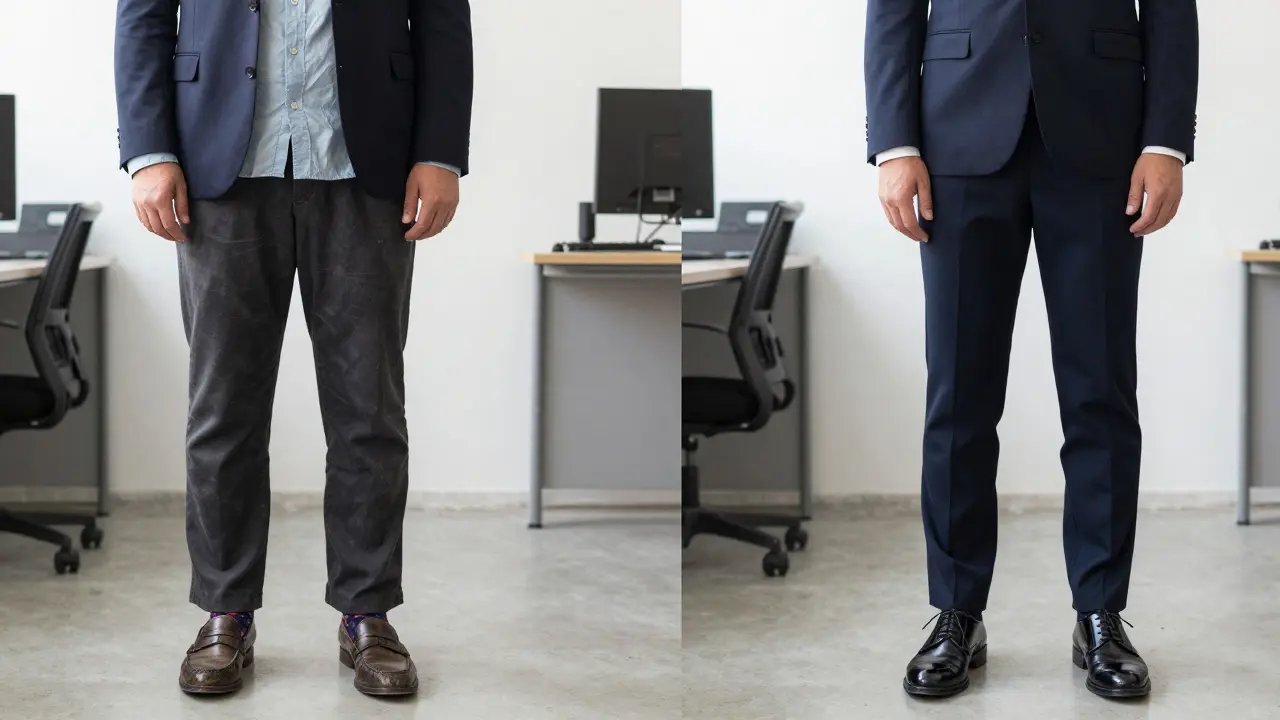
Nothing screams "I didn’t think this through" like clothes that don’t fit. A suit that’s too tight across the shoulders? A shirt that bunches when you sit down? Pants that pool at your ankles? These aren’t minor issues. They’re visual noise that distracts from your message. In conservative settings, tailoring isn’t optional-it’s expected. A well-fitted suit costs more upfront, but it lasts longer and makes you look sharper every single day. If you’re unsure, get it altered. Even a $40 adjustment can turn a good outfit into a great one.
Choosing the wrong fabric
Not all wool is created equal. Cheap polyester blends look shiny under fluorescent lights and wrinkle the moment you sit down. In conservative offices, natural fibers like wool, cotton, and linen (in the right season) are the gold standard. They breathe, drape better, and age gracefully. A $300 wool suit from a reputable brand will outlast and outperform three $100 polyester ones. And don’t forget about the shirt-100% cotton with a twill weave is the quiet hero of professional dressing. It holds its shape, doesn’t cling, and feels like it should.
Over-accessorizing
When it comes to accessories in conservative environments, less is everything. A single watch, a simple tie clip, and maybe one pair of cufflinks are enough. Wearing multiple rings, a chunky bracelet, or a necklace that hangs below your collar? That’s not personality-it’s a red flag. In finance, law, or government settings, restraint signals competence. Think of your accessories like punctuation: they should support the sentence, not rewrite it.
Wearing sneakers or loafers without socks
Sneakers? Never. Not even the "minimalist" ones. Loafers? Only if they’re leather, polished, and worn with socks. Going sockless in a conservative environment is a hard pass. It looks sloppy, unhygienic, and disrespectful. Even in warmer months, invisible socks or no-shows in dark navy or black are the only acceptable option. The rule is simple: if you can’t see your socks, you still need to be wearing them.
Ignoring shoe condition
Shoes are the foundation of your outfit. And worn-out, scuffed, or dirty shoes ruin even the most expensive suit. A $1,000 suit paired with cracked leather shoes makes you look like you don’t care about details. Keep your shoes polished. Rotate them. Use cedar shoe trees. If the leather is cracking or the soles are worn thin, replace them. A pair of quality oxfords or derbies should last five years with basic care. If yours are older than that and still on your feet, you’re overdue for an upgrade.

Wearing bold patterns or loud colors
Stripes? Fine. Plaid? Only if it’s subtle. Neon pink ties? Bright purple shirts? Patterned socks with clashing polka dots? These have no place in conservative business settings. Stick to solids or very restrained patterns. Navy, charcoal, and black suits are the default for a reason-they’re neutral, timeless, and professional. Shirts should be white, light blue, or very pale pink. Ties should be solid or have a small, repeating pattern. If you’re wondering whether something looks "too much," it probably is.
Forgetting about grooming
Dressing professionally isn’t just about the clothes. It’s about the whole package. A clean, well-groomed appearance is non-negotiable. That means trimmed nails, neat hair, and minimal facial hair. A beard? Fine-if it’s shaped and clean. Unkempt stubble looks like you rolled out of bed. Hair should be styled, not messy. Cologne? Use it sparingly, if at all. In close quarters, strong scents are distracting. And don’t forget deodorant. This isn’t a joke-it’s a baseline expectation.
Wearing the wrong undergarments
Undergarments might be hidden, but they still affect how you look. A poorly fitted bra can cause visible bulges or straps showing under a tailored blazer. Boxers with a fly opening can create an awkward outline in dress pants. Men, avoid baggy underwear-it creates wrinkles and shifts under pressure. Women, skip lace trim that shows through thin fabrics. Invest in seamless, body-hugging basics in neutral tones. They don’t make headlines, but they keep you looking polished from every angle.
Thinking "business casual" means "whatever I feel like"
"Business casual" is one of the most misunderstood phrases in professional life. It doesn’t mean jeans, hoodies, or sandals. In conservative environments, it usually means: tailored chinos or wool trousers, a button-down shirt (no t-shirts), a sweater or blazer, and leather shoes. No graphic tees. No flip-flops. No athletic wear. If you’re unsure what "business casual" means at your company, watch what senior leaders wear. Then match it-not exceed it.
Wearing outdated styles
Just because something was in style 20 years ago doesn’t mean it’s still appropriate. Wide lapels, double-breasted suits with six buttons, or patent leather shoes? These are museum pieces, not office wear. Conservative business environments favor classic, modern cuts. Slimmer lapels, single-breasted suits, and narrower ties are the norm today. You don’t need to chase trends, but you also shouldn’t look like you stepped out of a 1980s boardroom movie.
Not adapting to the culture
Every office has its own unwritten rules. A law firm in Chicago expects navy suits and white shirts. A bank in Boston might allow tweed jackets. A government agency in D.C. might require a tie even on Fridays. The key is observation. Watch how people dress in meetings. Notice what the most respected colleagues wear. Ask a trusted mentor if you’re unsure. Dressing to fit in isn’t about conformity-it’s about signaling that you understand the environment you’re in.
What to wear instead
Here’s the simple formula for conservative business environments:
- Suit: Navy or charcoal, single-breasted, slim or classic fit
- Shirt: White or light blue cotton, button-down collar
- Tie: Silk, solid or subtle pattern (stripes, dots, small geometrics)
- Shoes: Oxfords or derbies in black or dark brown leather
- Socks: Dark, no-show or mid-calf, cotton or wool blend
- Accessories: One watch, one tie clip (optional), no rings beyond one
- Grooming: Clean-shaven or neatly trimmed beard, short hair, no strong scents
These aren’t rigid rules. They’re guardrails. Stay inside them, and you’ll be taken seriously. Step outside them, and you risk being seen as careless-even if you’re brilliant.
Final thought: It’s not about looking rich. It’s about looking reliable.
People don’t remember your outfit. But they remember whether you looked like you belonged. In conservative environments, your clothing is a silent resume. It says: "I pay attention. I respect the space. I’m ready." You don’t need to spend a fortune. You just need to be intentional. And that’s something no trend can teach you.
Can I wear a turtleneck instead of a shirt and tie in a conservative office?
In most conservative environments, no. A turtleneck alone lacks the formality of a shirt and tie. If you want to wear one, layer it under a suit jacket and add a tie. But even then, it’s better to stick with a traditional button-down unless your company has a very relaxed culture. When in doubt, default to the classic combo.
Is it okay to wear a blazer without a suit jacket?
Yes-but only if it’s part of a deliberate, coordinated look. A matching blazer and trousers (a suit) is always safest. If you’re mixing, make sure the blazer is in a conservative cut, color, and fabric that matches your pants. A navy blazer with gray chinos is acceptable. A brown blazer with black dress pants? Not in conservative settings. Match the weight and tone.
What if I’m in a hot climate? Can I skip the suit?
Even in hot climates, conservative offices expect structure. Opt for lighter-weight wool or linen blends. A suit made of 100% wool might be too heavy, but a wool-silk-linen blend (around 50/30/20) breathes well and still looks professional. Keep the cut slim and the color dark. A shirt and tie with tailored trousers is the minimum standard. Never skip the tie unless explicitly allowed.
Are loafers ever acceptable in conservative business settings?
Only if they’re full leather, polished, and worn with socks. Loafers without socks are a hard no. Even penny loafers or tassel loafers should be reserved for offices with very relaxed dress codes. In law firms, banks, or government roles, oxfords remain the gold standard. If you prefer loafers, make sure they’re the cleanest, most polished pair you own-and always wear socks.
How often should I replace my business wardrobe?
A well-made suit lasts 5-7 years with proper care. Shirts should be replaced every 2-3 years if you wear them weekly. Shoes need replacement every 2-3 years, depending on wear. Replace items as they show signs of wear: fraying seams, stretched collars, worn soles, or fading fabric. Don’t wait until they’re falling apart. Your appearance is a reflection of your professionalism.
Stick to the basics. Pay attention to fit. Respect the environment. And remember: in conservative business settings, the quietest choices are often the most powerful.


Write a comment