

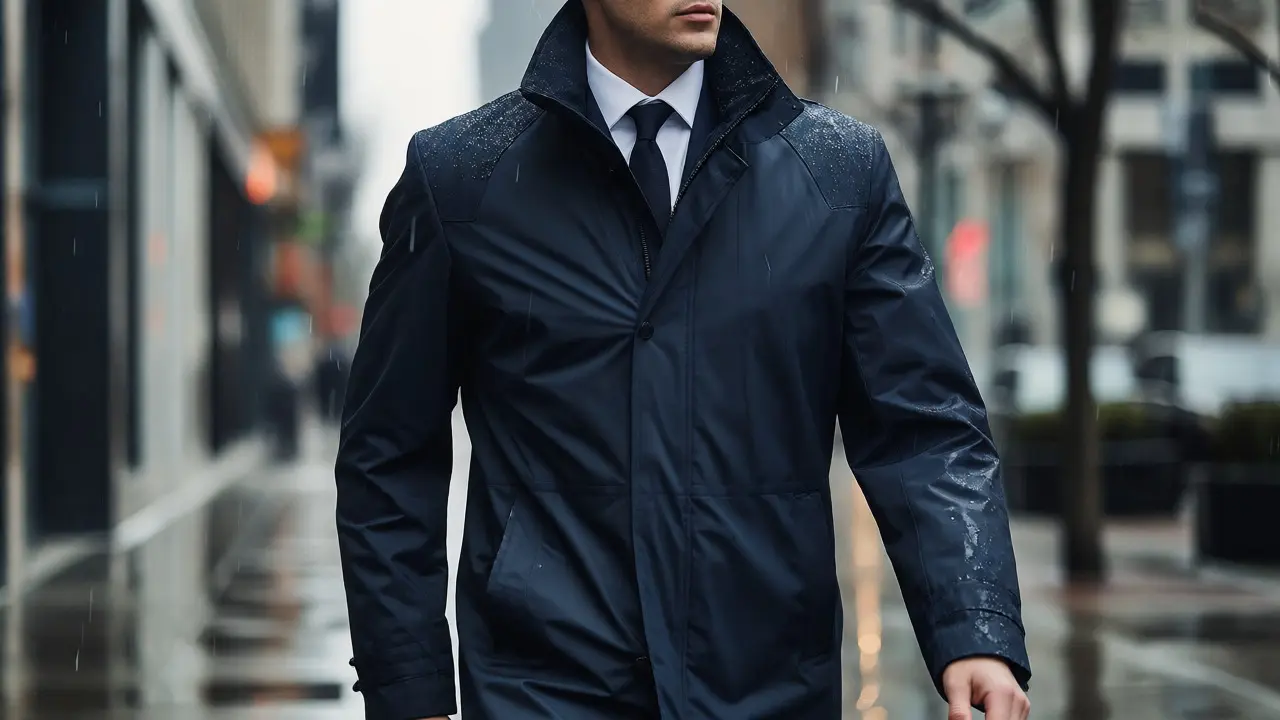
You know the drill. It’s 8:15 AM in Seattle (or any rainy city), and you’re staring at your closet. You have a choice: wear a slick wool overcoat that will get soaked and heavy by the time you reach the office, or throw on a neon-yellow hiking shell that makes you look like you’re about to summit Mt. Rainier instead of attend a board meeting. Neither option is great. The former ruins your suit; the latter ruins your credibility.
This is the commuter outerwear dilemma. We need gear that handles actual weather-rain, wind, sleet-without making us look like we just hiked out of the wilderness. The good news? The gap between technical performance and corporate polish has closed. Brands are finally designing coats with hidden vents, matte finishes, and tailored cuts that pass the "office test" while keeping you dry.
| Feature | Why It Matters for Work | What to Avoid |
|---|---|---|
| Fabric Finish | Matte or low-sheen looks sophisticated under fluorescent lights. | High-gloss nylon that reflects light like a trash bag. |
| Cut & Fit | Articulated elbows allow movement without pulling shirt cuffs. | Bulky padding that hides your blazer silhouette. |
| Ventilation | Pit zips prevent sweat buildup during rushed commutes. | Non-breathable coatings that trap heat indoors. |
| Hood Design | Stowable hoods keep collars crisp when not raining. | Giant, brimmed hoods that obscure your face in meetings. |
The Anatomy of a Smart Commuter Coat
When shopping for weatherproof coats that double as business attire, you need to look past the marketing fluff. Here is what actually matters when you’re trying to maintain a professional image while battling the elements.
First, consider the fabric technology. Traditional waterproofing often relied on shiny polyurethane coatings. Today, brands use membranes like Gore-Tex or proprietary equivalents such as eVent. These materials block water molecules but let vapor escape. For a commuter, this means you won’t arrive at your desk damp from your own sweat after running for the bus. Look for terms like "DWR finish" (Durable Water Repellent) which causes water to bead up and roll off rather than soak in. If the coat feels like plastic, put it back. It should feel like high-quality cotton or wool blend, even if it’s synthetic.
Next, examine the cut. A boxy fit might be comfortable for hiking, but it adds bulk over a dress shirt and tie. You want a slim or athletic cut that accommodates layers underneath without ballooning. Check the armholes. High armholes allow you to raise your arms to grab an overhead train handle without lifting the entire hem of the coat. This small detail prevents your pants from showing and keeps your posture looking sharp.
Layering Systems That Survive the Office
Outerwear is only half the battle. Your base and mid-layers determine whether you stay warm or end up sweating through your shirt. The key here is modularity. You need pieces that can be removed easily when you step into a heated office.
- The Base Layer: Skip the thick thermal underwear unless you’re standing outside for hours. Opt for merino wool blends. They regulate temperature better than synthetics and don’t retain odors. A thin merino tee under your dress shirt is invisible but effective.
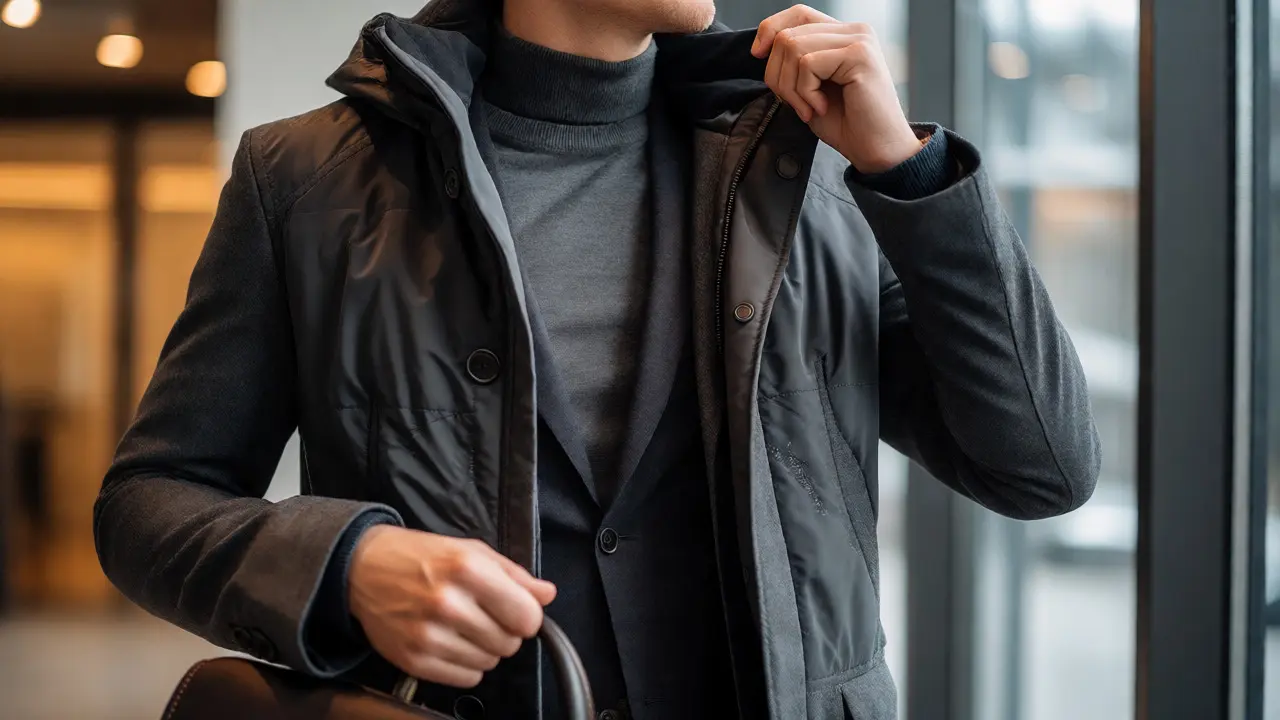
- The Mid-Layer: This is where most people fail. A bulky puffer vest is practical but rarely professional. Instead, choose a fine-gauge cashmere or merino sweater. It fits under a blazer without adding bulk. If it’s really cold, a lightweight down jacket with a matte finish can work, provided it’s slim enough to fit under your coat.
- The Accessory Layer: Gloves and scarves are part of your outerwear strategy. Choose leather gloves with touchscreen-compatible fingertips so you don’t freeze while checking emails on your phone. For neck warmth, a thin silk or wool scarf tucks neatly into a collar, unlike chunky knits that create a messy neckline.
Material Guide: What Works and What Doesn’t
Not all fabrics play nice with business attire. Some absorb water, some stain easily, and others wrinkle if you so much as sit down. Here is a breakdown of common materials found in professional layers.
Nylon and Polyester Blends: These are the workhorses of modern outerwear. They are durable, lightweight, and quick-drying. However, cheap versions look shiny. Look for "matte" or "tactical" finishes. Brands like Arc’teryx Veilance or Ministry of Supply use these fabrics in ways that mimic the drape of wool. If the label says "ballistic nylon," it’s tough but may be too stiff for a sleek look.
Wool Blends: Wool is naturally water-resistant and regulates temperature well. But pure wool takes forever to dry. If you get caught in a downpour, a wool coat stays wet for hours. The solution is a blend. A 70% wool / 30% nylon mix offers the aesthetic of wool with the durability and drying speed of synthetics. Treated wool (often labeled "storm system") repels light rain effectively.
Trench Coat Fabrics: Classic gabardine is elegant but vulnerable. Modern trenches use bonded fabrics or treated cottons. If you buy a trench, ensure it has storm flaps and a deep yoke. These features aren’t just decorative; they channel water away from your chest. A beige trench is versatile, but navy or charcoal looks more authoritative in a corporate setting.
Style Rules for the Corporate Commuter
Even the best tech fails if the style clashes with your workplace culture. Here are three non-negotiable rules to keep your look polished.
- Color Discipline: Stick to neutrals. Black, navy, charcoal, and olive green are safe bets. Bright colors signal leisure or outdoor activity. If you must have color, keep it subtle-a dark burgundy lining or a muted teal hood interior shows personality without shouting.
- Length Matters: For men, a coat ending at mid-thigh protects your trousers from splashes. For women, knee-length or longer provides coverage for skirts and dresses. Short jackets expose your waistband and lower back to wind and rain, leading to discomfort and potential wardrobe malfunctions.
- Hardware Quality: Zippers and buttons are the first things to break. Cheap plastic zippers jam when wet. Look for YKK zippers, which are industry-standard for reliability. Buttons should be covered or made of metal/plastic composites that won’t crack in freezing temperatures. A missing button on a $300 coat looks worse than a torn zipper on a $50 one.
Top Picks for Different Climates
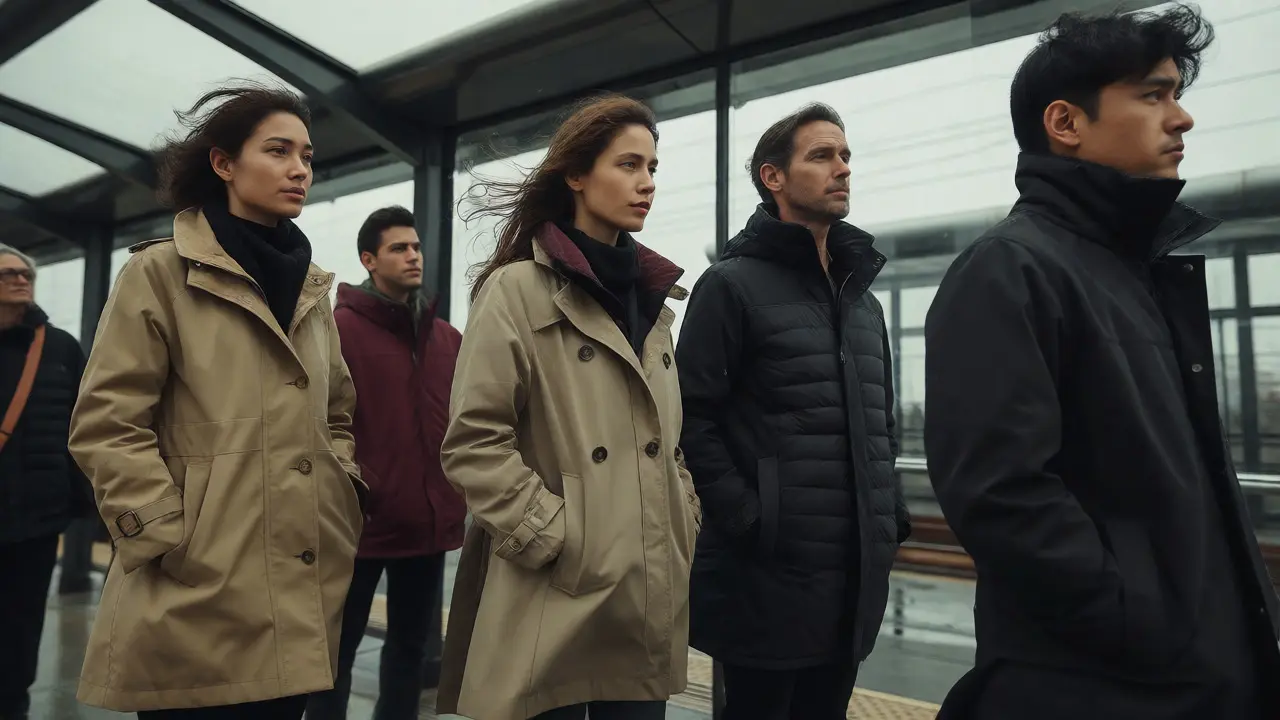
Your location dictates your gear. Living in Seattle means dealing with constant drizzle, whereas Chicago brings biting wind and snow. Here is how to tailor your choices.
Rain-Heavy Cities (Seattle, London, Vancouver): Prioritize breathability and seam sealing. Look for fully taped seams. A packable rain shell that fits in your briefcase is essential for sudden showers. Pair it with a water-repellent blazer. Avoid heavy insulation; you’ll likely remove it indoors anyway.
Cold-Wind Cities (Chicago, New York, Boston): Wind resistance is critical. A standard raincoat lets wind chill penetrate. Look for softshell jackets with wind-blocking membranes. Layering becomes more important here. A heated vest (battery-powered) can save you from wearing bulky sweaters. Ensure your coat has a high collar to protect your neck from gusts.
Snow Belt (Minneapolis, Toronto): Insulation is key. Down-filled coats offer the best warmth-to-weight ratio. Choose hydrophobic down, which resists moisture. Pair with insulated boots that have rubber soles for traction. Avoid suede shoes entirely-they turn into mush in slush.
Maintenance: Making Gear Last
You’re investing in quality, so treat it right. Most technical coats require specific care to maintain their water-repellent properties. Washing them with regular detergent strips the DWR coating. Use a dedicated cleaner like Nikwax Tech Wash. After washing, tumble dry on low heat or iron on a cool setting to reactivate the water repellency.
Store coats properly. Hanging a wet coat can stretch the shoulders. Let it air dry fully before storing. If you travel, use a garment bag for suits, but fold technical jackets loosely to avoid creasing the membrane. Small habits extend the life of your business attire significantly.
Can I wear a raincoat to a formal business meeting?
It depends on the coat's design. A bright yellow fisherman's slicker is too casual. However, a matte-finish, tailored rain jacket in black or navy can pass as smart-casual outerwear. Always remove it upon entering the building. If the meeting is strictly formal (suit and tie required), stick to a traditional wool overcoat or trench, even if it gets slightly damp. Carry a compact umbrella as a backup.
How do I hide a bulky sweater under my coat?
Choose a slim-fit coat with articulated sleeves. Wear a thin merino wool or cashmere layer instead of a thick cable-knit sweater. If you need more warmth, opt for a vest under your blazer rather than a full sweater. This preserves the line of your shoulders and prevents the "marshmallow" effect.
Are expensive technical coats worth it for commuting?
Yes, if you commute daily. Cheap waterproof jackets often fail after a few months of heavy use, with seams leaking or zippers breaking. Premium brands invest in better membranes, durable hardware, and ethical manufacturing. Over five years, a $400 coat that still works costs less per year than replacing three $100 coats that failed.
What is the best fabric for a professional-looking rain jacket?
Look for matte-finish nylon or polyester blends with a Gore-Tex or similar membrane. Avoid shiny PVC or vinyl. Some brands now use recycled ocean plastics that have a natural, textured look, which appears more sophisticated than smooth synthetic fabrics.
How should I store my coat if I don't have a coat check?
Use a sturdy hook near your desk. If space is tight, hang it inside your locker or behind your door. Never leave a wet coat crumpled in a bag, as this creates permanent wrinkles and traps moisture, leading to mildew smells. If possible, bring a small portable fan to dry it out during lunch.


Write a comment