

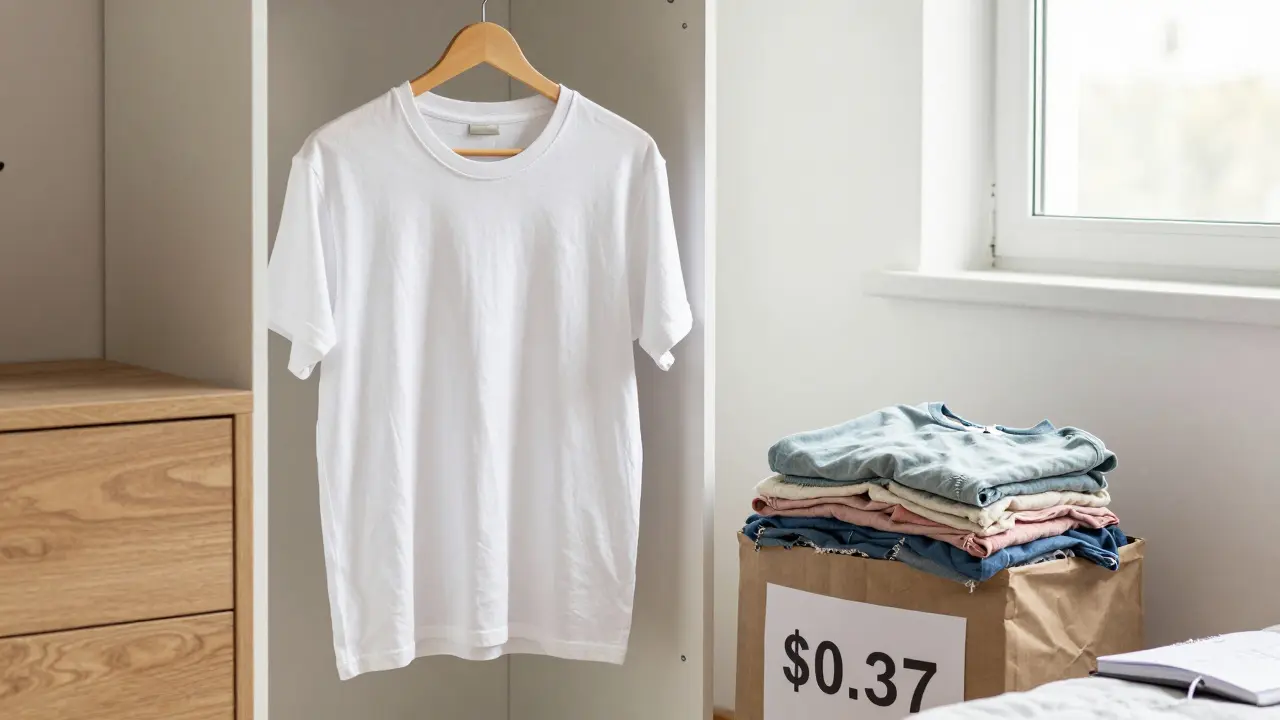
You’ve seen the ads: buy three cheap shirts for the price of one decent one. It feels like a win-until one frays at the seams after three washes, another loses its color after two wears, and the third just doesn’t fit right anymore. You’re back at the store, spending the same amount again. Sound familiar? What if the real savings isn’t in the sticker price, but in how often you actually wear something? That’s where cost-per-wear comes in.
What Is Cost-Per-Wear?
Cost-per-wear is simple math: divide the price of an item by how many times you wear it. A $200 coat worn 100 times costs $2 per wear. A $40 coat worn five times? That’s $8 per wear. Suddenly, the expensive one is the smarter buy-even if you didn’t think of it that way.
This isn’t about being rich. It’s about being smart with what you already own. People who build long-lasting wardrobes don’t buy less-they buy differently. They stop thinking in terms of "how much" and start thinking in terms of "how often."
Why Cheap Clothes Fail You
Fast fashion thrives on one thing: your impatience. It’s designed to look good for a few wears, then fall apart. Zippers snap. Seams unravel. Fabric pills. Colors bleed. And when it does? You don’t think twice about tossing it. You’ve already accepted that it’s disposable.
But here’s the hidden cost: you’re not just spending money-you’re spending time. Time shopping. Time returning. Time sorting through drawers full of things you don’t like anymore. Time feeling guilty about how much you’ve spent on stuff that didn’t last.
A 2024 study from the Fashion Sustainability Institute tracked 500 people over two years. Those who bought mostly under $30 items wore each piece an average of 3.7 times before replacing them. Those who spent over $100 on key pieces wore each one 42 times on average. The difference? Not taste. Not style. It was durability.
What Makes an Item Last?
Not every expensive thing lasts. And not every cheap thing is trash. But certain things are signs you’re getting real value:
- Stitching: Look for at least 8-10 stitches per inch. If you can see loose threads or uneven seams, it’s not built to last.
- Fabric: Natural fibers like cotton, wool, linen, and silk outlast synthetics. A 100% cotton shirt will breathe, hold shape, and soften with age. A polyester blend? It’ll shrink, smell, and static-cling after a few washes.
- Construction: Reinforced stress points-like double-stitched hems, bar tacks at pockets, and lined jackets-mean the brand expected real use.
- Brand transparency: Brands that say where their materials come from and how they’re made are more likely to stand behind their products.
Think of it like buying a car. You wouldn’t pick a vehicle based only on its price tag. You’d check the engine, the warranty, the fuel efficiency. Clothes are the same. They’re worn daily, washed weekly, and exposed to sweat, sun, and stress. They deserve the same scrutiny.
Real Examples: The Math Doesn’t Lie
Let’s look at two real scenarios.
Scenario 1: The $15 T-Shirt
You buy five of them a year. Total spent: $75. Each lasts 3 wears. Total wears: 15. Cost-per-wear: $5.
Scenario 2: The $120 T-Shirt
You buy one. It lasts 5 years. You wear it 2.5 times a week. That’s 65 wears per year. Over five years? 325 wears. Cost-per-wear: $0.37.
The $120 shirt costs less than 8 cents per wear. The $15 shirts? More than five times that. And the expensive one still looks good. The cheap ones? Long gone.
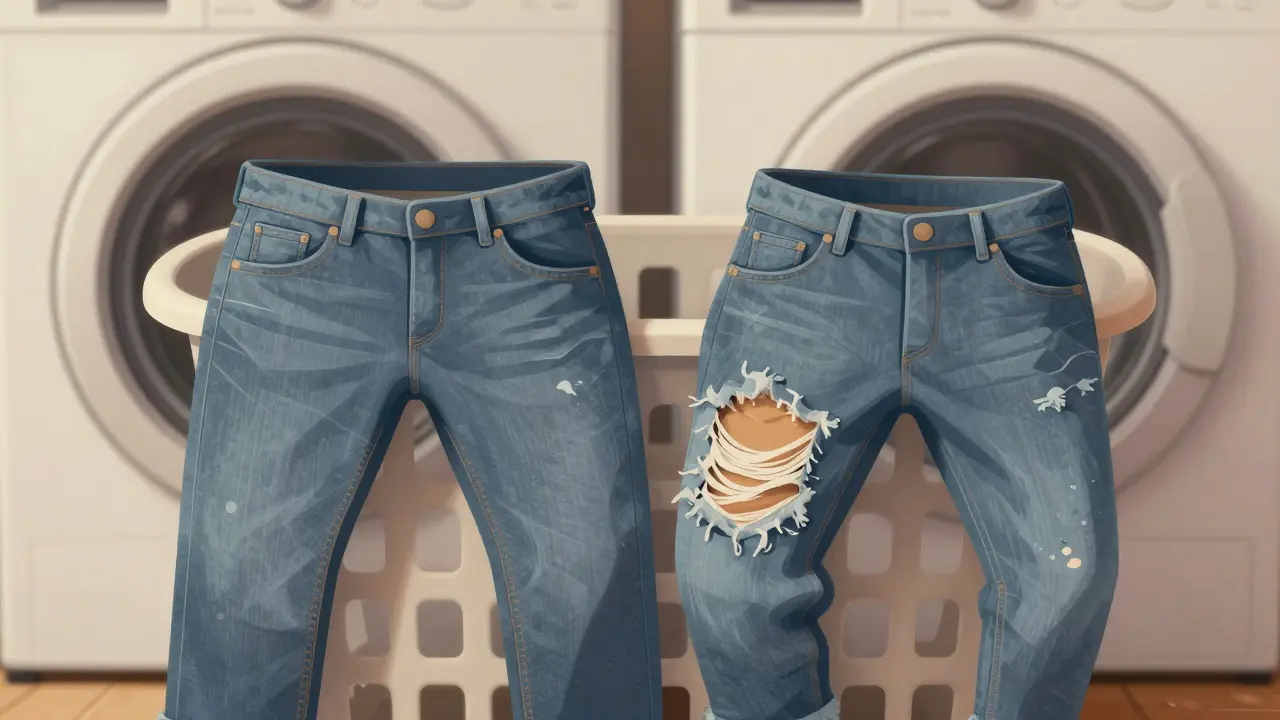
Same goes for jeans. A $40 pair worn 12 times before fading and sagging? That’s $3.33 per wear. A $200 pair worn 200 times? That’s $1 per wear. And if you repair the zipper or hem once? You’ve stretched that value even further.
How to Start Building a Cost-Per-Wear Wardrobe
You don’t need to overhaul your closet overnight. Start small. Pick one category-jeans, coats, shoes-and upgrade just one item.
- Track your wears. Use a notes app or a simple calendar. Mark each time you wear something. After a month, you’ll see what you actually use.
- Replace one thing. Pick the item you wear most that’s falling apart. Spend a little more on a better version. You’ll notice the difference immediately.
- Wait 30 days. Before buying anything new, wait a month. If you still want it, it’s probably worth the investment.
- Learn to repair. A $10 sewing kit and five minutes on YouTube can extend a garment’s life by years. Fixing a button or re-hemming pants is cheaper than replacing them.
- Buy secondhand first. A used $80 wool coat from a thrift store is still a better value than a new $50 synthetic one. You get quality without the markup.

The Environmental and Mental Cost
There’s another side to this. Every time you toss a cheap shirt, you’re adding to landfill waste. The fashion industry produces 92 million tons of textile waste yearly. Most of it ends up in developing countries or incinerated.
But beyond the planet, there’s your mental space. A cluttered closet creates cluttered thinking. Studies show people who own fewer, higher-quality items report less stress about what to wear. They feel more confident. They spend less time deciding. They stop chasing trends and start living in clothes that fit their life.
Cost-per-wear isn’t just about money. It’s about peace of mind.
What to Invest In First
Not every item needs to be premium. Focus on the pieces you wear most and that take the most abuse:
- Shoes: You walk in them every day. A good pair lasts 2-3 years. Cheap ones? 3-6 months.
- Outerwear: Coats and jackets protect you from weather. A well-made one lasts a decade.
- Underwear and socks: These are worn daily. Quality materials prevent odor, bunching, and breakdown.
- Workwear: If you wear the same outfit to the office five days a week, invest in fabrics that don’t wrinkle or fade.
For casual pieces-like t-shirts, hoodies, or graphic tees-stick with affordable options. These are low-impact items. You don’t need to overpay for them.
Myth: "I Can’t Afford Expensive Clothes"
People say this like it’s a fact. But if you’re spending $200 a year on cheap clothes that don’t last, you’re already spending $200. The difference? With quality pieces, you’re spending it once. Not every year.
Think of it like groceries. You could buy the cheapest pasta every week. Or you could spend a little more on one good brand and eat less, but feel better. It’s not about income. It’s about priorities.
Start with one $100 item. Then another. After a year, you’ll have fewer clothes-but they’ll all be ones you love. And you’ll stop buying so much.
Final Thought: Less Is More, But Only If It Lasts
The goal isn’t to own fewer things. It’s to own better things. Things that fit. Things that feel good. Things that don’t make you feel guilty when you wear them.
Cost-per-wear turns fashion from a cycle of consumption into a relationship with what you own. You stop seeing clothes as disposable. You start seeing them as tools-tools that help you move through your days with ease, confidence, and less waste.
Next time you’re about to buy something cheap, ask: "How many times will I actually wear this?" The answer might surprise you.
Is cost-per-wear only for luxury brands?
No. Cost-per-wear applies to any clothing item, no matter the price. A $50 pair of jeans from a brand that uses reinforced stitching and organic cotton can have a lower cost-per-wear than a $30 pair from a fast-fashion label. It’s about durability and frequency of use, not brand name.
How do I know if a garment is well-made?
Check the seams-tight, even stitching with no loose threads. Look for double stitching at stress points like pockets and waistbands. Natural fibers like cotton, wool, and linen tend to last longer than synthetic blends. Also, check the lining: a fully lined jacket or dress usually means more care went into construction. Finally, try pulling the fabric gently-if it stretches too much or feels thin, it’s not built to last.
Can I afford to buy expensive clothes on a budget?
Yes, if you shift your spending. Instead of buying five $20 shirts a year, buy one $100 shirt that lasts five years. You’re spending the same amount-$100-but getting 10 times the use. Look for sales, secondhand stores, or off-season deals. Many quality brands offer discounts in winter or summer. You don’t need to spend more-you need to spend smarter.
What if I only wear something once or twice?
Then don’t buy it. Cost-per-wear only works if you wear the item. If you’re buying something for a single event, it’s okay to rent it or buy cheap. But if it’s something you think you’ll wear again, even occasionally, invest in quality. A well-made blazer, for example, can be worn to work, dates, or family dinners-it pays for itself over time.
Does cost-per-wear work for seasonal fashion?
It works best for timeless pieces-jeans, coats, shoes, basic tees. Trendy items like printed dresses or statement accessories are harder to justify. But even then, if you wear a trendy piece three times a season for three seasons, it still beats buying a new one every year. The key is choosing trends that fit your personal style, not just what’s popular.


Write a comment