

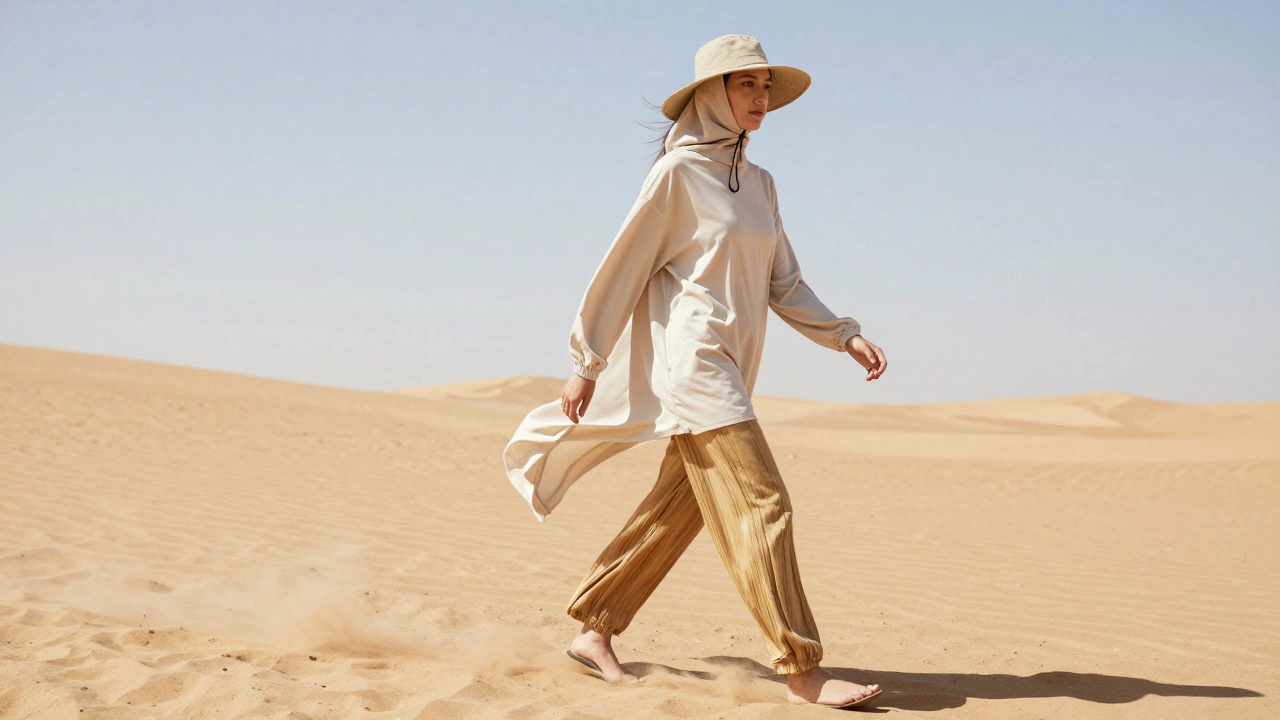
When you live where the sun doesn’t quit and the air feels like a dry oven, your clothes aren’t just about looking good-they’re your first line of defense. Desert climate style isn’t a trend. It’s survival. And it’s not about wearing a hat and calling it a day. It’s about how layers work together, how fabric breathes, and how the cut of a shirt can keep you cooler than any AC unit.
Why Your Regular Summer Clothes Fail in the Desert
Think a cotton T-shirt and shorts are enough for Phoenix in July? They’re not. Cotton soaks up sweat and holds it. That’s fine in humid cities like Chicago, where evaporation cools you. But in the desert, humidity drops below 15%. Sweat doesn’t evaporate fast enough. Instead, it clings, traps heat, and leaves you sticky, tired, and overheated. You’re not just uncomfortable-you’re at risk.
Then there’s color. Black, navy, even dark gray? They absorb heat like a solar panel. Studies from the American Society of Heating, Refrigerating and Air-Conditioning Engineers show dark fabrics can be up to 20°F hotter than white ones under direct sun. That’s not a small difference. That’s the difference between walking and collapsing.
The Three-Layer System That Actually Works
Forget one-piece outfits. Desert dressing uses a smart layering system-not to trap warmth, but to manage heat and airflow.
- Base layer: Lightweight, moisture-wicking fabric-think merino wool or synthetic blends like Coolmax. These pull sweat away from your skin and dry fast. Merino wool, surprisingly, doesn’t smell even after days of wear. Brands like Smartwool and Icebreaker make base layers so thin you forget you’re wearing them.
- Mid layer: Loose, open-weave linen or rayon. This isn’t insulation-it’s a buffer. It lets air flow between your skin and the outer layer, creating a cooling chimney effect. A loose linen shirt with wide sleeves? That’s your heat shield.
- Outer layer: Light-colored, long-sleeved, high-UPF fabric. Think UPF 50+ sun shirts from Columbia or prAna. These block UV rays without trapping heat. They’re not meant to be seen as ‘protective gear’-they’re designed to look like casual button-downs or tunics.
This system isn’t about bulk. It’s about control. Each layer does one job. No one piece tries to do everything. That’s why desert dwellers in Saudi Arabia, Arizona, and Namibia wear the same structure: loose, layered, light.
Silhouettes That Let Air Move
Fit matters more than you think. Tight pants? They trap heat against your legs. Skinny jeans in 110°F heat? You’re asking for heat rash and exhaustion.
The right silhouette is loose-but not sloppy. Look for:
- Wide-leg trousers made from bamboo or TENCEL™-they drape, don’t cling, and let air circulate around your calves.
- Shirts with dropped shoulders and slightly extended sleeves that cover the back of your arms. No exposed skin means less UV damage.
- A-line skirts or dresses that flare from the waist. They create space between your body and the fabric, turning your outfit into a natural wind tunnel.
- Open-back tops or tunics with slits. These aren’t just stylish-they let heat escape from your spine, the body’s main heat source.
When you see locals in Dubai or Tucson wearing flowing robes or kaftans, it’s not tradition alone. It’s physics. Air moves. Heat escapes. Skin stays protected.
Colors That Reflect, Not Absorb
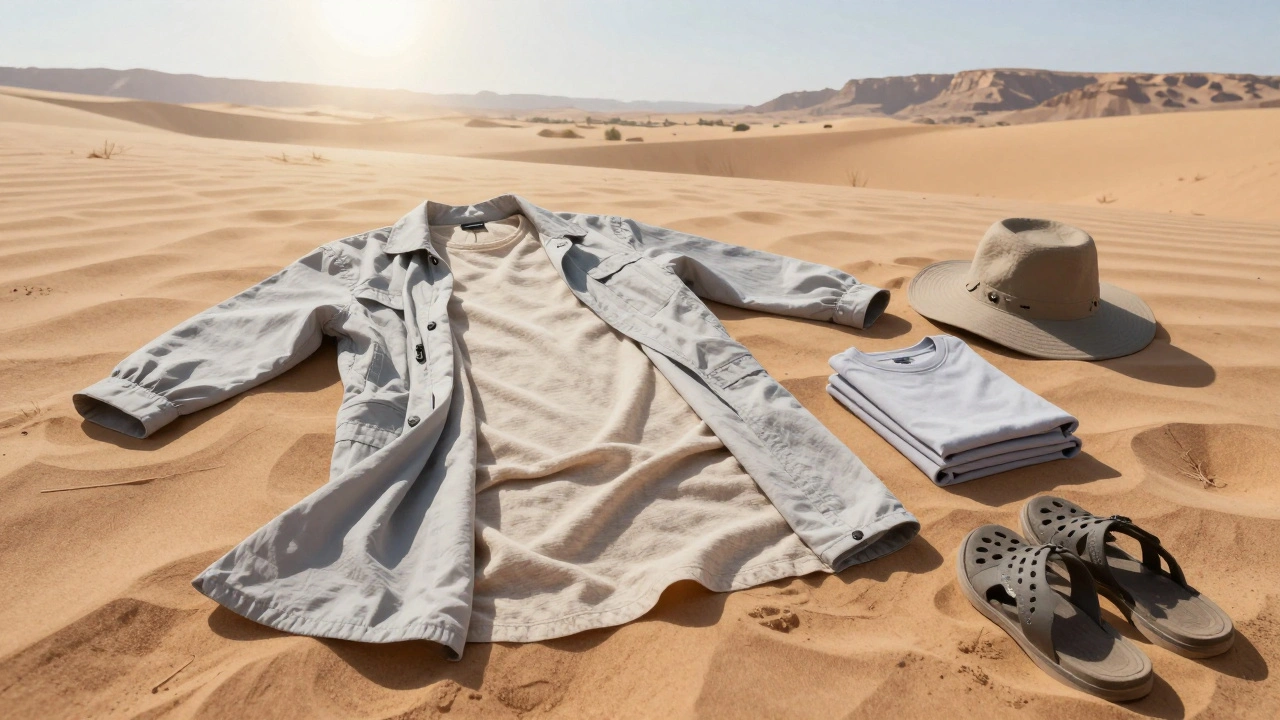
White isn’t just a color in the desert-it’s a tool. But it’s not the only one. Light pastels like sand beige, pale olive, and soft lavender work just as well. They reflect more sunlight than darker tones and don’t show dust as badly as pure white.
Here’s what to avoid:
- Black, navy, and dark red-these absorb up to 90% of solar radiation.
- Metallics and shiny fabrics-they trap heat like mirrors in a greenhouse.
- Dark patterns on light fabric-contrast creates heat pockets.
Stick to low-saturation tones. They look calm, feel cooler, and help your body regulate temperature without you even trying.
Accessories That Do More Than Look Good
A hat isn’t optional. It’s mandatory. Look for wide-brimmed styles-3 inches or more-with a neck flap. A buff or neck gaiter made from UPF 50+ fabric can be pulled up over your nose and ears when the sun hits hard. Sunglasses with 100% UV protection? Non-negotiable. Cataracts and macular degeneration don’t wait for retirement.
Footwear? Closed-toe sandals with breathable mesh uppers. Think Teva or Chaco. They protect your feet from hot pavement without suffocating them. Flip-flops? Only for showers or indoor use. Asphalt in the afternoon hits 160°F. Your soles don’t stand a chance.
What to Skip-Even If It’s Popular
Just because something looks desert-chic doesn’t mean it works.
- Sheer fabrics-thin cotton voile or lace? They offer zero UV protection. You’re just showing skin and letting heat in.
- Denim-even lightweight-is a heat trap. It holds moisture and doesn’t breathe well enough for desert conditions.
- Synthetic blends with polyester as the main ingredient-they melt against skin in extreme heat and don’t wick properly.
- High necklines with no ventilation-turtlenecks, even in light fabric, block airflow around your neck and collarbone, where heat escapes fastest.
Desert style isn’t about fashion influencers. It’s about people who’ve lived with this climate for generations. They didn’t get lucky. They figured out what science says: airflow, reflection, and coverage win every time.
Real People, Real Wardrobes
Look at the women in the Sonoran Desert who garden at dawn. They wear long, loose cotton dresses in cream, paired with wide-brimmed straw hats and linen shawls. They’re not trying to be Instagram models. They’re trying to survive the day without heat exhaustion.
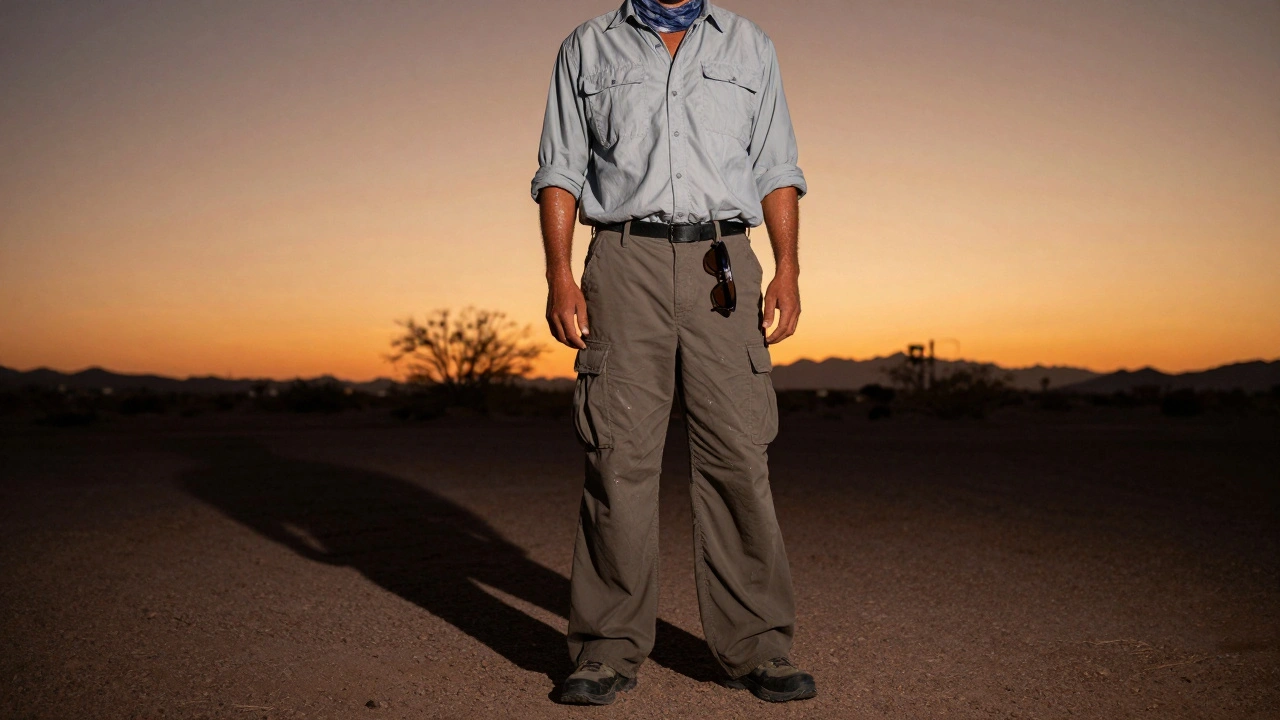
Or the construction workers in Phoenix who wear long-sleeved, light gray shirts with rolled sleeves and wide-leg cargo pants made from ripstop nylon. They sweat. But they don’t collapse. Why? Because their clothes let heat out.
You don’t need to buy a whole new wardrobe. Start with one key piece: a UPF 50+ sun shirt. Pair it with loose linen pants. Swap your sneakers for ventilated sandals. That’s 80% of the battle.
How to Build Your Desert-Ready Capsule
You don’t need 50 pieces. Here’s what you actually need:
- 2 loose, long-sleeved UPF 50+ tops (light colors)
- 2 pairs of wide-leg, breathable pants (linen, TENCEL™, or bamboo)
- 1 lightweight, open-weave tunic or duster for extra coverage
- 1 wide-brimmed hat with neck flap
- 1 pair of ventilated closed-toe sandals
- 1 lightweight, UPF 50+ neck gaiter
- 1 pair of UV-blocking sunglasses
That’s seven items. Wash them in cold water, air dry, and they’ll last for years. No dry cleaning. No special care. Just smart choices.
Final Thought: It’s Not About Style. It’s About Survival.
Desert climate style isn’t a fashion statement. It’s a practical response to an environment that doesn’t care how trendy you look. The people who thrive there don’t wear clothes to impress. They wear them to stay alive.
And if you’re stepping into that heat-whether for work, travel, or just a weekend hike-you owe it to yourself to dress like someone who knows what they’re doing. Your skin, your energy, and your health will thank you.
Can I wear cotton in the desert?
Cotton isn’t ideal for the desert unless it’s blended with moisture-wicking fibers. Pure cotton holds sweat and dries slowly, which can make you feel hotter. For desert conditions, choose merino wool, TENCEL™, or synthetic blends designed for breathability and quick drying.
Is linen too formal for everyday desert wear?
No. Linen is one of the best fabrics for desert climates because it’s lightweight, highly breathable, and dries fast. Look for relaxed cuts-oversized shirts, wide-leg pants, or draped tunics-to keep it casual. Many desert communities wear linen daily because it’s practical, not fancy.
Do I need to wear long sleeves in extreme heat?
Yes-if they’re made from lightweight, UPF-rated fabric. Long sleeves protect your skin from sunburn and UV damage, which can lead to skin cancer. The key is fit: loose sleeves create airflow and don’t trap heat. A light, loose long-sleeve shirt is cooler than bare arms under direct sun.
What’s the best color for desert clothing?
Light, low-saturation colors like white, sand beige, pale olive, and soft lavender reflect sunlight and stay cooler. Avoid black, navy, and dark red-they absorb heat. Even light gray works better than you’d think.
Can I use regular sunscreen instead of sun-protective clothing?
Sunscreen is helpful, but not enough on its own. It wears off, rubs off, and needs reapplying every 2 hours. Clothing with UPF 50+ blocks UV rays continuously without reapplication. For long days in the sun, combine both: wear sun-protective fabric and apply sunscreen to exposed areas like your face and hands.


Write a comment