


What you wear isn’t just about looking polished-it’s about how you feel and how others perceive you before you even speak. In high-stakes moments like job interviews or critical presentations, your outfit becomes part of your pitch. Studies from UCLA and Harvard show that people form first impressions in under seven seconds, and clothing accounts for nearly half of that judgment. This isn’t about following rigid rules. It’s about strategy. It’s about choosing clothes that reduce your anxiety, amplify your confidence, and signal competence without saying a word.
Why Your Outfit Matters More Than You Think
Think about the last time you walked into a room feeling off. Maybe your shirt was wrinkled, your shoes squeaked, or your jacket didn’t fit right. That discomfort didn’t vanish when you started talking-it followed you. Your brain was half-focused on adjusting your collar instead of your pitch. That’s the hidden cost of bad dressing.
On the flip side, when you wear something that fits well, feels comfortable, and matches the context, your posture changes. Your voice steadies. You make eye contact more easily. A 2023 study in the Journal of Consumer Psychology found that people who wore professional attire performed 11% better on cognitive tasks than those in casual clothes-not because of the clothes themselves, but because the clothes shifted their mindset.
This is called “enclothed cognition.” It’s not magic. It’s psychology. When you put on a blazer, your brain doesn’t just see fabric-it sees authority. When you wear clean, tailored pants instead of stretched-out jeans, your brain shifts into “serious mode.” You’re not pretending. You’re priming yourself.
The Three Rules of High-Stakes Dressing
Forget trends. Forget what influencers wear. In high-stakes situations, there are three non-negotiable rules:
- Match the environment-Not the company’s website homepage. The actual office. Walk in. Look around. Are people in suits? Business casual? Hoodies and sneakers? Match one level above if you’re unsure. If everyone’s in chinos and button-downs, wear a blazer. If everyone’s in suits, wear a suit.
- Eliminate distractions-No loud patterns, no dangling jewelry, no shoes that squeak. Your outfit should disappear. The focus should be on your words, not your socks.
- Wear what makes you feel powerful-If a navy blue blazer gives you the same confidence as a red one, go with navy. Confidence isn’t about color-it’s about connection. If you feel awkward in heels, wear loafers. If you hate ties, wear a crisp turtleneck. Your comfort is your credibility.
Interview Outfits: What Works in 2026
Remote interviews still dominate, but in-person interviews are making a comeback-especially in finance, law, healthcare, and tech leadership roles. Here’s what actually works right now:
- For men: A well-fitted navy or charcoal suit (not black) with a white or light blue shirt. No tie needed unless the company culture demands it. Polished leather loafers or oxfords. A simple watch. Avoid cufflinks-they’re distracting.
- For women: A tailored blazer with a silk blouse or structured turtleneck. Pair it with straight-leg trousers or a knee-length pencil skirt. Nude or low-heeled pumps. Minimal jewelry-stud earrings only. A leather tote bag, not a backpack.
- For non-binary or gender-neutral options: A tailored blazer over a solid-color tee, paired with dark, clean jeans or chinos. Closed-toe shoes. The key is structure, not gender. Think sharp lines, neutral tones, and no wrinkles.
Pro tip: Always test your outfit the day before. Walk around your apartment. Sit in your chair. Stand up. Sit again. If anything digs, slips, or feels tight, swap it out. You don’t want to be adjusting your pants during your first answer.
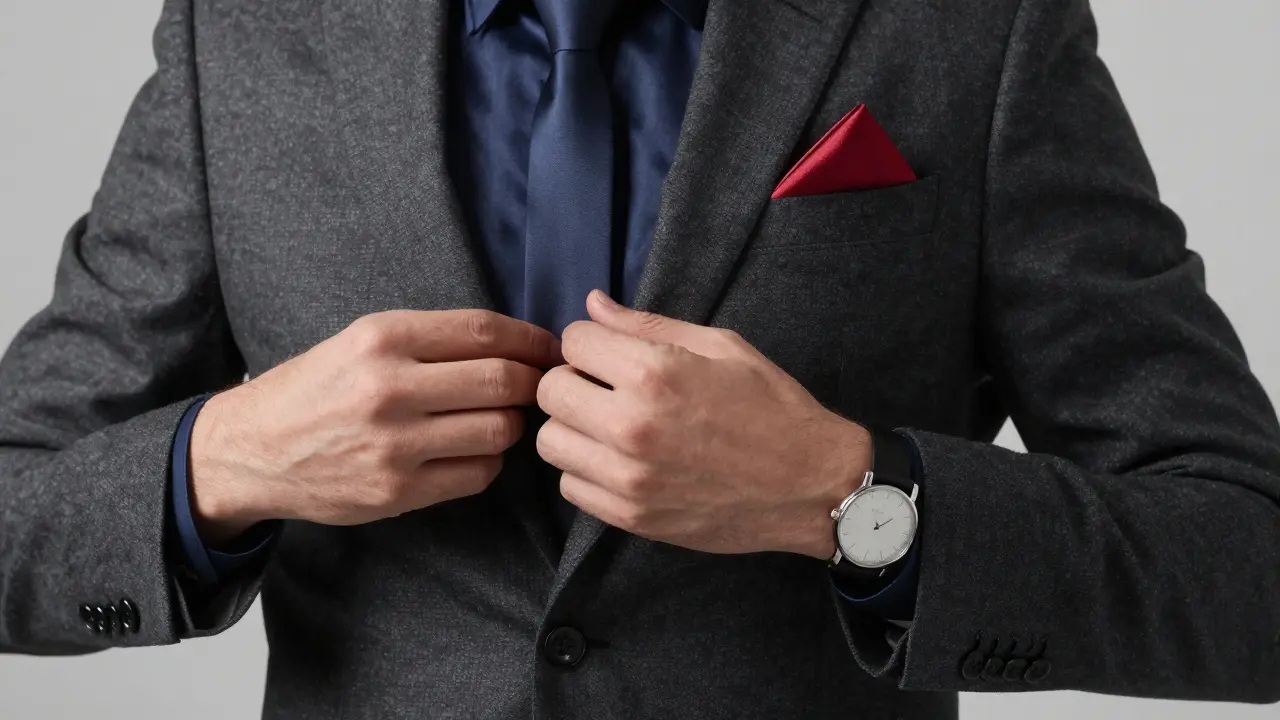
Presentation Attire: Command the Room
Presenting to executives, investors, or clients is different from interviewing. Here, you’re not trying to prove you’re qualified-you’re trying to prove you’re in control.
Dark tones still win. Deep navy, charcoal, or even black (if it’s not too formal) create authority. But now, texture matters. A wool-blend blazer, a silk scarf, or a subtle pinstripe adds depth without shouting. Avoid shiny fabrics-they catch light and look cheap on camera.
For men: A suit is still safe, but a well-fitted vest with a button-down and no tie is trending in tech and startup circles. It’s professional without being stiff.
For women: A pantsuit is still the gold standard. But a tailored dress with a blazer works just as well-especially if the dress has a structured neckline. Avoid anything with ruffles, lace, or cutouts. This isn’t about elegance. It’s about precision.
Footwear is critical. You’ll be standing. You might walk to the whiteboard. Choose shoes with cushioning, not just style. A low block heel or a sturdy loafer is better than a stiletto that makes you wobble.
What Not to Wear (And Why)
Here are five common mistakes-and why they sabotage your credibility:
- Over-accessorizing-Too many rings, bracelets, or necklaces. They draw attention away from your face and voice. One statement piece max.
- Wrinkled clothes-Even if it’s just one sleeve. Wrinkles signal carelessness. Invest in a travel steamer. They cost less than $30.
- Too-tight or too-loose clothing-If you’re pulling at your shirt or your pants gap at the waist, you’re distracting. Tailoring isn’t luxury-it’s necessity.
- New shoes-Never wear brand-new shoes to a high-stakes meeting. Blisters don’t care about your pitch.
- Overly trendy pieces-Oversized blazers, logo-heavy logos, or “viral” styles. They age fast. You want timeless, not trendy.
The Psychology of Color in Professional Settings
Color isn’t just aesthetic-it’s psychological. Here’s what science says about what to wear:
- Blue-The most trusted color. It signals reliability and calm. Perfect for interviews, especially in finance, law, or healthcare.
- Gray-Neutral, professional, and non-threatening. Great for presentations where you want to appear balanced and thoughtful.
- Black-Powerful, but risky. It can feel cold or intimidating if overused. Best for evening events or when you need to dominate a room.
- White-Clean and confident. Works well as a base layer. Avoid pure white shirts if you sweat easily-they show through.
- Red-Bold and commanding. Use sparingly. A red scarf or tie can add energy, but a full red suit? Only if you’re pitching a startup or speaking on stage.
Pro tip: Wear your most powerful color as an accent. A blue blazer with a red pocket square. A gray suit with a white shirt and a navy tie. Subtlety wins.

Preparation Checklist
Here’s a simple pre-event checklist you can print or save on your phone:
- ✅ Choose outfit 2 days before
- ✅ Wash, steam, or dry clean everything
- ✅ Try on the full outfit with shoes and accessories
- ✅ Walk, sit, and gesture in it
- ✅ Check for wrinkles, stains, or loose buttons
- ✅ Pack a lint roller and stain remover
- ✅ Have backup socks and a spare shirt (if traveling)
Most people skip the “try it on” step. Don’t be most people.
What to Do If You’re Not Sure
Still unsure? Here’s the easiest shortcut:
Look up the company’s LinkedIn page. Find photos of their leadership team. What are they wearing? Copy the style-not the exact outfit, but the level of formality. If the CEO wears a sweater and jeans, you don’t need a suit. If the VP wears a blazer every day, then you do.
When in doubt, lean toward formality. It’s easier to tone down than to ramp up.
Final Thought: You’re Not Dressing for Them. You’re Dressing for You.
At the end of the day, your outfit isn’t about impressing them. It’s about helping you show up as the best version of yourself. If you feel confident, you’ll speak clearly. If you feel prepared, you’ll think faster. If you feel in control, you’ll handle pressure with grace.
That’s the real power of dressing for success. It doesn’t change who you are. It just removes the noise so your talent can speak.
What’s the best color to wear to a job interview?
Navy blue is the safest and most effective choice. It’s associated with trust, competence, and calm. It works for both men and women, across industries. Avoid black-it can feel too harsh-and bright colors like red or neon-they distract. If you want to add personality, use a pop of color in accessories, like a scarf or tie.
Can I wear jeans to a presentation?
Only if the company culture explicitly allows it-and even then, not for high-stakes presentations. In most professional settings, dark, tailored chinos or trousers are the minimum. Jeans, even black ones, signal informality. In finance, law, or corporate environments, they’ll hurt your credibility. In startups or creative fields, you might get away with them-but only if they’re pristine, without rips or fading.
Do I need to wear a suit to every interview?
No. Suits are still the gold standard for corporate roles, law firms, and banking. But in tech, design, or startup environments, a blazer with well-fitted trousers or a dress is often enough. The key is matching the company’s unspoken dress code. When in doubt, ask: “What’s the typical attire for team meetings?” That’s your guide.
Is it okay to wear the same outfit to multiple interviews?
Yes, if it’s clean, pressed, and still fits well. Many professionals reuse their interview outfits. What matters isn’t how many outfits you have-it’s how polished each one looks. Just make sure to wash or steam it between uses. Don’t wear the same shirt twice in one week unless it’s a fresh, clean one.
How important are shoes in a professional setting?
Extremely. Shoes are the first thing people notice when you walk in-and the last thing they remember when you leave. Dirty, scuffed, or worn-out shoes signal neglect. Invest in two pairs: one for interviews (polished loafers or oxfords), one for presentations (comfortable, low-heeled pumps or loafers). Keep them clean. Polish them weekly. They’re your foundation.


Write a comment