

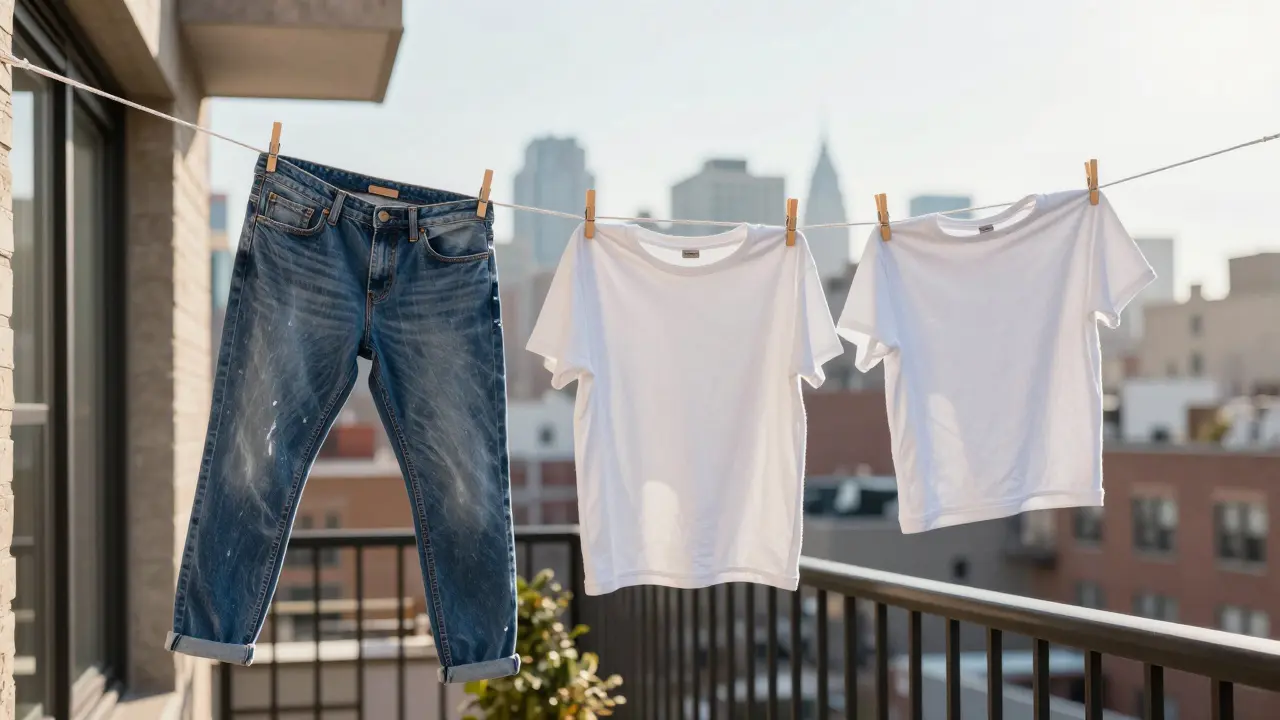
Every time you toss clothes into the dryer, you’re not just saving time-you’re burning energy and wearing out your clothes faster. If you’ve ever wondered whether line drying is really better, the answer isn’t just about being eco-friendly. It’s about money, durability, and how your clothes actually feel after months of use.
How Much Energy Does a Dryer Really Use?
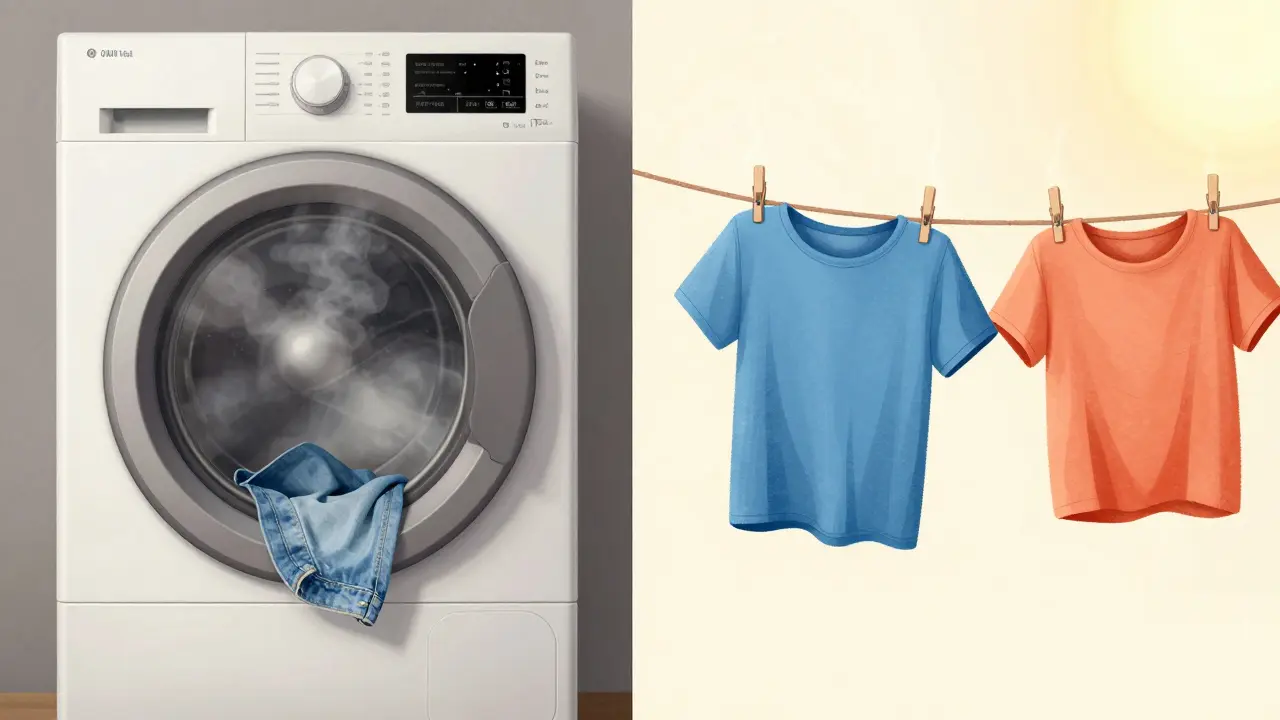
A typical electric clothes dryer uses between 2.5 and 5 kilowatt-hours (kWh) per load. That’s the same amount of power a modern LED TV uses in 25 to 50 hours. If you do five loads a week, that’s 650 to 1,300 kWh a year. Multiply that by the average U.S. electricity rate of $0.16 per kWh, and you’re spending $104 to $208 just to dry clothes annually.
Gas dryers are cheaper to run-about half the cost-but they still use natural gas, which contributes to carbon emissions. Even the most energy-efficient dryers on the market today still consume more power than your phone charger uses in a month.
Line drying? Zero electricity. Zero gas. Zero emissions. In New York, where winter winds can freeze clothes stiff and summer humidity lingers, line drying still saves you hundreds of dollars over five years-especially if you’re doing laundry weekly.
Fabric Wear: What Happens Inside the Dryer
That shrinkage you see after a few washes? It’s not just the water. Heat and tumbling are the real culprits. Cotton, linen, and wool fibers break down under constant friction and temperatures above 140°F. A 2023 textile lab study found that clothes dried in a machine lost 27% more tensile strength after 50 cycles compared to air-dried items.
Think about your favorite T-shirts. The ones that start to feel thin, stretch out at the neck, or lose their shape? Most of that damage happens in the dryer. Even on low heat, the tumbling action stretches elastic fibers in activewear and breaks down the weave in denim. A pair of jeans dried in a machine can lose up to 30% of their original durability after just 30 cycles.
Line drying, on the other hand, lets fibers relax naturally. Clothes dry in their natural shape. No crushing, no twisting, no overheating. You’ll notice your sweaters hold their form longer. Your workout leggings stay tighter. Your white cotton shirts don’t turn gray from lint buildup and heat-induced dye fading.
Odor, Mildew, and the Hidden Downsides of Line Drying
People say line drying smells fresh. That’s true-but only if you do it right. In humid climates like New York, damp clothes left on the line for too long can develop a musty smell. That’s not from the air-it’s from bacteria growing in moisture trapped in fabric fibers.
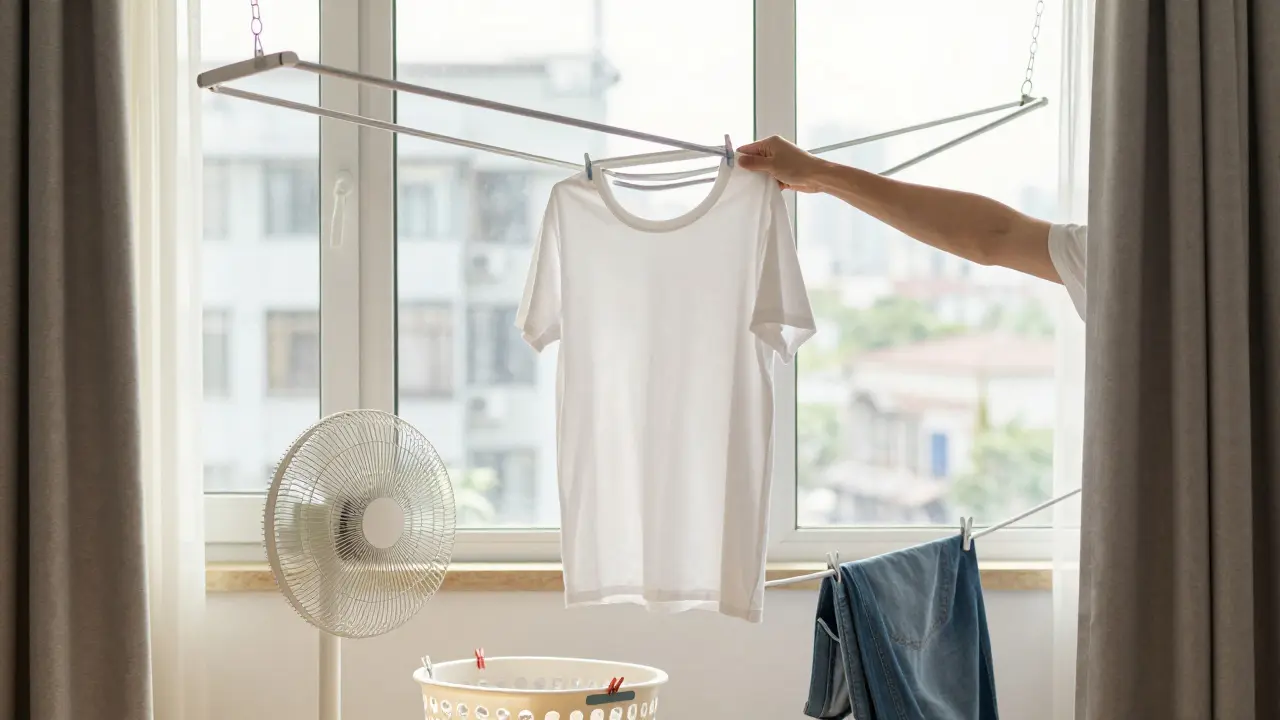
The fix? Hang clothes in direct sunlight when possible. UV light kills odor-causing microbes. If it’s overcast, hang them indoors near a window or fan. Don’t leave wet clothes on the line overnight unless you’re in a dry, breezy area. And always shake out clothes before hanging-this helps them dry faster and reduces wrinkles.
Some fabrics, like silk and lace, need to be dried flat. Others, like towels and denim, hang well on clips. You don’t need a fancy outdoor rack. A simple retractable line between two trees or a tension rod in your bathroom works fine. You’re not trying to win a laundry competition-you’re trying to make your clothes last.
Time, Space, and Real-Life Trade-Offs
Yes, line drying takes longer. A load of jeans might take 8 to 12 hours to dry in spring. A summer T-shirt? 2 to 4 hours. But you’re not stuck waiting for a machine to finish. You can hang clothes while making coffee, during your lunch break, or right after the spin cycle. It’s not a full-time job-it’s a 10-minute habit.
Space is another concern. If you live in a small apartment, you might think line drying isn’t possible. But indoor drying racks, over-the-door hooks, and even hanging clothes from shower rods work. In New York City, many apartments have fire escapes or balconies where drying clothes is allowed. Check your building’s rules. Many landlords don’t care as long as it’s not dripping on neighbors.
And if you’re in a rush? Use the dryer for 10 minutes on low heat to remove most of the moisture, then hang the rest of the way. That cuts energy use by 70% and still protects your fabrics.
What You Save Beyond Electricity Bills
Line drying isn’t just about saving money on your electric bill. It’s about reducing your wardrobe replacement cycle. The average American buys 68 new clothing items a year. A big reason? Clothes wear out too fast.
When you line dry, your clothes last longer. You buy fewer replacements. You waste less. You reduce the demand for new cotton, which takes 2,700 liters of water to make one T-shirt. You cut down on microplastic shedding from synthetic fabrics, which happens more in high-heat tumbling.
Think of it this way: if you switch to line drying for just two years, you’ll likely save enough on new clothes to pay for a decent indoor drying rack. And you’ll have a closet full of clothes that still fit, still feel good, and still look like they’re meant to be worn.
When to Stick With the Dryer
There are times when the dryer makes sense. If you’re sick and need clean towels fast. If you’re traveling and only have 24 hours in a hotel. If you live in a place where rain is constant for weeks and your clothes stay damp.
But those are exceptions. For 90% of your laundry, line drying is not just possible-it’s better. It’s cheaper. It’s kinder to your clothes and the planet.
You don’t need to go all-in overnight. Start with towels and jeans. Then move to T-shirts. Then sweaters. You’ll notice the difference before the season changes.
Quick Tips to Start Line Drying Today
- Use wooden or plastic clothespins-metal can rust and stain clothes.
- Hang dark clothes inside out to prevent sun fading.
- Shake each item before hanging to reduce wrinkles.
- Dry heavy items like jeans and towels vertically to prevent stretching.
- Use a fan indoors to speed up drying in humid rooms.
- Don’t overload the line-airflow matters more than space.
Line drying isn’t a throwback. It’s a smarter way to live with less waste. Your clothes will thank you. Your wallet will thank you. And the planet will, too.
Is line drying really cheaper than using a dryer?
Yes. Running a standard electric dryer five times a week costs between $100 and $200 a year in electricity. Line drying costs nothing. Even if you buy a $50 indoor drying rack, you’ll break even in under six months. Over five years, you’ll save hundreds-plus you’ll replace fewer clothes because they last longer.
Does line drying damage clothes?
No-quite the opposite. Dryers damage clothes through heat, friction, and tumbling. Line drying lets fibers dry naturally without stress. Clothes retain their shape, color, and strength. Studies show fabrics last up to 40% longer when air-dried. The only risk is sun fading on dark fabrics, which you can avoid by hanging them inside out.
Can I line dry in the city or an apartment?
Absolutely. Many New York apartments use retractable lines on balconies, fire escapes, or windows. Indoors, you can hang clothes from shower rods, over-the-door hooks, or folding racks. Just make sure there’s airflow. A small fan near your drying area helps speed things up. Check your lease rules-but most landlords allow it as long as it’s not dripping on others.
Why do my clothes smell musty after line drying?
Musty smells come from bacteria growing in damp fabric, not from the air itself. To fix it, hang clothes in direct sunlight when possible-UV light kills odor-causing microbes. If it’s cloudy, dry indoors near a fan or window. Don’t leave wet clothes on the line overnight. Always shake clothes out before hanging to improve airflow and reduce moisture pockets.
What’s the best way to dry delicate fabrics like silk or lace?
Lay them flat on a clean towel or a mesh drying rack. Avoid hanging them, as gravity can stretch the fibers. Gently reshape them while damp. Keep them out of direct sunlight to prevent color fading. For lace, use a towel underneath to absorb moisture without direct contact. This method keeps delicate items in good shape for years.


Write a comment