


What you wear doesn’t just reflect your taste-it shapes how people see your competence, trustworthiness, and power. In boardrooms, client meetings, and job interviews, clothing acts as silent communication. A well-tailored suit isn’t just fabric; it’s a signal that you mean business. And in 2026, where hybrid work blurs the lines between home and office, knowing how to project authority through clothing isn’t optional-it’s essential.
The Unwritten Rules of Formal Business Style
There’s no official handbook for professional dress, but every industry has its own invisible code. In finance, law, and corporate leadership, the standard remains classic: dark suit, white shirt, polished shoes. But even here, subtle shifts have taken root. The rigid necktie is giving way to a well-knotted silk square or no tie at all-when the jacket is on. The key isn’t rebellion; it’s intentionality.
Studies from Harvard Business School show that people perceive individuals in tailored, neutral-toned clothing as 23% more competent than those in casual wear-even when the content of their speech is identical. This isn’t about vanity. It’s about cognitive bias. Your brain makes snap judgments based on visual cues. Your clothes are the first thing people notice before you say a word.
The rules are simple but strict:
- Fit matters more than brand. A $500 suit that hangs off your shoulders looks cheaper than a $200 one that hugs your frame.
- Color is strategic. Navy and charcoal are safe. Black is powerful but can feel funeral-like in daylight meetings. Avoid patterns unless they’re subtle-pinstripes, micro-checks.
- Shoes must match your belt. Brown belt with black shoes? That’s a red flag. It screams inattention to detail.
- Accessories should whisper, not shout. A simple watch, a single cufflink, a silk pocket square-these are punctuation, not exclamation points.
The Five Core Pieces Every Professional Wardrobe Needs
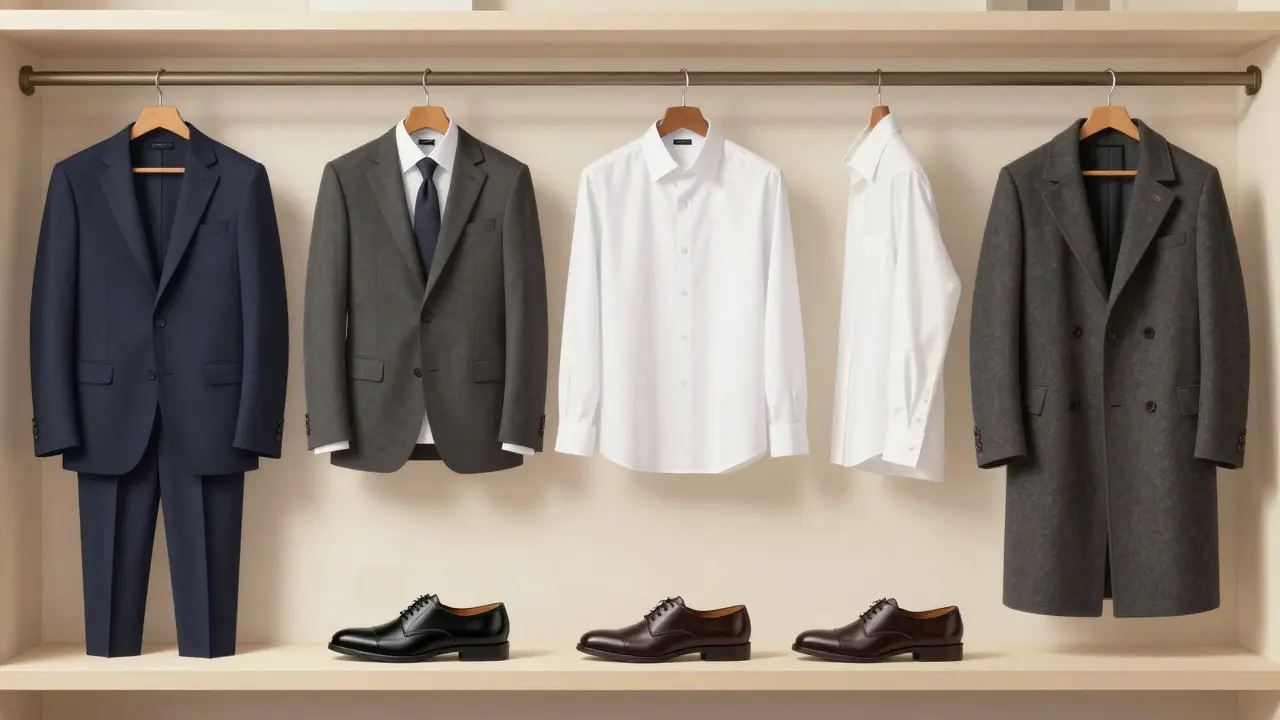
You don’t need a closet full of suits. You need five key items that can mix, match, and carry you through 90% of professional situations.
- A two-button navy suit. This is your foundation. It works for interviews, client lunches, and year-end reviews. Look for wool or wool-blend fabric with a slight stretch for comfort. The jacket should end at your hipbone, and the sleeves should show 1/4 inch of shirt cuff.
- Two crisp white dress shirts. Cotton poplin is ideal-breathable, wrinkle-resistant, and durable. Avoid pique or textured weaves in formal settings. Buttons should be secure, collars should lie flat.
- A charcoal gray suit. For colder months or when you need to look more serious than the navy suit allows. It pairs well with lighter shirts and darker ties.
- Two pairs of leather dress shoes. One black oxford for formal events, one dark brown derbies for business casual days. Polish them weekly. Scuffed shoes ruin even the best suit.
- A neutral wool overcoat. Not a puffer. Not a parka. A tailored wool coat in camel, charcoal, or navy. It completes your silhouette and signals you’ve thought ahead.
These five items, properly maintained, can last five to seven years. That’s the point: professional style isn’t about trends. It’s about consistency.
How to Adjust for Industry and Culture
Not all offices are the same. A Silicon Valley startup might call a navy blazer and dark jeans acceptable. A Wall Street bank still expects a tie. The trick isn’t copying what others wear-it’s reading the room.
Here’s how to adapt:
- Finance, Law, Government: Stick to the classic. Tie is expected. Socks should match your pants, not your shoes. No visible logos on belts or watches.
- Tech, Creative Agencies, Startups: You can drop the tie. Swap the suit jacket for a fine-gauge knit sweater. But keep the trousers tailored. A rumpled blazer over a turtleneck still reads as professional.
- Healthcare, Education, Nonprofits: Authority here comes from calm competence. A tailored blazer over a silk blouse or button-down shirt, paired with dark trousers or a knee-length pencil skirt, works best. Avoid loud colors or distracting jewelry.
- International Business: In Japan, a dark suit with no tie is common. In Germany, precision matters-shoes must be spotless. In the UK, a tweed jacket can pass as business formal in certain sectors. Research local norms before traveling.
When in doubt, dress one level above the expected norm. It’s better to be slightly overdressed than underdressed.
Why Authority Comes from Details, Not Labels
People don’t remember your brand. They remember how you made them feel. And that feeling comes from small things:
- Pressed clothes. Wrinkles signal neglect. A steamer costs less than a coffee and takes two minutes.
- Neat hair and nails. A well-groomed appearance says you respect the space you’re in.
- Confident posture. A suit hangs differently when you stand tall. Shoulders back, chin level. It’s not about arrogance-it’s about presence.
- Consistent grooming. A clean shave, trimmed eyebrows, and subtle cologne (if any) complete the picture. Overpowering scent is a distraction.
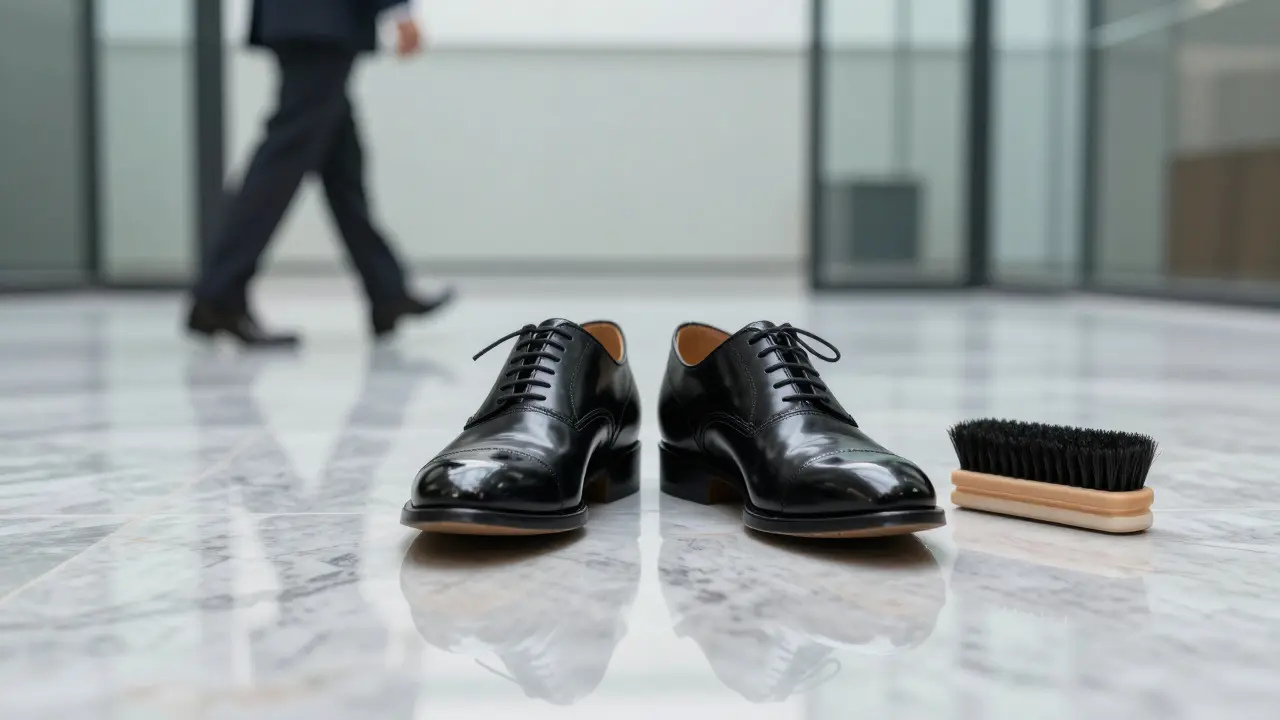
One executive I know always wears the same pair of black oxfords to every meeting. They’re 12 years old. They’re polished to a mirror shine. People notice. They don’t ask why. They just assume he’s meticulous in everything he does.
Common Mistakes That Undermine Authority
Even experienced professionals slip up. Here are the top five errors that quietly erode credibility:
- Wearing a suit that’s too tight or too loose. If you can’t comfortably button the jacket while sitting, it’s the wrong size.
- Choosing the wrong shirt collar. Spread collars are modern. Button-downs are casual. A wing collar? Only for black-tie events.
- Wearing socks that don’t match your pants. White athletic socks with dress shoes? Instant signal of carelessness.
- Carrying a worn-out briefcase or backpack. A leather briefcase that’s cracked or a nylon bag with frayed straps says you don’t value your own image.
- Ignoring the shoes. Scuffed, muddy, or overly shiny shoes break the illusion of professionalism faster than anything else.
These aren’t fashion crimes. They’re communication failures. Your clothes are your first impression. If that impression is sloppy, your message won’t land-even if it’s brilliant.
Building Your Authority Wardrobe on a Budget
You don’t need to spend $2,000 on a suit to look authoritative. The key is smart investment.
- Buy one quality piece at a time. Start with the navy suit. Then the shirt. Then the shoes. Don’t rush.
- Shop off-season. Buy wool suits in late spring. Get leather shoes in summer. Prices drop 30-50%.
- Use tailoring. A $300 suit altered for $75 looks better than a $800 suit that doesn’t fit.
- Check consignment stores and reputable online resellers. Sites like The RealReal, Vestiaire Collective, and local men’s wear consignment shops carry gently used professional wear from top brands.
- Maintain what you have. Dry clean only when necessary. Use a steamer between cleanings. Store suits on padded hangers. Rotate shoes so they rest between wears.
One client, a marketing director in Brooklyn, built her entire professional wardrobe over 18 months by spending $150 a month. She now owns two suits, four shirts, three pairs of shoes, and a coat-all tailored. She’s been promoted twice since.
When to Break the Rules (And How to Do It Right)
Rules exist to be understood, not followed blindly. The most powerful professionals know when to bend them.
Example: A female CEO in fintech wears a tailored turtleneck under a charcoal blazer-no tie, no shirt collar. It’s modern, efficient, and reads as confident. She doesn’t wear heels; she wears black loafers. Her hair is short and natural. She doesn’t look like a traditional executive. But she commands the room.
Breaking rules works when:
- You have earned credibility through results.
- Your look is intentional, not accidental.
- You maintain structure-tailored fit, neutral palette, quality fabric.
- You avoid mixing too many deviations at once.
Wearing a hoodie to a board meeting? No. Wearing a silk blouse with a sharp blazer and no bra? Yes-if it’s deliberate and you’re confident.
Authority isn’t about conformity. It’s about control. Control over your appearance, your message, and how others perceive you.
Do I need to wear a tie to be taken seriously in 2026?
Not always. In many industries-tech, media, startups-a tie is optional. But in finance, law, or government, it’s still expected in formal settings. The rule of thumb: if your jacket is on, you can skip the tie if you’re in a modern environment. If you’re meeting a client who wears a tie, wear one too. It’s about matching the energy of the room, not your personal preference.
Can I wear sneakers with a suit?
Only in very specific contexts-like a creative agency where the culture is intentionally relaxed. Even then, they must be minimalist: clean white leather, no logos, no mesh. In 95% of professional settings, sneakers break the authority code. Stick to oxfords, derbies, or loafers. They’re the silent language of competence.
What colors should I avoid in business attire?
Avoid neon, bright red, or overly patterned fabrics like loud plaids or cartoon prints. Bright colors can distract from your message. Stick to navy, charcoal, black, white, gray, and earth tones like camel or olive. These colors don’t compete with your words-they support them.
How often should I dry clean my suit?
Every 3-4 wears, if you’re wearing it regularly. But you can extend that with proper care: brush off lint after each wear, use a steamer to remove wrinkles, and air it out overnight. Over-cleaning damages wool fibers. Less is more.
Is it okay to wear a watch with a business suit?
Yes-but keep it simple. A stainless steel or leather-strapped watch with a clean dial is ideal. Avoid smartwatches in formal meetings unless everyone else is wearing them. A traditional watch signals timelessness and attention to detail. A blinking screen? That’s a distraction.
Final Thought: Dress for the Role You Want, Not the One You Have
People don’t promote you because you’re the hardest worker. They promote you because they believe you’re ready for the next level. And they believe that because of how you carry yourself.
Your clothing is a tool. Not a costume. Not a trend. A tool. Use it to show up as the person you’re becoming-not the person you are today. When you dress with intention, you don’t just look authoritative. You start to feel it. And that changes everything.


Write a comment