


How many times have you bought something new-something you were sure you’d wear every week-only to find it still hanging in your closet, untouched, six months later? You’re not alone. Most people own clothes they never wear. Not because they’re bad pieces, but because there’s no system to actually use them. A daily wear rotation system fixes that. It’s not about owning less. It’s about using what you already own-every single piece.
Why Your Clothes Stay Unused
You bought that navy blazer because it looked sharp in the store. You picked up those high-waisted jeans because they were on sale. You added the linen shirt because it felt ‘seasonally appropriate.’ But then what? You reach for the same three outfits on repeat. Why? Because your closet isn’t organized for use. It’s organized for storage.Without a rotation system, your clothes don’t get seen, touched, or worn. They sit there like silent guests at a party you never invited them to. The result? You feel like you have nothing to wear-even though your closet is full. This isn’t a style problem. It’s a system problem.
What a Daily Wear Rotation System Actually Is
A daily wear rotation system is a simple, repeatable process that ensures every item in your closet gets worn regularly. It’s not a one-time purge. It’s not a rigid rule that says you can only own 30 items. It’s a rhythm. A cycle. A way to make your wardrobe work for you instead of against you.Think of it like meal planning-but for clothes. You don’t buy groceries and then forget about them until they spoil. You plan meals, rotate ingredients, and use everything before it goes bad. Your clothes are the same. They need a schedule.
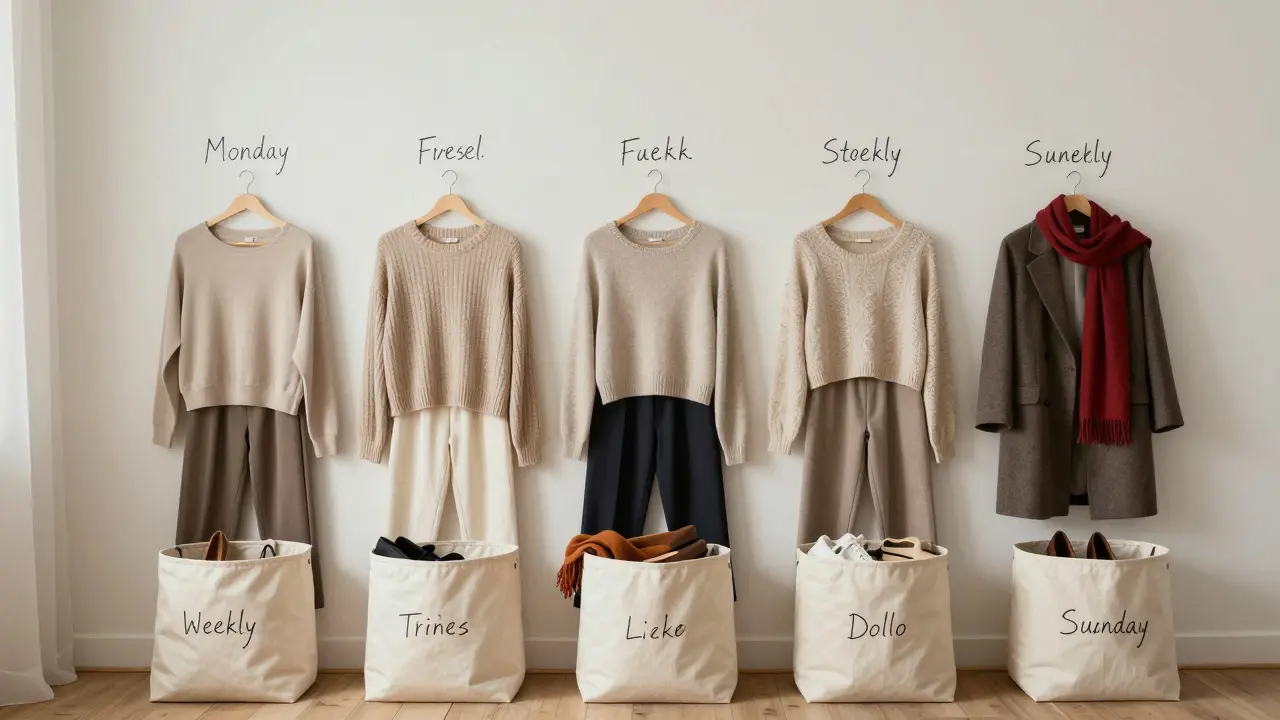
Here’s how it works in practice: You group your clothes into weekly sets. Each set contains enough pieces to cover your daily needs-tops, bottoms, layers, shoes-for five to seven days. You wear one set per week. When the week ends, you rotate to the next. No guessing. No stress. No piles of unworn clothes.
Step 1: Take Everything Out
Start by pulling every single item out of your closet, drawers, and storage bins. Yes, everything. Shoes, scarves, belts, that one sweater you haven’t touched since 2022. Lay it all on your bed or floor. This isn’t about judging. It’s about seeing.As you go through each piece, ask yourself: Have I worn this in the last six months? If the answer is no, set it aside. Don’t toss it yet. Just move it out of your active rotation. You’ll decide what to do with it later.
Now, sort what’s left into categories: tops, bottoms, dresses, outerwear, shoes, accessories. This isn’t about organizing by color or season. It’s about function. You need to know what you actually own before you can plan how to use it.
Step 2: Define Your Weekly Rotation Blocks
Now comes the core of the system. You’re going to build rotation blocks-small, manageable groups of clothing that cover a full week of wear.Start by figuring out how many outfits you actually need. Do you work from home three days a week? Do you have meetings on Tuesdays and Thursdays? Do you go out on weekends? Your rotation doesn’t need to be perfect. It just needs to match your real life.
For most people, a good starting point is five to seven outfits. Each outfit should include:
- One top
- One bottom
- One layer (cardigan, jacket, vest)
- One pair of shoes
- One accessory (optional, like a belt or necklace)
For example:
- Week 1 Outfit 1: White tee + black jeans + gray wool coat + brown loafers
- Week 1 Outfit 2: Knit sweater + corduroy pants + denim jacket + ankle boots
- Week 1 Outfit 3: Button-down shirt + tailored trousers + trench coat + oxfords
Don’t overthink it. You don’t need 20 outfits. You need five that you actually like and feel good in. Keep it simple. Keep it realistic.
Step 3: Assign Outfits to Days
Now, assign each outfit to a specific day. This is where the magic happens. When you know what you’re wearing on Tuesday, you stop wasting energy deciding.Write your rotation on a small notepad, a sticky note, or even a notes app on your phone. No need for fancy apps. Just write:
- Monday: Outfit 1
- Tuesday: Outfit 2
- Wednesday: Outfit 3
- Thursday: Outfit 1
- Friday: Outfit 4
- Saturday: Outfit 5
- Sunday: Outfit 2 (or casual version)
Notice how Outfit 1 and 2 repeat? That’s intentional. Repetition isn’t boring-it’s efficient. You’re not wearing the same thing every day. You’re cycling through what works. And when you wear something twice in a week, you start to notice how it fits, how it holds up, and whether you still love it.
Step 4: Rotate Weekly
At the end of each week, move to the next set. If you have five rotation blocks, you’ll cycle through them in five weeks. Then start over. That’s it.But here’s the key: when you rotate, you don’t just move to the next block-you check in. Ask yourself:
- Did I actually wear this outfit? Did I feel good in it?
- Did I get compliments? Did I forget I was wearing it because it felt so natural?
- Did I feel like I was forcing myself to wear it?
If an outfit didn’t work, take it out. Replace it with something else from your ‘set aside’ pile. If you wore something three times and loved it, make sure it’s in the next rotation. This isn’t about perfection. It’s about feedback.
Step 5: Keep It Fresh Without Adding More
One of the biggest mistakes people make is thinking they need to buy new things to stay interested. You don’t. You need to rearrange what you have.Try swapping layers. Wear a blazer with jeans one week, then a hoodie the next. Change your shoes. Put on a belt you haven’t worn in a year. Layer a turtleneck under a dress. These small changes make old outfits feel new.
Also, pay attention to weather and mood. If it’s raining, swap your loafers for boots. If you’re feeling bold, wear the red top instead of the black one. Your rotation isn’t rigid. It’s flexible. It adapts to your life, not the other way around.
What Happens When You Stick With It
After three months of a daily rotation system, you’ll notice a few things:- You stop buying things you don’t need.
- You start to know exactly what fits, what flatters, and what lasts.
- You feel more confident because you’re not guessing what to wear.
- You realize you never needed more clothes-you just needed a better system.
And here’s the quiet win: you’ll start to care more about your clothes. You’ll wash them properly. You’ll mend the loose button. You’ll air out the jacket after wearing it. Because when you use something regularly, you treat it differently.
What to Do With the Clothes You Set Aside
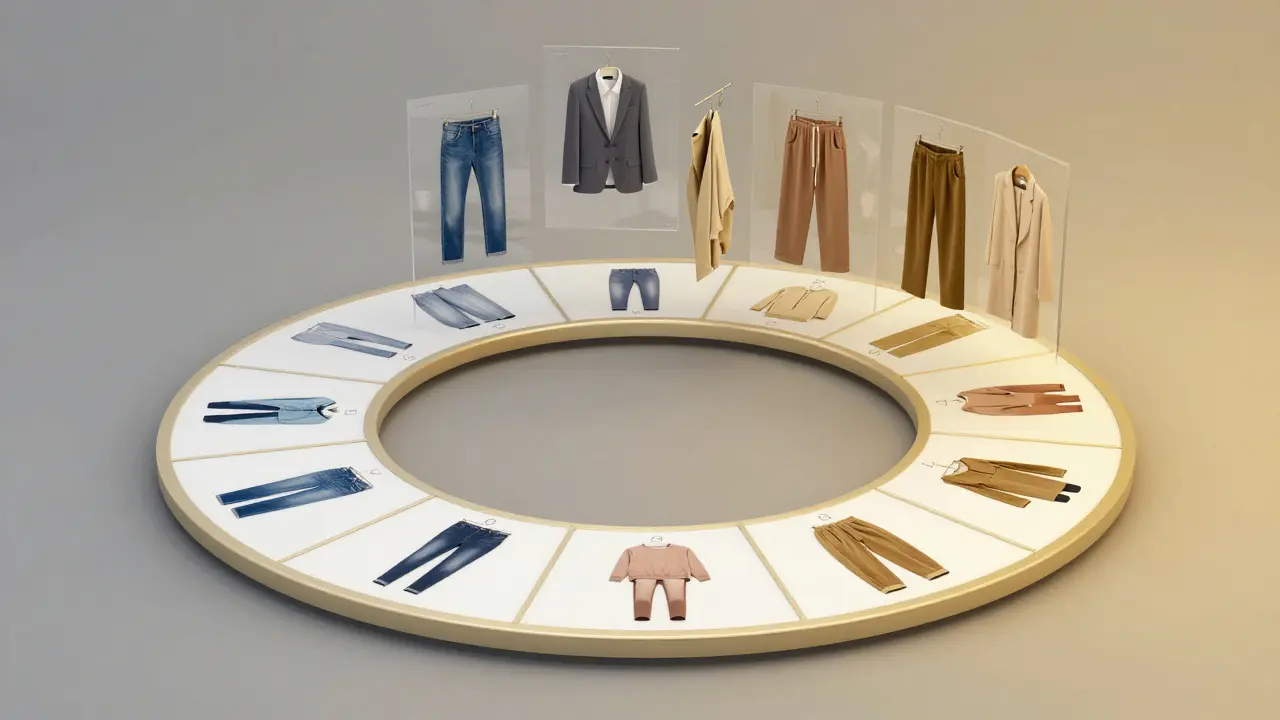
Remember that pile of clothes you pulled out earlier? Now’s the time to deal with them. Go through them one by one.Ask: Would I buy this again today, knowing what I know now? If the answer is no, it’s time to let it go. Donate it. Sell it. Give it to a friend. Don’t let it sit in a box for another year.
Keep only what you truly love and can see yourself wearing again. If you’re unsure, try it on. Wear it for a day. See how it feels. If it still feels like a chore, it’s not yours anymore.
Common Mistakes (And How to Avoid Them)
- Mistake: Trying to rotate too many items at once. Solution: Start with five outfits. Master that. Then expand.
- Mistake: Thinking you need seasonal wardrobes. Solution: Layer. A lightweight jacket can work in spring and fall. A long-sleeve tee can be worn under a sweater or alone.
- Mistake: Forgetting to rotate shoes. Solution: Rotate shoes just like clothes. Wear one pair for three days, then switch. Let them air out. They’ll last longer.
- Mistake: Waiting for the ‘perfect’ time to start. Solution: Start today. Pick five outfits. Write them down. Wear them this week.
Real-Life Example: Seattle Weather Edition
Seattle’s weather changes fast. One day it’s gray and drizzly. The next, it’s bright and chilly. Your rotation system needs to handle that.Here’s a real weekly rotation that works here:
- Monday: Long-sleeve tee + dark jeans + waterproof coat + hiking boots
- Tuesday: Button-down + wool trousers + wool blazer + loafers
- Wednesday: Knit sweater + corduroy pants + puffer vest + ankle boots
- Thursday: Turtleneck + straight-leg jeans + trench coat + suede boots
- Friday: Slip dress + denim jacket + wool scarf + ankle boots
- Saturday: Hoodie + joggers + puffer jacket + sneakers
- Sunday: Oversized cardigan + leggings + wool coat + slippers (yes, at home)
Notice how each outfit uses layers? That’s the trick. You don’t need 20 coats. You need one good one and smart layering.
Final Thought: It’s Not About Less. It’s About More.
A daily wear rotation system isn’t about owning fewer clothes. It’s about using more of what you own. It’s about making every purchase count. It’s about waking up and knowing exactly what to wear-without stress, without guilt, without clutter.You don’t need a bigger closet. You need a better system.
How long does it take to see results from a daily wear rotation system?
Most people notice a difference within two weeks. You’ll stop feeling overwhelmed by your closet and start feeling confident in your choices. After a month, you’ll likely stop buying things you don’t need. After three months, you’ll have a clear sense of what works-and what doesn’t.
Can I still wear the same outfit twice in one week?
Yes, and you should. Wearing an outfit twice in a week doesn’t mean you’re boring-it means you’ve found something that works. Real style isn’t about never repeating. It’s about wearing what fits your life, not chasing trends. Most people who say they ‘never wear the same thing twice’ are just avoiding the effort of building a system.
What if I don’t have enough clothes to make five outfits?
Start with what you have. Even if you only have three outfits, use them. Rotate them. Add layers. Swap accessories. You don’t need more clothes-you need to use what’s already there. Once you start seeing how much you actually wear, you’ll know exactly what to buy next-because you’ll be buying with purpose, not impulse.
Should I organize my closet by color or by outfit?
Organize by outfit. Hang or store your clothing in the groupings you use each week. Put Monday’s outfit together in one spot. Tuesday’s in another. This makes it easy to grab and go. Color-coding looks nice, but it doesn’t help you wear your clothes. Function beats aesthetics every time.
How do I handle special occasions or unexpected events?
Keep one or two ‘special occasion’ outfits separate from your rotation. A nice dress, a blazer set, or a pair of heels. Don’t force them into your daily cycle. But when you need them, they’re ready. The rest of your wardrobe should handle 90% of your days. The rest is for surprises.


Write a comment