

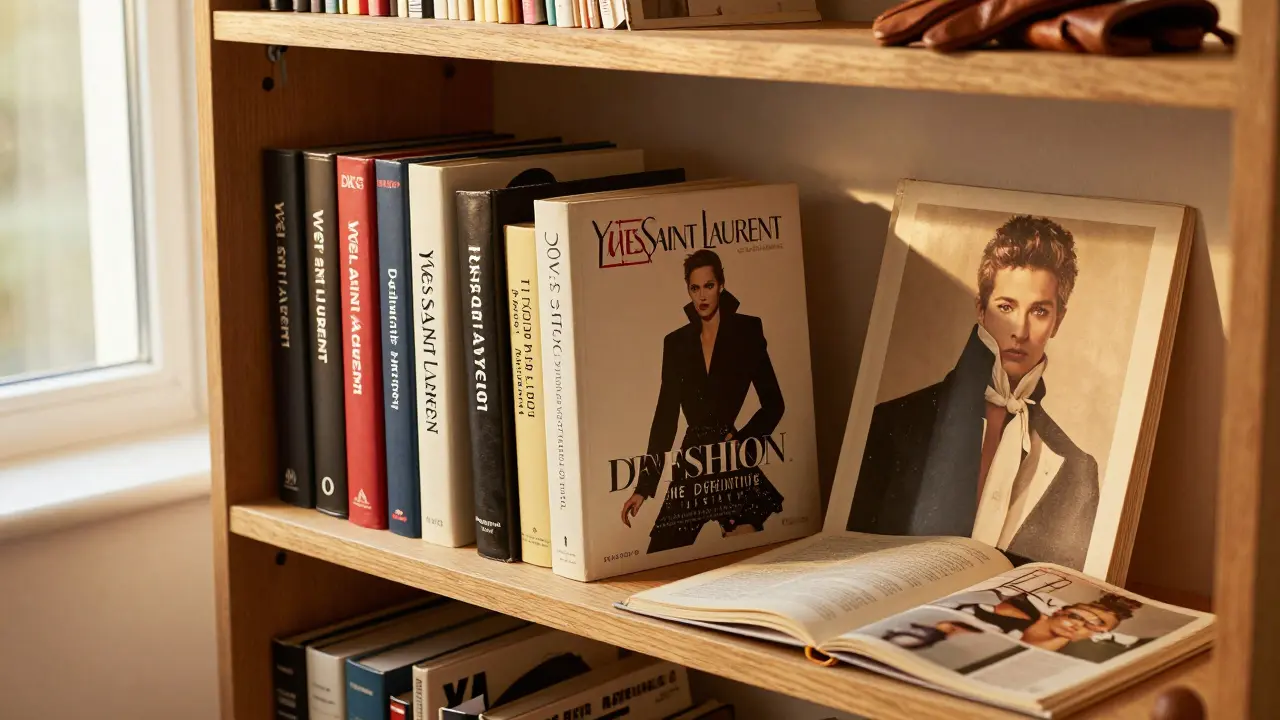
Most people think style is something you’re born with. But the truth? It’s built. Slowly. One book, one photo, one outfit breakdown at a time. If you’ve ever stared at a runway show and wondered how to translate that energy into something you actually wear, you’re not alone. The secret isn’t buying more clothes-it’s building a style reference library that speaks to your taste, grows with you, and gives you confidence when you’re stuck.
Why a Style Reference Library Matters More Than Ever
Instagram feeds and TikTok trends move fast. What’s hot today is outdated tomorrow. Without a personal system to filter what actually resonates, you end up chasing styles that don’t fit your body, lifestyle, or personality. A style reference library acts like a compass. It’s not about collecting pretty images-it’s about understanding why you’re drawn to them.
Think of it this way: if you were learning to cook, you wouldn’t just watch random YouTube videos. You’d keep a notebook of recipes that worked, note which ingredients you loved, and save photos of plating that made you hungry. Style is the same. You need a collection that reflects your evolving taste-not someone else’s algorithm.
Real designers do this. Rei Kawakubo of Comme des Garçons keeps hundreds of mood boards. Phoebe Philo built her entire Celine aesthetic from a library of vintage French magazines. You don’t need to be a designer to borrow this habit. You just need to start collecting-with purpose.
Start With Physical Books: The Foundation of Your Library
Books are the backbone of any serious style reference library. They don’t disappear when the internet goes down. They don’t get buried under a flood of ads. They sit on your shelf and whisper, “Remember this?”
Begin with these three types:
- Designer monographs - Books focused on one designer’s work. Look for Yves Saint Laurent: The Permanent Collection or Helmut Lang: What Remains. These show how a single vision evolves over decades.
- Historical fashion surveys - Titles like Fashion: The Definitive History of Costume and Style by DK or 20th Century Fashion by Elizabeth Wilson give you context. You’ll start noticing how silhouettes from the 1920s reappear in 2020s streetwear.
- Photography collections - Books by Richard Avedon, Irving Penn, or Willy Vanderperre. These aren’t just pretty pictures-they teach you how light, pose, and cropping create mood. Notice how Avedon’s white backgrounds make clothes feel sculptural.
Don’t buy everything at once. Start with one book that makes your heart skip. Read it slowly. Mark pages. Scribble notes in the margins. Ask yourself: What’s the emotion here? Is it power? Quiet confidence? Rebellion? That’s your signal.
Lookbooks: The Missing Link Between Inspiration and Wearability
Lookbooks are where theory meets reality. They’re not fashion editorials. They’re practical snapshots of how clothes are styled, layered, and worn in real life. Think of them as visual mood boards created by brands or stylists to show the full potential of a collection.
Where to find them:
- Independent brands - Smaller labels like A.P.C., Cuyana, or The Row often release beautifully curated lookbooks with minimal text. They focus on texture, proportion, and how pieces work together.
- Department store archives - Nordstrom, Saks, and even Zara used to publish printed lookbooks. Search eBay or Etsy for “vintage lookbook 2015” or “2018 Nordstrom catalog.” You’ll find styling ideas that never made it to Instagram.
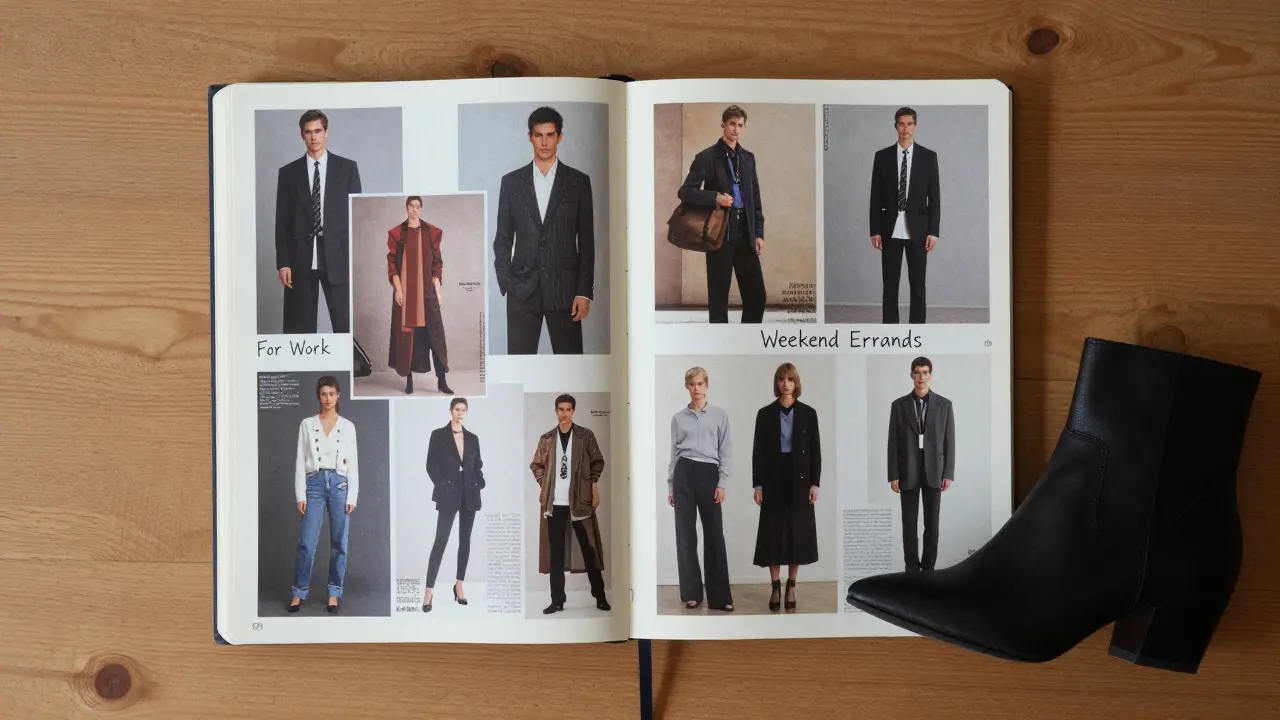
- DIY lookbooks - Cut out outfits from magazines, print photos from Pinterest (without the clutter), and glue them into a notebook. Label each page: “For work,” “Weekend errands,” “Date night.” Over time, patterns emerge. Maybe you always gravitate toward neutral tones with one bold accessory. That’s your signature.
Lookbooks teach you something no influencer can: how to build an outfit that feels complete, not just put together. They show you how a trench coat can be worn over a slip dress. How a blazer can be paired with jeans and sneakers. How to layer without looking bulky.
Digital Resources: Organizing Your Online Inspiration
There’s no way around it-digital tools are essential. But they’re useless if you’re just saving everything. A Pinterest board with 5,000 pins is noise. A curated digital library is power.
Here’s how to build one that actually works:
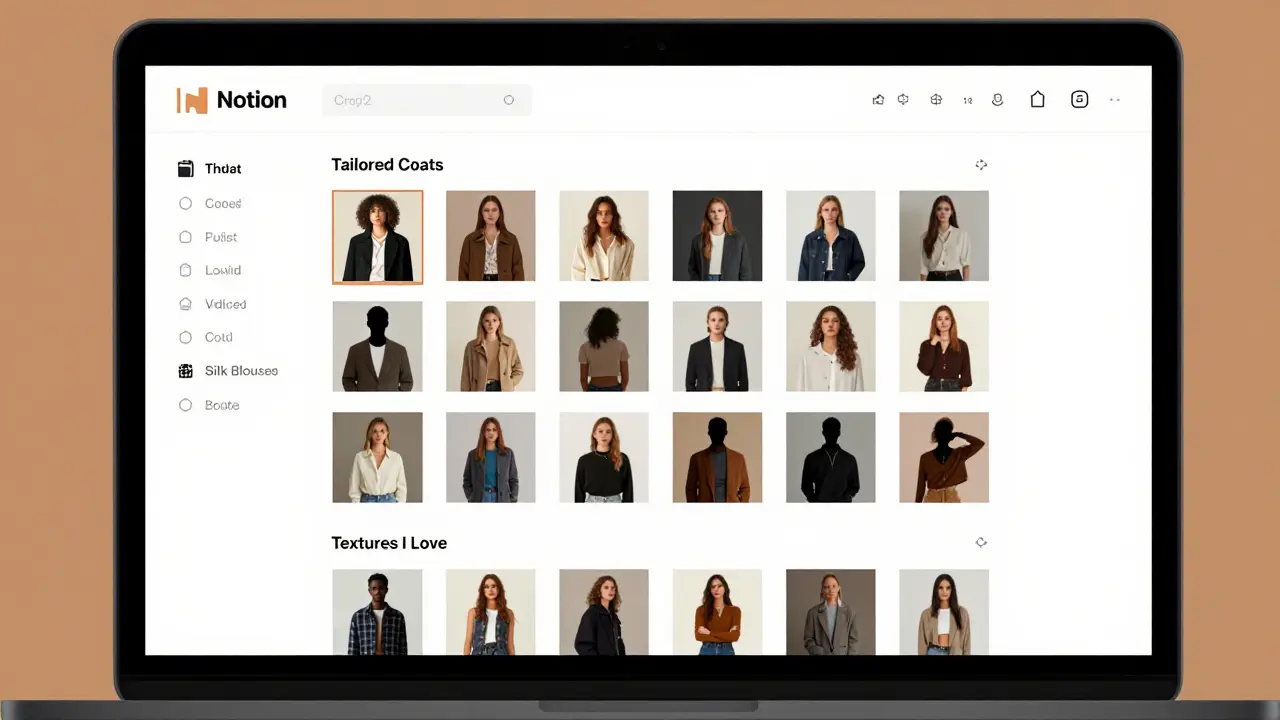
- Choose one main platform - Pinterest, Notion, or Apple Notes. Don’t spread yourself thin. Notion is best for structured libraries. Pinterest is best for visual browsing.
- Create folders by category - Not “outfits” but “Tailored Coats,” “Silk Blouses,” “Footwear That Lasts,” “Textures I Love.” Be specific. “Black shoes” is too vague. “Black pointed-toe ankle boots with 2-inch heel” is actionable.
- Tag everything - Use tags like #fabric:linen, #silhouette:boxy, #occasion:office, #color:ochre. This turns your library into a searchable database.
- Remove anything that doesn’t spark joy or clarity - If you saved something because it was “trending,” delete it. Only keep what makes you think, “Yes, that’s me.”
Pro tip: Take a screenshot of your digital library every six months. Compare it to your actual closet. Are you buying what you’re saving? If not, why? That gap is your next style lesson.
How to Use Your Library When You’re Stuck
Here’s the real test: you open your closet. Nothing feels right. What do you do?
Don’t scroll. Don’t shop. Open your library.
Find one image that matches your mood. Maybe it’s a photo from a 1990s Helmut Lang campaign-clean lines, no logos, a single belt. Now ask:
- What’s the shape? (Oversized? Fitted? Asymmetrical?)
- What’s the texture? (Wool? Leather? Knit?)
- What’s the color story? (Monochrome? Contrast?)
- What’s the vibe? (Powerful? Relaxed? Mysterious?)
Then go through your own clothes. Find one item that matches the shape. One that matches the texture. One that matches the color. Mix them. You’ve just created a new outfit-without buying anything.
This is how style becomes a skill. Not luck. Not trends. A system you control.
Update Your Library Like a Living Thing
Your style isn’t frozen in time. You’re not the same person you were five years ago. Your library shouldn’t be either.
Set a reminder every six months to:
- Review your saved images. Delete what no longer fits.
- Add three new books or lookbooks that surprised you.
- Write down one new observation: “I’m drawn to longer hemlines,” or “I feel more confident in structured shoulders.”
Over time, your library becomes a mirror. It doesn’t just show you what you like-it shows you who you’re becoming.
What to Do When You Don’t Know Where to Start
Start small. Pick one thing.
- Go to your local library. Borrow one fashion book. Read it. Don’t rush.
- Find one vintage lookbook online. Print two pages. Tape them to your wall.
- Create one Notion page titled “My Style DNA.” List three words that describe your ideal look.
You don’t need to buy a $200 book or spend hours curating Pinterest. Just begin. The rest will follow.
Style isn’t about having the most. It’s about knowing what matters. And your library? It’s the only thing that will never lie to you.
What’s the difference between a lookbook and a fashion magazine?
A fashion magazine tells you what’s trending and often uses editorial styling that’s exaggerated or impractical. A lookbook shows how clothes are meant to be worn in real life-layered, mixed, and styled for movement and function. Lookbooks are about wearability; magazines are about fantasy.
Can I build a style library without spending money?
Absolutely. Public libraries have fashion books. Many brands post free digital lookbooks on their websites. Pinterest and Instagram can be used as free digital archives if you organize them intentionally. The key isn’t cost-it’s curation. Delete what doesn’t serve you. Keep what sparks clarity.
How often should I update my style library?
Every six months. That’s enough time to notice patterns in what you’re drawn to-and what you’ve stopped caring about. Seasonal updates keep your library alive. Don’t wait for a wardrobe crisis to refresh it.
Is it okay to copy styles from my library?
Yes-but not blindly. Copying the shape, color, or texture of something you love is how you learn. But your goal isn’t to replicate someone else’s look. It’s to understand why it works and adapt it to your body, life, and personality. That’s how you create original style.
What if my style changes over time?
That’s the whole point. A style library isn’t a museum-it’s a diary. If you used to love bold prints and now you prefer neutrals, delete the old pins. Add new ones. Your library should reflect your growth, not lock you into who you were.
Start today. Pick one book. Save one image. Write one word. Your future self will thank you.


Write a comment