


Quick Guide to Metal Matching
- Cool undertones: Reach for silver, white gold, and platinum.
- Warm undertones: Go for yellow gold, copper, and brass.
- Neutral undertones: You can rock almost any metal or a mix of both.
- The Goal: Create harmony between the metal's reflectiveness and your skin's natural pigment.
Decoding Your Skin Undertones
Before picking out a piece of jewelry, you have to identify what's happening beneath the surface of your skin. Your surface tone (fair, medium, deep) can change with sun exposure or age, but your undertone remains constant throughout your life.Think of color analysis is a method of determining which colors harmonize with a person's natural skin, eye, and hair color as a way to find your visual baseline. To figure out where you stand, try the vein test. Look at your wrist in natural light. If your veins appear blue or purple, you likely have cool undertones. If they look green or olive, you're leaning warm. If you can't quite tell or they look like a mix of both, you're probably neutral.
Another trick is the white paper test. Hold a sheet of stark white paper next to your face in a mirror. If your skin looks pink or bluish against the paper, you're cool. If it looks yellow or golden, you're warm. If you just look... skin-colored, you're neutral. Why does this matter? Because metals act like mirrors. They reflect light back onto your face, and if that reflection clashes with your undertone, it can make you look washed out.
The Cool Palette: Silver, Platinum, and White Gold
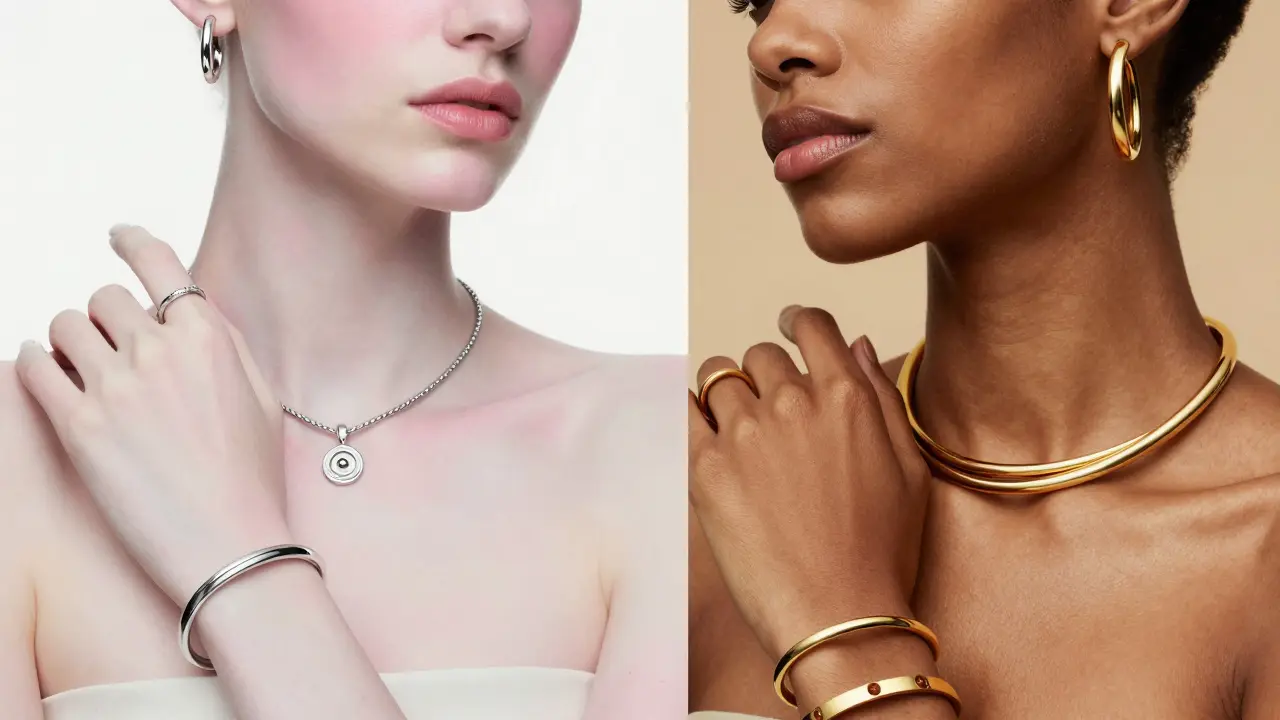
If you have cool undertones, your skin typically has hints of pink, red, or blue. When you wear metals with a cool base, they amplify the clarity of your skin.Silver is a lustrous white metal that reflects cool, blue-toned light. It creates a seamless blend with cool skin, making the wearer look bright and fresh. Platinum and White Gold function similarly, though platinum is denser and naturally white, whereas white gold is often plated with rhodium to achieve that crisp finish.
For those in the "Winter" or "Summer" categories of Seasonal Color Theory, these metals are non-negotiable. If you're a cool winter, high-contrast silver against deep skin or pale porcelain skin looks striking. If you're a soft summer, muted silver or pewter feels more natural and less overwhelming.
The Warm Palette: Yellow Gold, Copper, and Brass
Warm undertones mean your skin has a base of yellow, peach, or golden hues. For these individuals, cool metals can sometimes look "separate" from the skin, almost like they are floating on top of it rather than integrating with it.Yellow Gold is an alloy of gold and other metals that emits a warm, golden glow. This metal mimics the warmth already present in your skin, creating a glowing, healthy effect. If you have a deep golden complexion, 18k or 22k gold-which has a higher gold content and a richer yellow hue-looks incredibly luxurious.
If you're leaning toward the "Autumn" or "Spring" palettes, don't stop at gold. Copper and Brass are fantastic alternatives. Copper's reddish-orange tint is a dream for those with auburn hair or olive skin with warm undertones. It adds a rustic, grounded feel that yellow gold sometimes lacks.
| Undertone | Best Metals | Avoid or Use Carefully | Vibe Created |
|---|---|---|---|
| Cool | Silver, Platinum, White Gold | Yellow Gold, Copper | Crisp, Clean, Ethereal |
| Warm | Yellow Gold, Copper, Brass | Silver, Platinum | Glowy, Rich, Sun-kissed |
| Neutral | All Metals, Rose Gold | None | Versatile, Balanced |
The Neutral Middle Ground and the Magic of Rose Gold
Neutral undertones are the chameleons of the color world. You have a balanced mix of warm and cool pigments, which means you can usually wear any metal without looking washed out. However, there is one metal that specifically caters to this group: Rose Gold.Rose gold is created by mixing pure gold with copper. Because it contains both a warm element (gold) and a reddish-warm element (copper), it sits right in the center of the spectrum. For someone with neutral skin, rose gold doesn't just look "okay"-it looks intentional. It mimics the natural flush of blood under the skin, making it look incredibly organic.
If you're neutral, you can use metals to shift your mood. Want to look more professional and sharp? Go for silver. Want to look softer and more romantic? Choose rose gold. Want to look bold and high-energy? Stick with yellow gold. The choice depends on the energy you want to project rather than a strict biological requirement.
Mastering the Art of Mixed Metals
For a long time, the fashion world told us that mixing metals was a cardinal sin. We were told to pick a lane: either gold or silver. But in 2026, the rules have shifted. Mixing metals is now seen as a sign of effortless style, provided you do it with a bit of strategy.The key to mixing metals without looking messy is "intentionality." If you just throw on a random silver ring and a gold necklace, it can look like you got dressed in the dark. Instead, try these three approaches:
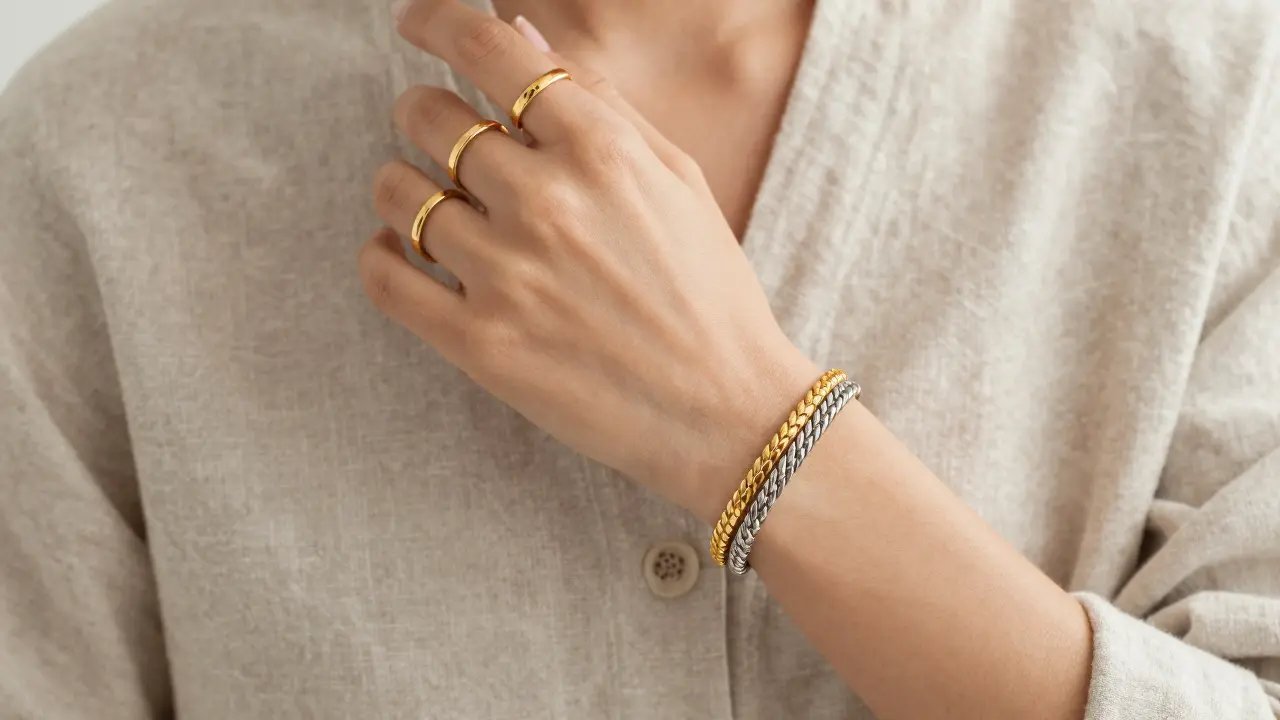
- The Bridge Piece: Find one piece of jewelry that already contains both metals. A two-tone watch or a braided gold and silver bracelet acts as a visual anchor. Once you have a bridge piece, the rest of your jewelry will look cohesive even if the colors vary.
- The Balanced Distribution: If you're wearing a gold necklace, pair it with both a gold and a silver ring on each hand. This spreads the colors across your body, making the mix feel like a conscious design choice rather than an accident.
- The 80/20 Rule: Choose one dominant metal and use the other as an accent. If you love gold, let it be 80% of your look, and add a single silver piece-perhaps a sleek cuff or a pair of studs. This creates a sophisticated contrast that doesn't clash.
Common Pitfalls and Pro Tips
One of the biggest mistakes people make is relying on their current tan. If you've spent a summer in the sun, your skin might look warmer than it actually is. This is why the vein and white paper tests are so important-they reveal your permanent undertone, not your seasonal tan. If you buy all yellow gold because you're tanned in August, you might find that everything looks jarringly yellow once winter hits and your skin returns to its natural pale or cool state.Another tip is to consider the saturation of the metal. If you have a very fair, cool complexion, a heavy, chunky silver chain can sometimes overwhelm your features. In this case, go for a thinner, more delicate silver wire. Conversely, if you have a deep, rich complexion, very pale silver can sometimes look too stark. In that case, a brushed silver or a darker pewter can provide a more sophisticated transition.
Don't forget about the environment. Lighting changes everything. A metal that looks perfect in your bathroom's LED light might look different under the warm glow of a restaurant's Edison bulbs. When testing metals, always try to see them in natural daylight. This is where the true interaction between the metal's reflection and your skin's pigment is most visible.
Can I wear gold if I have cool undertones?
Yes, you can, but it may not be as harmonizing. If you love yellow gold but have cool skin, try a lighter gold or a "champagne gold." Alternatively, pairing gold with a bit of silver (mixed metals) can help bridge the gap and prevent the gold from making your skin look sallow.
What is the difference between skin tone and skin undertone?
Skin tone is the surface color you see-like fair, medium, or deep. It can change due to sun exposure or skin conditions. Undertone is the subtle hue beneath the surface (cool, warm, or neutral) and never changes. Metals are chosen based on the undertone, not the surface tone.
Does hair color affect which metal I should choose?
While skin undertone is the primary guide, hair color plays a supporting role. For example, someone with cool skin but warm, golden-blonde hair might find that a mix of gold and silver works best, as the jewelry needs to harmonize with both the skin and the hair.
Is rose gold only for neutral undertones?
Not at all. While it's the "perfect" match for neutrals, rose gold is very forgiving. Because it blends warm and cool elements, it often looks great on warm undertones (who lean into the gold/copper side) and can even work for cool undertones if the pink hue is prominent.
How do I know if I'm truly neutral?
If you find that both gold and silver look equally good on you, or if the vein test is inconclusive (veins look blue-green), you're likely neutral. Another sign is that you can wear a wide variety of colors-like both royal blue and orange-without one making you look significantly worse than the other.
Next Steps for Your Jewelry Journey
If you're still unsure, start by experimenting with a few inexpensive pieces of different metals. Wear a silver ring on one hand and a gold one on the other for a full day. Pay attention to which one makes your hand look brighter and which one seems to blend in.For those who want to go deeper, I recommend looking into a full seasonal color analysis. Knowing if you're a "Deep Autumn" versus a "Bright Spring" will help you not only with metals but with your entire wardrobe, from lipstick shades to the color of your favorite coat. Once you find your harmony, getting dressed becomes less about guessing and more about highlighting your natural beauty.


Write a comment