


Let’s be honest-your closet shouldn’t feel like a storage unit for clothes you haven’t worn in three years. If you’re digging through piles of tags still attached, or you’ve started wearing the same three outfits on repeat, it’s not just laziness. It’s a signal. Your closet is screaming for a reset. And no, you don’t need to buy a whole new wardrobe. You need to edit it.
You’re Wearing the Same Things Over and Over
If your go-to outfits are always the same black jeans, that faded band tee, and the one sweater you’ve had since college, something’s off. Not because those pieces are bad, but because you’re stuck in a loop. When you stop reaching for other items in your closet, it’s not because they’re ugly-it’s because they don’t fit right anymore, or they don’t make you feel like yourself. That’s a red flag. Your clothes should work for your life, not just sit there as relics of who you were.
You Can’t Remember What You Own
Think about it: when you open your closet, do you immediately know what’s in there? Or do you spend five minutes shuffling through hangers, hoping something magically appears? If you can’t recall half the items in your closet without pulling them out and holding them up to the light, you’ve got a visibility problem. A well-edited closet lets you see everything at a glance. You shouldn’t need a spreadsheet or a photo album to remember you own a navy blazer. If you do, it’s time to reorganize-or let go.
You’re Avoiding Your Closet
Do you dread opening it? Do you sigh when you walk past it? Do you find yourself buying new clothes just to avoid dealing with the mess? That’s not shopping-it’s avoidance. When your closet becomes a source of stress instead of confidence, it’s not about the number of items. It’s about the emotional weight. Clutter isn’t just physical. It’s mental. You’re holding onto clothes that remind you of past versions of yourself: the job you quit, the relationship that ended, the body you no longer recognize. Letting go isn’t about throwing things away. It’s about making space for who you are now.
Items Are Falling Apart, But You Keep Them
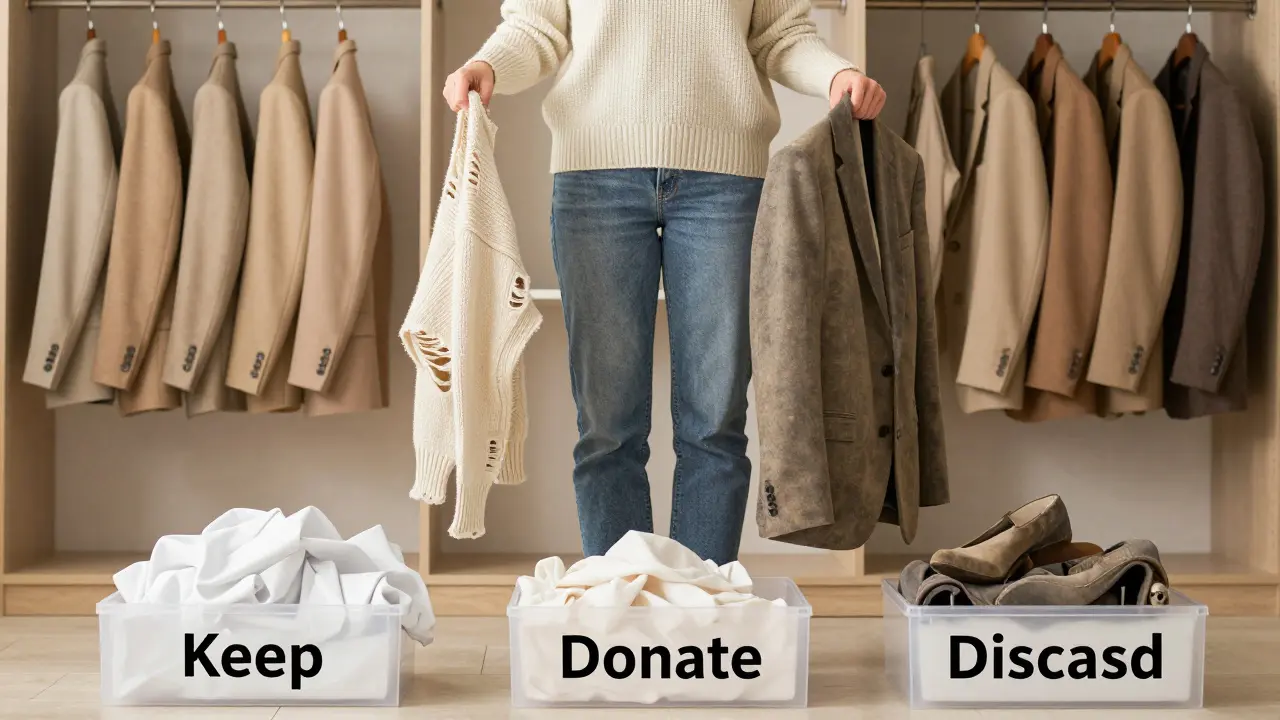
That sweater with the hole? The shoes with the cracked sole? The dress that’s faded from too many washes? If you’re keeping them because "you might fix them someday" or "it’s still wearable," you’re lying to yourself. Most of those items won’t be repaired. They’ll just sit there, taking up space and draining your energy. A good rule of thumb: if it’s been damaged for more than six months and you haven’t touched it, it’s not coming back. Donate it. Recycle it. Don’t let guilt turn your closet into a graveyard.
You’re Buying More to Fix the Problem
This one’s sneaky. You look in your closet, feel overwhelmed, and think: "I need something new." So you buy a top, then a pair of pants, then a jacket. And then? The same feeling comes back. That’s because you’re treating symptoms, not the disease. A cluttered closet isn’t solved by adding more stuff. It’s solved by removing what doesn’t serve you. Every time you buy something new without clearing out the old, you’re just moving the problem around. Try this: for every new item you bring in, let go of two. That’s the real math of a healthy wardrobe.
Your Clothes Don’t Fit Your Current Life
Think about your daily rhythm. Do you work from home? Walk to the subway? Have meetings in coffee shops? Your clothes should match your actual life-not the life you think you should have. That fancy dress you wore to a wedding three years ago? If you haven’t been to a formal event since, it’s not going to get worn. Same goes for those work blazers you wore before you switched to remote work. Clothes that don’t align with your current routine are just noise. Keep what fits your rhythm. Let go of what belongs to someone else’s.
You Feel Empty Even After a Shopping Trip
Ever bought something new and felt… nothing? No excitement. No confidence. Just a quiet disappointment? That’s not buyer’s remorse. That’s wardrobe dissonance. When your clothes don’t reflect who you are, buying more won’t fix it. You need clarity. A clean, intentional closet doesn’t need to be big. It needs to be right. One pair of jeans that fit perfectly. One coat that makes you feel powerful. One dress that makes you turn your head in the mirror. That’s all you need.

How to Start: A Simple 5-Step Process
- Empty it all out. Yes, every single thing. No exceptions. Lay it on your bed or floor. You need to see it all at once.
- Sort into three piles: Keep, Donate, Discard. Keep only what you love, wear regularly, and feel good in. Donate what’s in good condition but doesn’t fit your life. Discard what’s stained, torn, or worn out.
- Test the fit. Try on every piece you’re thinking of keeping. If it’s too tight, too loose, or just doesn’t feel right, let it go. Your body changes. Your clothes should too.
- Organize with intention. Hang what you wear most. Fold knits. Use bins for seasonal items. If you can’t see it or reach it easily, it doesn’t belong in your daily rotation.
- Set a rule: one in, two out. This keeps your closet from creeping back into chaos.
What to Keep: The 3-Point Test
When you’re holding a garment and wondering whether to keep it, ask yourself:
- Do I feel like myself in this? Not "would someone else like it?" Not "is it trendy?" Do you feel confident, comfortable, and like the best version of you?
- Have I worn it in the last 12 months? If not, it’s not serving you. Exceptions: seasonal items like winter coats or formal wear you wear once a year.
- Does it fit my current life? If you’re not going to the office, you don’t need five blazers. If you’re not going out, you don’t need heels.
If it passes two out of three? Keep it. If it passes one or none? Let it go.
You Don’t Need More Clothes. You Need Less Noise.
A complete wardrobe overhaul isn’t about buying a new wardrobe. It’s about removing the noise so you can hear yourself again. When your closet is clear, you stop second-guessing your choices. You get dressed faster. You feel better. You stop wasting time and money on things that don’t fit.
Think of your closet as a mirror. If it’s full of clutter, you can’t see clearly. When you edit it down to the essentials-the pieces you truly love, that fit your life, that make you feel like yourself-you’re not just organizing clothes. You’re building a foundation for confidence.
And that? That’s worth the effort.
How often should I do a full wardrobe overhaul?
There’s no set schedule, but most people benefit from a full edit every 12 to 18 months. If your life changes-new job, move, body shift, lifestyle change-you should reassess sooner. A seasonal check-in (spring and fall) helps you spot items you’ve forgotten about or no longer wear.
What if I’m emotionally attached to my clothes?
It’s normal. Clothes hold memories. But holding onto something because of the past can block your present. Try this: take a photo of the item before letting it go. Keep the memory, not the fabric. Or donate it with a note to someone who might need it more. Sometimes, giving it away feels better than keeping it.
Can I do a wardrobe overhaul on a budget?
Absolutely. A wardrobe overhaul isn’t about spending-it’s about stopping the leak. Don’t buy anything new until you’ve cleared out what’s not working. The money you save by not buying duplicates or wrong-sized items? That’s your budget. Focus on quality over quantity. One well-made piece that lasts five years beats five cheap ones that fall apart after two.
Should I keep clothes that were gifts?
Only if you wear them. A gift doesn’t come with a moral obligation to keep something you hate. If it doesn’t fit, flatter, or function for you, thank the person, donate it, and move on. The real gift is freeing yourself from guilt.
What do I do with clothes I don’t want to donate?
If they’re damaged, stained, or worn beyond repair, recycle them. Many brands like H&M, Madewell, and Patagonia have textile recycling bins. You can also check with local nonprofits or textile recycling centers. Never throw clothes in the trash-they belong in a recycling stream, not a landfill.


Write a comment