

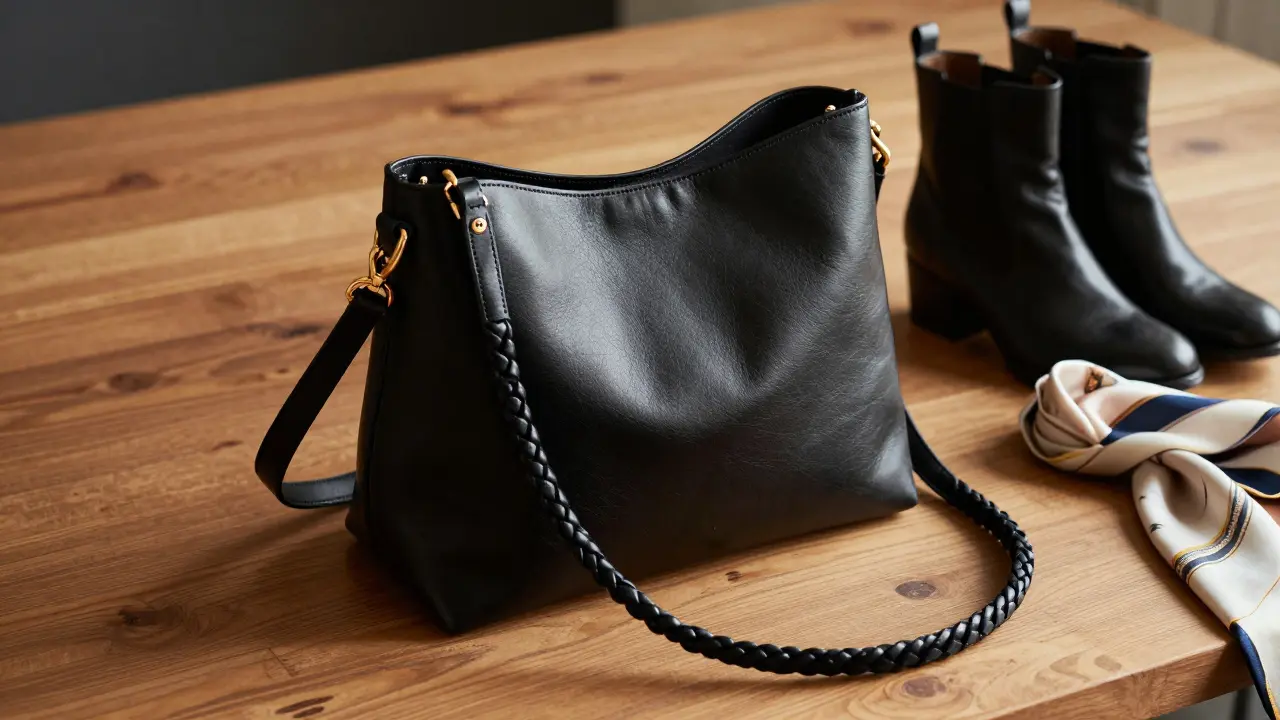
Ever looked at your favorite handbag and felt like it’s lost its spark? You wear it all the time, it still holds everything you need, but something’s off. It doesn’t match your outfit the way it used to. Maybe it’s too formal for brunch, too bulky for a night out, or just plain boring after months of use. The fix isn’t buying a new bag-it’s swapping the strap.
Why interchangeable straps work better than new bags
Buying a new handbag every season isn’t just expensive-it’s wasteful. A quality leather tote can cost $300 or more. A simple strap? Around $25 to $60. That’s a fraction of the price for a completely different look. People who switch straps regularly report using their favorite bags 3x more often because they never get tired of them. The truth is, most handbags are designed with hardware that makes swapping straps easy. Most designer bags, from Michael Kors to Longchamp, have removable clips or rings built into the sides. Even budget-friendly brands like Madewell and J.Crew now include interchangeable hardware. You’re not modifying your bag-you’re unlocking its hidden potential.Types of straps you can swap in
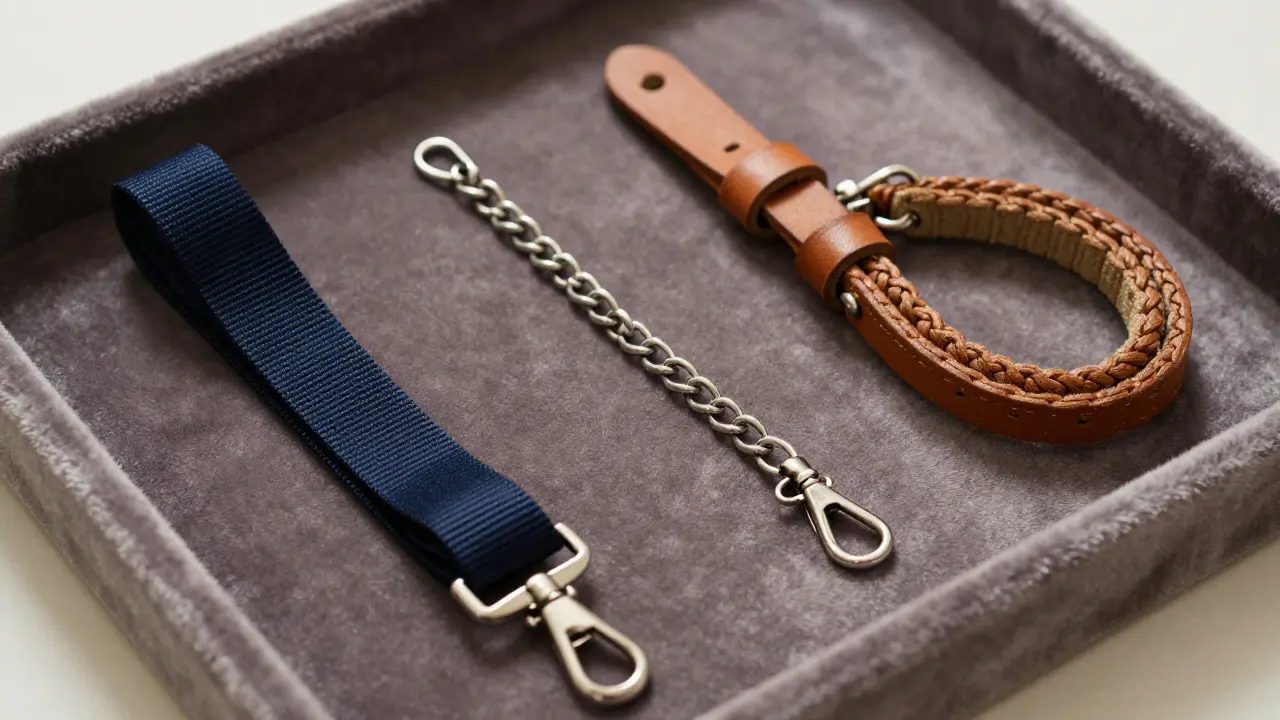
Not all straps are made the same. Here’s what actually works in real life:- Leather crossbody straps - Add structure and polish. Great for turning a clutch into a daytime bag. Look for ones with a slight taper-wider at the shoulder, thinner at the clasp-for comfort.
- Chain straps - Instant glam. A gold or silver chain turns a casual tote into an evening-ready piece. Avoid heavy chains on lightweight bags-they’ll pull the shape out of alignment.
- Webbing or nylon straps - Lightweight, durable, and casual. Perfect for weekend errands or travel. Brands like Fjällräven and Herschel make these in bold colors that pop.
- Adjustable braided straps - Adds texture and boho flair. Works best on structured bags with a clean silhouette. Great for layering with scarves or jewelry.
- Double straps - Two thinner straps instead of one thick one. Gives you the option to wear it as a shoulder bag or carry it by hand. Ideal for structured satchels.
Pro tip: Match the metal hardware on your strap to your belt buckle, watch, or earrings. It’s a subtle detail that ties your whole look together without trying too hard.
How to choose the right strap for your bag
It’s not just about looks-it’s about function. Here’s what to check before you buy:- Clasp type - Does your bag use a snap hook, a carabiner, or a ring? Most straps come with standard clips, but double-check compatibility. A mismatched clasp won’t hold.
- Length range - A strap that’s too short will dig into your shoulder. Too long, and the bag hangs past your hips. Look for straps with at least 3 adjustment points.
- Weight capacity - A delicate chain strap might look stunning, but if you carry a laptop or a full diaper bag, it’ll snap. Stick to leather or reinforced nylon for heavy loads.
- Bag shape - Round or slouchy bags look best with soft, drapey straps. Structured, boxy bags need clean lines and minimal hardware.
Try this: Hold your empty bag up to your shoulder with your hand. Now imagine a strap there. Does it feel balanced? If it looks like it’s pulling sideways, the strap length or width isn’t right.

Real-life examples: Before and after
Take a classic black leather tote. Original strap: thick, shoulder-length, no adjustability. It’s practical, but it screams “office.” Swap it for a medium-length braided leather strap with gold hardware. Now it’s a stylish companion for dinner dates. Add a small crossbody strap for weekends-it becomes your go-to bag for farmers markets and coffee runs. Or consider a canvas shopper bag. With its original long handles, it’s a grocery hauler. Swap in a thin chain strap and it becomes a statement piece. Wear it crossbody with a denim jacket and ankle boots-suddenly, it’s fashion-forward, not functional. One woman in Chicago replaced the strap on her 5-year-old Celine box bag with a red nylon webbing strap. She told a friend, “It’s like I bought a new bag without spending $2,000.”Where to buy interchangeable straps
You don’t need to buy from the same brand as your bag. In fact, third-party options often offer better variety and price.- Amazon - Search for “interchangeable handbag straps” and filter by customer reviews. Look for straps with 4.5+ stars and at least 100 reviews. Brands like BAGGU and Luvamia are consistently rated.
- Etsy - Handmade straps in unique materials: recycled leather, vegan suede, embroidered fabric. Great if you want something one-of-a-kind.
- Baggu - Offers straps designed specifically for their totes, but they fit most standard clips. Affordable and color-coordinated.
- Anthropologie - Trendy, boho styles. More expensive, but the craftsmanship is high.
- Local leather shops - Many small artisans will custom-make straps to match your bag’s hardware. You’ll pay more, but you get exactly what you want.
Pro tip: Buy two straps at once-one for work, one for play. That way, you’re always ready to switch without hunting for the right one.
Common mistakes to avoid
People think strap swapping is foolproof. It’s not. Here’s what goes wrong:- Buying straps that are too short - They dig into your neck or make the bag ride too high. Always check the adjustable range before buying.
- Ignoring weight limits - A dainty chain strap might look perfect, but if your bag holds your laptop, keys, wallet, and water bottle, it’s asking for trouble.
- Matching the strap to the bag’s color - Instead, match the strap to your outfit. A black strap on a black bag is invisible. Try a tan strap on a navy bag-it pops.
- Not testing the clasp - Some straps look great but clip on poorly. Give it a firm tug before you walk out the door.
One woman bought a beautiful gold chain strap for her tote. She didn’t check the clasp size-it was too small for her bag’s rings. She had to return it. Always measure the gap on your bag’s hardware before ordering.
How to care for your straps
Leather straps need conditioning every 3 months. Use a small amount of leather balm and rub it in with a soft cloth. Chain straps should be wiped down with a microfiber cloth to remove oils from your skin. Nylon straps can be spot-cleaned with mild soap and water. Don’t soak them. Store straps flat or rolled-not hung. Hanging can stretch them over time, especially if they’re heavy. Keep them in a dust bag or drawer with your other accessories.When to skip the swap
Not every bag is worth upgrading. Skip the strap swap if:- The bag’s hardware is bent, rusted, or broken. No strap will fix structural damage.
- The bag is already too worn-the leather is cracked, the lining is falling out. A new strap won’t hide that.
- You’re trying to make a bag you hate look good. Sometimes, the bag just doesn’t suit you. That’s okay. Let it go.
Interchangeable straps aren’t magic. They’re a smart, sustainable way to keep your favorite bags feeling fresh. You’re not replacing your bag-you’re evolving it.
Can I use any strap on any handbag?
No-not every strap fits every bag. You need to match the clasp type (snap hook, ring, carabiner) and the width of the attachment points. Most designer bags use standard 20mm or 25mm hardware, but always measure before buying. If your bag has non-standard hardware, look for custom straps on Etsy or from a local leatherworker.
Do interchangeable straps work on clutches?
Yes, but only if the clutch has side rings or clips. Many small clutches are designed to be carried by hand, so they don’t have attachment points. If yours does have hardware, a short crossbody strap can turn it into a convenient evening bag. Just make sure the strap isn’t too heavy-it could pull the clutch out of shape.
Are chain straps comfortable to wear all day?
It depends. Thin, lightweight chains are fine for short outings. For all-day wear, choose a padded chain strap or one with a soft backing. Avoid heavy, rigid chains on bags that weigh more than 3 pounds. If your shoulder feels sore after 2 hours, the strap is too heavy for your bag’s weight.
Can I make my own interchangeable strap?
Absolutely. All you need is a strip of leather or fabric, two sturdy metal clips (available at craft stores), and a sewing machine or strong needle and thread. Measure your bag’s hardware, cut the strap to your ideal length (add 2 inches for attachment), and sew the clips on securely. Test it with weight before wearing it out. Many people DIY straps for under $15.
How many straps should I own per bag?
Two is the sweet spot: one for casual use (like a webbing or braided strap), one for dressier occasions (like leather or chain). More than that, and you’ll end up losing them or forgetting which one goes with which bag. Start with one swap and build from there.


Write a comment