


The Hidden Cost of a "Cheap" Wardrobe
Most people treat clothing as a recurring expense rather than an investment. You spend $50 here and $120 there on a trend that dies by next Tuesday, and suddenly you've spent thousands on a closet full of clothes but still feel like you have nothing to wear. This is the "closet paradox." The real cost isn't the price tag on the garment; it's the mental energy spent every morning staring at a rack of clothes and the financial waste of buying items that don't actually work together.
When we talk about styling ROI is the measurable return on investment gained from hiring a professional to curate a wardrobe, focusing on financial savings, time recovery, and psychological gains , we aren't just talking about looking like a celebrity. We're talking about a strategic shift in how you manage your personal brand and your budget. If you've ever bought a "sale" item that sat in your closet for three years with the tags on, you've already experienced a negative ROI.
| Metric | DIY Shopping (Average) | Professional Styling |
|---|---|---|
| Annual Waste (Unworn Items) | $400 - $1,200 | Under $100 |
| Daily Decision Time | 15 - 30 Minutes | 2 - 5 Minutes |
| Outfit Versatility | Low (Isolated Pieces) | High (Capsule Method) |
| Confidence Level | Variable/Guesswork | Consistent/Validated |
Case Study 1: The "Corporate Climb" and Time Recovery
Imagine a mid-level manager in New York, let's call her Sarah. Sarah spent roughly 20 minutes every morning deciding what to wear. Over a work year of 250 days, that's over 80 hours a year spent on decision fatigue. By hiring an Image Consultant is a professional who manages a client's entire visual presentation to align with their professional goals , Sarah shifted to a curated system. The stylist didn't just buy clothes; they created a "lookbook"-a digital catalog of pre-approved outfits.
The ROI here wasn't just in the clothes. Sarah recovered nearly 70 hours of her year. For a professional making $100k+, that time has a literal dollar value. More importantly, the "mental load" vanished. Instead of worrying if her blazer clashed with her trousers, she started her day with a win. When you remove a friction point from your morning, your cognitive energy is preserved for high-stakes meetings, not for choosing between two shades of navy.
Case Study 2: The Cost Paradox of the Capsule Wardrobe
The biggest myth about professional styling is that it's only for the wealthy. In reality, it's often a tool for saving money. Consider the case of a client who spent $2,000 a year on "fast fashion"-cheap, trendy pieces from Fast Fashion is an industry model based on rapidly producing inexpensive clothing in response to the latest trends brands. These clothes wear out in six months and lack versatility.
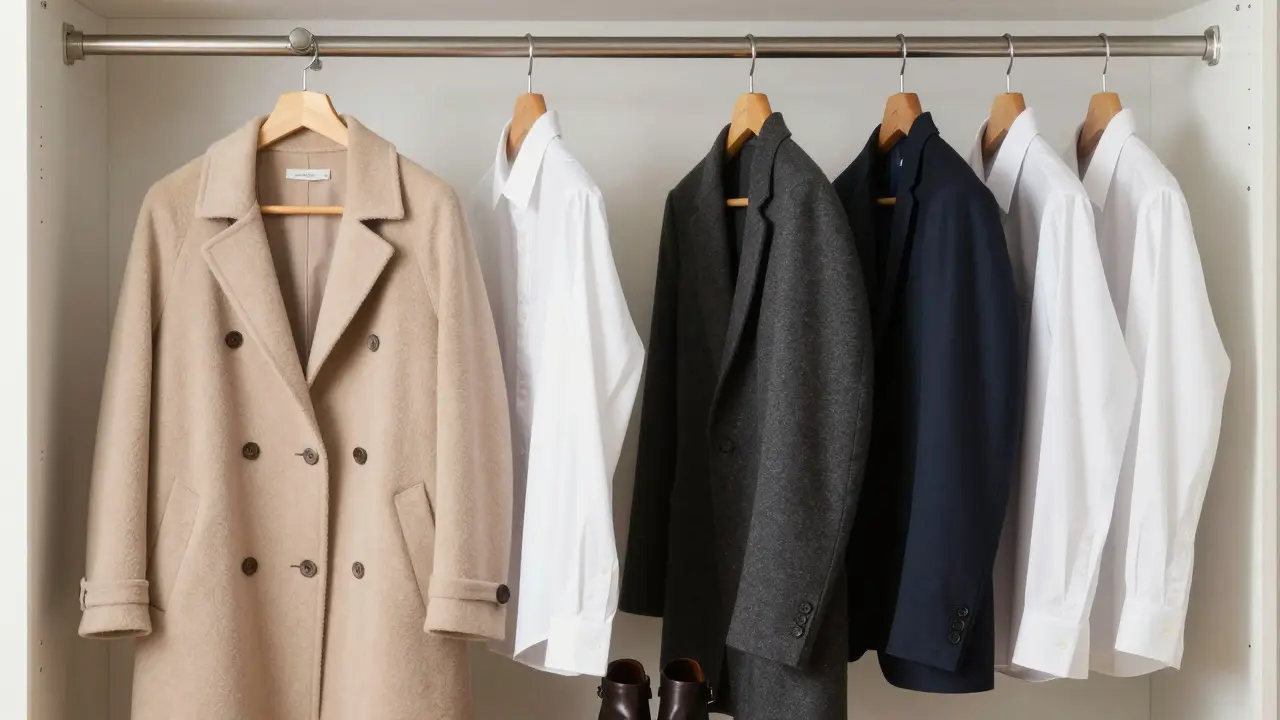
A stylist stepped in and implemented a Capsule Wardrobe is a curated collection of a few essential items of clothing that don't go out of fashion and can be mixed and matched to create numerous outfits . They spent $1,500 on high-quality, timeless pieces: a tailored wool coat, a perfect pair of leather boots, and versatile basics.
Two years later, the DIY shopper has spent $4,000 and has a closet of disposable clothes. The styled client has spent $1,500 and still has a wardrobe that looks brand new. That's a direct financial saving of $2,500. The ROI is found in the cost per wear. A $200 pair of boots worn 100 times a year costs $2 per wear. A $40 pair of trendy shoes worn five times before they fall apart costs $8 per wear. The "expensive" option is actually cheaper.
The Psychology of Confidence as a Financial Asset
It's hard to put a number on confidence, but in the professional world, it's a currency. There is a documented phenomenon called Enclothed Cognition is the systematic influence that clothes have on the wearer's psychological processes . Essentially, when you wear clothes that fit perfectly and align with your identity, your brain actually performs differently. You speak more authoritatively and take more calculated risks.
In one specific case, a freelance consultant revamped his wardrobe from "casual creative" to "polished expert." Within three months, he felt confident enough to raise his hourly rates by 20%. He stopped feeling like he had to "over-explain" his value because his visual presence already communicated it. This is the ultimate ROI: when a styling service acts as a catalyst for a salary increase or a successful contract negotiation. The service didn't just change his clothes; it changed his market value.
Avoiding the Pitfalls of "Trend Shopping"
Many people try to DIY their ROI by following influencers. The problem is that influencers are paid to promote new things, not lasting things. When you buy based on a trend, you're buying a depreciating asset. Professional styling focuses on Color Theory is a set of guidelines about the relationship between colors, used to create visually appealing combinations based on skin tone and contrast and body proportions, which never go out of style.
If you buy a neon green blazer because it's "in" this season, you've bought a piece with a very short shelf life. If a stylist helps you find your power color-say, a rich emerald that makes your skin glow-you can wear that for a decade. The difference is between buying a "look" and building a "system." A system is scalable; a look is temporary.

How to Calculate Your Own Styling ROI
If you're wondering if you can afford a stylist, try calculating your current "waste ratio." Look through your closet and count how many items you haven't worn in the last six months. Multiply that by the average price you paid for them. That number is your "ignorance tax."
Now, consider the time you spend shopping. If you spend four hours a month browsing online and in stores without a plan, and you value your time at $50/hour, that's $200 a month in lost productivity. Over a year, that's $2,400. A professional stylist reduces this time to almost zero by providing a precise shopping list and curated selections. When you add the recovered time to the reduced waste, the cost of the styling service often pays for itself within the first twelve months.
Isn't professional styling only for people with huge budgets?
Actually, it's often the opposite. Stylists help people stop wasting money on "impulse buys" and items that don't fit or match. By focusing on a capsule wardrobe and cost-per-wear, many clients spend less annually than they did when they were shopping on their own.
How do I know if a stylist is actually providing ROI?
Look for three indicators: first, a reduction in the time it takes you to get dressed; second, a decrease in the number of new items you buy but never wear; and third, a noticeable increase in compliments or professional opportunities linked to your appearance.
What is a "lookbook" and why does it save time?
A lookbook is a curated guide-often digital-that shows you exactly how to pair the items in your closet. It eliminates the need to "experiment" every morning, removing decision fatigue and ensuring you always look polished without the mental effort.
Can styling really affect my income?
Yes, through enclothed cognition. When you feel you look the part of a leader or an expert, you behave more confidently. This affects your negotiation power, your presence in meetings, and how others perceive your authority, which can lead to higher earnings.
How does cost-per-wear work?
You divide the price of the item by the number of times you wear it. A $300 jacket worn 100 times costs $3 per wear. A $60 "trendy" jacket worn 5 times costs $12 per wear. High-quality items usually have a lower cost-per-wear over time.
Next Steps for Your Wardrobe Evolution
If you're ready to stop the cycle of waste, start by auditing your current closet. Separate everything into "Love," "Maybe," and "Never." If you find that the "Never" pile is larger than the "Love" pile, you have a system failure, not a clothing failure. At this stage, you can either study capsule wardrobe principles or hire a professional to build a strategy for you.
For those in high-pressure environments like finance or law, the focus should be on image consulting to align visual cues with professional seniority. For creatives, the goal is often finding a balance between individuality and polish. Regardless of your role, the goal is the same: making your wardrobe an asset that works for you, rather than a chore you have to manage.


Write a comment