


You walk into a boardroom. You haven't said a word yet, but the room has already decided how much weight your opinion carries. Did they decide based on your resume? Your track record? Or did they make a snap judgment based on the cut of your jacket and the shine on your shoes? Research from Yale University suggests that people form first impressions within seven seconds. In those seconds, your business attire is doing heavy lifting for you. It’s not just about looking good; it’s about signaling competence, reliability, and command before you even open your mouth.
This isn’t about wearing expensive brands for the sake of status. It’s about understanding the semiotics of dress. Every button, every fold, and every color choice sends a data packet to the observer’s brain. When we talk about leadership presence, we are referring to the ability to project confidence and credibility through non-verbal cues, with clothing being one of the most immediate and visible ones. If your clothes look like they don’t fit or belong, your message gets lost in the noise of visual distraction. Let’s break down exactly how your wardrobe communicates authority and how you can hack these signals to work for you.
The Psychology Behind Visual Authority
Why do we trust certain looks more than others? It goes back to evolutionary biology and social conditioning. We are wired to assess threat levels and hierarchy instantly. A sharp silhouette suggests discipline and control. A disheveled appearance suggests chaos or lack of attention to detail. This is known as the "halo effect," where positive traits in one area (like neatness) spill over into other areas (like perceived intelligence).
Consider the concept of enclothed cognition. This psychological phenomenon describes how what you wear affects your own performance, not just how others see you. Studies have shown that when participants wore a doctor’s coat, their attention to detail improved significantly compared to when they wore casual clothes, even if the coat was labeled differently. For leaders, this means dressing for the role you want to play actually helps you perform in that role. You stand taller. You speak slower. You occupy space differently. The fabric on your skin changes your mindset.
Fit Is the Non-Negotiable Foundation
You can buy a $50 suit or a $5,000 suit. If neither fits correctly, both fail to communicate authority. Poor fit is the fastest way to signal amateurism. Shoulders that droop suggest passivity. Sleeves that swallow your hands hide your gestures, which are crucial for persuasive communication. Pants that pool at the ankles look sloppy and shorten your stature.
A well-fitted garment creates clean lines. Clean lines guide the eye upward toward your face, where your expressions and words live. Here is a quick checklist for assessing fit before you enter a high-stakes meeting:
- Shoulder Seam: It should sit exactly on the edge of your shoulder bone. No higher, no lower.
- Jacket Length: It should cover your seat entirely. Too short looks trendy; too long looks like you’re wearing your father’s blazer.
- Sleeve Exposure: Show about half an inch of shirt cuff. This subtle layering adds depth and precision.
- Trouser Break: Aim for a slight break or no break at all. A massive puddle of fabric at the shoe implies you haven’t been tailored.
Tailoring is often cheaper than buying new clothes, yet it yields a higher return on investment for your image. Spend money on alterations, not just labels. A custom fit tells the world you pay attention to details. That trait transfers directly to how people expect you to manage projects and teams.
Color Psychology and Strategic Choices
Not all colors carry the same weight. While personal preference matters, strategic leaders choose colors that align with the message they need to send. Navy blue is widely regarded as the safest bet for leadership because it conveys trust, intelligence, and stability without the aggression sometimes associated with black. It is softer than charcoal gray but more authoritative than light blues.
Charcoal gray is another powerhouse. It suggests neutrality and professionalism. It allows your personality to come through without the color dominating the conversation. Black, while sleek, can feel severe or distant in collaborative settings. Use it for evening events or when you need to assert dominance in a negotiation. Earth tones like olive or brown can signal approachability and groundedness, useful for team-building scenarios, but they rarely convey top-tier executive power in traditional corporate structures.
| Color | Perceived Trait | Best Context | Risk Factor |
|---|---|---|---|
| Navy Blue | Trust, Competence | Client Meetings, Interviews | Can blend in if too common |
| Charcoal Gray | Neutrality, Precision | Boardrooms, Negotiations | Can appear cold if paired poorly |
| Black | Power, Sophistication | Evenings, Creative Industries | Can seem intimidating or funereal |
| Burgundy/Deep Red | Passion, Energy | Pitch Decks, Sales Calls | Too bright can distract |
Fabric Quality and Texture Cues
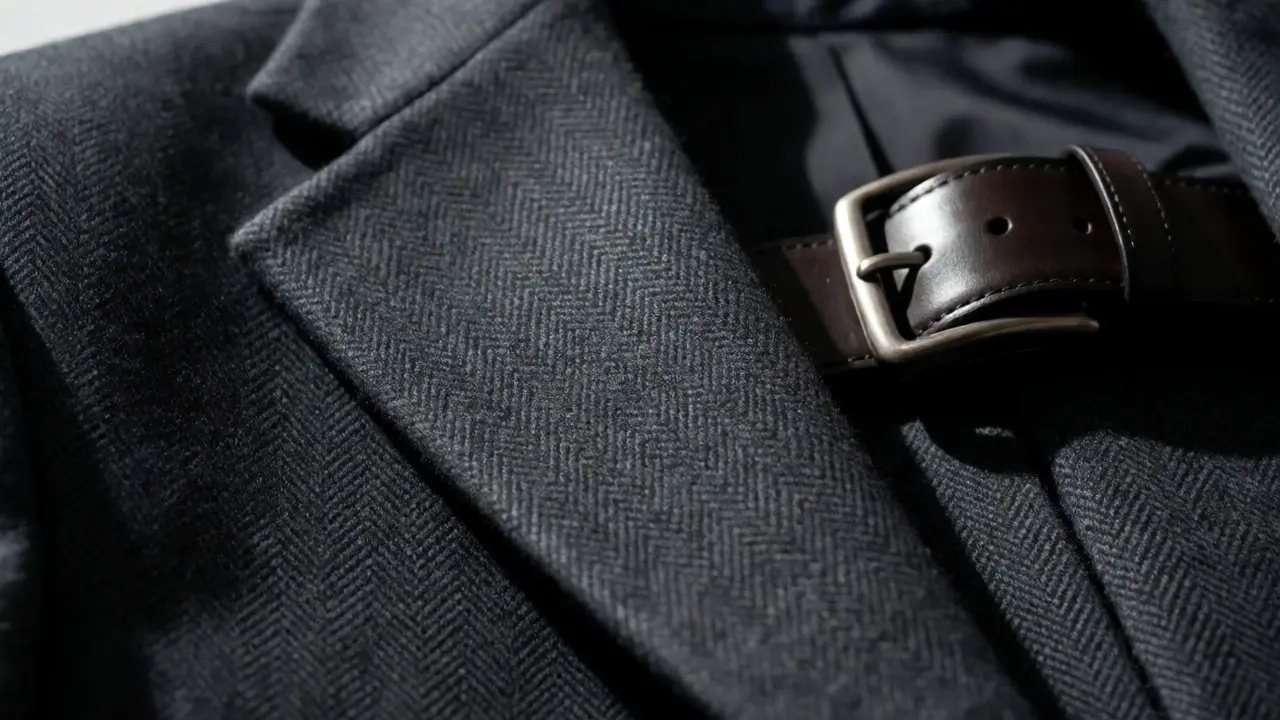
Look closely at your lapel. Does it shine? Does the fabric pill after one wear? Cheap synthetic blends reflect light artificially, creating a plastic-like sheen that reads as low-quality. Natural fibers like wool, cotton, and silk absorb light, giving them a rich, matte depth that photographs well and feels substantial.
Texture adds interest without adding volume. A subtle herringbone weave or a birdseye pattern shows sophistication. It indicates you understand nuance. Flat, shiny fabrics can look cheap under harsh office lighting. Matte textures suggest durability and timelessness. Leaders often opt for mid-weight wools (Super 110s to Super 130s) because they drape well and resist wrinkling throughout a long day. Wrinkles signal stress or neglect. Smooth fabric signals control.
Accessories as Micro-Signals
Details matter. Your watch, your belt, your bag-these are micro-signals that confirm or contradict your main outfit. A mismatch between a luxury watch and a fraying belt strap creates cognitive dissonance. The brain notices inconsistency and flags it as untrustworthy.
Keep accessories minimal but intentional. A quality leather belt should match your shoes. Not necessarily the exact shade, but the same family of tones. Dark brown with dark brown. Black with black. Mixing metallics? Stick to one metal tone for watches, buckles, and rings. Silver with silver. Gold with gold. Mixing them can look chaotic unless you are intentionally styling for fashion-forward industries.
Your bag also speaks volumes. A battered backpack says "student" or "intern." A structured leather briefcase or a high-quality messenger bag says "professional." If you must carry tech gear, ensure cables are coiled neatly. Spaghetti wires spilling out of a bag undermine the crisp line of your suit.

Contextual Adaptation and Modern Nuance
The rules have shifted. The strict three-piece suit is no longer mandatory in tech or creative sectors. However, the principle of intentionality remains. If you wear jeans, they must be pristine, dark-wash, and fitted. Pair them with a blazer or a high-quality knit. The goal is to look like you made a choice, not that you threw on whatever was clean.
In hybrid work environments, your top half matters most during video calls. Invest in collared shirts or structured knits that frame your face. Avoid busy patterns that moiré on camera. Solid colors work best. But remember, standing up to grab something off a shelf shouldn’t reveal pajama pants. Full-body dressing maintains your own psychological state of readiness.
Adapt to your audience. Dressing slightly above the norm of your industry signals aspiration and respect for the occasion. If everyone wears t-shirts, wear a polo. If everyone wears polos, wear a sport coat. This subtle elevation establishes you as someone who takes the environment seriously, distinguishing you from the crowd without alienating them.
Maintaining Consistency and Grooming
Clothing is only half the equation. Grooming completes the picture. Untrimmed nails, unkempt hair, or scuffed shoes undo the effort of a perfect suit. Shoes are particularly telling. People glance at feet when assessing status. Keep them polished. Replace worn heels or soles immediately. Scuffs suggest you don’t care enough to fix small problems, which translates to management style.
Consistency builds brand recognition. If you always wear glasses, keep them clean and modern. If you never wear ties, stick to that signature look confidently. Erratic changes in style can confuse observers. Find a uniform that works for your body type and profession, then refine it. Steve Jobs had his turtleneck. Anna Wintour has her bob and sunglasses. They didn’t change daily. They curated a persona.
Actionable Steps to Elevate Your Wardrobe
You don’t need to overhaul your closet overnight. Start with these steps:
- Audit Your Current Gear: Try on everything. Discard anything that doesn’t fit perfectly today. Don’t save things for a future weight loss goal.
- Invest in Tailoring: Take your best five pieces to a tailor. Ask for adjustments on sleeves and waist. Notice the difference in how you feel.
- Upgrade Key Basics: Buy one high-quality white shirt, one pair of dark chinos, and one navy blazer. These are versatile anchors.
- Check Your Shoes: Polish them weekly. If they are old, replace them. Good shoes support your posture and your image.
- Observe Feedback: Watch how people react when you dress sharply versus casually. Note the shift in engagement levels.
Remember, clothing is a tool. Like any tool, it requires maintenance and skillful use. When used correctly, it amplifies your voice rather than competing with it. You aren’t hiding behind clothes; you are using them to frame your message clearly.
Does wearing expensive brands automatically mean I look authoritative?
No. Fit and condition matter more than brand names. A well-tailored mid-range suit often commands more respect than an ill-fitting designer label. Authority comes from looking intentional and put-together, not from displaying logos.
How important is color in conveying leadership?
Color plays a significant role in subconscious perception. Navy and charcoal are traditionally seen as trustworthy and professional. Bright colors can signal creativity or energy but may reduce perceived seriousness in conservative fields. Choose colors that align with your industry norms and personal brand goals.
Can I wear sneakers to a formal business meeting?
It depends on the industry and company culture. In tech or creative startups, minimalist leather sneakers can work if paired with smart casual attire. In finance, law, or government, traditional dress shoes remain the standard for projecting authority. Always err on the side of formality if unsure.
What is enclothed cognition?
Enclothed cognition is a psychological term describing how clothing influences the wearer's mental processes and behavior. Wearing formal or symbolic clothing can increase abstract thinking, attention to detail, and feelings of power, thereby enhancing actual performance in professional tasks.
How often should I update my professional wardrobe?
Focus on quality over quantity. High-quality basics last years if cared for properly. Update items when they show wear, such as pilling fabric or worn elbows, or when your body shape changes. Aim for a capsule wardrobe of versatile, timeless pieces rather than chasing fast-fashion trends.


Write a comment