

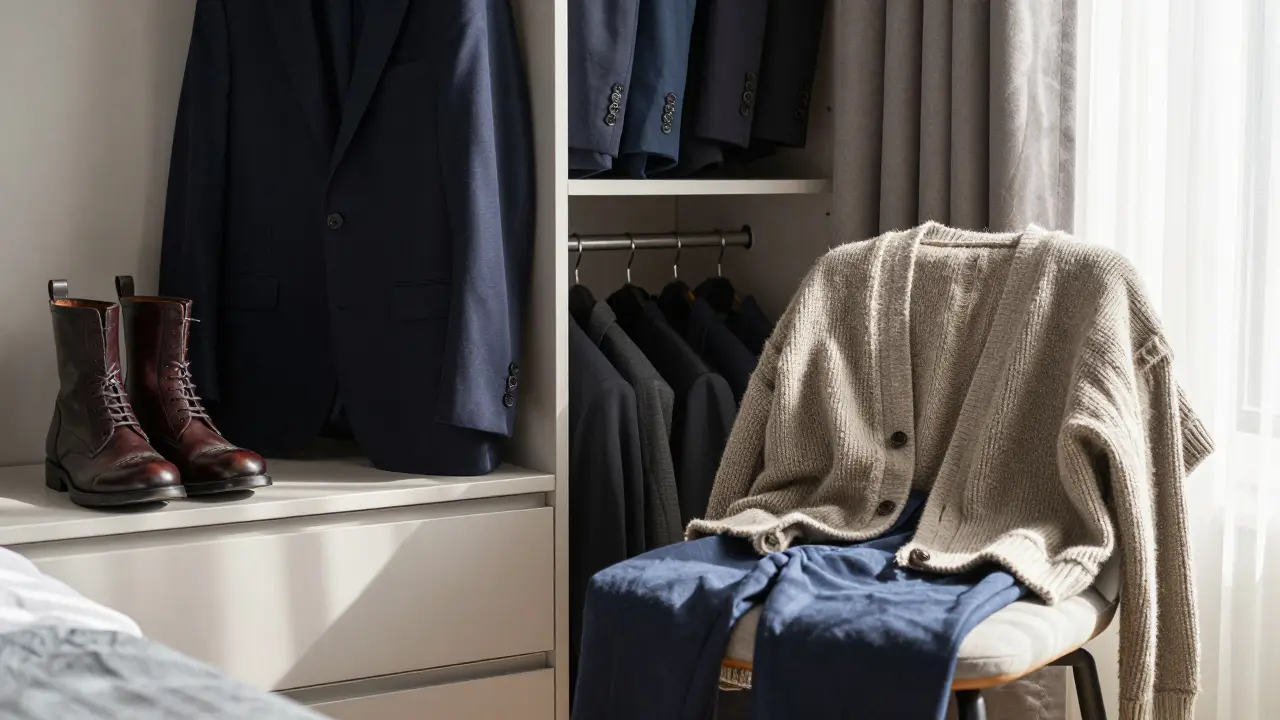
Do you own a blazer that gathers dust because your Tuesday meetings are on Zoom? Or maybe you bought those expensive leather boots for "special occasions" that never actually happen? This is the classic wardrobe disconnect. You buy clothes based on an idealized version of yourself-the person who goes to art galleries, drinks wine at rooftop bars, and travels frequently-while your actual life involves school runs, remote work, and grocery shopping.
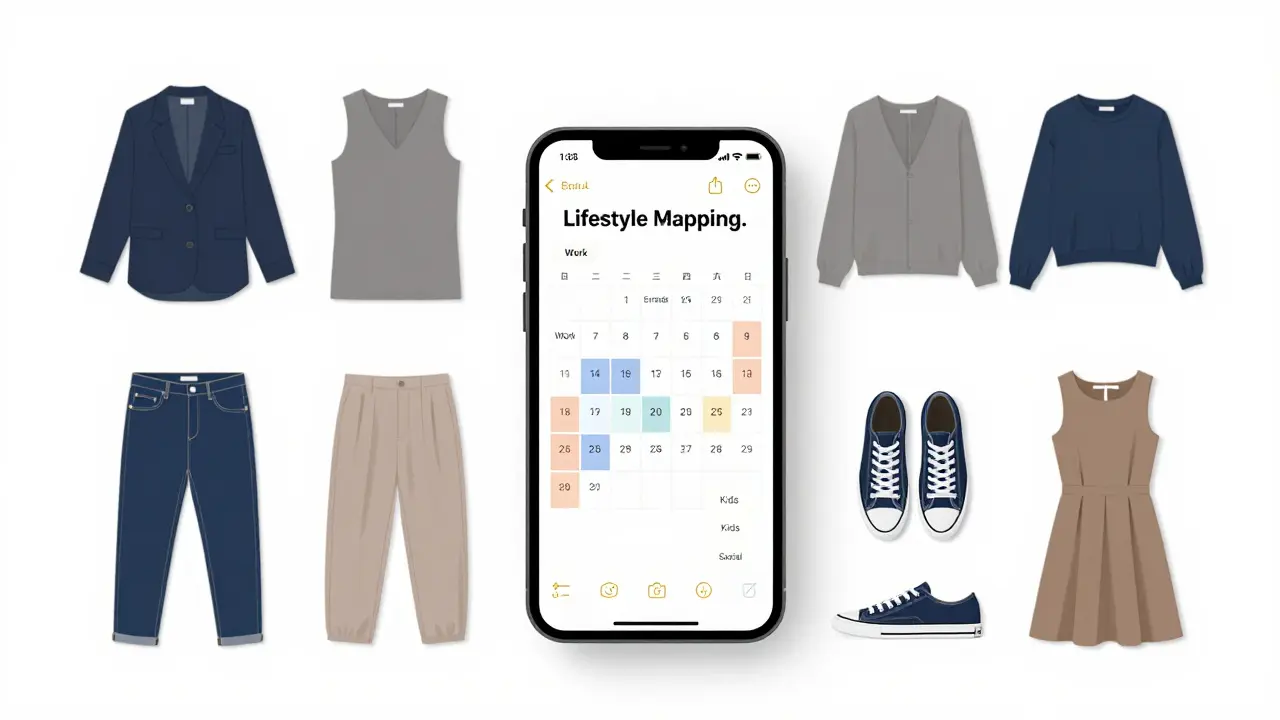
This gap between who we think we are and who we actually are creates clutter, waste, and decision fatigue. Enter Lifestyle Mapping, which is a strategic approach to wardrobe building that prioritizes real-life activities over aspirational trends. It’s not about restricting your style; it’s about making sure every piece in your closet earns its keep by serving a specific function in your daily routine.
The Problem with Aspirational Dressing
We all have what I call the "Instagram Self." This persona loves hiking, loves jazz clubs, and always looks effortlessly chic. But if you look at your calendar from last month, did you go hiking once? Did you attend a jazz club? Probably not. Most of us spend 80% of our time in just three or four contexts: working, commuting, running errands, and relaxing at home.
When you shop without this data, you fall into the trap of buying for the 20% of life that feels exciting but rarely happens. You end up with a closet full of outfits that fit your fantasy but not your reality. The result? You wear the same ten comfortable items repeatedly while ignoring the rest. Lifestyle mapping fixes this by grounding your purchases in hard facts rather than vague desires.
Step 1: Audit Your Actual Time Spent
To build a functional wardrobe, you first need to understand where your time goes. Grab a notebook or open a notes app on your phone. For one week, track how you spend your waking hours. Be brutally honest. If you spent four hours scrolling through social media in sweatpants, write that down. If you sat in traffic for forty-five minutes wearing jeans that were too tight, note that too.
Categorize these hours into broad buckets:
- Professional/Work: Office days, client meetings, video calls.
- Active/Physical: Gym sessions, walking kids to school, gardening, sports.
- Social/Leisure: Dinners out, concerts, parties, dates.
- Errands/Domestic: Grocery shopping, cleaning, laundry, casual outings.
After seven days, calculate the percentage of time spent in each category. You might discover that "Social/Leisure" accounts for only 5% of your week. That means your wardrobe should reflect that ratio. If you’re spending 60% of your time in "Professional" settings, your investment should heavily favor versatile workwear.
Step 2: Define Your Core Contexts
Once you have the percentages, define the specific requirements for each context. This is where lifestyle mapping gets granular. Instead of saying "I need work clothes," break it down further.
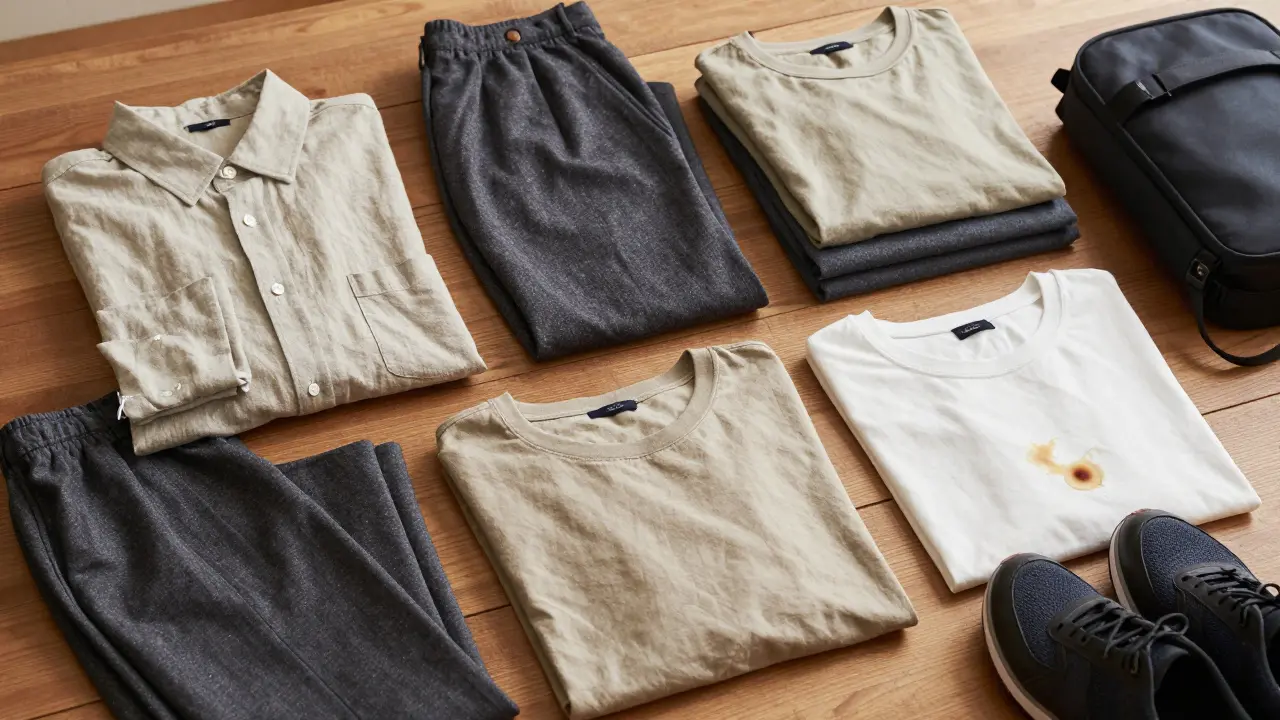
For example, if you work remotely, your "Professional" context might require high-quality tops (for camera visibility) and comfortable bottoms (since no one sees them). If you commute via subway, your "Commuting" context demands wrinkle-resistant fabrics and shoes that can handle stairs and crowds. If you have young children, your "Domestic" context needs stain-resistant fabrics and pockets.
List the top five activities within each major category. Then, identify the clothing attributes required for those activities. Does the activity involve sitting for long periods? You need stretch. Does it involve carrying heavy bags? You need structured shoulders or crossbody options. Does it involve temperature changes? You need layering pieces.
Step 3: The Gap Analysis
Now, look at your current wardrobe. Lay out everything you own, sorted by category. Compare your inventory against the time-tracking data from Step 1 and the attribute list from Step 2. You will likely find two types of gaps:
- Quantity Gaps: You don’t have enough items for your most frequent activities. Maybe you only have two pairs of pants that are truly comfortable for all-day sitting.
- Quality Gaps: You have items for frequent activities, but they fail specific tests. Your favorite jeans pill after one wash, or your go-to blouse wrinkles instantly in a bag.
Conversely, you’ll find surpluses. These are items bought for low-frequency activities. That sequined dress worn once in 2024? That’s a surplus. Identify these clearly. They are candidates for donation, resale, or storage if you have sentimental attachment.
| Context | Time % | Key Activities | Clothing Needs | Current Inventory Status |
|---|---|---|---|---|
| Remote Work | 45% | Video calls, desk work | Structured tops, soft bottoms | Strong tops, weak bottoms |
| Kids/School | 25% | Walking, bending, playing | Durable denim, sneakers | Adequate |
| Errands | 15% | Driving, short walks | Comfortable layers, easy shoes | Weak (too many heels) |
| Social Events | 10% | Dinner, movies | Versatile dresses, smart casual | Surplus (too many formal gowns) |
| Fitness | 5% | Yoga, light cardio | Stretchy sets | Strong |
Building the Capsule Based on Data
With your map complete, you can now build a Capsule Wardrobe, which is a small collection of interchangeable clothing items that maximize outfit combinations while minimizing waste. A traditional capsule might suggest thirty items total. A lifestyle-mapped capsule suggests thirty items *weighted* by your usage frequency.
If 45% of your life is remote work, nearly half of your core pieces should serve that function. Invest in higher-quality fabrics for these high-use items. Natural fibers like cotton, linen, wool, and Tencel breathe better and last longer than synthetics, especially when worn daily. For the 5% fitness category, you don’t need twenty different workout sets; you need two or three reliable ones that you rotate and wash regularly.
Focus on versatility. A navy blazer works for video calls, dinner dates, and even casual outings if paired correctly. A white button-down shirt layers well under sweaters, stands alone in summer, and looks professional on camera. Prioritize items that cross multiple categories. This reduces the total number of items you need while increasing your options.
Shopping Intentionally: The Pause Rule
Lifestyle mapping changes how you shop. Before buying anything new, ask three questions:
- Does this fit my top three contexts? If you’re buying a ski jacket but live in Florida and never travel to snow, pause.
- Can I pair this with at least three existing items? If the answer is no, it’s an island piece. Island pieces create clutter because they rarely get worn.
- Is the quality proportional to the use frequency? Don’t buy cheap jeans if you wear them four times a week. Buy the best pair you can afford. Conversely, don’t buy $500 boots for a hobby you do once a year.
This isn’t about deprivation. It’s about allocation. You still buy fun things. But you buy them consciously, knowing they are occasional treats, not staples. When you align your purchases with your actual life, you stop feeling guilty about unused clothes and start feeling confident in what you wear.
Maintaining the Map Over Time
Your life changes, so your map must change too. A promotion, a move, a new baby, or a retirement will shift your time percentages dramatically. Review your lifestyle map every six months. In New York, seasonal shifts also matter. A winter coat that was essential in January might be irrelevant by June. Rotate your inventory seasonally, storing off-season items to keep your active closet lean and relevant.
Re-auditing prevents stagnation. You might find that your "Social" percentage has increased because you’ve started dating again. Or your "Professional" percentage dropped because you switched to fully remote work. Update your gap analysis and adjust your shopping list accordingly. This keeps your wardrobe dynamic, responsive, and truly yours.
How often should I update my lifestyle map?
You should review and update your lifestyle map every six months, or immediately after any major life change such as a new job, moving to a different city, having a child, or retiring. Seasonal changes also warrant minor adjustments to ensure your wardrobe reflects current weather and activity patterns.
What if I love fashion and want to try new trends?
Lifestyle mapping doesn't ban trends; it contextualizes them. Allocate a small budget or closet space (e.g., 10%) for experimental pieces. Treat these as accessories or statement items rather than foundational staples. This allows you to enjoy fashion without letting trendy items clutter your core, functional wardrobe.
Is lifestyle mapping the same as minimalism?
Not exactly. Minimalism focuses on reducing quantity for its own sake. Lifestyle mapping focuses on relevance. You might end up with more items than a minimalist if your life requires diverse gear (e.g., hiking, formal events, office work), but every item will have a clear purpose. The goal is utility and satisfaction, not just emptiness.
How do I handle clothes that no longer fit my lifestyle?
If an item hasn't been worn in the past year and doesn't fit your current lifestyle map, it's time to let it go. Donate gently used items, sell valuable pieces online, or recycle damaged textiles. Holding onto them creates visual noise and mental clutter, making it harder to access the clothes you actually need.
Can lifestyle mapping help save money?
Yes, significantly. By stopping impulse buys for aspirational lifestyles and investing in high-quality items for daily use, you reduce waste and replacement costs. You stop buying things that sit unworn, freeing up budget for experiences or higher-value purchases that genuinely enhance your daily comfort and confidence.