

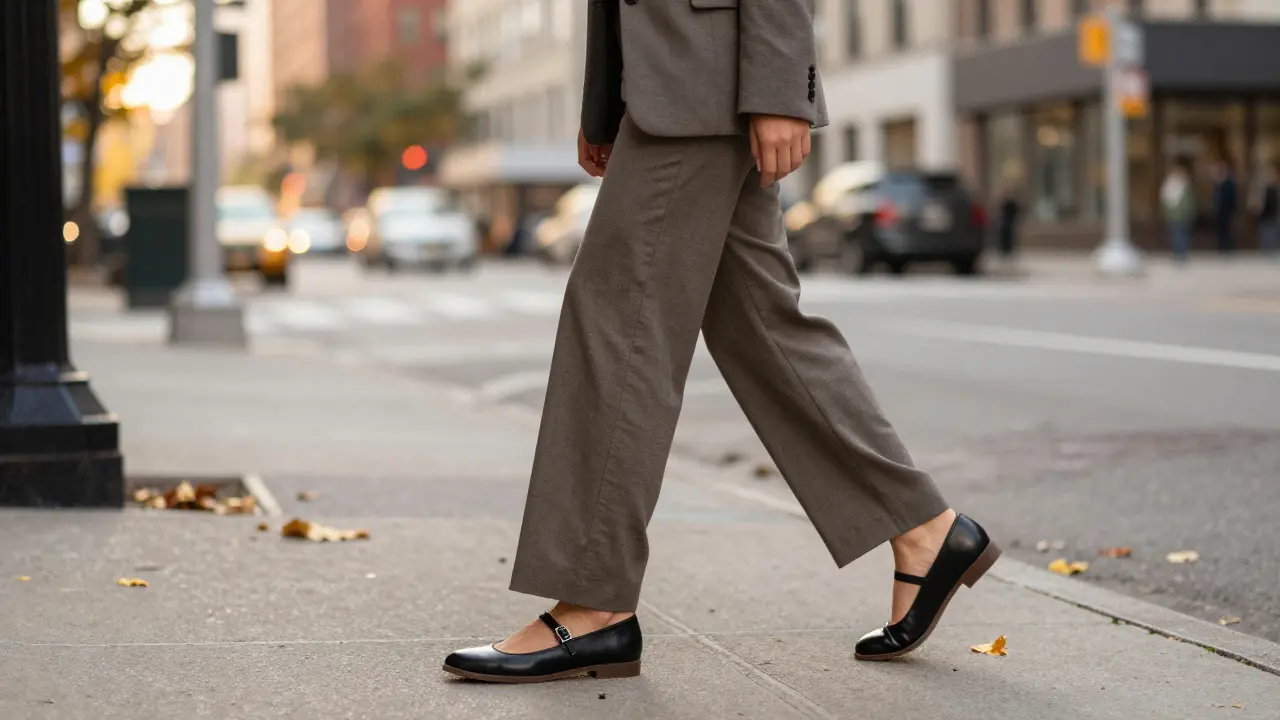
Mary Janes aren’t just a throwback to school uniforms or 1950s pin-up photos. They’ve quietly become one of the most versatile shoes in modern wardrobes-showing up on runways, in offices, and on city streets from Chicago to Tokyo. What makes them stick around? It’s the balance. A closed toe, a strap across the instep, and a sole that can be flat or heeled. Simple, but endlessly adaptable.
Why Mary Janes Never Went Away
They survived the rise of sneakers, the fall of stilettos, and the boom of chunky boots because they don’t demand attention-they just work. Unlike high heels that require adjustment or sneakers that scream casual, Mary Janes sit right in the middle. They’re polished enough for a job interview, comfortable enough for walking three miles, and cute enough to wear with jeans or a dress.
Designers didn’t reinvent them-they refined them. Brands like Cole Haan, Toms, and Everlane started offering Mary Janes in recycled leather, cushioned insoles, and low, stable heels. Meanwhile, indie labels like Rothy’s and Alegria added breathable knit uppers and arch support. The result? A shoe that feels like it was made for real life, not just photoshoots.
Flat Mary Janes: The Everyday Hero
If you’ve ever worn a pair of flat Mary Janes on a long day of errands, you know why they’re a cult favorite. No heel means no aching feet, no slipping, no adjusting. The strap keeps your foot secure, so you don’t have to constantly tug at them like a loafer.
Modern flat versions come in unexpected materials: vegan suede, recycled rubber soles, even waterproof canvas. Brands like Allbirds and Veja make them with natural dyes and carbon-neutral production. One pair I wore for six months straight-through snow, rain, and 10-hour workdays-still looked clean. The secret? A slightly rounded toe and a sole that’s just thick enough to absorb impact without looking bulky.
Style them with cropped pants, midi skirts, or even shorts. They pair better with denim than most people think. Skip the socks unless you’re going for a deliberate retro look. Let the strap be the focus.
Heeled Mary Janes: Elevated, Not Overdone
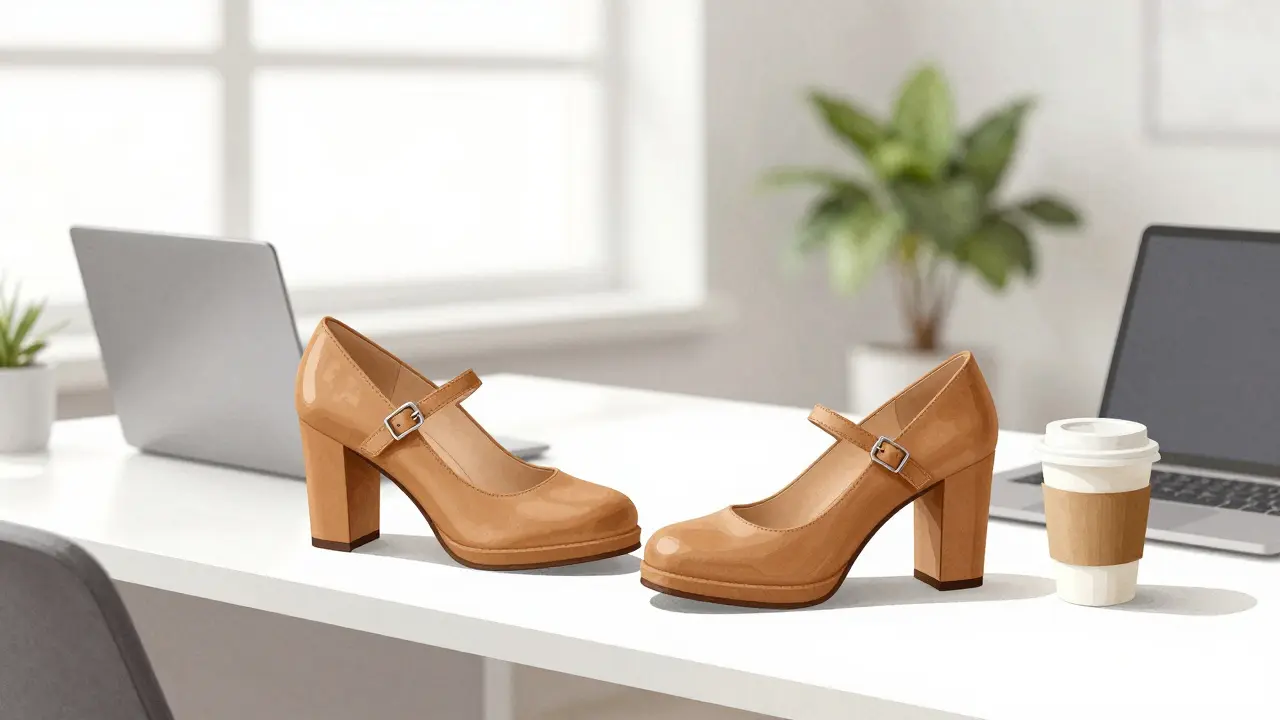
Heeled Mary Janes are where the magic happens. A 1.5-inch block heel adds just enough lift without turning your ankle. It’s the sweet spot between comfort and polish. Unlike stilettos, the heel is wide and centered under the foot, so you can stand for hours without feeling like you’re balancing on a pencil.
Designers like Sam Edelman, Madewell, and Zara have made these a staple for fall and spring. The most popular versions have a slight curve to the heel, making them feel more like walking on a gentle slope than a rigid post. Some even include a hidden platform under the ball of the foot-so you get height without the strain.
Wear them with tailored trousers for a sharp office look, or with a flowy dress for brunch. Avoid pairing them with overly busy patterns-the strap and heel are the statement. Stick to solid colors: black, camel, oxblood, or even a soft gray. Metallic finishes (gold, silver) work for evening, but keep them minimal.
Who Wears Them Now?
They’re not just for women in their 30s and 40s. Gen Z is buying them in droves. Why? Because they’re the anti-trend. While others chase the latest sneaker drop or viral heel, Mary Janes offer quiet confidence. You’ll see them on college campuses, in co-working spaces, and at art galleries in Chicago’s Wicker Park.
They’re also a favorite among women who work on their feet-nurses, teachers, retail staff. A survey by the American Podiatric Medical Association found that 68% of women who switched from high heels to low-heeled Mary Janes reported reduced foot pain within two weeks. That’s not marketing. That’s lived experience.
How to Pick the Right Pair
Not all Mary Janes are created equal. Here’s what to look for:
- Strap fit - It should hug your instep without digging in. You should be able to slip a finger between the strap and your foot.
- Toe box - Avoid pointed toes. A rounded or slightly squared shape gives your toes room to move.
- Sole thickness - For flats, aim for 0.5 to 0.75 inches. For heels, 1 to 1.5 inches is ideal. Anything higher than 2 inches defeats the purpose.
- Material - Leather or vegan leather lasts longer than synthetic fabrics. Look for a lining that breathes-cotton or microfiber, not plastic.
- Brand reputation - Stick to brands known for comfort: Clarks, Ecco, Naturalizer, or even New Balance’s recent foray into classic styles.
Try them on in the afternoon. Your feet swell by then. Walk around the store. Sit down. Stand up. If they feel fine at first but start pinching after five minutes, put them back.
What to Avoid
There are a few traps to sidestep:
- Too many straps - Two straps? Maybe. Three or more? It looks like a child’s shoe.
- Plastic-looking finishes - If it gleams like a toy, it’ll look cheap. Matte or lightly polished is always better.
- Overly decorative buckles - A simple metal or leather buckle is enough. Rhinestones and bows belong on Halloween costumes.
- Wrong scale - If you’re petite, avoid wide straps. If you have wider feet, skip narrow styles. Fit matters more than fashion.

Styling Tips That Actually Work
Here’s how real people wear them in 2026:
- With wide-leg pants - Tuck the hem just above the ankle. The strap breaks the line, making legs look longer.
- With a midi dress - Choose a dress with a slight A-line. The Mary Jane grounds the femininity without looking fussy.
- With a blazer and jeans - The contrast is intentional. It says, ‘I’m put together, but I’m not trying too hard.’
- With socks - Only if they’re thin, neutral, and ankle-length. White cotton socks? Save those for tennis shoes.
Don’t overthink it. Mary Janes are the quietest power move in footwear. They don’t shout. They just say, ‘I know what I’m doing.’
Where to Buy in 2026
You don’t need to spend $300. But you shouldn’t buy $40 pairs that fall apart in six months. Here’s a quick guide:
- Best budget - Target’s Universal Thread (under $50, good cushioning)
- Best mid-range - Madewell (around $120, durable leather, easy returns)
- Best sustainable - Rothy’s (made from recycled plastic bottles, machine-washable)
- Best luxury - Cole Haan GrandPro (arch support, rubber sole, looks like a designer shoe)
- Best for wide feet - Clarks Unstructured Collection (flexible uppers, roomy toe box)
Shop early in the season. The best styles sell out fast. And don’t wait for sales-many of these brands don’t discount much. Instead, look for free shipping and return policies.
Are Mary Janes still in style in 2026?
Yes. Mary Janes aren’t a passing trend-they’re a staple. They’ve been worn consistently for over 100 years, and in 2026, they’re more popular than ever. Designers from Zara to Bottega Veneta keep releasing new versions, and everyday wearers choose them for comfort, versatility, and timeless appeal.
Can I wear Mary Janes to work?
Absolutely. Flat Mary Janes are perfect for office settings, especially if your job involves walking or standing. Heeled versions add polish without the discomfort of stilettos. Pair them with tailored pants, a pencil skirt, or a simple dress. Avoid overly flashy details-stick to neutral colors and clean lines.
Do Mary Janes look good on wide feet?
Yes, if you pick the right style. Look for brands that offer wide widths, like Clarks, Naturalizer, or Ecco. Avoid narrow toe boxes and thin straps. A slightly rounded toe and a soft, flexible upper will give your feet room to breathe. Many modern Mary Janes now come in extended sizing.
Are Mary Janes comfortable for walking?
Flat Mary Janes with cushioned soles are among the most comfortable walking shoes you can own. Heeled versions with a block heel under 1.5 inches are also walkable. The key is support: look for a padded insole, a flexible sole, and a strap that holds your foot securely without pinching.
What’s the difference between Mary Janes and ballet flats?
Mary Janes have a strap across the instep-usually one, sometimes two. Ballet flats don’t. Mary Janes often have a slightly more structured toe and a more defined heel. Ballet flats are slip-on and tend to be softer and more flexible. Mary Janes offer better foot security, especially for walking.
Final Thought: The Quiet Shoe That Speaks Volumes
Mary Janes don’t need to be loud to matter. They’re not flashy, not trendy, not designed to go viral. But they’re the kind of shoe you’ll reach for again and again-because they just fit. Into your life. Into your schedule. Into your style.
They’re proof that sometimes, the best things aren’t the newest. They’re the ones that never left.


Write a comment