

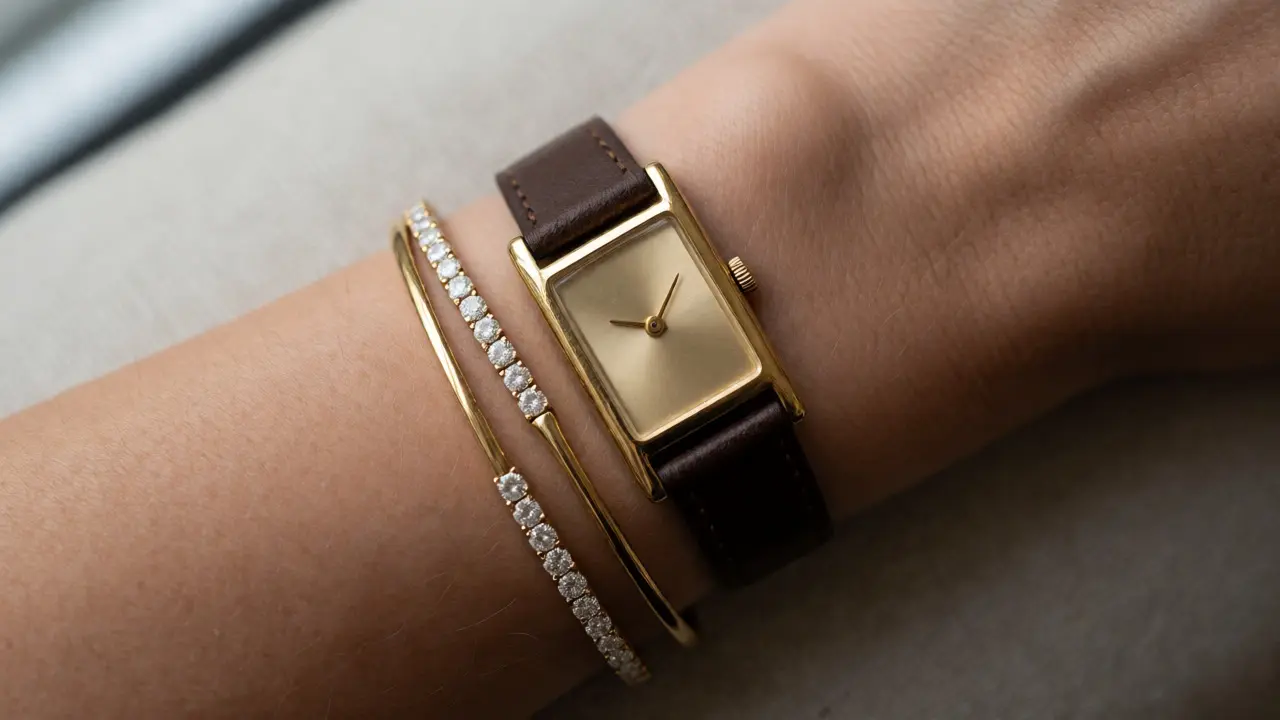
You’ve probably seen those photos where someone wears a vintage Cartier Tank alongside three gold bangles and a diamond tennis bracelet, looking effortlessly chic. Then you try it at home, and your wrist looks like a cluttered junk drawer. The difference isn’t money-it’s strategy. Layering watches and jewelry is an art form that balances visual weight, texture, and proportion. It’s not about wearing more; it’s about wearing smarter.
Most people fail because they treat every piece as an equal contender for attention. When everything screams, nothing speaks. To fix this, you need to understand how different materials interact and how to create a hierarchy on your wrist. This guide breaks down exactly how to combine timepieces with rings, necklaces, and bracelets without looking like you raided a costume trunk.
Understanding the Visual Hierarchy
The biggest mistake in accessory stacking is lack of focus. Your eye needs a place to rest. If you wear a bold statement watch, your other pieces should act as supporting actors, not co-stars. Think of your wrist as a stage. Who is the lead?
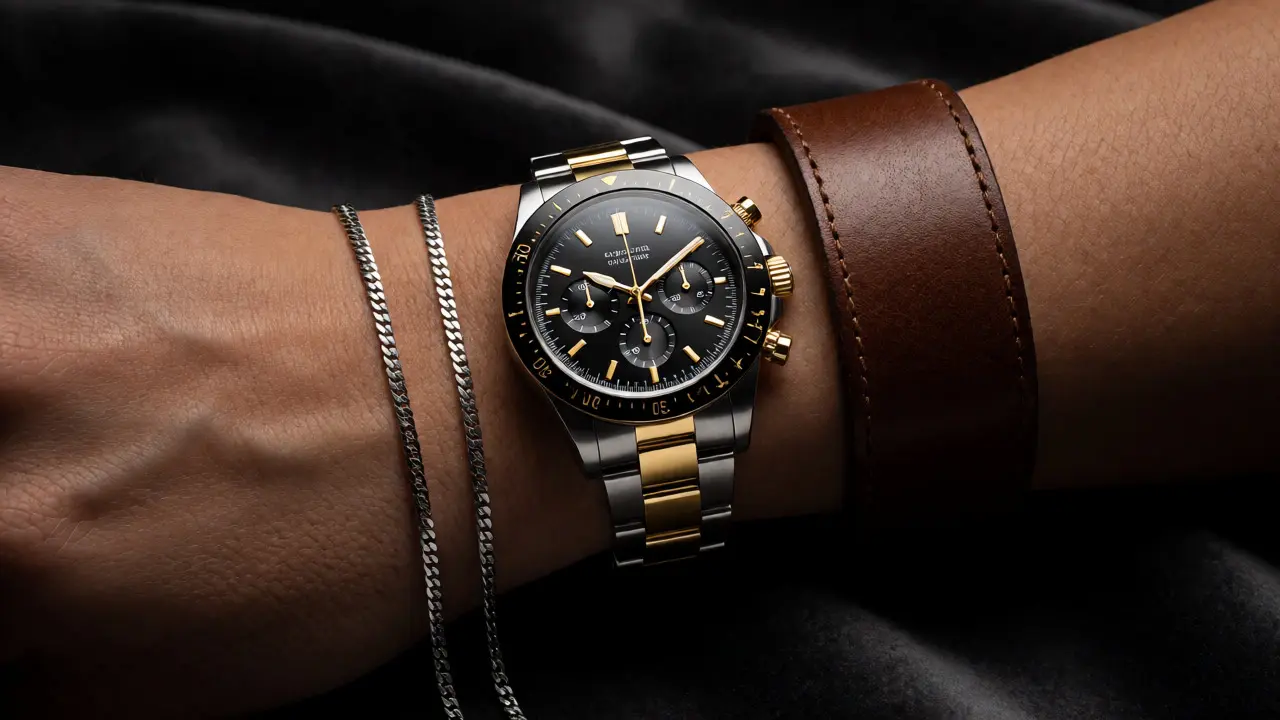
If your watch has a large face or intricate complications, keep the surrounding jewelry minimal. A sleek stainless steel diver’s watch pairs beautifully with a single thin chain necklace but might look messy with chunky cuffs. Conversely, if you’re wearing a delicate dress watch with a leather strap, you have more room to play with stacked bracelets or signet rings.
| Watch Style | Recommended Jewelry Pairing | Avoid |
|---|---|---|
| Large Chronograph | Thin chains, small stud earrings, simple band ring | Bulky cuff bracelets, oversized hoop earrings |
| Minimalist Dress Watch | Stacked bangles, layered necklaces, cocktail rings | Competing statement pieces on the same wrist |
| Sport Watch (Rubber Strap) | Casual beaded bracelets, fabric straps, no precious metals nearby | Diamond tennis bracelets, formal pearl strands |
This table isn’t law, but it’s a solid starting point. Notice how the material matters as much as the size. Mixing rubber with diamonds usually feels wrong unless you’re going for a very specific high-low fashion statement, which requires confidence to pull off.
Mixing Metals Without Looking Tacky
For decades, the rule was strict: match your metals. Gold goes with gold, silver with silver. Today, mixing metals is not just acceptable; it’s encouraged. But there’s a catch. You can’t just throw random pieces together. You need a unifying element.
The easiest way to mix metals successfully is to use a dominant metal and an accent metal. For example, if you wear a yellow gold watch, make sure 70% of your other jewelry is also yellow gold. Use white gold or platinum only for small accents, like a tiny pendant or a thin ring band. This creates cohesion rather than chaos.
Another trick is to bridge the gap with mixed-metal pieces. A two-tone watch (steel and gold) acts as a perfect mediator between a gold bracelet and a silver necklace. It ties the look together because it already contains both elements. If you don’t own a two-tone piece, consider adding a neutral element like black ceramic or brown leather to break up the metallic intensity.
The Rule of Thirds for Bracelet Stacking
When layering bracelets around a watch, think in thirds. Divide your wrist space into three zones: near the hand, middle, and near the elbow. Placing all your bracelets in one clump looks heavy and restricts movement. Instead, distribute them.
- Near the Hand: Place delicate items here, like a thin chain bracelet or a charm bracelet. These move freely and add subtle sparkle.
- Middle Zone: This is where your watch lives. Ensure there’s enough clearance so the watch doesn’t bang against harder surfaces.
- Near the Elbow: Put heavier or bulkier items here, such as wide leather cuffs or thick bangles. They stay put better and don’t interfere with daily tasks like typing or holding a coffee cup.
This distribution prevents the "clank" factor. Nothing ruins a sophisticated look faster than the sound of metal hitting metal every time you move your arm. By spacing things out, you reduce noise and friction.
Proportion and Scale Matters
Your body frame dictates what works best. Petite wrists get overwhelmed by oversized watches and chunky jewelry. If you have small hands, opt for watches with faces under 36mm and delicate chains. Large frames can handle broader bands and wider bezels, but even then, balance is key.
Consider the thickness of your watch case. A thick dive watch adds volume to the wrist. If you add a thick bangle next to it, you might look like you’re wearing armor. In this case, choose flat, flush-fitting bracelets that slide easily under or over the watch lugs. Slim profiles complement bulky watches; bulky profiles complement slim watches.
Don’t forget about vertical layering. If you’re wearing a long necklace, ensure it doesn’t tangle with your shirt collar or get caught on your watch crown. Shorter necklaces (chokers or princess length) often work better when paired with prominent wrist accessories because they draw attention upward, balancing the visual load on your arms.
Context Is King: Day vs. Night
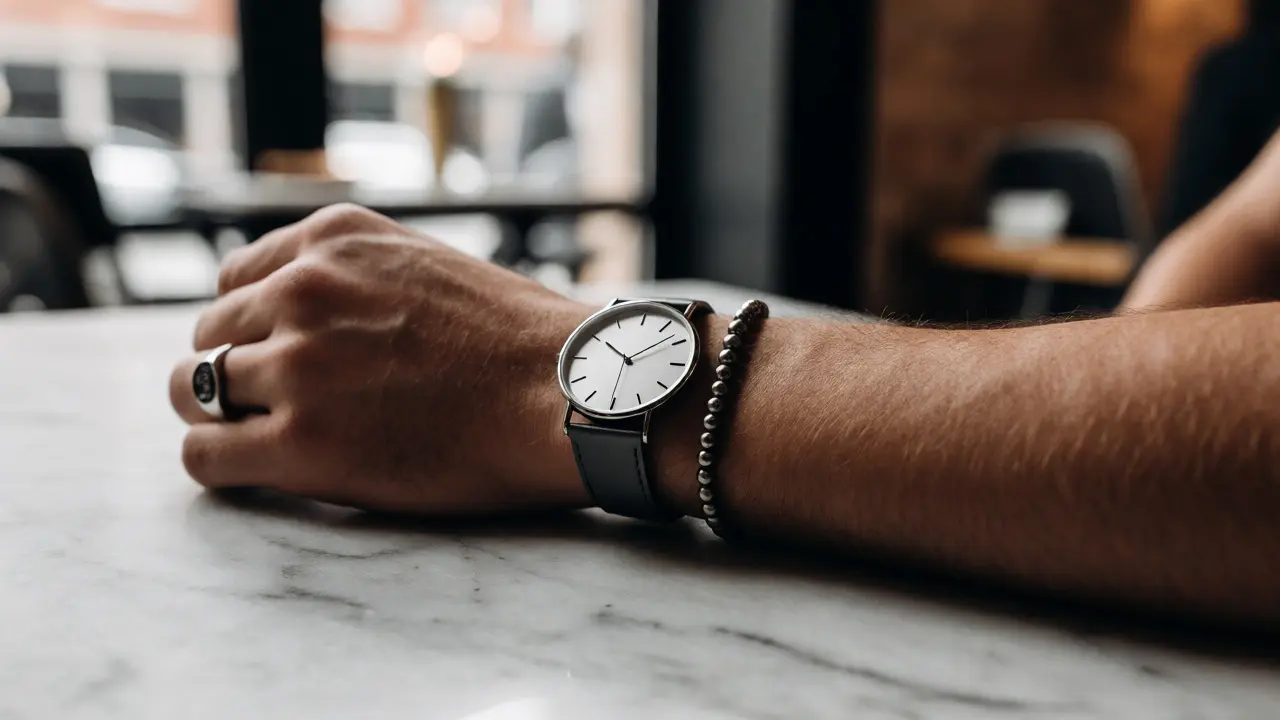
What works for a casual Sunday brunch won’t necessarily fly in a boardroom meeting. Context changes the rules. During the day, natural light reveals every detail, so simplicity often reads as cleaner and more intentional. At night, artificial lighting allows for more drama and reflection.
For daytime professional settings, stick to two types of jewelry max: a watch and perhaps one other item, like a wedding band or a simple pendant. Avoid noisy bracelets that distract colleagues during meetings. Save the multi-layered stacks for evenings or creative industries where expression is valued over uniformity.
In New York, where I live, street style often blurs these lines. You’ll see people wearing sport watches with tailored suits and fine jewelry with hoodies. The key is intentionality. If you’re breaking a rule, do it deliberately. Know why you’re mixing a smartwatch with a gold chain. Is it for comfort? Convenience? Or aesthetic contrast? Have an answer, even if it’s just "I like it."
Troubleshooting Common Layering Mistakes
Even with good intentions, things can go wrong. Here are quick fixes for common issues:
- The Tangling Problem: Chains getting caught on each other? Use a lobster clasp extension or switch to rigid bangles that don’t drape loosely.
- The Color Clash: Too many colors? Stick to one gemstone color per outfit. If you wear emerald earrings, skip the ruby bracelet.
- The Weight Imbalance: One wrist looks bare while the other is overloaded? Try moving a ring from your right hand to your left to balance the visual weight across your body.
- The Skin Tone Mismatch: Cool skin tones often look better with silver, white gold, and platinum. Warm tones glow with yellow gold and rose gold. Mixing metals helps mitigate this if you’re unsure.
Remember, accessories should enhance your outfit, not dominate it. If you find yourself constantly adjusting your jewelry throughout the day, you’ve likely gone too far. Strip back one piece and see if it feels more comfortable. Comfort is the ultimate litmus test for successful styling.
Can I wear a watch and a bracelet on the same wrist?
Yes, absolutely. The key is choosing a bracelet that fits comfortably over or beside the watch case without causing friction. Soft leather bands or flexible mesh bracelets work well with most watches. Rigid bangles may require a larger wrist circumference to slide over the watch head.
Is it okay to mix gold and silver jewelry?
Modern styling norms fully support mixing metals. To make it look intentional rather than accidental, ensure the pieces share a similar style era or design motif. Using a two-tone piece as a bridge helps unify the look seamlessly.
How many layers of jewelry are too many?
There is no hard number, but a good rule of thumb is to stop when you feel restricted movement or notice excessive noise. For most people, three distinct elements on one wrist (e.g., watch + one bracelet + one ring) is the maximum before it starts looking chaotic.
Do smartwatches count as jewelry?
They function as tech first, but you can style them as jewelry. Swap standard silicone bands for metal links or leather straps to elevate their appearance. Pair them with minimalist jewelry to avoid competing aesthetics.
What if my skin gets irritated from layered jewelry?
Friction and sweat trapped between layers can cause irritation. Ensure your jewelry is made of hypoallergenic materials like surgical steel, titanium, or pure gold. Allow your skin to breathe by removing layers at night, and clean your pieces regularly to remove buildup.