

Forget last year’s hype around organic cotton and recycled polyester. In 2026, what you wear isn’t just about how it looks-it’s about what it does. The fabric on your skin is no longer passive. It responds to your body, glows under streetlights, and even cleans itself. The fashion world has moved beyond dyes and weaves. We’re now living in an era where textiles are engineered like gadgets.
Sheers: Not Just for Layering Anymore
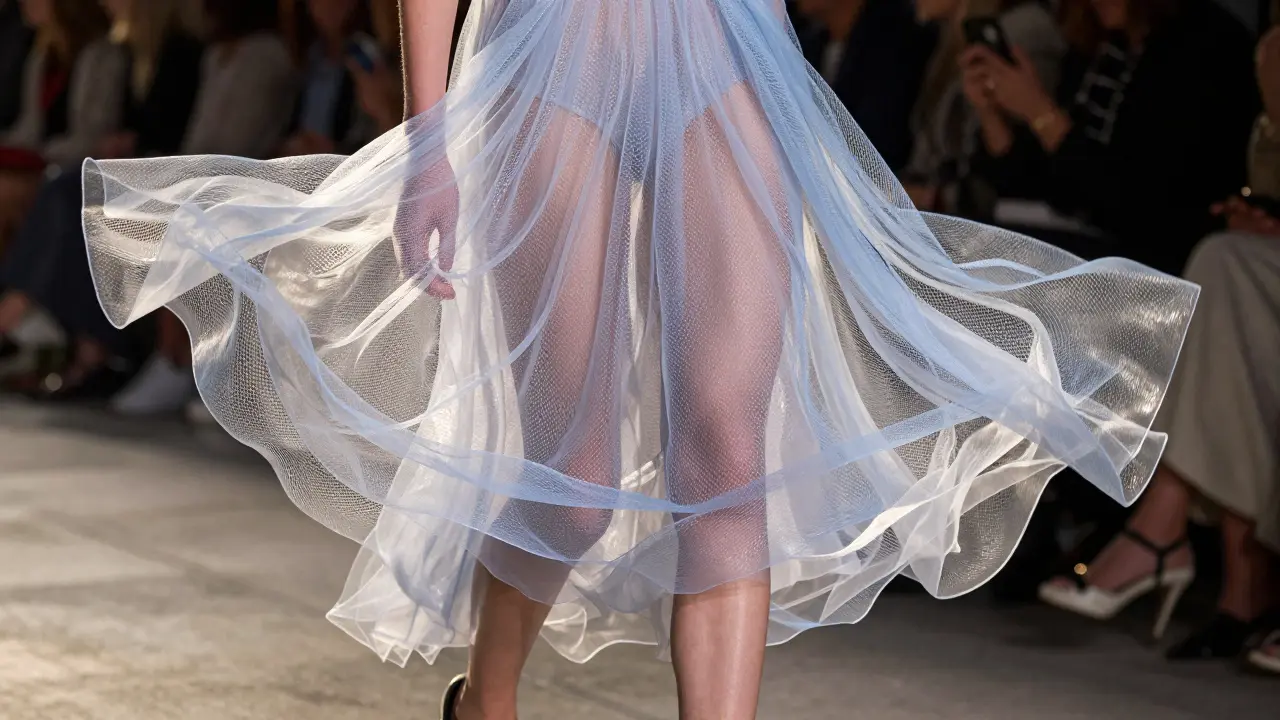
Sheer fabrics used to be a summer staple-thin, delicate, and meant to be worn over something else. Now, they’re the star of the show. Designers aren’t using sheers to hint at skin; they’re using them to build entire silhouettes that float like smoke. Think of a dress made entirely of nano-weaved polyester mesh that shifts opacity based on body heat. That’s not sci-fi. It’s what’s on runways in Milan and New York this season.
Brands like Iris van Herpen and Nili Lotan have mastered this. Their sheer pieces aren’t fragile. They’re reinforced with micro-filaments that add structure without weight. One coat from a Berlin-based label weighs less than 120 grams but holds its shape like a tailored blazer. The secret? A lattice of biodegradable thermoplastic fibers woven into the mesh. It doesn’t need lining. It doesn’t wrinkle. And it dries in under 90 seconds after rain.
What makes this trend stick? It’s the illusion of effortlessness. You don’t need layers. You don’t need structure. Just one piece that moves with you, breathes with you, and looks expensive without being heavy.
Metallics: From Disco Ball to Smart Surface
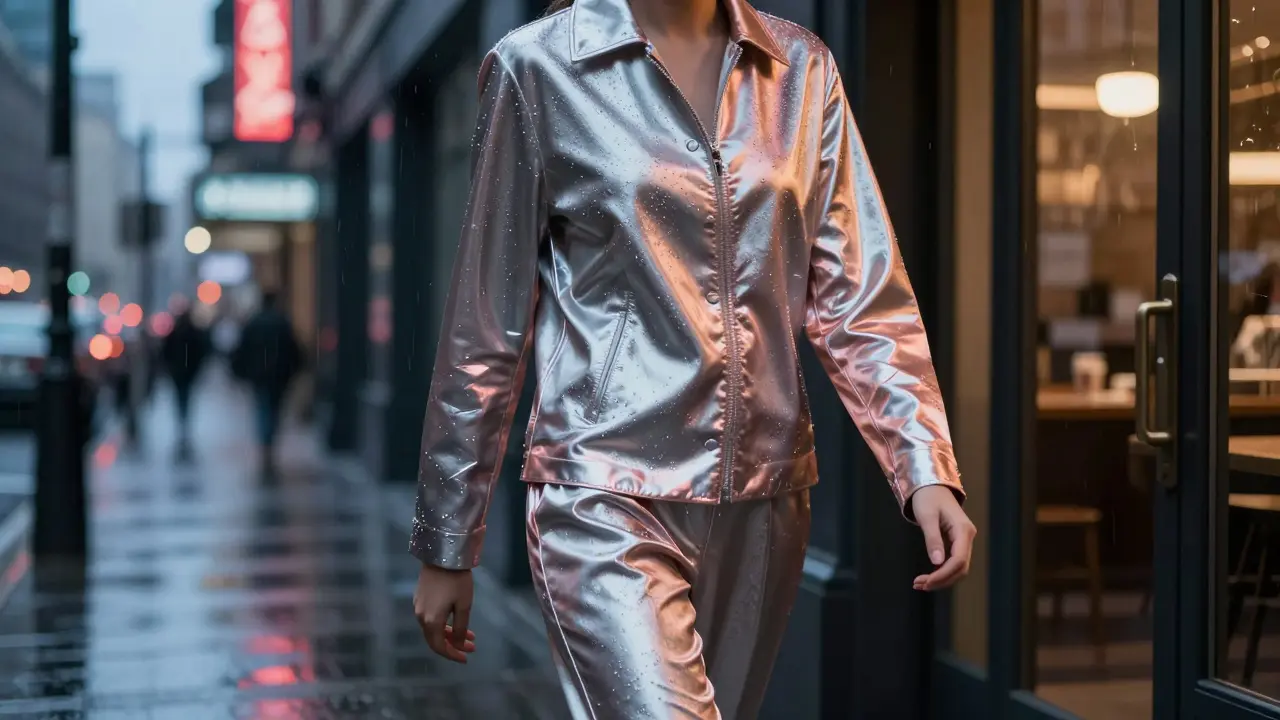
Remember metallic fabrics from the ’80s? Shiny, stiff, and prone to peeling? Those are gone. Today’s metallics are fluid, flexible, and embedded with conductive threads. They’re not just reflective-they’re interactive.
Companies like Luminex Textiles have developed a coating made from nano-silver particles suspended in a water-based polymer. Applied to silk or nylon, it creates a surface that reflects light like polished metal but bends like cotton. And here’s the kicker: it can be programmed. A jacket from a Tokyo-based brand changes color based on ambient temperature. Walk into a warm room? It shifts from silver to rose gold. Step outside into cold air? It turns deep charcoal.
These aren’t just fashion statements. They’re energy-efficient. The metallic coating reflects body heat back to the wearer, reducing the need for thick insulation. In cities like Seattle, where winters are damp and chilly, a metallic-lined coat can cut heating needs by up to 30% compared to traditional wool blends.
And the durability? Better than you think. Lab tests show these fabrics withstand 500+ washes without flaking. That’s longer than most denim jeans last.
Tech Textiles: The Real Revolution
If sheers and metallics are about appearance, tech textiles are about function. This is where fashion meets biotech, and the results are startling.
Take the new generation of phase-change materials (PCMs). These are microcapsules embedded into fabric fibers that absorb, store, and release heat. Worn next to your skin, they react to sweat and body temperature. When you’re hot, they pull excess heat away. When you’re cold, they release stored warmth. No batteries. No wires. Just fabric that regulates your core like a living thermostat.
One company, ThermalWeave, partnered with outdoor brands to create a hiking jacket that uses PCMs and moisture-sensing threads. The jacket detects when you’re sweating and automatically opens micro-vents along your back. It closes them when you stop moving. No zippers. No buttons. Just fabric that thinks for itself.
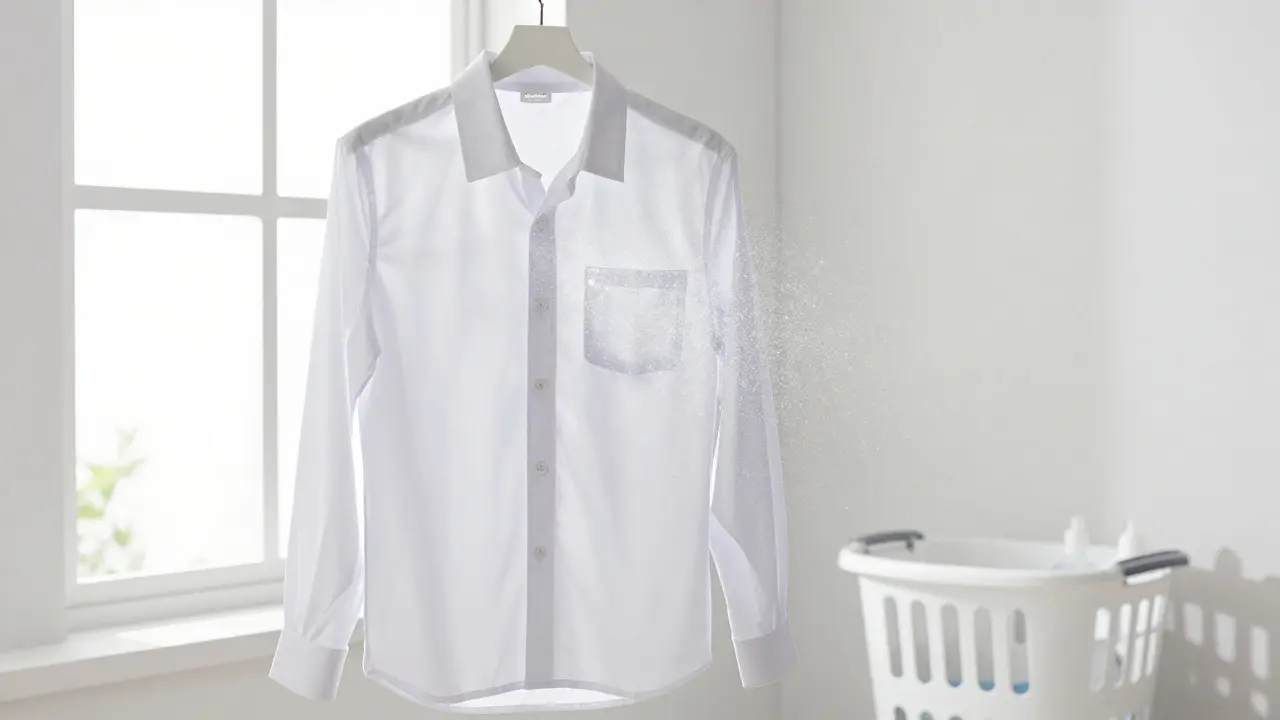
Then there’s self-cleaning fabric. Researchers at MIT developed a coating made from titanium dioxide nanoparticles that breaks down dirt and bacteria when exposed to UV light. A shirt treated with this material stays fresh after a full day of wear. You don’t need to wash it after a coffee run or a walk to the bus stop. Just hang it by a window for two hours.
And yes-it’s already in production. A line of urban commuter shirts from a Portland-based startup sells out every month. People aren’t buying them because they’re trendy. They’re buying them because they never smell bad, never wrinkle, and last three times longer than regular cotton.
Why This Matters Beyond the Runway
This isn’t just about looking cool at a party. These materials are changing how we think about consumption.
Fast fashion thrived on cheap, disposable fabrics. But when a shirt lasts 1,000 wears instead of 10, the math changes. A tech textile hoodie might cost $180 upfront. But if it replaces five cheap hoodies over five years? You’re saving money. And landfill space.
Even the production side is shifting. Traditional dyeing uses 200 liters of water per kilogram of fabric. New tech textiles like the self-cleaning ones? They’re dyed using air-based pigment deposition-zero water waste. The metallic coatings? Made from recycled silver, not mined.
And for cities with high pollution? Fabrics that clean themselves also clean the air around them. The titanium dioxide coating doesn’t just break down dirt on the fabric-it neutralizes airborne pollutants like NOx and VOCs. In places like Los Angeles or Beijing, wearing this fabric isn’t a luxury. It’s a public health choice.
What to Look For (And What to Skip)
Not all ‘tech’ fabrics are created equal. Here’s how to tell the real from the gimmick:
- Real tech textiles have third-party certifications: OEKO-TEX Standard 100, bluesign®, or GOTS. Look for these labels.
- Sheers with structure feel slightly springy, not flimsy. If it tears with a tug, it’s not engineered.
- Metallics shouldn’t feel sticky or plasticky. They should drape like silk and reflect light evenly.
- Self-cleaning claims? Ask if it needs UV light. If the brand doesn’t mention it, it’s probably just a coating that fades after three washes.
Avoid anything labeled ‘smart fabric’ without explaining how it works. If the description says ‘innovative technology’ but gives no details, it’s marketing fluff.
Where to Start
You don’t need to overhaul your whole closet. Start small:
- Try a sheer top with built-in structure-it pairs with anything and feels weightless.
- Invest in one metallic jacket. It works as a statement piece and a functional layer.
- Buy one tech-textile shirt or blouse. Wear it for a week. Notice how little you need to wash it.
These aren’t trends you’ll outgrow. They’re upgrades. The future of fashion isn’t about buying more. It’s about wearing less-better.
Are tech textiles safe to wear directly on the skin?
Yes, if they’re certified. Look for OEKO-TEX Standard 100 or bluesign® labels. These certifications mean the materials have been tested for harmful substances and are safe for direct skin contact. Brands using phase-change materials or self-cleaning coatings must pass strict biocompatibility tests before selling to consumers.
Can you wash tech textiles in a regular washing machine?
Most can, but check the care label. Tech textiles with conductive threads or nano-coatings often recommend cold water and gentle cycles. Avoid bleach and fabric softener-they break down the special coatings. Some self-cleaning fabrics don’t need washing at all; just air them out near sunlight.
Do metallic fabrics fade or peel over time?
Old-school metallic fabrics did. Today’s versions use bonded nano-silver or vapor-deposited metal layers that don’t flake. Lab tests show they last 500+ washes without visible wear. If a metallic garment starts peeling after two washes, it’s likely a cheap print, not real tech textile.
Are these fabrics expensive?
Initially, yes. A tech-textile shirt might cost $120-$180. But compared to buying five cheap shirts that wear out in a year, you save money long-term. Plus, they last 3-5 times longer, reduce laundry costs, and cut down on replacements. It’s a higher upfront cost, but lower lifetime cost.
Where can I buy real tech textiles?
Look at brands like ThermalWeave, Luminex Textiles, and smaller innovators like Pachacuti (Portland) or NüRave (Berlin). Department stores often carry tech lines under their premium labels-check the care tag for certifications. Avoid fast fashion brands claiming ‘smart fabric’ without details.
If you’ve ever felt like your clothes don’t work with your life-too hot, too smelly, too fragile-this is the answer. The future of fashion isn’t about trends. It’s about textiles that adapt, protect, and last. You’re not just wearing fabric anymore. You’re wearing performance.


Write a comment