

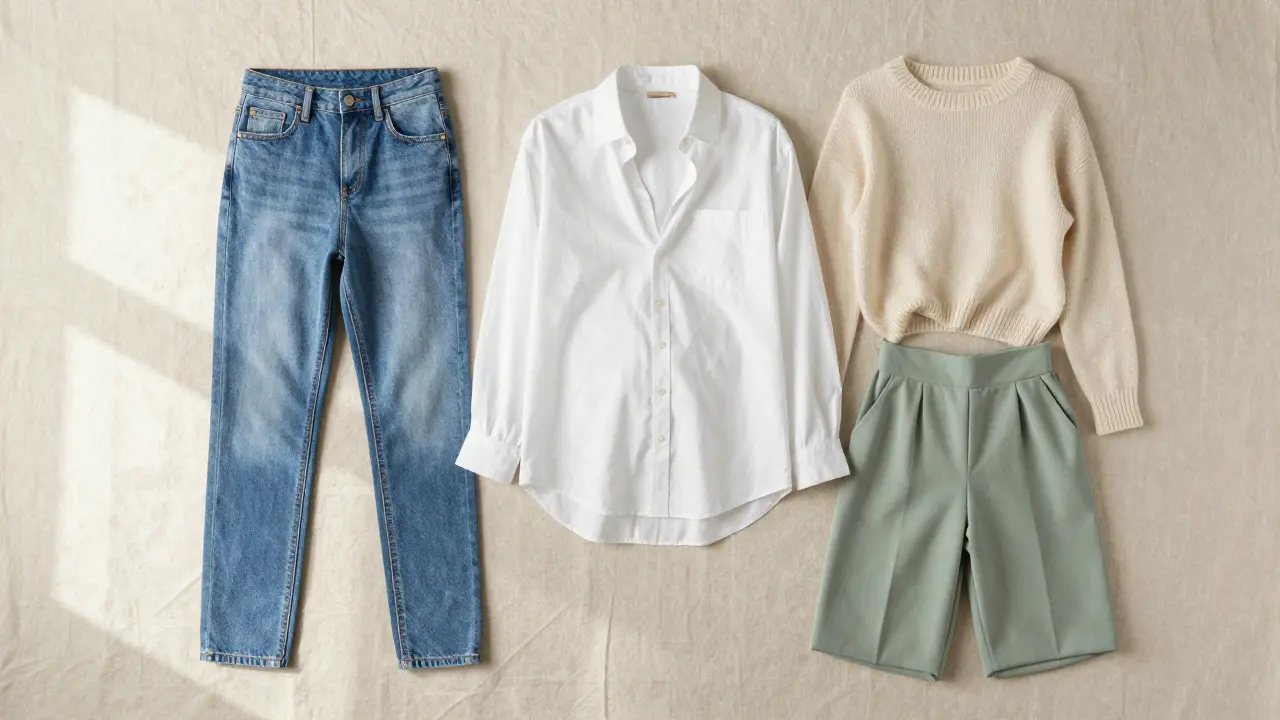
Buying a whole new closet for nine months is expensive, wasteful, and frankly, exhausting. You don’t need fifty outfits that you’ll only wear twice. You need a maternity capsule wardrobe-a small collection of versatile pieces that mix and match easily while adapting to your changing body. This approach saves money, reduces decision fatigue, and keeps you looking polished without the hassle.
The key isn't just buying "maternity" labels; it's about strategic layering and choosing fabrics that move with you. Your body changes drastically from week one to week forty, so a static wardrobe won't work. We need to break this down by trimester because what works in the beginning will likely chafe or restrict you later on.
First Trimester: The Stealth Phase
In the first three months, most people aren't showing yet. In fact, you might even feel bloated rather than pregnant. The goal here is comfort without the "I'm pregnant" announcement unless you want to give it. You can mostly stick to your pre-pregnancy clothes, but with a few tweaks.
| Item | Why It Works | Fabric Tip |
|---|---|---|
| Elastic Waist Jeans | Hides bloating, no digging in | Look for hidden stretch panels |
| Oversized Button-Downs | Can be worn open or closed for ventilation | Cotton or linen blends |
| Soft Knit Sweaters | Layers over sensitive breasts | Avoid wool if skin is itchy |
| Wide-Leg Trousers | No waistband pressure at all | Tencel or rayon for drape |
Focus on tops that are slightly looser around the bust and midsection. Bra sizes often change early, so avoid tight tank tops. Instead, opt for V-necks or scoop necks that don't cling. If you're working in an office, a blazer that buttons loosely or stays open is your best friend. It covers any unevenness and looks professional.
Don't buy maternity-specific jeans yet. Regular high-waisted jeans with a bit of stretch usually last through the first trimester. Save the specialized under-bump bands for when they're actually needed.
Second Trimester: The Growth Spurt
This is where things get real. Around weeks 13 to 26, your baby bump becomes visible. Your regular pants stop buttoning, and your shirts start pulling across the belly. This is the time to introduce true maternity staples into your capsule.
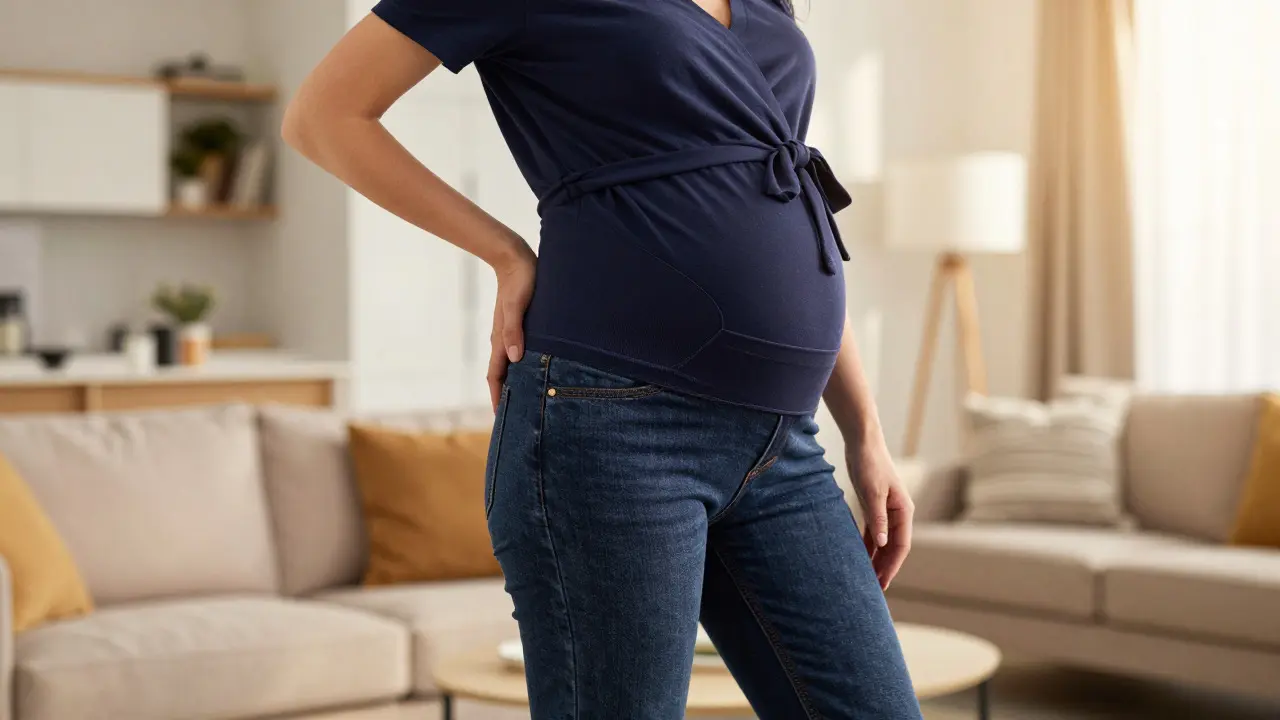
The cornerstone of your second-trimester wardrobe is the Over-Bump Maternity Belt. A wide, soft band that sits on top of your growing belly, providing support without constriction. Unlike the under-bump styles that dig in, over-bump belts distribute weight evenly. They look like regular waistbands from the outside, so you can wear them with almost any pair of trousers or skirts.
- Stretchy Denim: Invest in two pairs of dark wash jeans with full-panel over-bump support. Dark denim is slimming and versatile enough for dinner dates or casual Fridays.
- Wrap Dresses: These are non-negotiable. A wrap dress adjusts to your exact measurements every day. Since your size can fluctuate due to swelling, a tie-waist design is forgiving and flattering.
- Empire Waist Tops: Look for blouses that cinch right under the bust and flow out over the stomach. This creates shape without squeezing your middle.
- Leggings with Belly Support: For lounging or light workouts, choose leggings with a built-in mesh panel. Cotton jersey is great for sleep, but nylon-spandex blends hold up better during the day.
Colors matter here too. Stick to neutrals like black, navy, gray, and beige for your bottoms. This allows you to swap out colorful tops as your mood changes. If you buy a bright red wrap dress, it’s hard to pair with everything. But a black midi skirt? That goes with ten different shirts.
Third Trimester: Maximum Comfort
By week 27, you’re carrying extra weight, possibly dealing with heartburn, and your feet might be swollen. Style takes a backseat to survival, but you still want to look put-together. The focus shifts entirely to ease of dressing and temperature regulation.
Your body runs hotter now, so breathable fabrics are critical. Synthetics trap heat and moisture, leading to rashes. Switch to organic cotton, bamboo, and linen. These materials wick sweat and allow air circulation.
| Category | Must-Have Item | Feature to Look For |
|---|---|---|
| Bottoms | Drawstring Joggers | Adjustable waist, soft fleece interior |
| Tops | Nursing-Friendly Tanks | Hidden zippers or snap closures |
| Dresses | Maxi Slip Dresses | Satin-like finish, zero waist structure |
| Outerwear | Open Cardigans | Long length, loose fit |
Consider buying nursing-friendly clothing now. Yes, it’s called "nursing," but many of these pieces are perfect for late pregnancy too. Tops with discreet zippers or overlapping layers make feeding easier later, but right now, they provide easy access for ultrasounds or if you just need to adjust your shirt quickly. It’s a smart bridge between pregnancy and postpartum.
Shoes also need attention. As your arches flatten and feet swell, narrow heels become torture devices. Switch to supportive sneakers or flat sandals with straps. Avoid slip-ons that fall off; secure footwear prevents trips when your center of gravity has shifted.
Building the Mix-and-Match System
A capsule wardrobe fails if the pieces don’t work together. To maximize your limited budget, ensure every top matches every bottom. Here’s how to structure your shopping list:
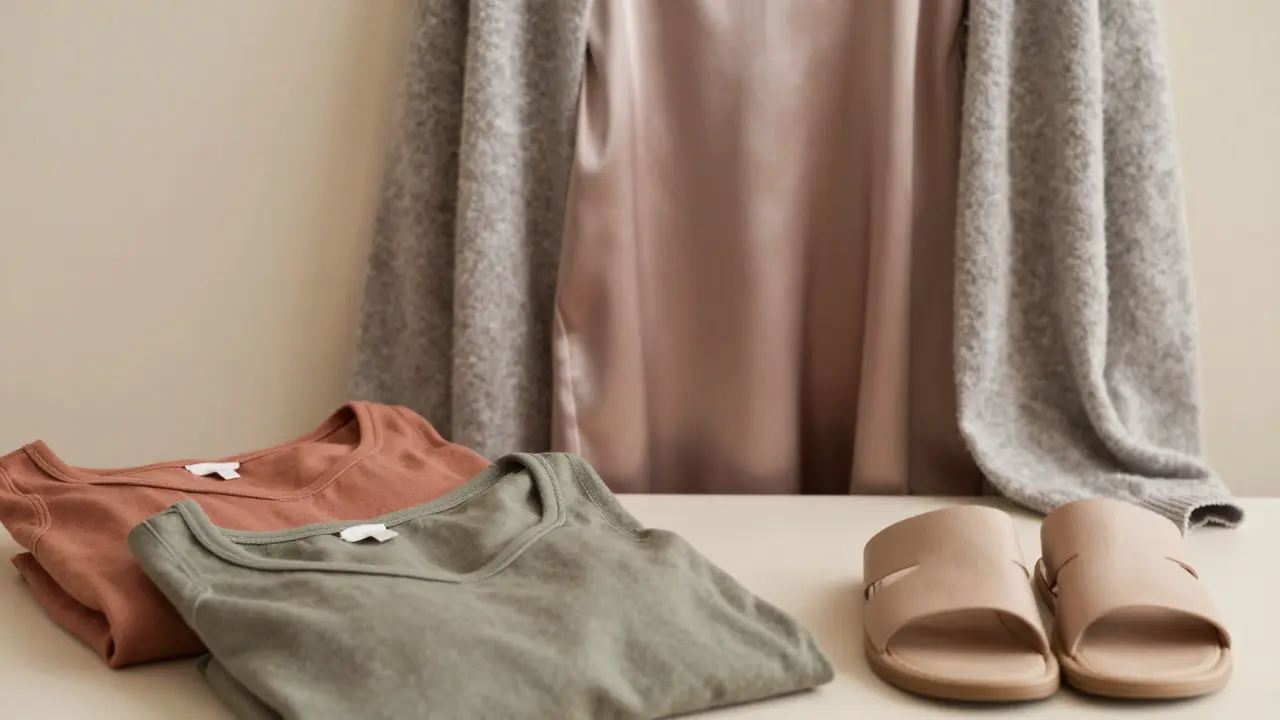
- Pick a Color Palette: Choose three neutral base colors (e.g., black, white, tan) and two accent colors (e.g., olive green, rust). Every item must fit into this scheme.
- Invest in Quality Basics: Spend more on items you’ll wear daily, like bras, underwear, and jeans. Cheap elastic loses its snap after a few washes.
- Use Accessories to Refresh: A scarf, statement earrings, or a belt can change the vibe of a simple tee and jeans combo. This adds variety without buying new clothes.
- Layer Strategically: Keep a lightweight cardigan or denim jacket handy. Hospital rooms are cold, and air-conditioned offices can be chilly despite your internal furnace.
Think about laundry logistics. You’ll be tired. Choose wrinkle-resistant fabrics if possible. Nothing ruins a night out like having to iron a blouse while holding a sleeping newborn. Machine-washable knits and jersey fabrics are your allies.
Common Mistakes to Avoid
Many women overspend on trendy maternity pieces that look cute once and then sit in the closet. Avoid fast-fashion traps. Instead, borrow from friends or buy second-hand from reputable resellers. Maternity clothes are rarely worn long enough to show significant wear.
Another mistake is ignoring bra fit. Your chest size can increase by several cup sizes. Get fitted professionally in the second trimester. A supportive bra relieves back pain and improves posture, which is crucial when you’re carrying extra weight.
Finally, don’t forget about sleepwear. You’ll be hot, sweaty, and potentially leaking milk later on. Buy breathable pajama sets with button fronts or zip closures. You’ll thank yourself at 3 AM when you need to change a diaper or nurse without waking up fully.
How many outfits do I really need for a maternity capsule?
You don't need many. Aim for 5-7 bottoms, 8-10 tops, 2-3 dresses, and 2 outerwear pieces. This creates over 30 unique combinations. Quality matters more than quantity because you'll be wearing these items frequently.
When should I start buying maternity clothes?
Start around 12-14 weeks for basics like bras and stretchy pants. Wait until 16-20 weeks to buy structured maternity jeans and dresses, as your bump shape changes rapidly during this period. Buying too early often leads to items that don't fit correctly later.
Can I wear my old clothes during pregnancy?
Yes, especially in the first trimester. Use hair ties to extend button-down shirts, or wear oversized sweaters. Many women continue wearing their pre-pregnancy jeans until 20 weeks if they have some stretch. Layering is key to making existing wardrobe items work longer.
What fabric is best for third-trimester comfort?
Organic cotton, bamboo viscose, and linen are the best choices. They are breathable, moisture-wicking, and soft against sensitive skin. Avoid polyester and acrylic, which trap heat and can cause irritation or rashes during hot flashes common in late pregnancy.
Is it worth buying nursing clothes before birth?
Absolutely. Nursing tops and dresses serve dual purposes. They provide easy access for breastfeeding but also offer loose, comfortable fits ideal for the third trimester. Investing in 3-4 versatile nursing pieces bridges the gap between pregnancy and postpartum seamlessly.