

Key Takeaways for Bold Dressing
- Use a "bridge color" to connect clashing prints.
- Balance oversized silhouettes with structured anchors.
- Layer textures to add depth without adding bulk.
- Trust your gut, but verify with a mirror check for visual balance.
The Psychology of the "More is More" Approach
At its core, Maximalism is an aesthetic of excess that rejects the minimalism of clean lines and neutral palettes in favor of richness and complexity. Unlike its counterpart, minimalism, which seeks to remove everything unnecessary, maximalism asks what else can be added to tell a more complete story. It is a visual representation of personality, travel, and art.
When you embrace this style, you aren't just picking clothes; you are building a mood. Think of it as interior design for your body. Just as a maximalist living room uses a mix of velvet, gold, and leopard print to feel cozy and lived-in, your wardrobe should feel like a collection of your favorite things happening all at once. The goal is to look intentional, not accidental.
Mastering the Art of Mixing Prints
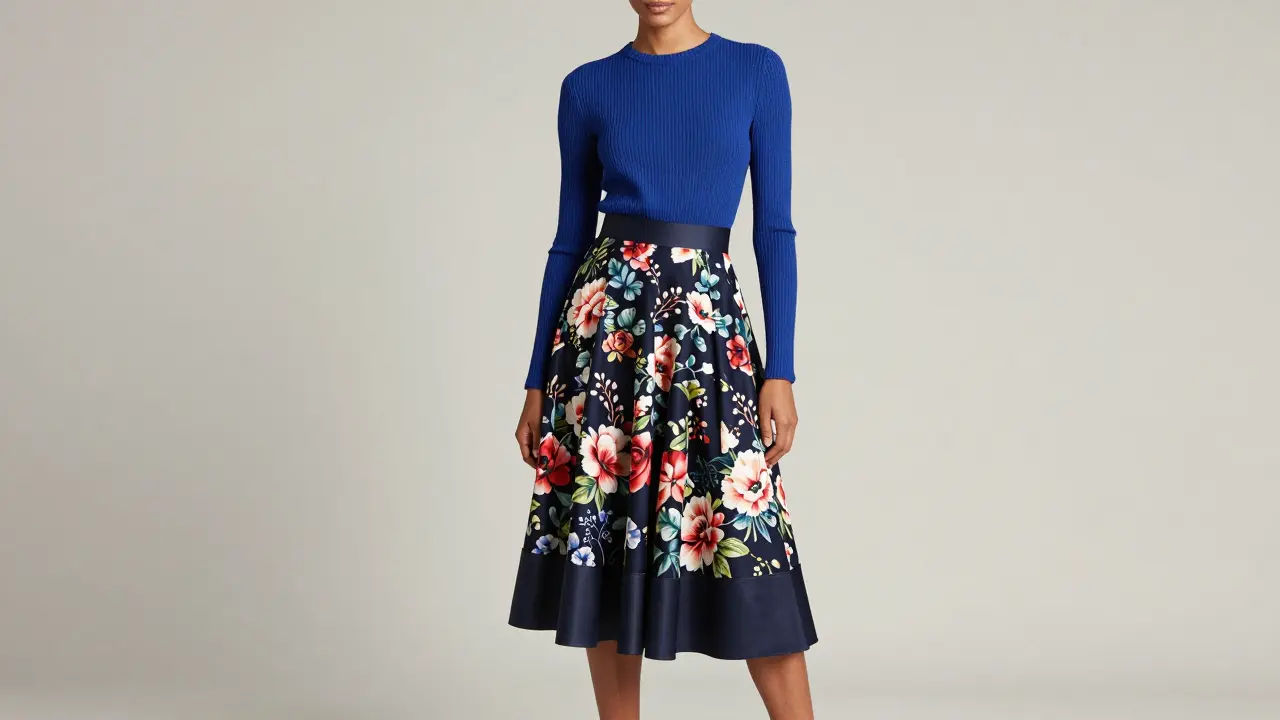
The biggest hurdle for most people is the fear of "clashing." But in a maximalist world, clashing is actually a tool. The trick is to find a common thread. If you are wearing a Floral Print is a pattern consisting of flowers, leaves, and botanical elements skirt and a striped top, look for one color that appears in both. If the flowers have tiny hints of navy and the stripes are navy and white, the outfit is automatically anchored. That shared color acts as a bridge, telling the eye that the combination was a choice, not a mistake.
Vary the scale of your prints to avoid a visual blur. If you wear a giant, oversized leopard print coat, pair it with a tiny, delicate polka dot scarf. When two prints are the same size, they fight for attention. When one is large and the other is small, they complement each other. Imagine a bold geometric rug in a room with a small, intricate wallpaper-the contrast is what makes it sophisticated.
| Primary Print | Complementary Print | The "Bridge" Strategy |
|---|---|---|
| Leopard/Animal | Stripes or Polka Dots | Keep a neutral base (black/tan) in both. |
| Large Florals | Small Geometrics | Match the accent color of the floral to the geometric line. |
| Plaid/Checkered | Abstract Swirls | Use a solid-colored accessory to separate the two. |
Strategic Layering Without the Bulk
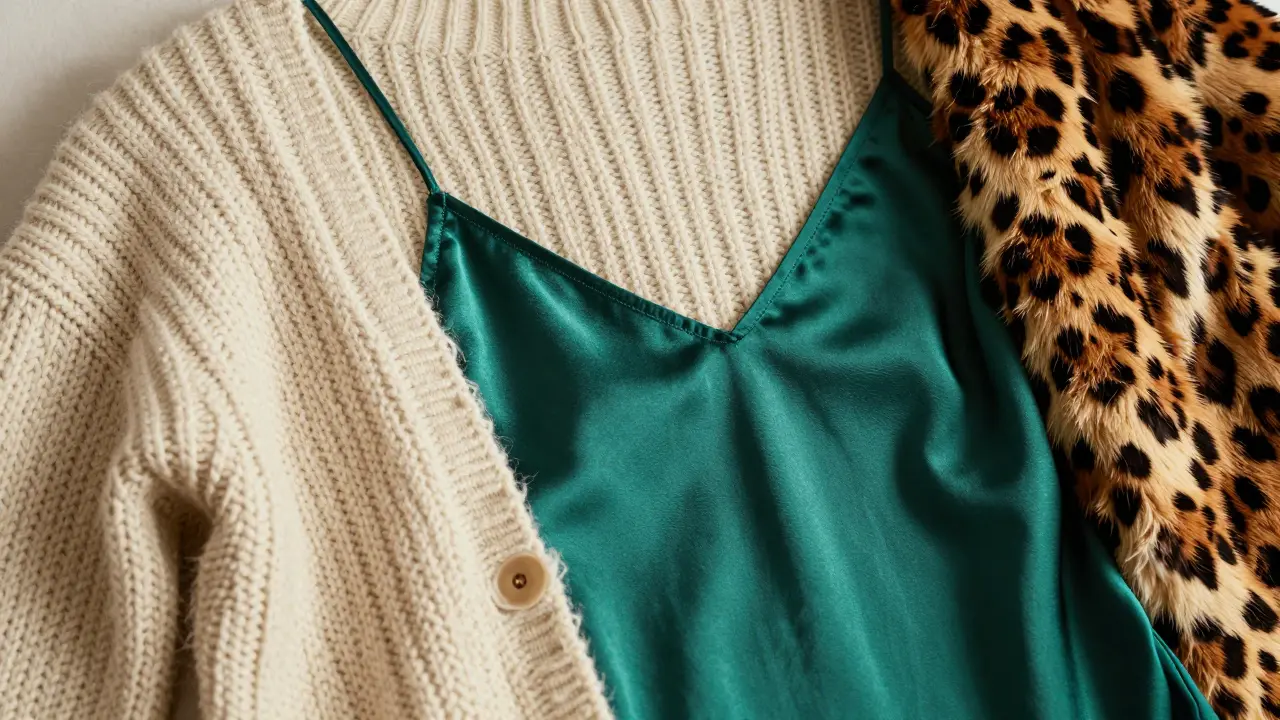
Layering is the backbone of a maximalist look. It adds dimension and allows you to experiment with proportions. However, there is a fine line between looking like a fashion icon and looking like you're wearing every piece of clothing you own. The key is mixing Texture is the perceived surface quality of a fabric, such as smoothness, roughness, or fluffiness . Pairing a chunky wool knit with a sleek silk slip dress creates a contrast that feels expensive. If everything you wear is the same weight, the outfit looks flat.
Use the "Rule of Three" for layering. Start with a base (like a fitted turtleneck), add a middle layer (a colorful button-down or a vest), and top it off with a statement piece (a faux-fur coat or an oversized blazer). By varying the lengths-shorter under, longer over-you create a visual hierarchy. This prevents the outfit from looking like a shapeless blob and instead looks like a carefully constructed ensemble.
Don't forget the accessories. In maximalism, jewelry is not just an add-on; it is part of the architecture. Layering three different lengths of necklaces or stacking mismatched rings adds that final layer of "curated chaos." The goal is to make the viewer wonder where the outfit ends and the art begins.
Bold Color Palettes That Actually Work
Many people stick to the color wheel's safe zones, but maximalists play with Complementary Colors is colors opposite each other on the color wheel that create high contrast when placed together . Think purple and yellow, or orange and blue. These pairings are naturally striking because they create a visual vibration. If you're nervous about this, start with one dominant color and use its opposite as a highlight in your shoes or bag.
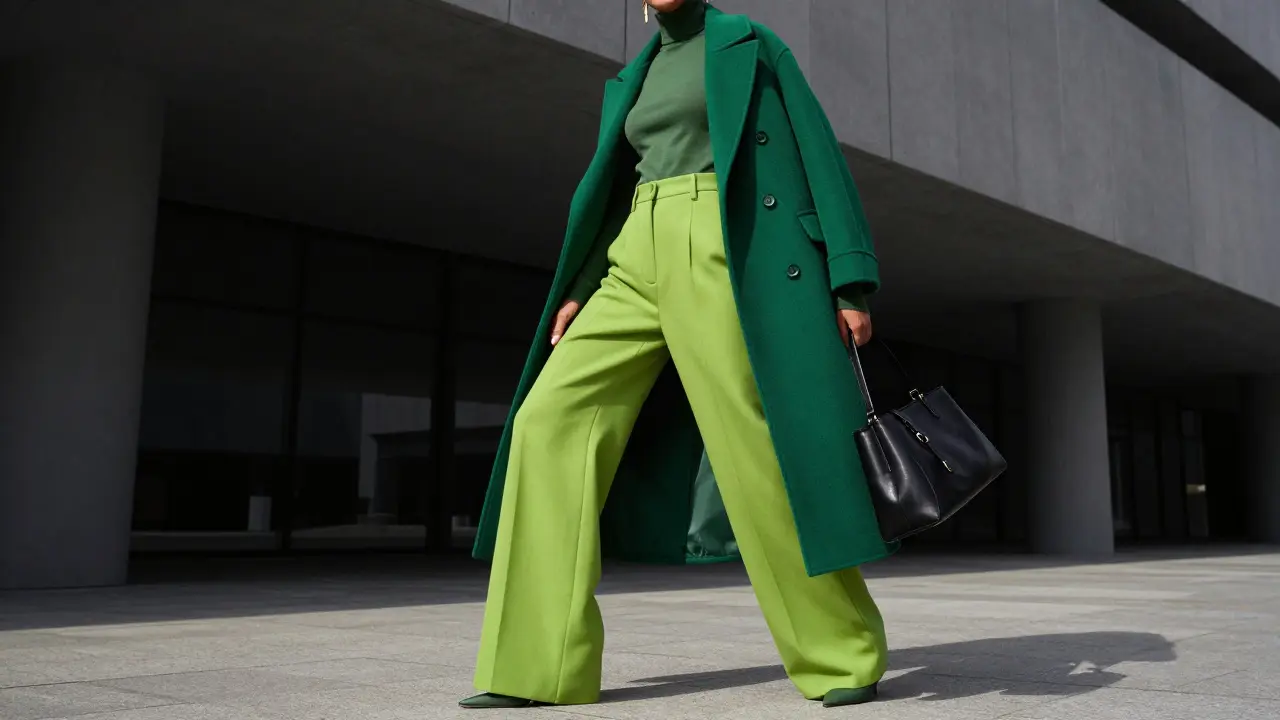
Another approach is the monochromatic maximalist look. This doesn't mean wearing one boring color; it means wearing five different shades of the same color. Imagine a lime green pant, a forest green sweater, and an emerald green coat. Because the hue is consistent, you can go wild with the prints and textures without worrying about the outfit falling apart. It creates a streamlined look that still screams confidence.
Avoid the trap of using too many "loud" colors without a grounding element. Even the boldest outfits benefit from a "reset' color. A pop of black, white, or deep navy can act as a visual palate cleanser, giving the eye a place to rest before jumping back into the color explosion. It’s like the silence between notes in a song-it makes the melody stand out more.
Avoiding the 'Costume' Trap
The most frequent question is: "How do I know when I've gone too far?" The answer lies in the fit. When you wear bold prints and multiple layers, the silhouette becomes the most important factor. If your clothes are all oversized, you lose your shape and start to look like you're wearing a costume. Balance a wide-leg patterned pant with a more tailored, tucked-in top.
Another tip is to choose one "hero piece." Whether it's a neon faux-fur coat or a sequined blazer, let one item take center stage. Build the rest of the outfit to support that piece. If everything is a hero, nothing is. By designating a focal point, you provide a logical starting point for whoever is looking at you, which makes the overall look feel intentional.
Finally, consider the occasion. Maximalism is about expression, but context matters. A maximalist approach to a business meeting might mean a bright power suit with a bold patterned blouse and chunky jewelry, whereas a weekend look might be a full-blown mix of vintage finds and neon accessories. The intentionality comes from knowing exactly how much noise you want to make in a specific environment.
Can I be a maximalist if I only have a few clothes?
Absolutely. Maximalism is about the *way* you style your pieces, not the quantity of clothes in your closet. You can achieve a maximalist vibe by layering a few versatile pieces in unexpected ways, adding bold accessories, or mixing a couple of strong prints. It's about the richness of the combination, not the size of the wardrobe.
What is the easiest print to start mixing?
Stripes are the best entry point. Because they are linear and often come in neutral colors, they act almost like a solid color. Try pairing a striped shirt with a floral skirt or a leopard print shoe. Once you're comfortable with stripes, move on to polka dots or geometric patterns.
Do I need to buy expensive designer clothes for this look?
Not at all. In fact, maximalism thrives in thrift stores and vintage shops. The best maximalist wardrobes are often a mix of high and low-a vintage silk scarf from a flea market paired with a modern bold-colored blazer. The value comes from your eye for pairing, not the price tag.
How do I stop an outfit from looking messy?
Focus on the "bridge color" and the silhouette. Ensure at least two items share a common color to tie the look together. Also, make sure your clothes fit well; if you're layering oversized items, use a belt or a tuck to define your waist. A defined shape tells the world the look is intentional.
Is maximalism only for certain body types?
No. Maximalism is for anyone who enjoys self-expression. The key is adjusting the proportions to suit your frame. If you're petite, avoid letting the clothes swallow you by using vertical stripes or a high-waisted silhouette. If you're tall, you can play more with exaggerated lengths and wide-cut layers.
Next Steps for Your Style Evolution
If you're feeling overwhelmed, don't try to change your entire wardrobe overnight. Start by adding one "wild card" item to your usual routine-maybe a pair of bright socks or a colorful scarf. Once that feels normal, try mixing two prints. The more you experiment, the more you'll develop an intuitive sense of what works for you.
Keep a digital mood board of images that inspire you. Notice what the models or style icons are doing with their proportions and colors. Are they using a specific bridge color? Are they balancing a huge coat with a tiny bag? By analyzing the "why" behind the looks you love, you'll be able to recreate that intentionality in your own closet.


Write a comment