

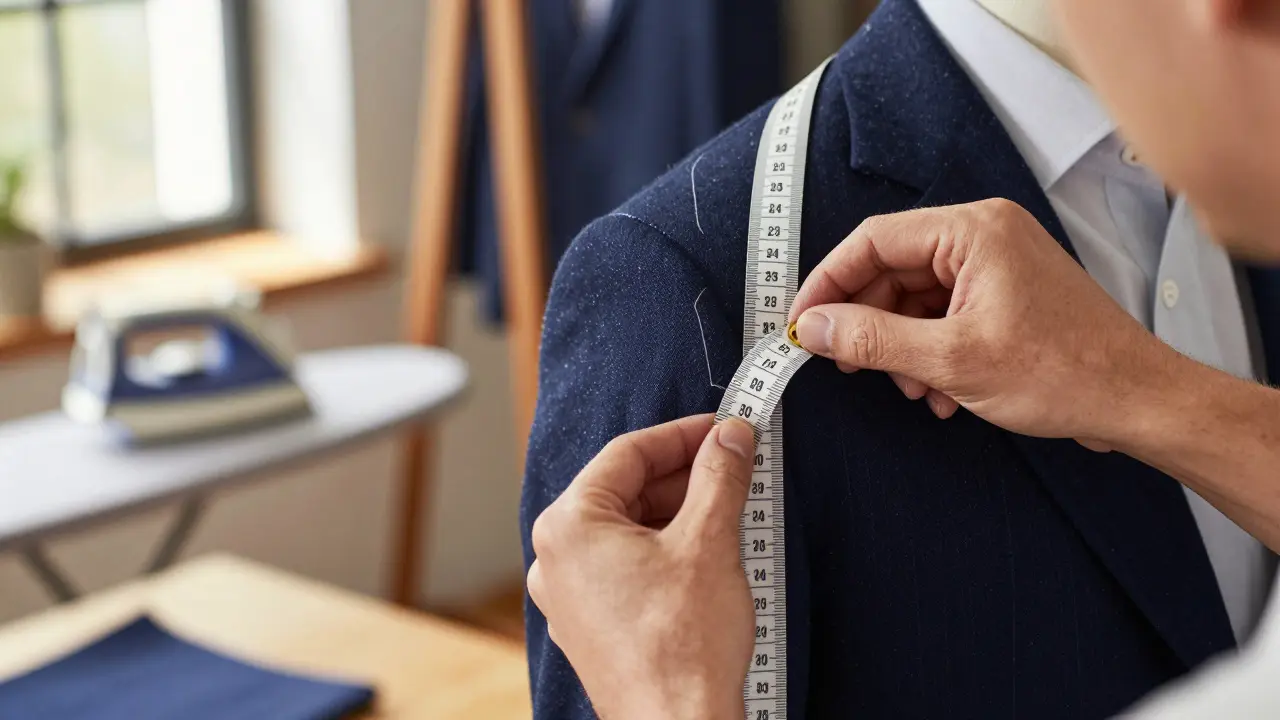
Walking into a closet full of clothes but having nothing to wear is a universal frustration. You buy the trendy jacket, the crisp shirt, the perfect trousers, yet when you stand in front of the mirror, something feels off. The fit is slightly wrong. The colors clash. The vibe is inconsistent. This isn’t a problem with your budget; it’s a problem with strategy. Menswear personal styling is the professional service that bridges the gap between owning clothes and wearing them with confidence. It combines two critical pillars: precise tailoring and strategic capsule wardrobe building.
Most men treat style as an afterthought or a random act of consumption. They wait until they have a wedding, a job interview, or a date to think about what they look like. By then, it’s too late. Real style is built on systems. It’s about creating a foundation of versatile pieces that fit your body perfectly and mix together effortlessly. In this guide, we’ll break down how to approach styling not as a chore, but as a streamlined process that saves you time, money, and stress every single morning.
The Non-Negotiable Foundation: Why Fit Trumps Brand
You can spend $500 on a suit from a luxury brand, and if it doesn’t fit, it looks worse than a $100 suit from a department store that has been altered correctly. The first rule of menswear is simple: clothes must fit your body, not the other way around. Off-the-rack garments are made for average body shapes, which rarely exist in reality. Most men have proportions that deviate from the standard size chart-longer torsos, shorter arms, broader shoulders, or narrower waists.
Tailoring is the process of altering ready-to-wear clothing to achieve a custom fit. It is the most cost-effective upgrade you can make to your appearance. A good tailor can transform a boxy blazer into a sharp, structured piece by taking in the sides and shortening the sleeves. They can taper trousers so they don’t bunch up at your ankles. These small adjustments signal attention to detail. People may not know why you look better, but they will notice that you look put-together.
When working with a stylist or tailor, focus on these key areas:
- Shoulders: This is the hardest area to alter. Always ensure the shoulder seam ends where your natural shoulder bone ends. If it hangs over or pulls tight, the garment is likely the wrong size.
- Sleeve Length: Shirt sleeves should end at the wrist bone, showing about a quarter-inch of cuff. Jacket sleeves should show about half an inch of the shirt sleeve underneath.
- Trouser Break: The "break" is where the fabric rests on the shoe. A slight break (where the fabric just touches the top of the shoe) looks modern and clean. No break can look too casual; a full break often looks dated and sloppy.
- Jacket Length: The bottom of your jacket should cover your seat. A quick test is to cup your hands behind your back; the jacket hem should align with where your thumbs meet.
Don’t underestimate the power of a good relationship with a local tailor. Visit one before you buy anything expensive. Ask them what alterations are possible and what costs extra. Knowing this upfront helps you shop smarter. For example, buying a slightly larger size because it fits your chest might mean excessive fabric in the waist, which requires more complex and costly tailoring. Sometimes, buying the right size off the rack saves you money in the long run.
Building Your Capsule Wardrobe: Less Is More
Once you’ve mastered fit, the next step is curation. A Capsule wardrobe is a limited collection of interchangeable clothing items that maximize outfit combinations while minimizing decision fatigue. The concept was popularized by Susie Faux in the 1970s and later refined by Donna Karan, but its principles remain timeless for men who value efficiency.
The goal isn’t to own fewer clothes for the sake of minimalism. The goal is to own clothes that work harder. Imagine a kitchen where every tool is high-quality and serves multiple purposes. You don’t need ten different knives; you need one excellent chef’s knife that can chop, slice, and dice. Your wardrobe should function the same way.
A typical male capsule wardrobe consists of 30-40 items, excluding underwear, sleepwear, and specialized gear like gym clothes or winter coats. These items should be selected based on your lifestyle. A software engineer working remotely needs a different capsule than a sales executive meeting clients daily. However, certain core pieces remain consistent across most lifestyles.
| Category | Essential Items | Color Palette Strategy |
|---|---|---|
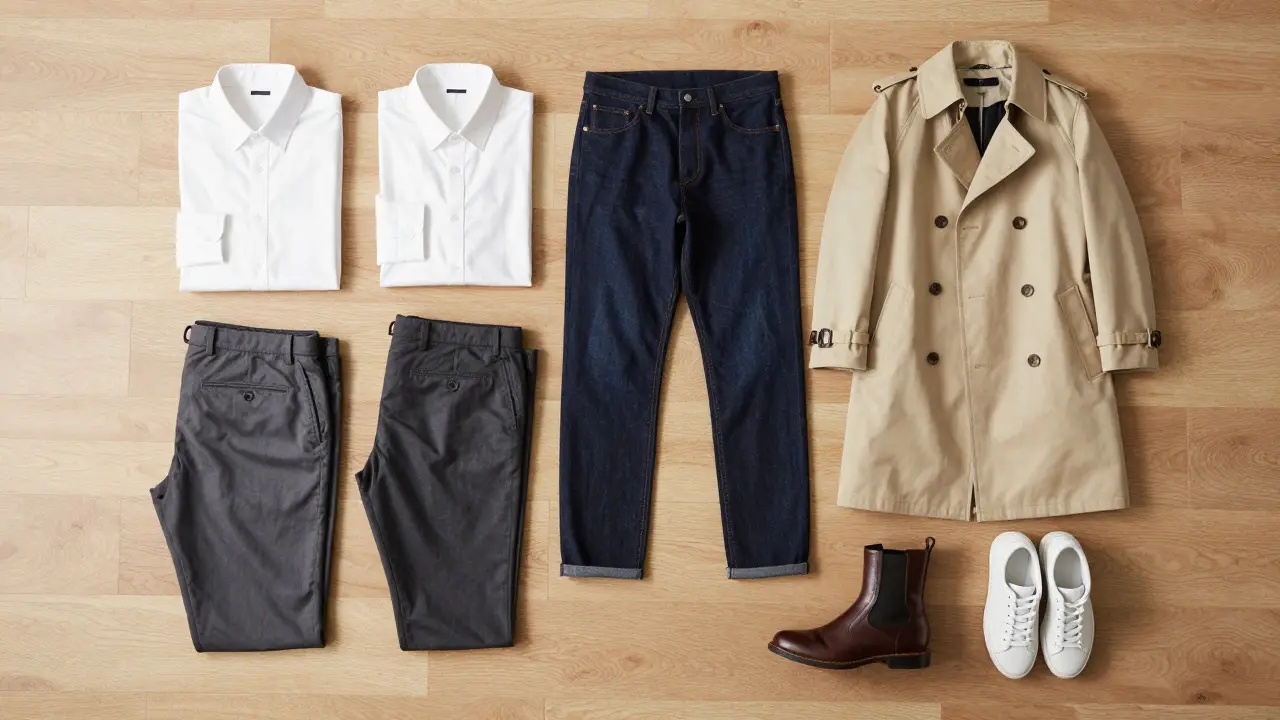
| Tops | White Oxford shirts, light blue button-downs, plain black and white t-shirts, grey merino wool sweaters | Stick to neutrals: white, light blue, navy, grey, black |
| Bottoms | Dark indigo jeans, charcoal chinos, navy dress trousers, olive cargo pants (for casual) | Choose shades that contrast with your tops |
| Outerwear | Navy blazer, beige trench coat, black leather jacket, grey overcoat | Invest in higher quality here as these get heavy use |
| Footwear | White minimalist sneakers, brown leather boots, black derby shoes, loafers | Match belt leather to shoe leather color |
The magic of the capsule lies in interchangeability. Every top should go with every bottom. Every jacket should complement the rest. If you buy a bright red shirt that only matches one pair of jeans, it fails the capsule test. Stick to a cohesive color palette. Navy, grey, white, black, and earth tones (olive, brown, beige) form the backbone of a flexible system. Once you master these basics, you can introduce accent colors through accessories like ties, pocket squares, or socks.
The Role of the Personal Stylist: Beyond Shopping
Many men hesitate to hire a Personal stylist is a professional advisor who curates clothing selections based on individual body type, lifestyle, and aesthetic goals. They provide objective feedback and access to resources that consumers typically lack. There’s a misconception that stylists only serve celebrities or people with unlimited budgets. In reality, a good stylist works within your financial constraints to maximize value. They know which brands offer the best quality-to-price ratio. They understand seasonal trends and can advise you on what to skip and what to invest in.
Working with a stylist involves several phases. First comes the consultation. This is where you discuss your life. Where do you work? What are your hobbies? Do you travel frequently? What are your pain points? Maybe you hate ironing. Maybe you struggle to find jeans that fit your thighs but not your waist. The stylist takes notes. This data drives every subsequent recommendation.
Next is the audit. The stylist reviews your current wardrobe. They identify gaps and redundancies. You might realize you own five similar dark jeans but no suitable trousers for business casual settings. They’ll also flag items that no longer fit or are worn out. This process is eye-opening. Many men hold onto clothes out of sentimentality or hope, cluttering their space and confusing their style narrative.
Finally, there’s the shopping phase. Whether done online or in-store, the stylist selects items that fill the gaps in your capsule. They handle the logistics, ensuring everything fits and coordinates. Some stylists offer ongoing support, helping you adapt your wardrobe as seasons change or your career evolves. Think of it as a subscription to looking your best.
DIY Styling: How to Apply Professional Principles
If hiring a stylist isn’t in the cards, you can still apply their methods. Start by defining your personal uniform. Look at men whose style you admire. Do they lean towards classic preppy? Modern minimalist? Rugged outdoorsman? Identify three keywords that describe your desired image. Use these as filters when shopping.
Create a mood board. Use Pinterest or a physical scrapbook. Collect images of outfits you like. Look for patterns. Do you see a lot of denim? Lots of monochrome looks? This visual exercise clarifies your taste faster than reading articles ever could. Once you have a direction, build your capsule around it.
Prioritize fabric quality. Cheap fabrics pill, fade, and lose shape quickly. Natural fibers like cotton, wool, linen, and silk breathe better and age gracefully. A 100% cotton oxford shirt will last years if cared for properly. A polyester blend might look fine initially but will feel uncomfortable and look shiny after a few washes. Read the labels. If it says “polyester” or “acrylic,” proceed with caution unless it’s for performance wear.
Learn basic maintenance. Iron your shirts. Polish your shoes. Remove lint with a brush. These small acts of care extend the life of your clothes and keep you looking sharp. A wrinkled $200 shirt looks cheaper than a crisp $50 one. Invest in a good steamer or iron. Keep a lint roller in your car or office bag. These tools are part of your style toolkit.

Common Pitfalls to Avoid
Even with the best intentions, many men fall into common traps. One major mistake is chasing trends blindly. Fashion cycles fast. What’s hot this season might be outdated next year. Capsule wardrobes rely on timeless pieces. If an item is heavily trend-dependent, ask yourself if you’ll still want to wear it in three years. If not, skip it or buy a cheaper version.
Another pitfall is ignoring context. Wearing a tuxedo to a beach barbecue sends the wrong message. Dressing too casually for a client meeting undermines your credibility. Understand the dress codes of your environments. When in doubt, it’s better to be slightly overdressed than underdressed. You can always remove a layer or loosen a tie, but you can’t add sophistication on the fly.
Lastly, don’t neglect grooming. Clothes are only half the equation. Haircut, skincare, and hygiene play huge roles in how people perceive you. A well-fitted suit won’t save you if your hair is unkempt or your shoes are scuffed. Style is holistic. Treat your entire presentation as a package deal.
Measuring Success: Confidence and Efficiency
How do you know if your styling efforts are working? Look at your mornings. Are you spending less time deciding what to wear? Do you feel confident walking out the door? Are you receiving positive feedback from colleagues or friends? These are the real metrics of success. Style shouldn’t be stressful. It should be empowering.
Over time, you’ll develop intuition. You’ll know what works for your body and lifestyle without second-guessing. You’ll stop buying things you don’t need. You’ll appreciate the clothes you own. This shift in mindset is the ultimate reward of mastering menswear personal styling. It’s not about vanity. It’s about respecting yourself and presenting your best self to the world.
How much does a personal stylist cost?
Costs vary widely depending on location and experience. Hourly rates typically range from $100 to $300 per hour. Package deals, which include wardrobe audits and shopping trips, can cost between $500 and $2,000. Some stylists offer virtual consultations for lower fees, starting around $50-$150. Always clarify what’s included in the price before committing.
How many items should be in a men's capsule wardrobe?
Aim for 30-40 items, excluding underwear, sleepwear, and seasonal outerwear like heavy coats. This includes tops, bottoms, outer layers, and footwear. The exact number depends on your lifestyle. Someone who works from home might need fewer formal pieces, while a traveler might prioritize versatile, wrinkle-resistant fabrics.
Is tailoring worth the investment?
Absolutely. Tailoring is the most impactful upgrade you can make. Alterations like tapering trousers or adjusting sleeve lengths cost between $15 and $50 per item. Compared to buying new clothes, this is inexpensive. Well-tailored clothes boost confidence and professionalism, making them a high-return investment.
What are the best colors for a capsule wardrobe?
Stick to neutral foundations: navy, grey, white, black, beige, and olive. These colors mix and match easily. Add subtle textures like tweed or corduroy for visual interest without breaking the color scheme. Accent colors can be introduced through accessories like scarves or ties, allowing flexibility without compromising versatility.
Can I build a capsule wardrobe on a budget?
Yes. Focus on essential items first. Shop sales, outlet stores, and secondhand markets for high-quality basics. Brands like Uniqlo, J.Crew Factory, and Everlane offer affordable staples. Prioritize fit over brand name. A cheap shirt tailored well looks better than an expensive one that fits poorly. Gradually replace low-quality items as your budget allows.