


You stand in front of your closet. You have clothes. Lots of them. But nothing feels quite right. It’s not that you lack options; it’s that the pieces don’t sing together. This is where micro-upgrades are small, intentional adjustments to your existing wardrobe that elevate your overall aesthetic without requiring a full shopping spree. Instead of buying a new coat every season, you tweak how you wear the one you already own. The result? A look that feels polished, intentional, and uniquely yours.
We often think style requires a complete overhaul. We scroll through feeds filled with perfect outfits and assume we need to empty our closets to start fresh. But real style isn’t about volume. It’s about precision. Think of it like seasoning a dish. You don’t throw in every spice in the cabinet. You add a pinch of salt, a dash of pepper, and suddenly, the flavors pop. Your wardrobe works the same way. Small shifts create big changes.
The Power of Intentional Details
Most people overlook the tiny details because they’re too busy looking at the big picture. But it’s the small stuff that signals effort. When you roll your sleeves up just enough to show a watch, or tuck in your shirt with a specific knot, you’re communicating care. These aren’t accidents. They’re choices.
Consider the humble t-shirt. A basic white tee can look sloppy or sharp depending on three things: fit, fabric weight, and neckline. If you swap a thin, stretched-out cotton for a slightly heavier jersey with a structured collar, you’ve upgraded the piece without changing its category. Pair it with dark denim instead of light wash, and you’ve shifted the vibe from casual to smart-casual. That’s a micro-upgrade in action.
- Fabric Weight: Heavier fabrics drape better and resist wrinkling, giving a more expensive look.
- Neckline Structure: A ribbed or reinforced neckline holds its shape longer than a loose knit.
- Hem Length: Slightly longer hems allow for tucking without riding up, creating cleaner lines.
These changes cost almost nothing but time and attention. You might already own these items. You just haven’t noticed their potential yet.
Tailoring as a Secret Weapon
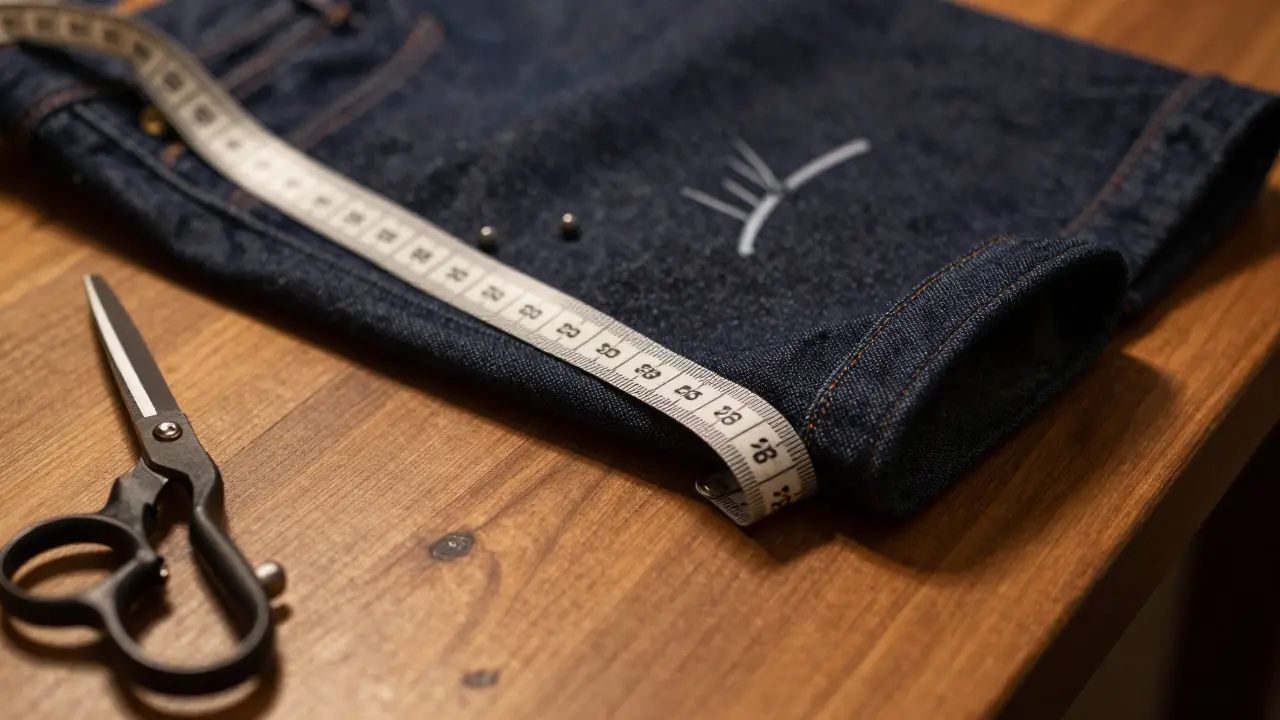
If there’s one thing that separates ‘off-the-rack’ from ‘custom-fit,’ it’s tailoring. Most ready-to-wear clothing is designed for an average body. Unless you happen to be that average, your clothes probably hang wrong somewhere. Shoulders droop. Pants pool at the ankles. Jackets gap at the waist. Fixing these issues doesn’t require a designer label. It requires a tailor.
A simple hem on your trousers can transform how you walk. When pants hit the shoe correctly-just a slight break or no break at all-they elongate your legs and make you look taller. Hemming costs between $15 and $30. Compare that to buying a new pair of jeans that fit perfectly off the rack (which rarely happens). Tailoring is the highest ROI investment in your wardrobe.
| Adjustment | Average Cost | Visual Impact | Frequency Needed |
|---|---|---|---|
| Hemming Trousers | $15 - $30 | High (Elongates legs) | Once per garment |
| Taking In Waist | $20 - $40 | High (Improves silhouette) | Every few years |
| Shortening Sleeves | $10 - $20 | Medium (Cleaner arm line) | Once per garment |
| Replacing Buttons | $5 - $15 | Low-Medium (Polished detail) | As needed |
Don’t ignore jackets either. If the shoulders fit but the body is loose, a tailor can take it in at the sides. Suddenly, a boxy blazer looks tailored and modern. This is especially true for outerwear. A well-fitted coat makes everything underneath look better by comparison.
Color Coordination Without Rules
Color theory sounds intimidating, but you don’t need a degree in art to use it effectively. The goal isn’t to match perfectly. It’s to create harmony. One easy trick is the “rule of three.” Limit your outfit to three main colors. If you’re wearing navy pants, a grey sweater, and brown shoes, you’re good. Add a red scarf and a green belt, and it starts to look chaotic.
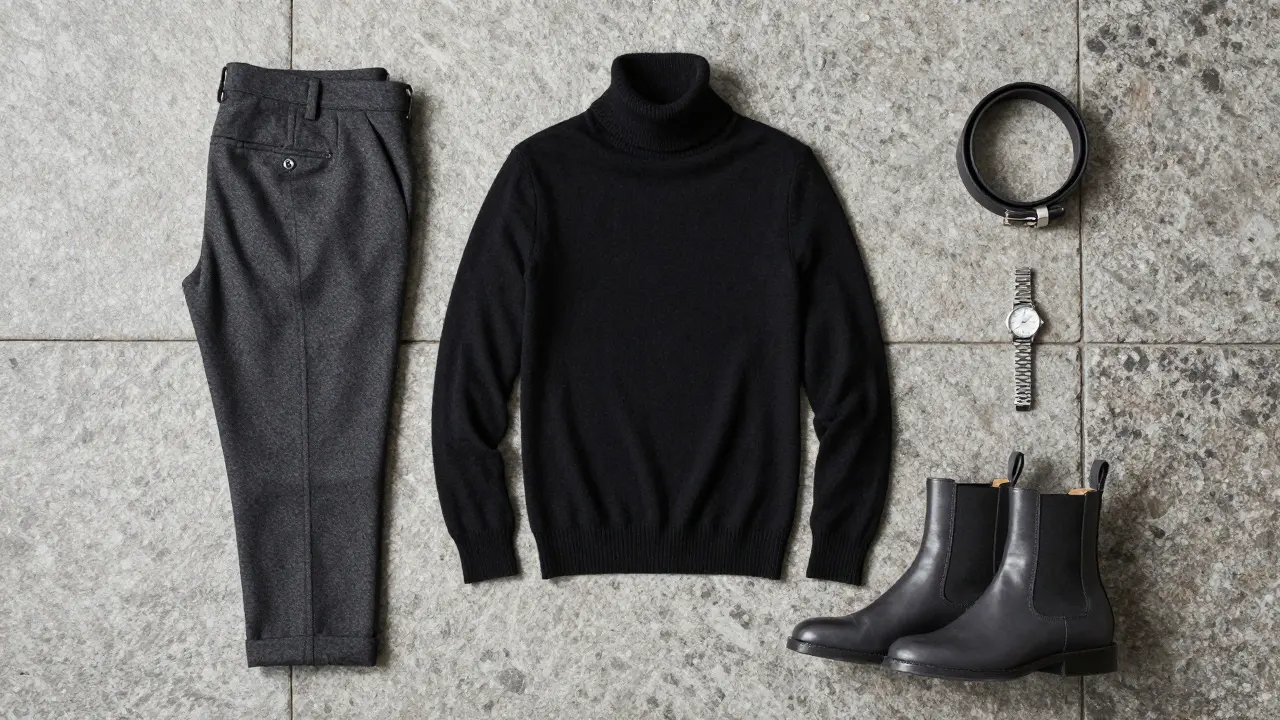
Another powerful micro-upgrade is monochromatic dressing. Wearing different shades of the same color creates a long, lean line. Try pairing charcoal trousers with a black turtleneck and dark grey boots. It’s subtle, sophisticated, and hard to mess up. This works particularly well in professional settings where you want to look put-together without trying too hard.
Also, consider your skin tone. Not every color flatters everyone. If you look washed out in pastels, switch to jewel tones. If bright whites make you look tired, try off-white or cream. Pay attention to how others react when you wear certain colors. Compliments are data. Use them.
Footwear: The Foundation of Fit
Your shoes anchor your entire outfit. A crisp suit falls flat if worn with scuffed sneakers. A casual denim look gets elevated by clean leather boots. Footwear is often the first thing people notice because it’s grounded in reality-it’s what touches the ground.
Cleanliness matters more than brand name. A pair of white sneakers that are actually white looks better than a muddy luxury pair. Keep a brush and some mild soap handy. Brush off dirt after every wear. For leather, apply conditioner every few months. Neglected shoes signal neglect everywhere else.
Versatility is key. Invest in shoes that work across multiple contexts. A minimalist leather sneaker goes with jeans, chinos, and even casual slacks. A sturdy boot pairs with shorts in summer and wool trousers in winter. By choosing versatile footwear, you reduce decision fatigue and increase mix-and-match possibilities.
- Minimalist Sneakers: White or black leather, low profile, no loud logos.
- Chelsea Boots: Suede or leather, elastic side panels, pull-on design.
- Loafers: Slip-on, leather sole, works with socks or bare ankles.
Rotate your shoes. Don’t wear the same pair two days in a row. Leather needs time to dry out and recover its shape. Rotating extends the life of your footwear and keeps them looking newer for longer.
Accessories: The Final Touch
Accessories are the punctuation marks of your outfit. They tell the reader where the sentence ends and adds emphasis. A watch, a belt, a scarf, sunglasses-these items don’t cover much skin, but they carry significant visual weight.
Match your metals. If you wear a silver watch, choose a silver ring. Mixing gold and silver can work, but it requires confidence and balance. For beginners, sticking to one metal family reduces clutter. Same with belts and buckles. A brown belt should go with brown shoes. A black belt with black shoes. It’s a classic rule for a reason: it creates continuity.
Sunglasses are another high-impact accessory. They hide tired eyes and frame your face. Choose a shape that contrasts with your face shape. Round faces benefit from angular frames. Square faces look great with round ones. It’s not magic; it’s geometry.
A silk pocket square in a blazer breast pocket adds texture and color without overwhelming the look. Fold it simply-a straight fold or a puff fold. Avoid over-styling. The goal is interest, not distraction.
Maintaining Your Micro-Upgrade Strategy
Style isn’t a one-time project. It’s a practice. To keep your wardrobe sharp, adopt a regular maintenance routine. Inspect your clothes weekly. Look for loose threads, missing buttons, or fading colors. Fix small problems before they become big ones.
Declutter ruthlessly. If you haven’t worn something in six months, donate it. Clutter dilutes your style. When every piece in your closet is something you love and wear, getting dressed becomes easier. This aligns with the concept of a capsule wardrobe, which is a limited collection of interchangeable clothing items that maximize versatility and minimize waste. You don’t need 50 shirts. You need five great ones.
Finally, observe others. Notice what works for people whose style you admire. Are their jackets cropped? Do they always wear rolled sleeves? Steal their ideas, then adapt them to your body and lifestyle. Style is personal, but inspiration is universal.
What exactly is a micro-upgrade in fashion?
A micro-upgrade is a small, strategic change to your existing wardrobe or styling habits that significantly improves your appearance. Examples include tailoring pants for a better fit, swapping a cheap belt for a quality leather one, or learning to tuck your shirt properly. It focuses on optimization rather than acquisition.
How much does tailoring really cost?
Basic alterations like hemming trousers usually cost between $15 and $30. Taking in the waist of pants or a jacket ranges from $20 to $40. More complex work, like restructuring shoulders, can exceed $100. However, for most everyday items, simple hems and tucks provide the biggest visual boost for the lowest price.
Can I achieve a polished look without buying new clothes?
Absolutely. Many micro-upgrades involve re-styling what you already own. Rolling sleeves, tucking shirts differently, accessorizing with a watch or scarf, and ensuring your shoes are clean can transform an outfit. Often, the issue isn't a lack of clothes, but a lack of intentionality in how they're worn.
Why is footwear so important in styling?
Shoes ground your outfit and set the tone for formality. Scuffed or dirty shoes undermine an otherwise nice look. Conversely, clean, well-maintained shoes can elevate casual clothing. They are also the most visible part of your ensemble when walking, making them a critical detail for first impressions.
How do I know if my clothes fit correctly?
Check for gaps at the jacket shoulders, excess fabric bunching at the waist, or pants pooling around the ankles. Shirts should button comfortably without pulling. If you find yourself constantly adjusting your clothes throughout the day, they likely don't fit right. A quick visit to a tailor can solve most of these issues.