

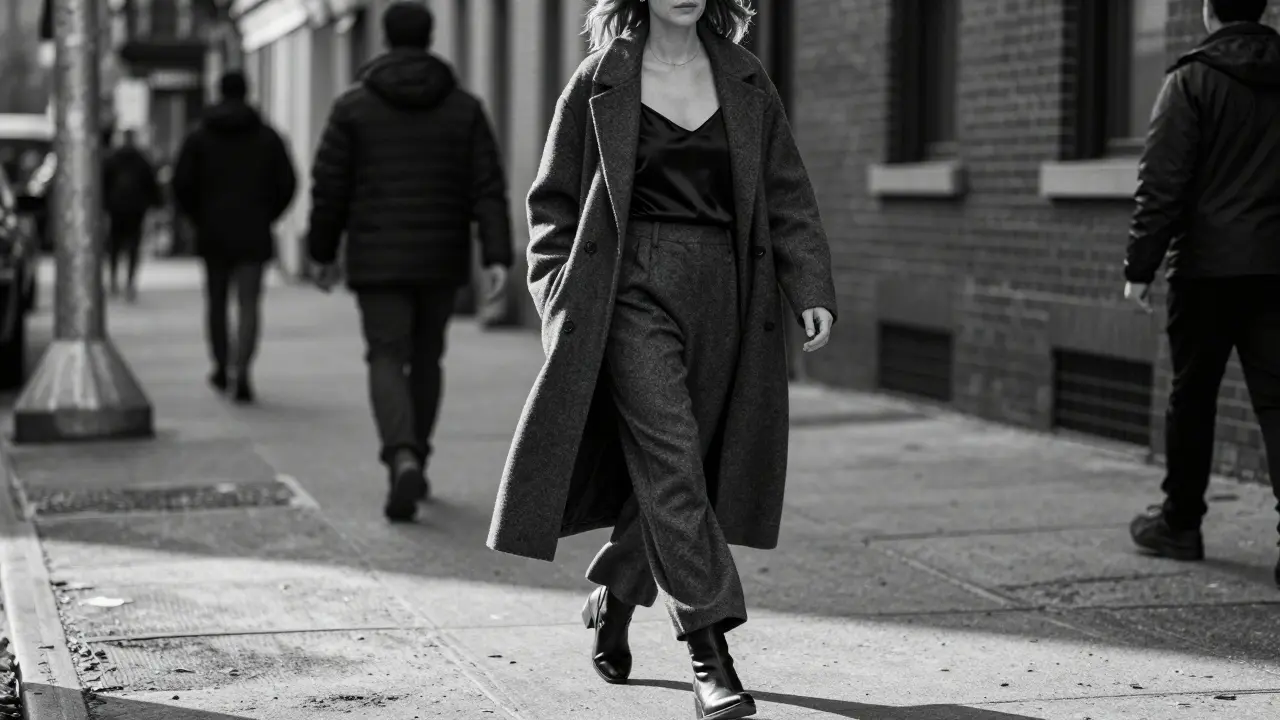
Wearing all black doesn’t make you monochrome. Wearing all beige doesn’t either. True monochrome style isn’t just about one color-it’s about monochrome style as a deliberate design choice that uses texture, proportion, and depth to turn simplicity into power. Think of it like a black-and-white photograph: no color, but every shadow, line, and surface tells a story. In fashion, that story is confidence, control, and quiet intensity.
Why Monochrome Works Better Than You Think
Most people assume monochrome outfits look flat. They picture a gray sweater and gray pants and wonder, "How is that interesting?" But look at someone walking down a New York street in a charcoal wool coat, a cashmere turtleneck, and structured leather pants-all the same tone, but each piece plays with different surfaces. One catches the light. One absorbs it. One drapes. One holds its shape. That’s not boring. That’s precision.
Monochrome styling reduces visual noise. Your brain doesn’t have to process clashing patterns or competing hues. Instead, it focuses on form. The way fabric moves. The cut of a hem. The curve of a shoulder. That’s why professionals in high-impact fields-architects, editors, creative directors-often wear single-color outfits. It’s not a trend. It’s a tool.
Texture Is Your Secret Weapon
If you’re wearing one color, texture becomes your only way to create dimension. Without it, you look like a mannequin. With it, you look like someone who thought deeply about what they put on.
Here’s how to layer texture in monochrome:
- Wool over silk-try a thick wool blazer over a satin slip dress in the same shade.
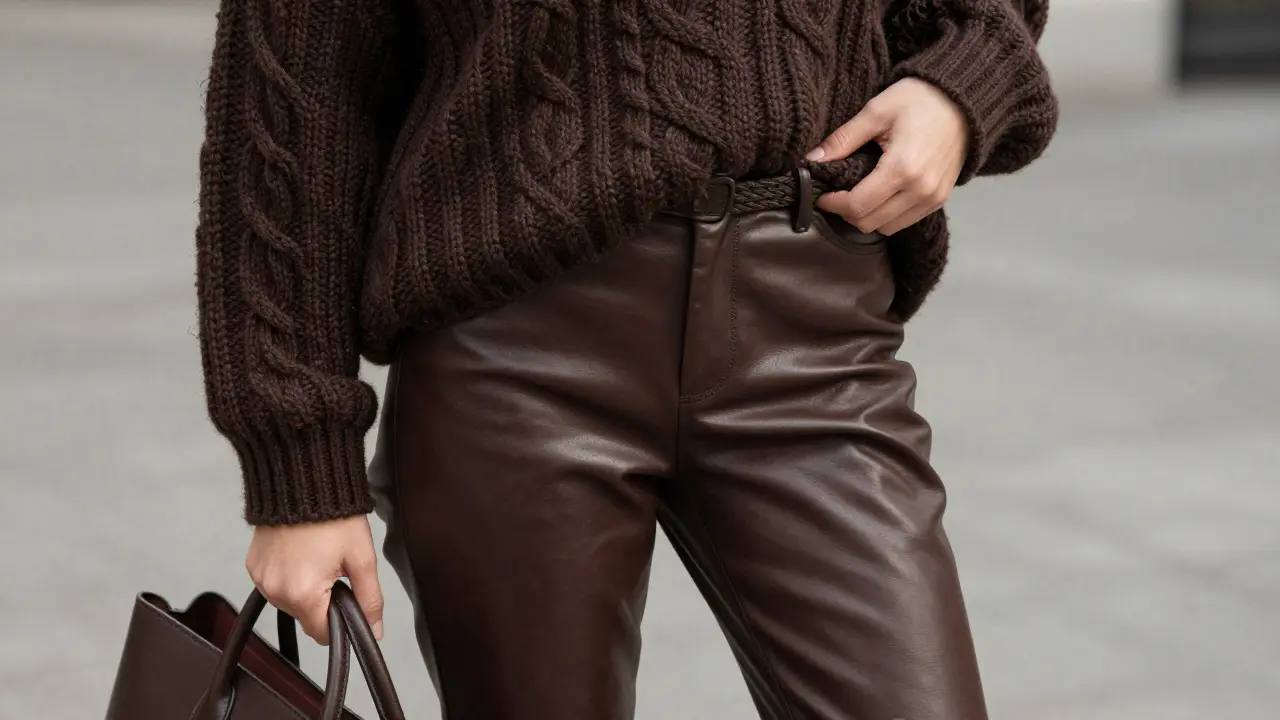
- Leather against knit-structured leather boots with a chunky cable-knit sweater in deep brown.
- Matte against glossy-matte cotton trousers with a patent leather belt and shoes.
- Structured against fluid-tailored wool trousers with a flowing silk blouse that pools slightly at the waist.
These contrasts aren’t random. They’re intentional. A textured outfit tells your brain, "This isn’t just clothing. This is craftsmanship." Even in a neutral palette, texture adds rhythm. It gives movement. It makes people pause-not because of color, but because of how something feels.
Proportion Changes Everything
Color ties you to a mood. Proportion defines your silhouette-and in monochrome, silhouette is everything.
When you strip away color, your body’s shape becomes the focal point. That means oversized pieces can look powerful, not sloppy. A long, boxy coat over a slim-fitting dress? That’s drama. A cropped top with wide-leg pants? That’s balance. A fitted turtleneck under a voluminous skirt? That’s contrast without clutter.
Try this rule: One oversized piece. One fitted piece. The rest balanced.
For example:
- Wide-leg linen trousers + fitted cotton turtleneck + structured tote bag
- Oversized knit cardigan + high-waisted tailored shorts + ankle boots
- Longline blazer + bodycon dress + chunky loafers
You’re not just wearing clothes. You’re sculpting space around your body. Monochrome lets you do that without distraction.
Choosing Your Shade Matters More Than You Realize
Not all neutrals are created equal. Black isn’t just black. It’s charcoal, jet, onyx, or midnight. Beige isn’t just beige. It’s oat, camel, taupe, or sand. The undertone changes how the outfit reads.
Here’s how to pick the right shade for your vibe:
- Deep tones (charcoal, navy, black): Authority. Power. Edge. Perfect for meetings, galleries, or nights out.
- Mid tones (taupe, olive, gray): Calm. Sophistication. Effortless. Ideal for workdays or casual weekends.
- Light tones (cream, oat, pale beige): Softness. Airiness. Minimalist elegance. Best for spring, light fabrics, or when you want to look approachable.
Don’t just pick "neutral." Pick a shade that matches the energy you want to project. A navy suit in a matte fabric reads differently than a navy coat with a metallic thread woven in. One says "serious." The other says "thoughtful."
Common Mistakes (And How to Fix Them)
Monochrome is simple, but not easy. Here’s what goes wrong-and how to fix it:
- Mistake: Everything is the same texture. Fix: Mix at least two textures. Smooth + rough. Hard + soft. Matte + shine.
- Mistake: All pieces are the same length. Fix: Play with vertical lines. A long coat over a short top creates rhythm. A cropped jacket over long pants adds balance.
- Mistake: No accessories break the monotony. Fix: A single metallic belt, a leather bag, or even a watch with a different finish adds depth without color.
- Mistake: Wearing it in the wrong lighting. Fix: Test your outfit in natural light. Some fabrics look flat indoors but glow in sunlight.
Real-World Examples
Look at how people who live in monochrome style actually dress:
- Art curator in Brooklyn: Charcoal wool coat, black silk camisole, wide-leg wool trousers, matte black ankle boots. No jewelry. Just a single black leather crossbody bag.
- Freelance designer in Queens: Cream linen shirt, oat-colored tailored shorts, cream canvas sneakers, a thin woven belt. Looks relaxed, but every piece has weight and structure.
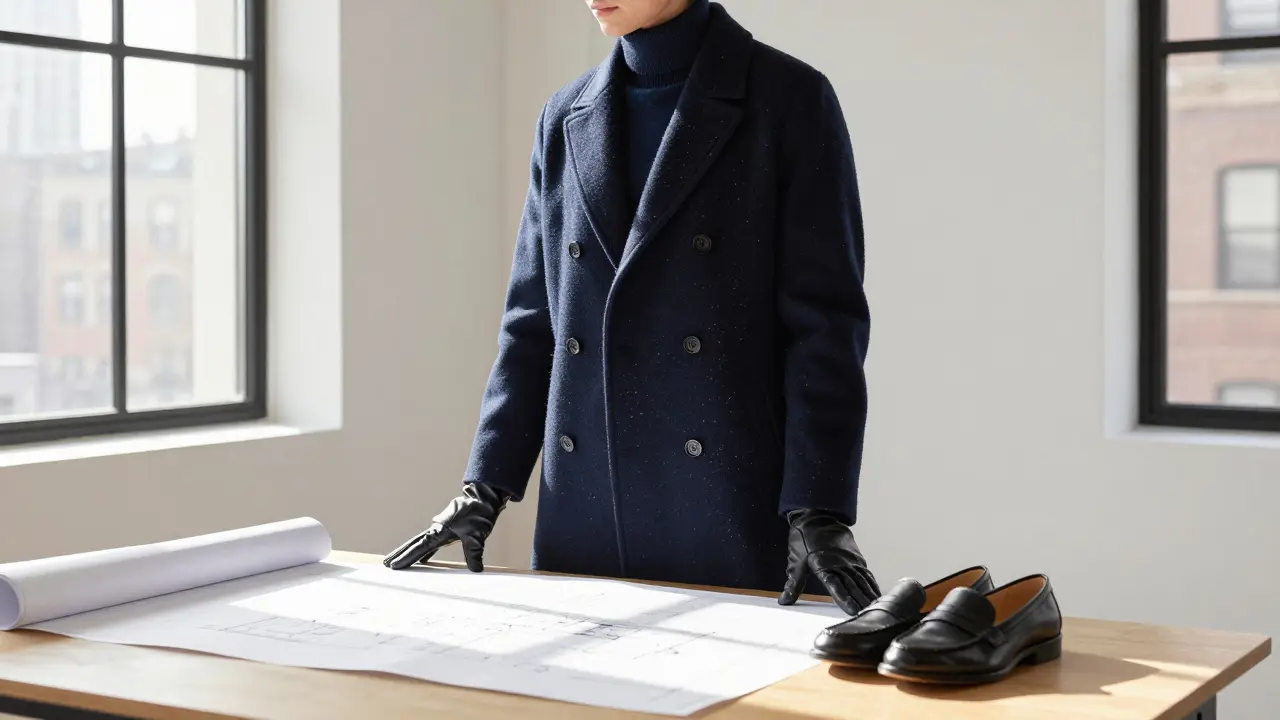
- Architect in Midtown: Navy double-breasted coat, navy turtleneck, black leather gloves, black loafers. No contrast. Just precision.
Notice something? No logos. No patterns. No bright accessories. Just texture, proportion, and intention.
How to Build Your Monochrome Capsule
You don’t need a whole new wardrobe. Start with three key pieces in one shade:
- A structured outer layer (coat, blazer, or jacket)
- A fitted or flowing mid-layer (top, dress, or turtleneck)
- A bottom that contrasts in shape (wide-leg, cropped, or tailored)
Add two accessories: one in leather, one in metal. That’s it. You now have 10+ outfits from three core pieces. Rotate textures. Swap footwear. Change the belt. The color stays the same. The impact changes.
Try this: Pick one shade you love. Wear it for a week. Notice how people react. Notice how you feel. You’ll start seeing texture and proportion everywhere.
Monochrome Isn’t About Being Minimalist. It’s About Being Intentional.
It’s not about having less. It’s about having more control. Every fold, every seam, every surface matters. When you strip away color, you’re left with form-and form is where real style lives.
You don’t need to wear all black to pull this off. You just need to stop thinking of monochrome as "safe." It’s the boldest choice you can make when you know how to use it.
Can monochrome style work for all body types?
Absolutely. Monochrome doesn’t hide your shape-it highlights it. The key is proportion. If you have a fuller lower half, pair a fitted top with wide-leg pants. If you’re petite, try a long coat that hits below the hip to elongate your frame. Monochrome lets you control how your body reads in space. It’s not about fitting into a mold-it’s about shaping the silhouette you want.
Is monochrome only for black and neutrals?
No. Monochrome means one color, not one shade. A deep emerald dress with emerald velvet blazer and emerald loafers is monochrome. A rust-orange sweater with rust-toned trousers and boots works too. The trick is matching the undertone. If your green has yellow in it, make sure everything else has the same warmth. That’s where texture and proportion become your allies.
How do I avoid looking like I’m wearing pajamas?
Texture and structure. If everything is soft, stretchy, and loose, you’ll look casual-even if it’s expensive. Pair a knitted top with structured pants. Add a belt. Choose shoes with definition. Even a simple leather belt in the same color can pull the whole look together. Monochrome isn’t about comfort alone-it’s about intention.
Can I wear monochrome in warm weather?
Yes, and it’s perfect for summer. Think linen in cream, silk in pale gray, cotton voile in oat. Light fabrics naturally create contrast through movement and drape. Pair a loose linen shirt with tailored shorts in the same tone. Add a woven belt. You’ll look cool, put-together, and effortlessly stylish-without a single bright color.
What’s the easiest way to start experimenting with monochrome?
Start with shoes. Pick one pair of shoes in a neutral tone-black, camel, or gray-and build your outfit around them. Wear them with pants, a top, and a jacket all in the same family. You don’t need to match perfectly. Just stay in the same tone range. Once you feel comfortable, add texture. That’s how most people who master monochrome begin: one shoe, then one outfit, then one new confidence.


Write a comment