

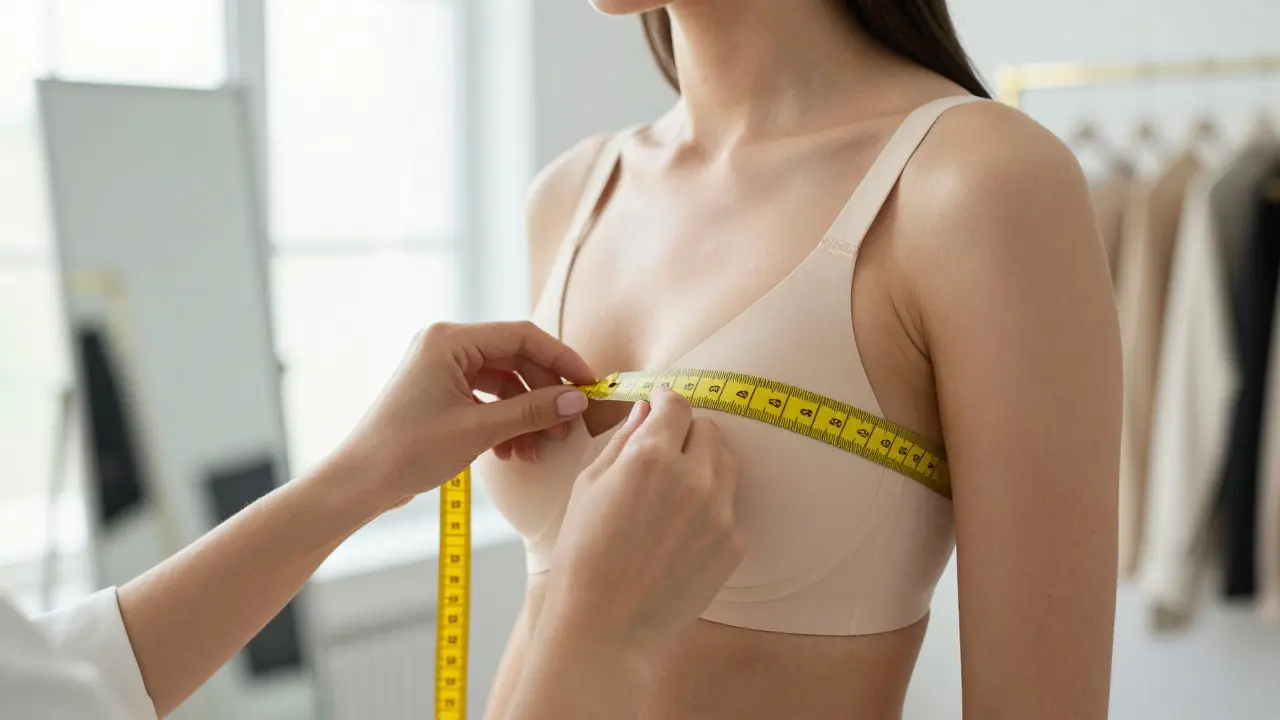
Have you ever bought a beautiful top, only to feel like it was fighting against your body? Maybe the neckline gaped open in an awkward way, or perhaps it sat so high that it felt suffocating. This isn’t just about size; it’s about geometry. Specifically, it is about the relationship between neckline depth and the vertical distance from the base of the neck to the bust point. Most fashion advice tells you to pick styles based on your "body shape"-hourglass, pear, apple-but that misses a crucial mechanical detail. Your bust proportion dictates how fabric behaves around your chest, and ignoring this leads to fits that look expensive but feel wrong.
Finding the sweet spot for comfortable, flattering outfits requires looking past trends and understanding the physical structure of your torso. When the neckline depth aligns with your bust projection and height, clothes drape correctly. They don’t pull, gap, or ride up. This guide breaks down how to measure these proportions, which necklines work for specific bust types, and how to adjust off-the-rack items to get that custom-fit look without spending a fortune on alterations.
Understanding the Mechanics of Fit
To fix the fit, we first need to understand why things go wrong. The primary culprit is often the mismatch between the garment's design and your individual anatomy. In pattern making, there is a concept called "bust apex" or BP. This is the highest point of your breast tissue. The distance from your shoulder seam to this point determines how much fabric is needed to cover that area smoothly.
If a neckline is too deep relative to your bust height, gravity pulls the fabric down, creating diagonal wrinkles from the armpit to the center of the chest. If the neckline is too high or tight, it acts like a strap, pulling the entire garment upward. This causes the waistband to ride up and exposes the midriff, even if the pants are the correct length. It creates a constant state of adjustment, where you are tugging at your shirt every ten minutes.
Bust proportion refers not just to cup size, but to the ratio of bust width to torso height. A person with a large bust but a short torso has different fitting challenges than someone with the same cup size but a longer torso. Understanding this distinction is the key to unlocking better style choices.
Measuring Your Specific Proportions
You cannot guess this accurately by looking in the mirror. You need hard data. Grab a soft measuring tape and a friend to help, as self-measuring can lead to errors due to arm positioning.
- High Bust Measurement: Wrap the tape around your ribcage, directly under your armpits and above your breasts. This measures your frame size, independent of your breast tissue.
- Full Bust Measurement: Measure around the fullest part of your bust, keeping the tape parallel to the floor. Do not squeeze the tape; let it rest gently on the skin.
- Bust Point Distance: Stand straight. Have your friend measure from the center of your collarbone (where the neck meets the shoulder) down to the nipple/bust apex. Do this for both sides, as asymmetry is common.
- Torso Length: Measure from the base of your neck (C7 vertebra, the bony bump at the back of your neck when you tilt your head forward) down to your natural waistline.
Compare your High Bust measurement to your Full Bust measurement. The difference tells you your cup volume. More importantly, look at your Bust Point Distance. If this number is shorter than average (typically under 8-9 inches for many standard patterns), you likely have a higher-set bust. If it is longer, your bust sits lower. This single metric will dictate which necklines serve you best.
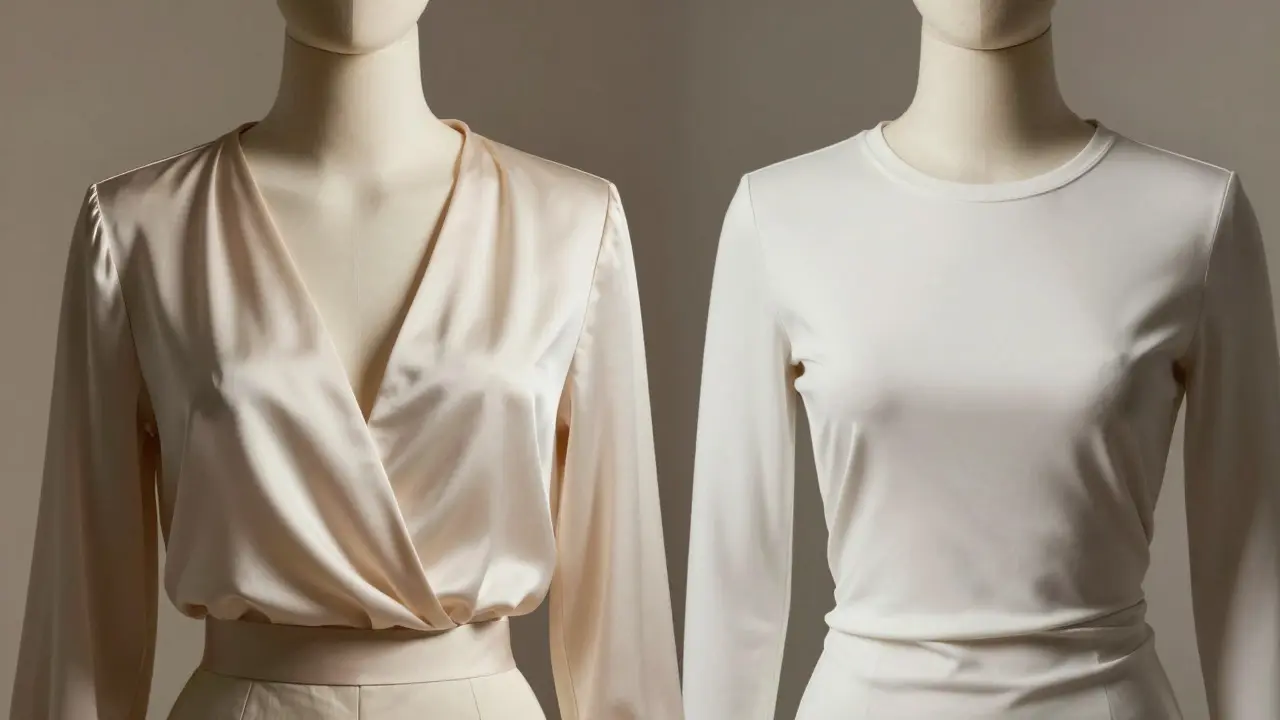
The Sweet Spot: Matching Necklines to Anatomy
Not all necklines are created equal. Some are designed to elongate, some to widen, and others to anchor. Here is how to match them to your measurements.
| Bust/Torso Profile | Ideal Neckline Depth | Recommended Styles | Styles to Avoid |
|---|---|---|---|
| Short Torso / High Bust | Deeper V-necks | V-neck, Scoop neck, Plunging | Crew neck, Turtleneck, Boat neck |
| Long Torso / Low Bust | Higher, structured lines | Crew neck, Square neck, Halter | Deep plunges without support |
| Large Bust / Wide Frame | Moderate depth, wide width | Sweetheart, Square, Wide V | Narrow V-necks, Tight Crews |
| Small Bust / Narrow Frame | Shallow to Moderate | Boat neck, Off-shoulder, Ruffles | Very deep plunges (can look disproportionate) |
If you have a short torso and high bust, your enemy is horizontal lines across the chest. A crew neck cuts your upper body in half, making your torso look even shorter and your bust appear heavier. Instead, opt for V-necks. The vertical line draws the eye downward, creating the illusion of length. The deeper the V, the more it counteracts the compactness of your upper body.
For those with a long torso and low bust, the challenge is preventing clothes from looking like they are swallowing you. Deep necklines can sometimes make a long neck and torso look endless. Here, a square neck or a well-fitted crew neck adds visual weight to the upper chest, breaking up the vertical expanse. Structured fabrics hold their shape better here, providing definition where soft knits might droop.
V-neck shirts are garments with a neckline shaped like the letter V, which visually elongates the neck and torso. However, the width matters. A narrow V can cut into the cleavage of a larger bust, causing gaping. A wider V distributes the tension across the shoulders, offering a cleaner line.
Fabric Behavior and Structural Integrity
Even the perfect neckline will fail if the fabric lacks the right properties. Fabric has two main characteristics that affect fit: drape and recovery. Drape is how fluidly the fabric falls. Recovery is its ability to return to its original shape after being stretched.
If you have a larger bust, you need fabrics with good recovery. Thin cotton jersey or lightweight silk may stretch out over time, leading to permanent bagginess around the arms and neckline. Look for blends with elastane (spandex) or heavier weights like ponte knit or wool blends. These materials hug the curves without distorting.
Conversely, if you have a smaller bust, stiff fabrics can add unwanted bulk. Flowy materials like chiffon, rayon, or thin viscose create movement and volume, adding dimension to a flatter silhouette. However, be wary of very sheer fabrics; they require careful layering to maintain modesty while achieving the desired aesthetic.
Elastane is a synthetic fiber known for its exceptional elasticity, often blended with other fibers to provide stretch and recovery. A blend containing 2-5% elastane is usually sufficient for tops to maintain their shape through wear and washing.
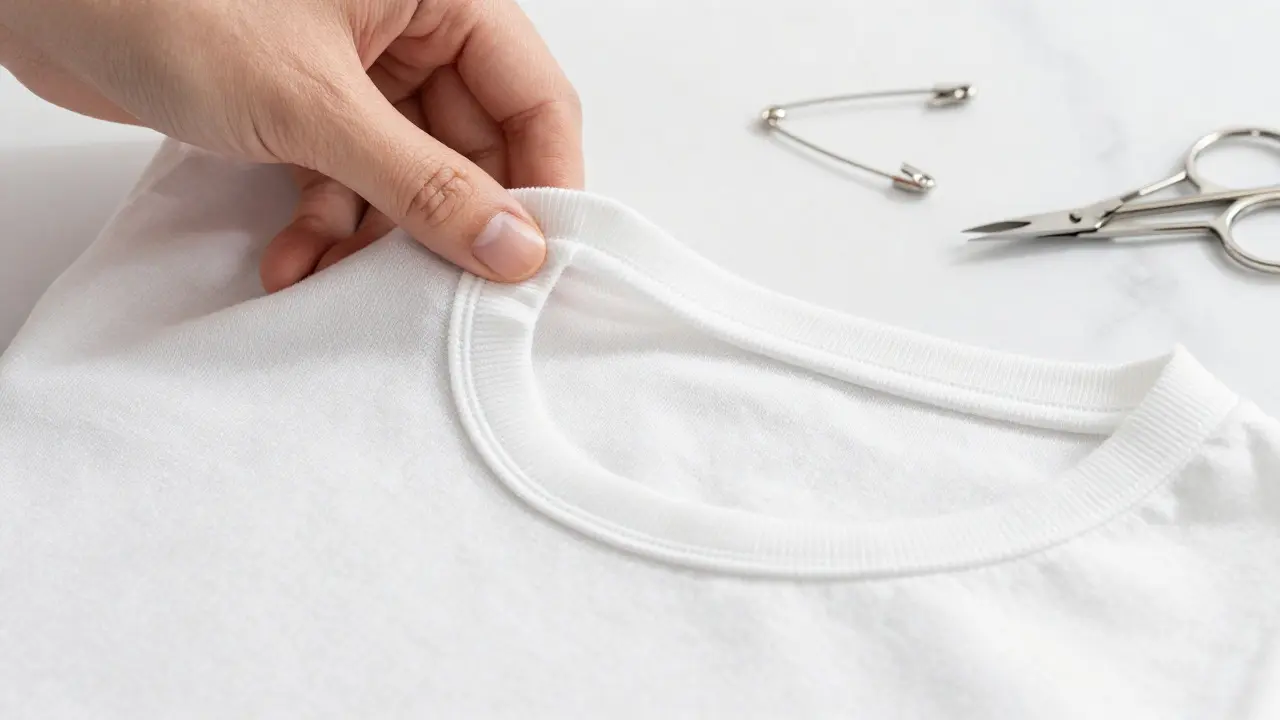
Practical Hacks for Off-the-Rack Success
Fashion brands rarely cater to specific bust-to-torso ratios. They use standard blocks that assume an average proportion. This means you will almost always need to tweak what you buy. Here are three simple fixes that cost little but make a huge difference.
- The Safety Pin Trick: If a V-neck gaps at the center, take a small safety pin and pinch the excess fabric on the inside, just below the bust line. This pulls the neckline closer together without altering the outside appearance. For a more permanent fix, a tailor can add a hidden dart.
- Strategic Layering: If a crew neck feels too tight or high, wear a camisole or tank top underneath. Choose a color that matches your skin tone or the shirt to minimize contrast. This adds a layer of fabric that bridges the gap between your skin and the restrictive neckline, increasing comfort.
- Button Adjustment: On button-down shirts, skip the top button or two. This effectively turns a restrictive mandarin collar into a flattering V-neck. Conversely, if a shirt is too loose, buttoning one extra button near the top can tighten the neckline slightly.
Another pro tip involves the bra. The foundation of any outfit is the bra. If your bra band is too loose, the whole top shifts. Ensure your bra band is snug and level around your body. For deep V-necks, consider a plunge bra or adhesive cups to prevent the bra line from showing and to keep the fabric smooth against the skin.
Common Mistakes to Avoid
One major error is chasing trends blindly. If "high necks" are trending but you have a short torso, wearing them will compress your silhouette. It’s okay to ignore trends that fight your anatomy. Style is personal, not prescriptive.
Another mistake is assuming that "one size fits all" applies to necklines. A size Medium in one brand might have a deeper neckline than a Medium in another. Always check the product details for "neckline depth" if available, or look at customer photos. Real people show you how the garment hangs on various body types, not just the model who was likely styled specifically for that shoot.
Finally, don’t neglect the shoulder seam. The shoulder seam should hit right at the edge of your shoulder bone. If it drops down your arm, the neckline will sag. If it sits too far inward, it will restrict movement and pull the neckline up. Correct shoulder placement ensures the neckline stays in its intended position.
How do I stop my V-neck from gaping?
Gapping occurs when the neckline is too wide for your bust projection. To fix this, you can use a small safety pin on the inside to gather excess fabric, or visit a tailor to insert a small dart. Wearing a camisole underneath can also fill the space and prevent the gap from showing.
What is the best neckline for a short torso?
For a short torso, deep V-necks and scoop necks are ideal. They create a vertical line that elongates the upper body, counteracting the compact appearance. Avoid high necklines like turtlenecks or tight crew necks, which can make the torso look even shorter.
Why does my shirt ride up when I move?
This is usually caused by a neckline that is too tight or high, pulling the fabric upward. It can also happen if the shirt is too short in the torso. Try loosening the neckline, wearing a longer undershirt, or choosing tops with a bit more length and stretch.
Does fabric type really affect neckline fit?
Yes, significantly. Fabrics with low recovery, like thin cotton or silk, will stretch out and lose their shape, leading to gaping or sagging. Fabrics with elastane or heavier weights like ponte knit maintain their structure better, ensuring the neckline stays in place throughout the day.
How should I measure my bust for clothing purposes?
Measure your full bust at the fullest point with a soft tape measure, keeping it parallel to the floor. Also measure your high bust under the arms. The difference helps determine cup volume, while the distance from your collarbone to your bust point helps determine appropriate neckline depth.