


Ever opened your closet and felt like you have nothing to wear-even though it’s full? You’re not alone. Most people own way more clothes than they actually use. The fix isn’t buying more. It’s cutting back. That’s where the one-in-one-out rule comes in. It’s not a trend. It’s a system. And if you’re building a capsule wardrobe, it’s the only way to keep it working long-term.
Why Your Closet Feels Crowded (Even When It’s Not)
It’s not about how many hangers you have. It’s about how many things you actually wear. A 2023 study by the Fashion Revolution found that the average person wears just 20% of their clothes 80% of the time. The rest? Forgotten in the back, hanging limp, or stuffed in a drawer because they don’t match anything else.
A capsule wardrobe solves this by design. It’s usually 30-40 pieces-including tops, bottoms, layers, and shoes-that work together. Everything fits. Everything coordinates. Everything gets worn. But here’s the catch: it only stays that way if you control what comes in.
What the One-In-One-Out Rule Actually Means
The rule is simple: every time you buy something new, you remove something old. No exceptions. Not ‘if it’s on sale.’ Not ‘if it’s just one thing.’ Not ‘I’ll donate it later.’
It’s not about punishment. It’s about balance. Your closet has a limit. If you keep adding without removing, you’re just building a cluttered version of the same problem you started with. The one-in-one-out rule forces you to make a choice: does this new thing deserve a spot more than something already there?
Think of it like a bank account. You can’t deposit without withdrawing. Your wardrobe’s capacity is fixed. You’re not expanding it-you’re upgrading it.
How to Make It Work (Without Losing Your Mind)
Here’s how to actually stick to this rule, step by step:
- Start with your current capsule. Take everything out. Lay it on the floor. Keep only what you’ve worn in the last 6 months. If you haven’t worn it, it’s not part of your capsule. Donate, sell, or recycle it.
- Define your limits. Decide your ideal number. Most people land between 30-40 items. That includes all clothing and shoes. Accessories like scarves and belts can be extra.
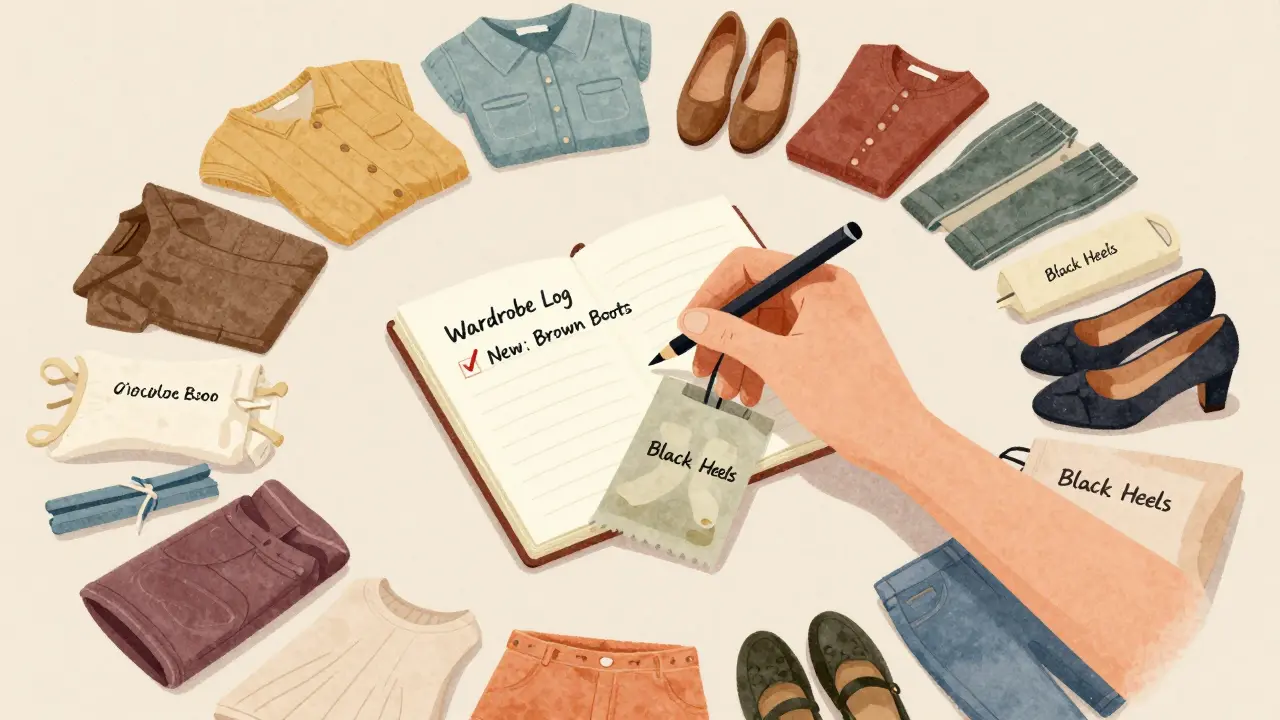
- Track every purchase. Keep a simple list. Phone notes work. A spreadsheet works. Write down the item and the date you bought it.
- Remove before you add. The second you buy something new, pick one thing to go. Don’t wait. Don’t think about it. Pick the item you haven’t worn in the longest time. Or the one you always feel meh about when you put it on.
- Don’t let ‘maybe’ stay. If you’re unsure about an item, give it 30 days. If you haven’t worn it in that time, it’s out. No second chances.
This isn’t about being perfect. It’s about being consistent. Miss a week? Just get back on track the next time you shop.
What to Remove First (And What to Keep)
Not all items are equal. Here’s what to look for when deciding what to let go:
- Remove: Items that don’t fit (even if you plan to lose weight), things you bought because they were ‘on sale,’ clothes that need serious repairs, pieces that clash with your core colors, and anything you’ve worn less than twice in the last year.
- Keep: Items you feel confident in, that fit well, that can be mixed and matched at least 3 ways, and that suit your daily life-whether that’s commuting, working from home, or running errands.
Color matters. Stick to 3-5 base colors (black, white, navy, beige, gray) and 1-2 accent colors. That’s how you get 30+ outfits from 35 pieces.
Real-Life Examples: What This Looks Like
Take Sarah, a graphic designer in Portland. Her capsule has 34 items: 8 tops, 6 bottoms, 4 outerwear, 5 dresses, 6 shoes, and 5 accessories. She bought a new pair of brown ankle boots last month. So she donated a pair of black heels she hadn’t worn since last winter. The boots go with 7 of her pants, 5 of her tops, and her favorite wool coat. The heels? They only went with two outfits-and she never wore them to work.
Or James, who works in logistics. He kept 28 items: 5 tees, 4 button-downs, 3 sweaters, 4 chinos, 2 jeans, 2 jackets, 5 sneakers, and 3 accessories. He added a new olive utility jacket. He let go of a bulky navy parka that made him look like he was going to the Arctic instead of the grocery store.
Both of them save time getting dressed. Both of them feel less stressed about shopping. And both of them stopped buying things they didn’t need.
Common Mistakes (And How to Avoid Them)
People try the one-in-one-out rule and fail. Here’s why:
- They wait to remove. ‘I’ll get rid of it after the holidays.’ No. Do it the same day you buy.
- They keep ‘just in case’ items. ‘What if I gain weight?’ ‘What if I go to a wedding?’ If you haven’t worn it in a year, you won’t wear it next year.
- They use it as an excuse to buy more. ‘I can buy this new sweater because I’ll get rid of that old one.’ That’s not a capsule. That’s a revolving door.
- They don’t track. If you don’t write it down, you forget. And then you’re back to square one.
Set a reminder on your phone: ‘Check wardrobe every Sunday.’ Spend 5 minutes. Ask: Did I buy anything this week? If yes, what went out?
Why This Works Better Than Decluttering Once
Most people do a big spring cleaning. They get rid of 20 items. They feel amazing. Then they buy 15 new ones. Two months later? Back to chaos.
The one-in-one-out rule isn’t a one-time fix. It’s a habit. It turns your wardrobe into a living system. You’re not trying to keep everything. You’re trying to keep the right things.
Over time, your taste gets sharper. You stop buying things that don’t fit your life. You start noticing quality over quantity. You stop seeing clothes as a way to chase trends-and start seeing them as tools for your daily life.

What Happens After 6 Months?
After six months of sticking to the rule, you’ll notice a few things:
- You spend less time deciding what to wear.
- You feel more confident in what you put on.
- You stop comparing your closet to others’.
- You notice how much less you spend on clothes.
- You start feeling proud of what you own-not how much you own.
That’s the real win. Not a smaller closet. A calmer mind.
What If You Need to Expand?
Seasons change. Life changes. Maybe you start a new job. Maybe you move to a colder city. Maybe you just want to try a new style.
That’s fine. The rule still applies. If you add a heavy winter coat, you remove a light jacket you never wear. If you add a pair of dress shoes for work, you remove a pair of sandals you haven’t worn since last summer.
Your capsule isn’t frozen. It’s flexible. But it’s still limited. That’s what makes it work.
Final Thought: Less Is More, But Only If You Mean It
A capsule wardrobe isn’t about deprivation. It’s about clarity. It’s about owning only what serves you. The one-in-one-out rule isn’t a restriction. It’s a filter. It stops the noise. It keeps your closet aligned with your life.
Try it for 90 days. Don’t think about it as a challenge. Think of it as a reset. Every time you bring something in, you’re making a promise: this thing matters enough to replace something else. And if you keep that promise, your closet won’t just look better. You’ll feel better too.
Can I use the one-in-one-out rule if I don’t have a capsule wardrobe yet?
Yes. Start by defining your capsule first. Take everything out. Keep only what you wear regularly. Once you’ve narrowed it down to 30-40 items, start applying the rule. You can’t maintain a small wardrobe if you haven’t built one yet.
What if I get a gift? Do I still have to remove something?
Yes. Gifts count. If you don’t love it, donate it. If you like it but don’t need it, trade it or sell it. If you want to keep it, then remove something else. The rule isn’t about punishment-it’s about keeping your space intentional.
How do I know if something is worth keeping?
Ask three questions: Do I wear this at least once a month? Does it fit well and make me feel confident? Does it go with at least three other items in my closet? If you answer yes to all three, keep it. If not, let it go.
Should I donate, sell, or recycle my old clothes?
Donate if the item is in good condition and you want to help others. Sell if it’s high-quality or designer and you want to recoup some money. Recycle if it’s worn out, stained, or damaged. Many brands like H&M and Patagonia have recycling programs. Avoid throwing clothes in the trash.
Does this work for men, women, and non-binary people?
Absolutely. The one-in-one-out rule doesn’t care about gender. It cares about function. Whether you wear suits, dresses, or unisex pieces, the goal is the same: own less, wear more, feel better.


Write a comment