

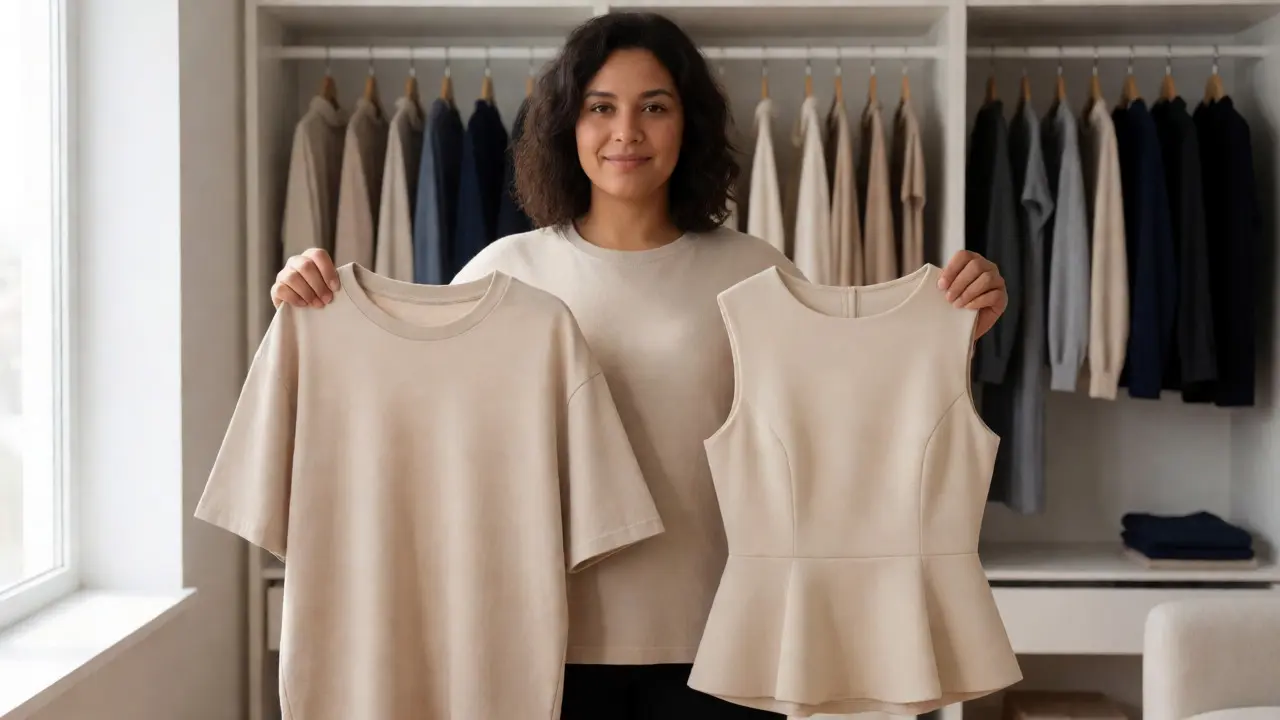
You’ve probably heard the advice a thousand times: "Just wear what makes you feel good." And sure, confidence is key. But let’s be real-sometimes you’re standing in front of your closet, holding two different tops, wondering why one makes you look like you lost ten pounds while the other hides your waist entirely. It’s not magic. It’s geometry. Plus-size styling isn’t about shrinking yourself; it’s about understanding how proportion and silhouette interact with your specific shape to create visual harmony.
If you have a curvy body type, you likely have distinct curves at the bust, hips, or thighs. The goal isn’t to hide these features but to frame them so your outfit looks intentional rather than accidental. This guide breaks down the core mechanics of dressing for curves, moving beyond vague rules into concrete design elements that actually work. We’ll cover how to balance your top and bottom halves, choose silhouettes that respect your shape, and pick fabrics that behave well on a curvier frame.
The Myth of "One Size Fits All" Silhouettes
Most mainstream fashion is designed around a straight or slightly hourglass sample size (usually US 4-6). When you scale those patterns up without adjusting the cut, things get weird. A dress meant to skim a straight torso might balloon over a larger bust or cling tightly to wider hips. This is where silhouette becomes critical. A silhouette is the overall outline of your clothing against your body. For curvy bodies, the most flattering silhouettes usually acknowledge the waist, even if just visually.
Consider the difference between a boxy t-shirt and a fitted peplum top. The boxy tee creates a rectangle from shoulders to hem, often obscuring the waistline and making the midsection appear blockier. The peplum, however, flares out at the hips, creating an artificial curve that mimics natural proportions. This doesn’t mean you must wear tight clothes everywhere. You can wear loose linen pants, but pairing them with a structured blazer that nips in at the waist restores balance. The key takeaway? Don’t fear structure. Structure gives definition; lack of structure often reads as shapeless.
Mastering Visual Proportion
Proportion is the relationship between the sizes of different parts of your outfit. If you’re carrying more weight in your lower half, wearing a bulky sweater and skinny jeans can make your legs look shorter and your torso heavier. Conversely, if you have a larger bust, a high-necked, stiff shirt can add bulk to your upper body. The fix lies in balancing volume.
Here is a simple heuristic used by stylists: Balance volume with volume, or contrast volume with fit.
- Volume on Top, Fitted Bottom: If you’re wearing an oversized blouse or a chunky knit, pair it with tailored trousers or a pencil skirt. This keeps the eye moving vertically and prevents the outfit from looking like a tent.
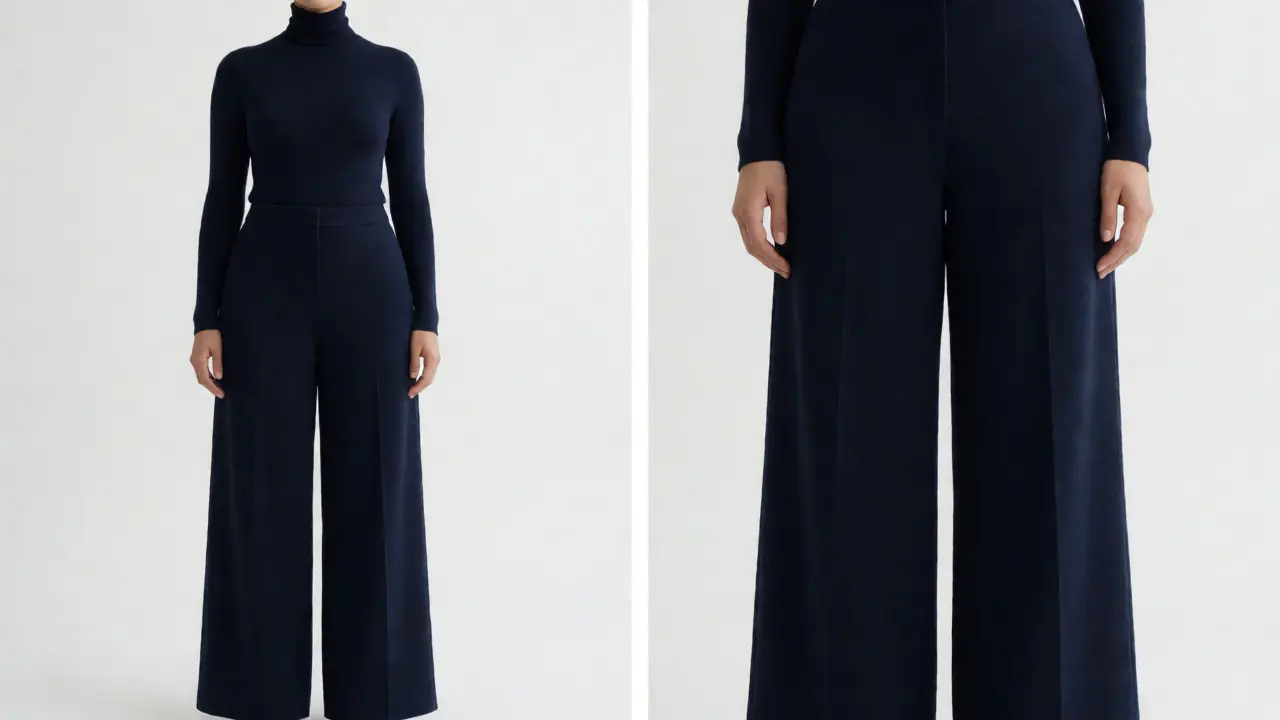
- Fitted Top, Volume on Bottom: A slim-fit turtleneck paired with wide-leg trousers or a full midi skirt creates an elegant, elongated line. This works exceptionally well for pear-shaped bodies because it highlights the narrowest part of the torso while allowing freedom in the hips.
- Monochrome Continuity: Wearing similar colors from head to toe eliminates horizontal breaks, which can chop up your figure. A monochromatic look, perhaps in navy or charcoal, creates a long vertical line that is inherently slimming and sophisticated.
Let’s look at a practical example. Imagine you have a large bust and want to wear a floral print. A busy, small-scale print all over a loose dress can look chaotic. Instead, try a dress with a V-neckline (which opens up the chest area) and a wrap style. The wrap dress is a classic for a reason-it uses fabric tension to define the waist and accommodate bust variance without gaping buttons. This is a perfect application of design elements working *with* your body, not against it.
Design Elements That Actually Work
Certain design details are engineered to flatter curvy frames. Knowing what they are saves hours of trial and error in fitting rooms. Here are three non-negotiables for plus-size wardrobes:
Strategic Seaming
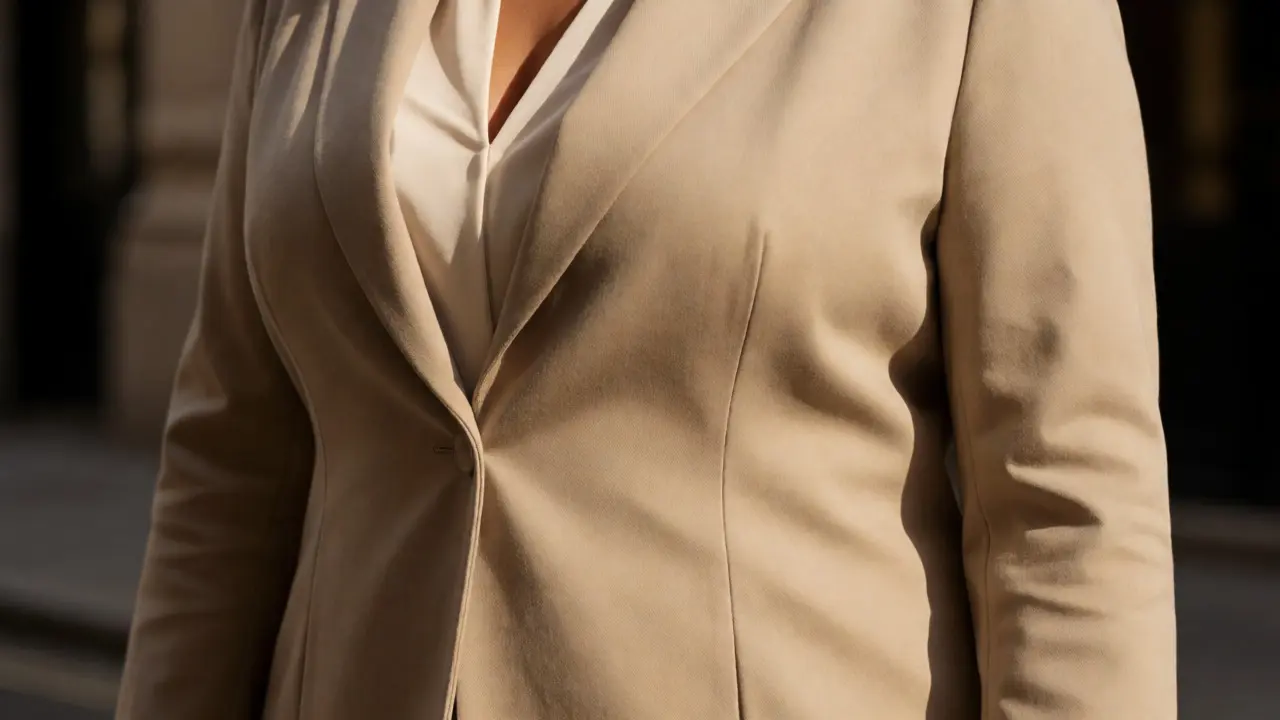
Princess seams are your best friend. Unlike darts, which pull fabric toward a point, princess seams run vertically from the shoulder or armhole down to the hem. They contour the body, providing shape without needing to be skin-tight. Look for jackets, dresses, and coats with princess seams. They create a clean, tailored look that respects curves without squeezing them.
Necklines Matter More Than You Think
The neckline draws the eye. For fuller figures, open necklines generally work better than closed ones. V-necks, scoop necks, and sweetheart necklines elongate the neck and draw attention upward, away from the midsection. High crew necks can sometimes close off the face and add visual weight to the upper body. If you prefer higher necklines, opt for a mock neck that sits loosely, rather than a tight turtleneck that cuts across the collarbone.
Hemlines and Lengths
Avoid hemlines that hit exactly at the widest part of your calves or thighs. These horizontal lines emphasize width. Instead, aim for hemlines that end above the knee (showing leg length) or below the calf (creating a longer line). Midi skirts are tricky; they need to be balanced with a defined waist or a heel to avoid cutting the body in half awkwardly. Ankle-length trousers with a slight flare or straight leg are universally flattering because they extend the leg line.
Fabric Choices: Drape vs. Structure
Fabric dictates how a garment hangs on your body. Thin, flimsy fabrics like cheap rayon or jersey tend to cling to every bump and curve, which isn’t always desirable. Heavy, stiff fabrics like thick denim or canvas can add bulk. The sweet spot is medium-weight fabrics with some drape and recovery.
| Fabric Type | Best Use Case | Why It Works |
|---|---|---|
| Structured Cotton Poplin | Shirts, Blouses | Hold its shape without clinging; crisp collars frame the face. |
| Stretch Ponte Knit | Dresses, Pants | Thick enough to smooth, stretchy enough to move; holds silhouette. |
| Viscose/Rayon Blends | Blazers, Skirts | Excellent drape; flows over curves rather than sticking to them. |
| Stiff Denim (10%+ Stretch) | Jackets, Jeans | Provides support and structure; prevents sagging at knees/butt. |
Avoid fabrics that are too thin unless you plan to wear a slip underneath. Also, steer clear of shiny materials like satin or silk unless you know exactly how they reflect light. Shine attracts attention, which can highlight areas you might want to soften. Matte finishes are generally more forgiving and look more expensive.
Color Blocking and Pattern Placement
You don’t have to stick to black. In fact, relying solely on dark colors can make you look washed out. Color blocking is a powerful tool for curvy bodies. By using darker colors on areas you want to minimize and lighter or brighter colors on areas you want to highlight, you can manipulate perception.
For instance, if you have broad shoulders and narrower hips, wear a darker top with a lighter, patterned bottom. This balances the visual weight. If you have a smaller bust and wider hips, a bright, detailed top with solid, dark bottoms draws the eye upward. Patterns should also follow this logic. Large prints can overwhelm a petite curvy frame, while tiny prints can look busy. Medium-scale prints are usually the safest bet. Vertical stripes are classic for a reason-they lead the eye up and down, reinforcing height.
Fit Is Everything: Tailoring Tips
Even the most perfectly designed garment will fail if it doesn’t fit right. Many plus-size shoppers buy clothes that fit their largest measurement (usually bust or hips), resulting in excess fabric elsewhere. This is where tailoring pays for itself. You don’t need a custom suit; simple adjustments make a massive difference.
- Taking in the Waist: If a blazer fits your shoulders but billows at the waist, have a tailor take in the side seams. This instantly sharpens your silhouette.
- Shortening Sleeves: Sleeves that bunch up at the wrist add bulk. Ensure sleeves end exactly at the wrist bone.
- Adjusting Hemlines: Pants that pool at the ankles break the vertical line. Have them hemmed to sit just above the shoe.
Remember, off-the-rack sizing is inconsistent. A size 18 in one brand might be a 16 in another. Always prioritize how the garment fits your body over the number on the tag. Try clothes on with the undergarments you plan to wear daily. If a bra strap digs in or a pant waistband rolls down, the fit is wrong, regardless of the size label.
Common Pitfalls to Avoid
Let’s address a few outdated rules that still linger. First, "Never wear horizontal stripes." This is false. A horizontal stripe placed strategically, such as at the neckline or hem, can accentuate assets beautifully. Second, "Avoid white." White is fresh and crisp. Just ensure the fabric is opaque and structured. Third, "Cover everything up." Covering up often leads to frumpy layers. Showing a bit of ankle, collarbone, or arm adds airiness and modernity to an outfit.
Another trap is buying clothes that are too big hoping they’ll be comfortable. Oversized clothes can swallow a curvy frame, making you look larger than you are. Clothes should skim the body, not squeeze it or hang off it. There is a middle ground, and finding it requires paying attention to the cut, not just the size.
What is the best silhouette for a pear-shaped body?
The A-line silhouette is ideal for pear shapes. It fits snugly at the waist and flares out over the hips, balancing the lower half. Pair this with structured tops or boat necklines to broaden the shoulders slightly, creating a more symmetrical hourglass appearance.
Can I wear prints if I am plus-size?
Absolutely. The key is scale and placement. Choose prints that are proportional to your body size. Medium-sized prints are usually safest. Place bold prints on areas you want to highlight (like the top for a pear shape) and keep other areas solid to prevent visual clutter.
Do dark colors really make you look thinner?
Dark colors recede visually, which can create a slimming effect, especially in monochromatic outfits. However, color alone won't fix poor fit. A poorly fitted black dress can look worse than a well-fitted colorful one. Use dark colors strategically to streamline, but don't fear color.
How important is tailoring for plus-size clothing?
Tailoring is crucial. Off-the-rack clothes are made for average proportions, which rarely match individual curvy bodies. Simple alterations like taking in the waist, shortening sleeves, or adjusting hemlines can transform a mediocre fit into a polished, custom-looking outfit.
What fabrics should I avoid?
Avoid very thin, clingy fabrics like cheap jersey or chiffon without lining, as they highlight lumps and bumps. Also, be cautious with stiff, heavy fabrics that add bulk, like thick wool or rigid denim without stretch. Opt for medium-weight fabrics with some structure and drape, like ponte knits or structured cotton blends.


Write a comment