


After giving birth, your body changes in ways you might not expect. One of the most immediate? Your breasts. They swell, leak, feel heavy, and need constant support - especially if you're breastfeeding. A regular bra won't cut it. Neither will an old maternity bra from three months ago. What you need is a postpartum nursing bra that actually works: no wires digging in, no straps slipping, no awkward clips that make feeding in the middle of the night feel like a puzzle.
Why Postpartum Nursing Bras Are Different
Not all nursing bras are created equal. A nursing bra designed for pregnancy might be too loose once your milk comes in. A bra meant for pumping might lack the softness your skin needs after delivery. Postpartum nursing bras are built for the unique phase right after birth - when your breasts are fluctuating in size, sensitive to touch, and still adjusting to your new routine.These bras combine three things: support, access, and softness. They’re made with stretchy, breathable fabrics like organic cotton, bamboo, or modal - not synthetic lace that itches. The cups open with one hand, usually via drop-down clips or swing-top designs. And unlike underwire bras, they avoid pressure on milk ducts, which can lead to clogged ducts or mastitis.
According to lactation consultants at New York Presbyterian Hospital, over 60% of new moms report breast pain or discomfort in the first two weeks postpartum. The number one cause? Ill-fitting bras. Not because they’re cheap - but because they’re not designed for the reality of postpartum bodies.
What to Look for in a Postpartum Nursing Bra
You don’t need ten options. You need one that fits right now. Here’s what actually matters:- No underwire - It’s not just about comfort. Underwire can restrict milk flow and increase the risk of blocked ducts.
- Adjustable bands - Your ribcage may still be swollen. Look for bras with at least three hook settings so you can loosen as you shrink.
- Wide, padded straps - Thin straps dig into your shoulders, especially when your breasts are heavy. Look for straps that are at least 1 inch wide.
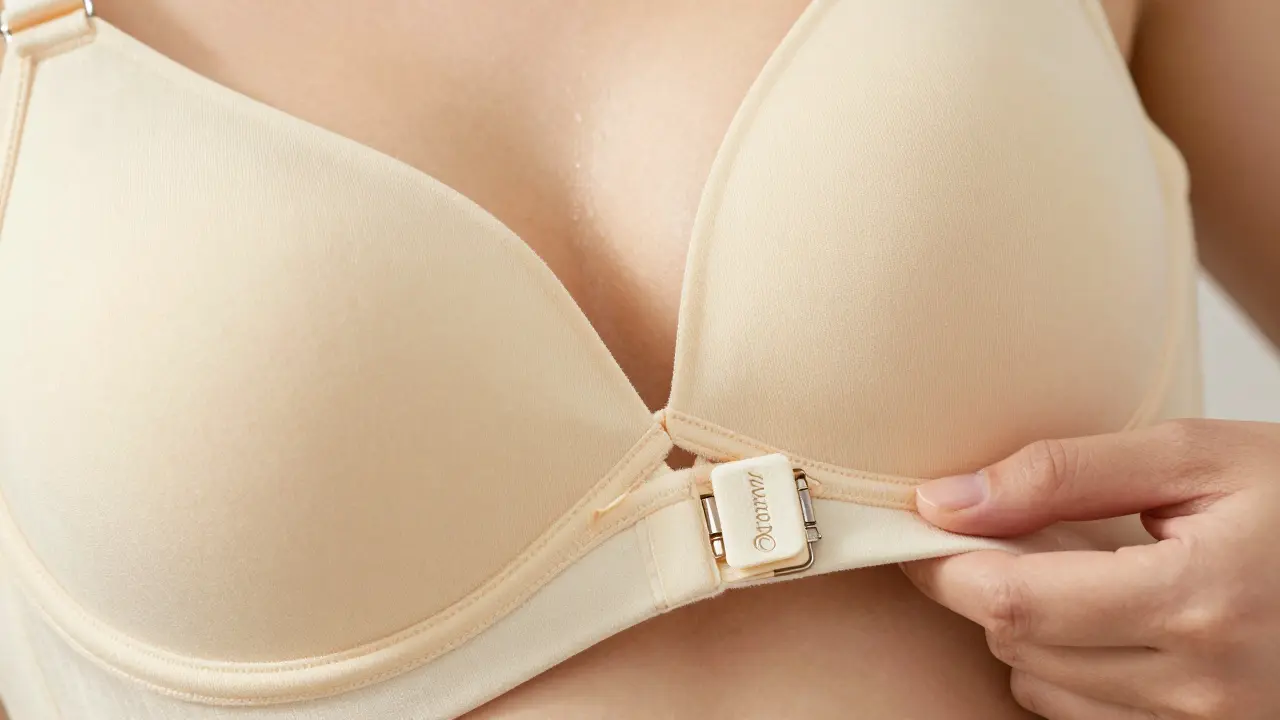
- Easy-access clips - One-handed operation is non-negotiable. Drop-down clips are the most reliable. Swing-top styles work too, but only if they don’t twist or pop open accidentally.
- Soft, seamless cups - Avoid seams across the nipple area. They irritate sensitive skin and can cause friction burns during frequent feeding.
Bras labeled "maternity" often have molded cups and no nursing access. Don’t be fooled. You need something labeled "nursing" or "postpartum nursing." And if it’s sold as a "shapewear bra," put it back.
Fit: How to Measure After Baby
You probably wore a different size during pregnancy. Now, your size may have changed again. Here’s how to get it right:- Measure your ribcage right under your breasts. Don’t pull tight - just snug. That’s your band size.
- Measure around the fullest part of your breasts. Subtract the band measurement. Each inch difference equals a cup size.
- Go up one band size and down one cup size if you’re between sizes. Postpartum breasts are softer and fuller - a looser band gives better support.
For example: If you measured 34 inches around your ribcage and 38 inches around your bust, you’d be a 34D. But after delivery, you might feel better in a 36C. That’s normal. Your body is still healing.
Most brands offer size charts online. But don’t trust them blindly. Read reviews from other new moms. Look for phrases like "ran small," "stretched out after a week," or "perfect fit on day two." Real user feedback matters more than the label.
Top Features That Make a Difference
Some nursing bras look the same on the hanger. But the details separate the good from the great:- Front closure - No need to twist or reach behind. Just unclip and open. Great for moms with back pain or those recovering from C-sections.
- Removable padding - Helps with leakage and gives shape without bulk. Washable pads are a must.
- Stretchy side panels - These adapt as your body changes over the first few weeks. They prevent the bra from riding up.
- Seamless lining - No rubbing against sore nipples. Even a tiny seam can become unbearable after 10 feedings a day.
- Machine washable - You’ll be washing this bra every other day. If it shrinks or loses shape after one cycle, it’s not worth it.
Brands like Bravado, Medela, and Milk & Co. have tested their designs with lactation specialists. But smaller brands like Kindred Bravely and Cake Maternity have earned loyal followings for their soft fabrics and inclusive sizing. You don’t need to spend $80. Many great options are under $40.
When to Buy - And How Many
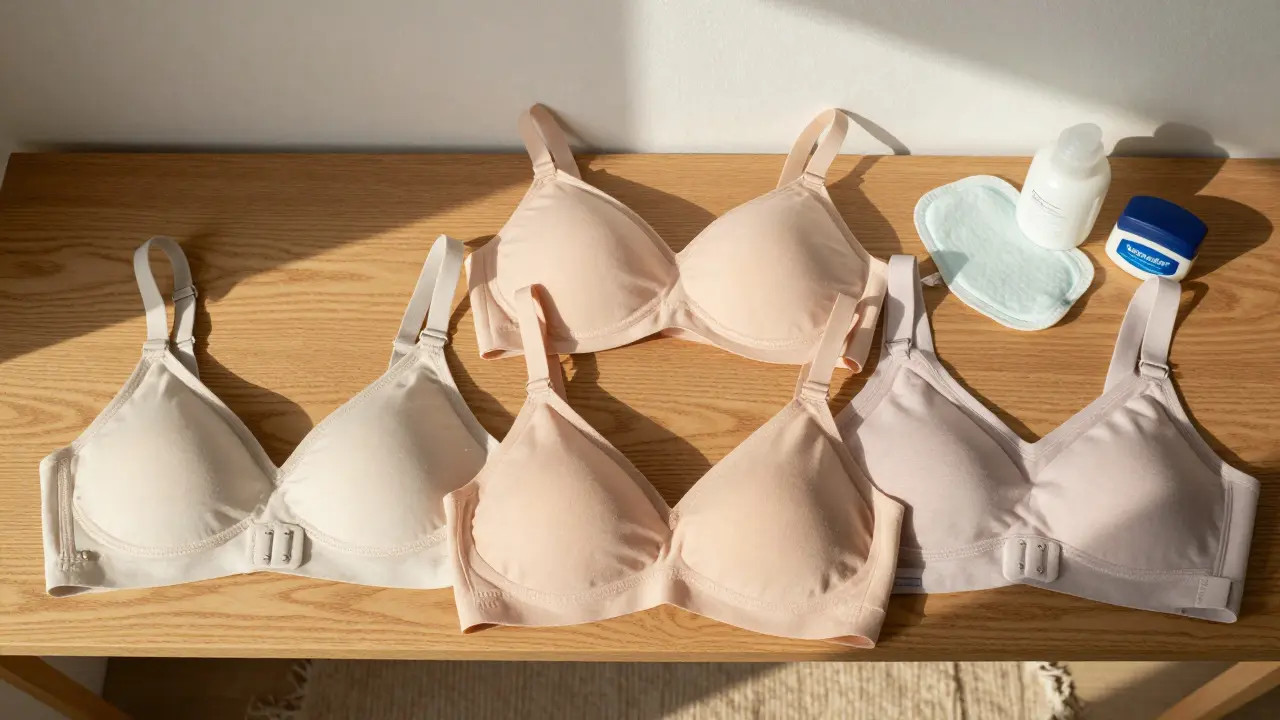
Buy your first nursing bra before your baby arrives. But don’t stop there. You’ll need at least three:- One for daytime - supportive, breathable, with easy access.
- One for nighttime - soft, no clips, just stretch. Think sleep bra with nursing access.
- One for exercise - low-impact support. Avoid compression bras; they can restrict milk flow.
Some moms swear by wearing a nursing bra 24/7 for the first month. Others switch to a soft cami after a few weeks. It’s personal. But if you’re leaking, sore, or feeling unsupported - you’re not wearing the right one.
Common Mistakes (And How to Avoid Them)
New moms make the same mistakes over and over:- Wearing the same bra for weeks - Your body shrinks. Your bra stretches. What fit on day 5 won’t fit on day 25.
- Buying based on pre-pregnancy size - You’re not the same person you were nine months ago. Don’t force it.
- Ignoring strap pain - If your shoulders ache, your bra is too tight or the straps are too thin.
- Choosing style over function - Lace looks pretty. But if it’s hard to open or digs into your skin, it’s not helping.
- Waiting until you’re uncomfortable - Don’t wait for leaking or pain to buy your first bra. Get one before discharge from the hospital.
Pro tip: Buy two of your favorite style in the same size. You’ll need a backup. Laundry piles up. Feedings happen at odd hours. You don’t want to be stuck with a wet bra and no clean one.
What to Skip
Not every nursing bra on Amazon is worth your money. Avoid these:- Bras with plastic clips - They break. Fast. Metal clips last longer and feel more secure.
- Bras labeled "nursing-friendly" but no actual access - Some just have a slit. That’s not a nursing bra. That’s a bra with a hole.
- Compression or sports bras for daily wear - They restrict milk flow. Save them for workouts only.
- One-size-fits-all - There’s no such thing. If it doesn’t have adjustable bands, it’s not designed for postpartum bodies.
There’s a reason hospitals give out free samples. They know what works. If you’re unsure, ask your lactation consultant for brand recommendations. Most have a short list of bras they’ve seen work for hundreds of moms.
Real Moms, Real Feedback
A survey of 200 new mothers in New York City found that 78% of those who switched to a properly fitted postpartum nursing bra reported less breast pain within 48 hours. The most common feedback? "I didn’t realize how much I was holding my shoulders up until I stopped needing to."One mom wrote: "I bought a $60 bra that looked like lingerie. I wore it once. My nipples were raw. I bought a $28 cotton one from a small brand. I’ve worn it every day for six months. It’s the best thing I bought after my daughter was born."
It’s not about looking sexy. It’s about feeling safe, supported, and in control. When you can feed your baby without fumbling, without pain, without stress - that’s confidence.
Final Tip: Let Your Body Lead
Your postpartum body isn’t broken. It’s adapting. Your bra should adapt with it. Don’t force yourself into a size that feels tight. Don’t ignore discomfort. Don’t wait until you’re in pain to make a change.Try a bra. Wear it for a full day. Feed your baby. Leak. Sleep. Move. If you forget it’s on - that’s the sign you’ve found the right one.
Can I wear a regular bra while nursing?
You can, but it’s not recommended. Regular bras don’t have nursing access, and many have underwire or tight bands that can restrict milk flow. This increases the risk of clogged ducts and mastitis. A nursing bra is designed to support your changing body while allowing easy access for feeding.
How many nursing bras do I really need?
At least three: one for daytime support, one for nighttime comfort (soft, no clips), and one for light activity. If you’re leaking heavily or washing daily, you might want four or five. It’s better to have extras than to be stuck with a wet, smelly bra in the middle of the night.
Do nursing bras cause sagging?
No. Sagging is caused by genetics, age, pregnancy hormones, and weight changes - not by wearing a bra. In fact, a well-fitting nursing bra helps support your breasts and may reduce strain on your ligaments. Not wearing support during heavy feeding periods can actually increase discomfort and contribute to long-term changes in shape.
When should I stop wearing nursing bras?
There’s no set time. Many moms switch to regular bras once they wean and their breasts return to their pre-pregnancy size - usually between 3 to 6 months after stopping breastfeeding. But if you’re still nursing or pumping, keep wearing nursing bras. Your body will tell you when it’s ready to change.
Are expensive nursing bras worth it?
Not always. The most expensive bra isn’t the best one. Look for soft, breathable fabric, adjustable bands, and easy-to-use clips. Brands like Kindred Bravely and Milk & Co. offer high-quality bras under $40. Spend your money on comfort, not branding. Read reviews from other nursing moms - not just the star ratings.
If you’re feeling overwhelmed, start with one good bra. Then add more as your body settles. You don’t need to buy everything at once. Just make sure the first one fits - and lets you breathe.


Write a comment