


Wearing the right shoes at work isn’t just about looking polished-it’s about feeling powerful, confident, and in control. Too many professionals sacrifice comfort for style, only to spend their day limping between meetings or dreading the 5 p.m. commute. The truth? You don’t have to choose. The best professional footwear blends authority with comfort, so you walk into every room like you own it-without needing a foot massage by lunch.
Why Footwear Matters More Than You Think
Studies from the Journal of Applied Psychology show that people who dress with intention, including their footwear, are perceived as more competent and trustworthy. Your shoes set the tone before you even speak. A scuffed loafer says "I’m tired." A crisp, well-made oxford says "I’ve got this."
But here’s the catch: authority doesn’t come from brand names. It comes from fit, polish, and function. You can wear a $600 pair of shoes and still look sloppy if they’re too tight or worn out. Conversely, a $150 pair with proper arch support and a clean finish can make you look like a CEO.
The Four Shoe Styles That Command Respect (Without Killing Your Feet)
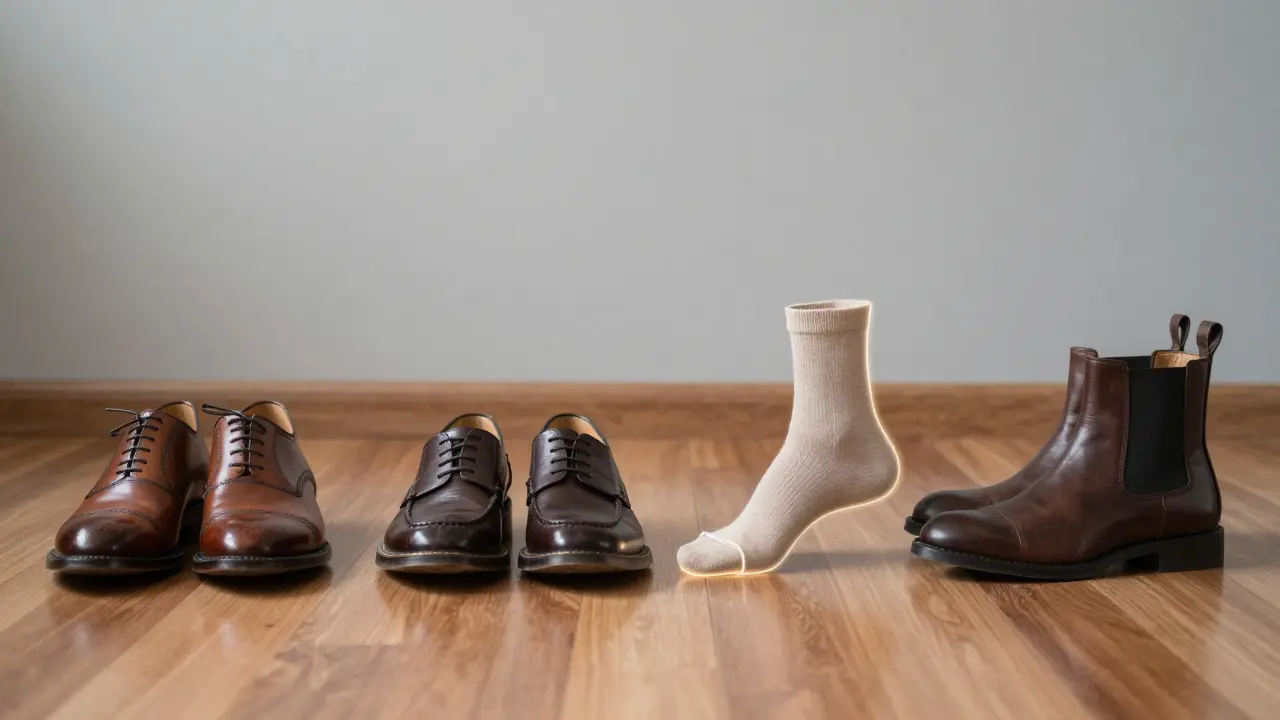
Not all dress shoes are created equal. Some are built for runway photos. Others are built for 10-hour days in conference rooms and airport terminals. Here are the four styles that consistently deliver both presence and comfort:
1. Cap-Toe Oxfords
The cap-toe oxford is the gold standard. Its clean lines and closed lacing system signal formality and discipline. Look for ones made with full-grain leather-it breathes better and molds to your foot over time. Avoid stiff, factory-pressed soles. Instead, choose models with rubber outsoles (like those from Ecco or Clarks) that absorb shock without looking casual.
Pro tip: Go half a size up if you’re standing or walking a lot. Your feet swell by 5-10% during the day. A snug fit in the morning means pain by afternoon.
2. Monk Straps (Single or Double)
Monk straps have been quietly replacing oxfords in boardrooms for years. They offer the same formality but with a more modern silhouette. The buckle closure allows for quick adjustments-no laces to untie when you’re rushing to a client meeting.
Double monk straps add a touch of personality without crossing into flashy. Single monk straps are sleeker and work better with slim suits. Brands like Johnston & Murphy and Rockport make versions with memory foam insoles and flexible rubber soles that feel like walking on clouds.
3. Loafers (No Sock Style or With Socks)
Loafers are the quiet power move. They’re ideal for creative industries, law firms with relaxed dress codes, or days when you’re hopping between meetings and coffee shops. The key? Avoid cheap, slip-on styles with plastic soles.
Look for penny or tassel loafers made from hand-stitched leather with a slight heel (1-1.5 inches). Brands like Allen Edmonds and Cole Haan offer versions with Goga Max cushioning or Nike Air technology built right in. Wear them with no socks for a sleek look, or with thin, invisible wool socks for all-day comfort.
4. Chelsea Boots
Once reserved for weekend wear, Chelsea boots are now standard in executive wardrobes. Their slip-on design saves time, their sleek profile matches tailored trousers, and their rubber sole handles wet sidewalks and marble floors without squeaking.
Choose a polished leather version in black or dark brown. Avoid chunky soles or hiking-inspired treads-they look out of place in a corporate setting. Look for models with a cushioned footbed and a narrow heel (under 1 inch) to maintain a professional silhouette. Timberland Pro and Red Wing’s Heritage line make excellent business-ready options.
What to Avoid at All Costs
Some shoes might look formal, but they undermine your authority faster than a wrinkled shirt.
- White athletic sneakers-even the "minimalist" ones. They scream "I just got off the treadmill."
- Pointed-toe pumps with stiletto heels-they’re not professional, they’re high-maintenance. A 1.5-inch block heel is the sweet spot.
- Loafers with tassels in bright colors-save those for weddings, not quarterly reviews.
- Shoes with visible wear-scuffed toes, worn heels, or faded polish signal neglect. A quick polish every two weeks keeps you looking sharp.

Comfort Isn’t Optional-It’s a Strategy
Comfort isn’t about padding. It’s about biomechanics. Your feet are your foundation. If they hurt, your posture slumps. Your shoulders tighten. Your voice gets quieter. Your confidence drains.
Here’s what actually works:
- Arch support-if you have flat feet or high arches, get custom insoles. Superfeet or Sole inserts cost $40 and last a year. They’re cheaper than physical therapy.
- Room for toe wiggling-your toes shouldn’t touch the front. Leave a thumb’s width of space.
- Flexible sole-if you can’t bend the shoe at the ball of your foot, it’s too stiff.
- Leather lining-synthetic linings trap sweat and cause blisters. Real leather wicks moisture and molds to your foot.
Try this test: Walk around the store for 10 minutes. Then stand still for 5. If your feet feel fine standing but hurt when you move, keep looking. The right shoe should feel better after you’ve been on your feet.
How to Care for Your Professional Footwear
Shoes that last five years cost less than shoes you replace every six months. Here’s how to make them last:
- Use cedar shoe trees after every wear-they maintain shape and absorb moisture.
- Rotate your shoes. Don’t wear the same pair two days in a row. Let them air out for 24 hours.
- Polish every two weeks with a matching cream. Wax polish adds shine; cream polish adds protection.
- Replace heel taps and soles before they wear through. A cobbler can do it for $25-$40.
Think of your shoes like a suit: they need maintenance to perform.
Real People, Real Results
Sarah, a partner at a Manhattan law firm, switched from stilettos to black cap-toe oxfords with cushioned insoles two years ago. She went from taking two painkiller pills a day to none. "I used to dread client dinners because I’d be in agony by dessert," she says. "Now I stand for hours in court and walk five miles in a day. My shoes don’t hold me back anymore."
Mark, a tech CEO in Brooklyn, wears dark brown monk straps with rubber soles every day. "I meet with investors, walk the office floor, and sometimes hop on a train to Newark. My shoes look sharp, but they feel like sneakers. That’s the goal."
Final Checklist: Your Authority Footwear Formula
Before you buy, ask yourself:
- Does this shoe look sharp from 10 feet away? (If not, skip it.)
- Can I walk 10 minutes in it without discomfort? (Test it in the store.)
- Is the sole flexible at the ball of the foot? (Bend it with your hand.)
- Is the leather full-grain, not bonded or synthetic? (Check the label or ask.)
- Will I still like this style in two years? (Avoid trends. Stick to classics.)
Professional footwear isn’t about impressing people. It’s about freeing yourself to focus on what matters-your work, your ideas, your presence. When your feet don’t hurt, your mind doesn’t wander. When your shoes look sharp, you carry yourself differently.
Choose well. Walk tall. Stay comfortable. That’s how authority is built-one step at a time.
Can I wear dress shoes with socks?
Yes, but choose the right kind. For oxfords and monk straps, wear thin, invisible wool or no-show socks made for dress shoes. Avoid thick cotton or athletic socks-they create bulk and look sloppy. For loafers, you can go sockless if your feet are clean and dry, but many professionals wear invisible socks to prevent blisters and odor.
What’s the best color for professional shoes?
Black and dark brown are the safest choices. Black works with navy, gray, and black suits. Dark brown pairs well with gray, charcoal, and tan. Avoid burgundy, tan, or oxblood unless you’re in a creative field where personal style is expected. Always match your belt to your shoes.
Are expensive shoes worth it?
Not always-but quality matters. A $200 pair from a brand like Allen Edmonds or Ecco will last 3-5 years with care. A $70 pair from a fast-fashion brand might fall apart in 6 months. You’re paying for materials, construction, and last shaping-not the logo. Look for Goodyear welted construction if you want shoes that can be resoled.
How often should I replace my professional shoes?
Every 12-18 months if you wear them 4-5 days a week. Signs it’s time: worn-down heels, cracked leather, flattened insoles, or discomfort you can’t fix with inserts. If the sole is separating or the leather is splitting, don’t wait-replace them before they ruin your posture.
Can I wear professional shoes with jeans?
Yes, if you’re in a business casual environment. Dark brown or black loafers or Chelsea boots pair well with slim, dark denim. Avoid oxfords with jeans-they look too formal and mismatched. Keep the jeans clean, unstained, and hemmed. This combo works for client lunches, casual Fridays, or creative offices.


Write a comment