

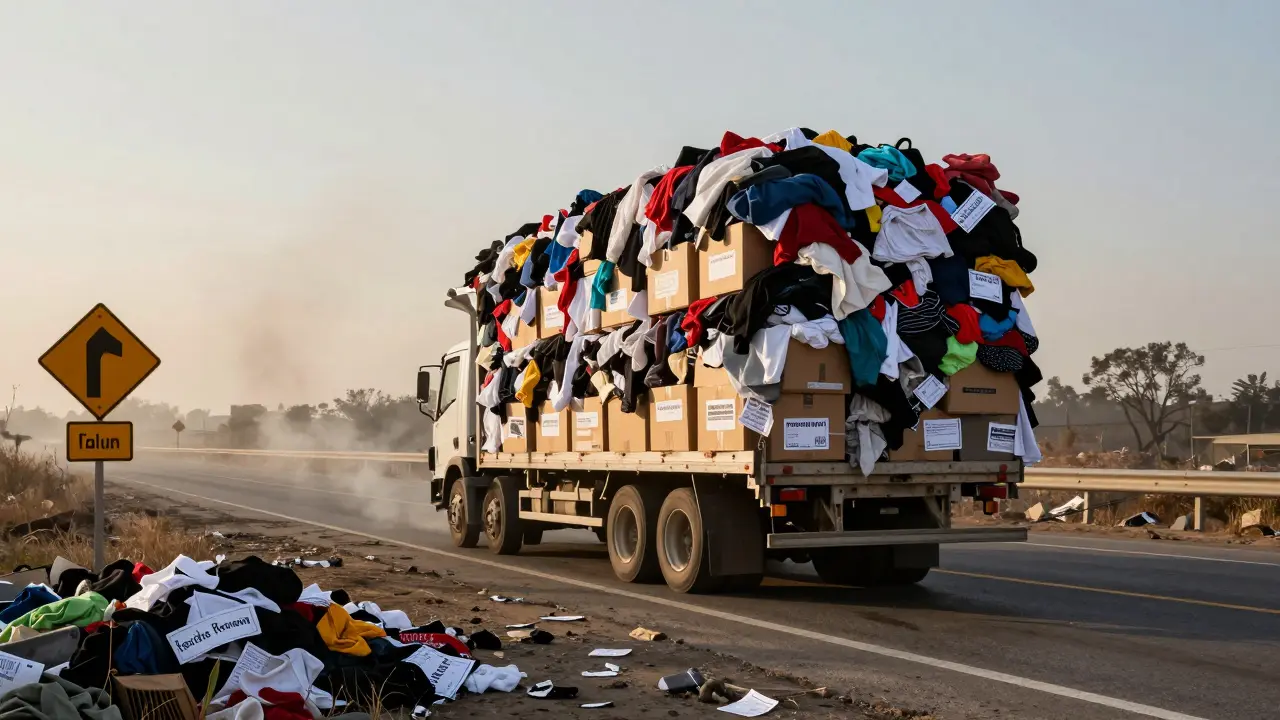
When you click "return" on your online fashion order, you probably think you’re doing the right thing - maybe you’re being responsible by not keeping something that doesn’t fit. But what you’re not seeing is the truck, the plane, the warehouse, and the landfill that follow. Free returns might feel like a customer perk, but they’re one of the most overlooked drivers of emissions in modern fashion.
How Returns Turn Into Pollution
In 2025, U.S. retailers processed over 3.8 billion returned clothing items. That’s roughly one return for every person in the country. And here’s the kicker: nearly 40% of those returns never even make it back to the warehouse. They’re left in homes, dropped at USPS bins, or thrown away because the return label expired or the customer got lazy.
Each returned garment travels an average of 1,200 miles round-trip. That’s the distance from New York to Chicago and back - just for one shirt. Multiply that by millions of items, and you’re looking at over 4.5 million metric tons of CO2 emissions annually from return shipping alone. To put that in perspective, that’s more than the yearly emissions of 950,000 passenger cars.
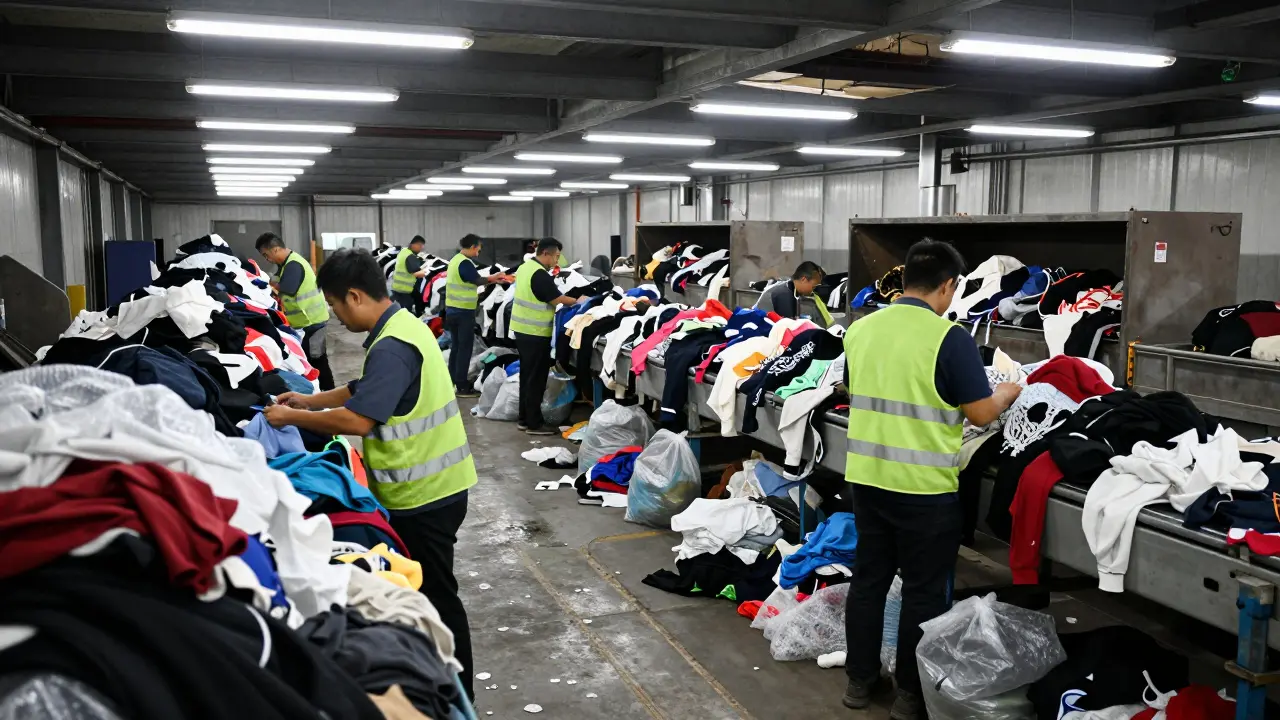
And it’s not just transportation. Returns get sorted, repackaged, inspected, and sometimes re-shipped to a different warehouse. Each step uses energy. Warehouses run 24/7 to handle the flood. Packaging materials - plastic bags, bubble wrap, cardboard - pile up. Many of these aren’t recycled. In fact, only 15% of return packaging is consistently recycled across major retailers.
The Double Whammy: Returns and Overproduction
Free returns don’t just create emissions - they encourage overbuying. A 2024 study by the Fashion Institute of Technology found that shoppers who knew returns were free bought 37% more items per order than those who paid for returns. Why? Because they treat shopping like a try-before-you-buy game. You order five sizes of the same dress. You keep one. You return four. Each return adds emissions. Each item you never wore was produced using water, dyes, and energy.
And here’s the worst part: many of those returned items never go back on sale. They’re damaged, stained, or just too expensive to reprocess. Retailers call it "ineligible for resale." In 2025, over 1.2 billion returned clothing items were incinerated or sent to landfills. That’s equivalent to dumping 100,000 tons of textile waste into the ground every week.
Who Pays the Real Price?
Consumers think they’re getting a free service. But the cost isn’t free - it’s hidden. Retailers absorb the return shipping cost, but they pass it on through higher prices. A 2023 analysis by the Sustainable Apparel Coalition found that free return policies added an average of $1.80 to the price of every garment sold. That’s not because of labor or materials - it’s because of the emissions, fuel, and waste from returns.
And let’s not forget the workers. Warehouse staff in places like Kentucky and Ohio now work double shifts during holiday returns season. They’re sorting through stained underwear, torn jeans, and shoes with missing laces - all while breathing in dust from shredded fabric. The human cost is rarely talked about.
What’s Being Done - and What’s Not
Some brands are waking up. Patagonia stopped offering free returns in 2023 and instead offered free alterations and repair guides. Their return rate dropped by 62%. Everlane introduced a "return with purpose" program: if you return an item, they donate it to a local shelter instead of shipping it back. Zara now charges $5 for returns over $50 - and saw a 30% drop in returns without hurting sales.
But most retailers? They’re still pushing free returns like a sales tactic. Why? Because it works. Return policies are a major reason people shop online instead of in-store. But the environmental cost is no longer sustainable.
What You Can Do - Right Now
You don’t need to stop shopping online. But you can change how you do it.
- Buy fewer, choose wisely. Use size guides. Read reviews that mention fit. If 70% of people say a dress runs small, order a size up.
- Don’t order multiple sizes. That’s not shopping - it’s gambling with the planet.
- Keep what you can. If something doesn’t fit perfectly but you like it, wear it anyway. Tailor it. Style it differently. That’s how clothes become timeless.
- Use local return drop-offs. Many retailers now partner with UPS or FedEx stores. Dropping off a return in person cuts emissions by 60% compared to curbside pickup.
- Support brands that charge for returns. They’re the ones trying to fix the system.
The Bigger Picture: Free Returns Are a Symptom
The real problem isn’t just returns - it’s a system built on disposable fashion. If clothes were made to last, if sizing was accurate, if brands were transparent about materials, we wouldn’t need to return so much in the first place.
Free returns are a symptom of fast fashion’s broken model. They’re a Band-Aid on a wound that needs surgery. Until we stop treating clothes like single-use items, emissions from returns will keep climbing - no matter how many "eco-friendly" labels brands slap on their packaging.
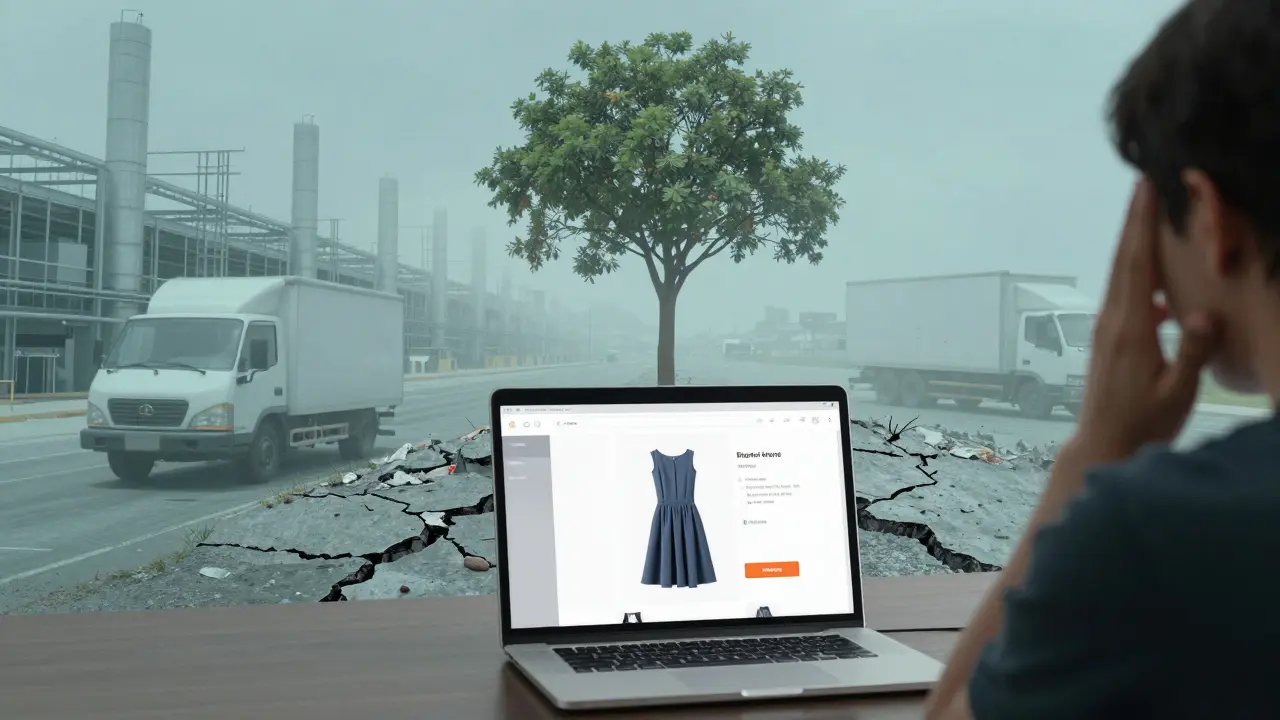
Next time you’re about to hit "return," ask yourself: Is this item worth the carbon, the waste, the labor? Or is it just another thing you bought because it looked good on a screen - and you knew you could send it back?
Why do free returns create so much carbon emissions?
Free returns create emissions because each returned item travels an average of 1,200 miles round-trip via truck or plane. Millions of returns add up to over 4.5 million metric tons of CO2 annually. Plus, returns require energy-intensive sorting, repackaging, and warehousing. Many returned items never even reach the warehouse - they’re discarded along the way, adding to landfill waste and methane emissions.
Do all retailers handle returns the same way?
No. Some retailers, like Patagonia and Everlane, have redesigned their return policies to reduce waste. Patagonia stopped offering free returns and now offers free repairs, cutting returns by 62%. Everlane donates returned items to shelters instead of shipping them back. Zara charges $5 for returns over $50, which reduced returns by 30%. But most fast fashion brands still offer free returns as a sales tool, ignoring the environmental toll.
What happens to most returned clothing?
About 40% of returned clothing never makes it back to the warehouse - it’s thrown away, left in homes, or dumped at mail drop-off points. Of what does get returned, roughly 30% is damaged, stained, or outdated and can’t be resold. These items are often incinerated or sent to landfills. Only about 25% of returned clothing is resold as new. The rest is either sold as seconds, donated, or destroyed.
Do free returns actually increase sales?
Yes - but at a cost. Shoppers who know returns are free buy 37% more items per order, according to a 2024 Fashion Institute of Technology study. That boosts short-term sales. But it also leads to more overproduction, more waste, and higher emissions. The long-term damage to the environment and brand reputation often outweighs the sales gain.
Can I reduce my personal return emissions?
Absolutely. Use size guides, read fit reviews, and avoid ordering multiple sizes. Keep items you like even if they’re not perfect - tailor them or style them differently. Use in-person return drop-offs instead of home pickup. And support brands that charge for returns - they’re the ones pushing for change.


Write a comment