


Can you really wear sandals to work? It’s a question more people are asking - and not just in warm climates. With hybrid schedules, relaxed office norms, and a shift toward comfort without sacrificing professionalism, sandals are no longer just for the beach. But not all sandals qualify. The key isn’t just choosing a pair - it’s choosing the right pair.
What Makes a Sandal Work-Appropriate?
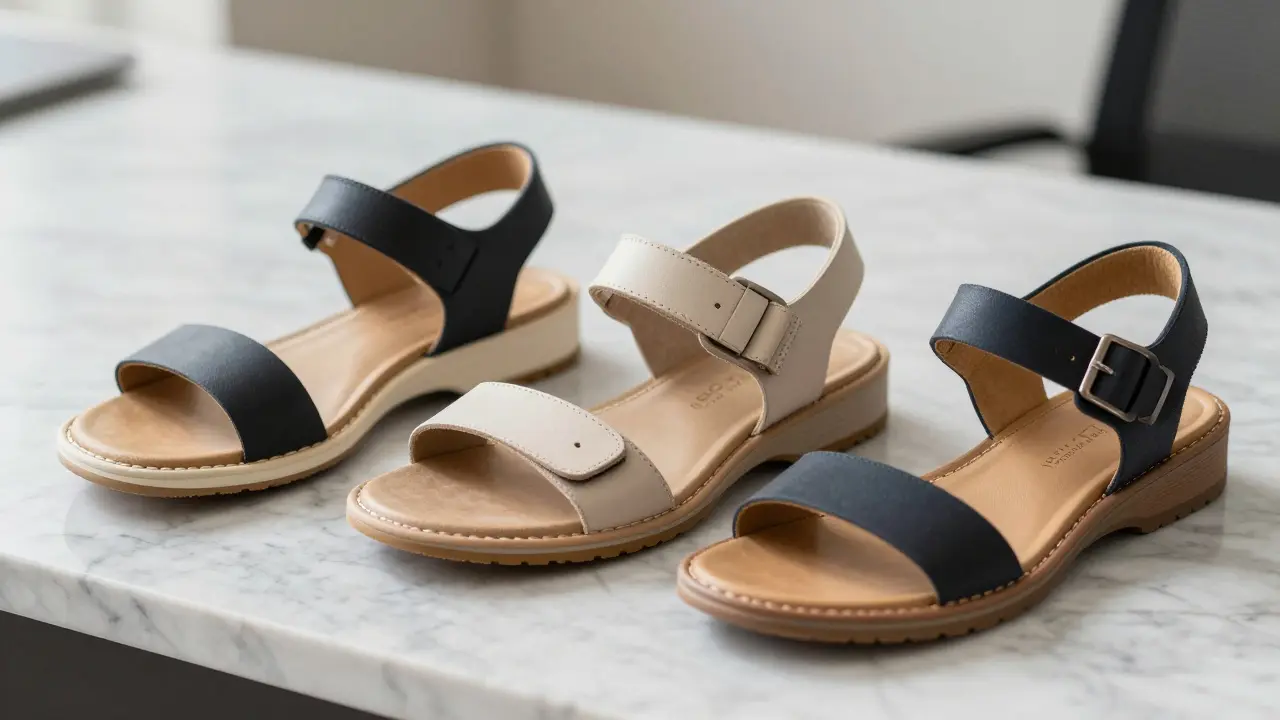
A work-ready sandal isn’t a flip-flop. It’s not a chunky beach style with neon straps. It’s not even a basic leather thong. Professional sandals have structure, coverage, and polish. Think minimal straps, closed toes or semi-closed toes, low heels or flat soles, and materials that look intentional - not accidental.
Brands like Clarks, Ecco, and Taryn Rose have built entire lines around this. Their sandals feature cushioned footbeds, leather uppers, and sleek silhouettes that mirror low-heeled loafers. You can wear them with tailored pants, midi skirts, or even slim jeans - and no one will question whether you took a wrong turn at the pool.
Here’s what to look for:
- Closed or semi-closed toe - Avoid fully open toes. A toe post or strap covering the front third of the foot is ideal.
- Minimalist design - One or two thin straps are fine. Three or more straps, especially with buckles or rhinestones, look too casual.
- Leather or high-quality synthetic - Matte finishes work better than glossy. Avoid plastic-looking materials.
- Low heel or zero drop - Heels under 1.5 inches keep it professional. Zero-drop soles (no elevation) are increasingly common in office-ready styles.
- Neutral colors - Black, navy, taupe, and metallics (like brushed silver or bronze) are safest. Brown works if it’s a rich, dark shade.
Industry Matters - Where Sandals Fly (and Where They Don’t)
Not all workplaces treat sandals the same. In creative fields - design studios, marketing agencies, tech startups - sandals are often standard. At a law firm? Maybe not. At a hospital? Probably not. Context is everything.
In corporate environments, the rule is simple: if you’d wear a loafer, you can wear a polished sandal. If your office requires closed-toe shoes for safety or formality (like in finance, accounting, or government roles), sandals are out - unless you’re in a role that allows flexibility.
Take New York City’s midtown offices. Many firms have dropped strict “closed-toe only” policies since 2022. A survey by the NYC Business Council in late 2025 found that 68% of companies with 50+ employees now allow sandals in summer months, provided they meet basic standards. That’s up from 32% in 2020.
Meanwhile, in healthcare settings - even in non-clinical roles like HR or admin - sandals are still discouraged. Why? Hygiene and safety. You can’t walk through a lab or ER in open footwear. But in outpatient clinics or wellness centers, clean, closed-toe sandals are sometimes acceptable.
How to Style Sandals for the Office
Styling is where most people stumble. A sandal that looks fine on its own can clash when paired with the wrong outfit. Here’s how to make it work:
- Pair with tailored pieces - A pencil skirt, straight-leg trousers, or a structured dress elevates the look. Avoid flowy maxi dresses or yoga pants.
- Match your sock situation - Bare feet? Fine. Ankle socks? Only if they’re invisible or skin-tone. No white cotton socks. Ever.
- Keep accessories minimal - If your sandals have a subtle metallic toe cap, don’t layer on chunky bracelets. Let the shoe be the quiet statement.
- Foot care matters - Polished sandals demand polished feet. Regular pedicures, exfoliation, and moisturizing are non-negotiable. No peeling cuticles or cracked heels.
One common mistake? Wearing sandals with shorts. Even in hot weather, shorts rarely belong in a professional setting - unless you’re in a very casual tech environment. Stick to trousers or skirts that hit above or below the knee.
Top 3 Work Sandals That Actually Work
Not all sandals are created equal. Here are three models consistently recommended by workplace stylists and HR departments across major U.S. cities:
| Model | Key Feature | Price Range | Best For |
|---|---|---|---|
| Clarks Unstructured Sandal | Leather upper, cushioned footbed, closed toe | $120-$150 | Long days on concrete floors |
| Ecco Soft 7 Sandal | Hybrid design - looks like a loafer, feels like a sandal | $160-$190 | Formal offices with flexible dress codes |
| Taryn Rose Lani | Arch support, zero-drop sole, vegan leather option | $140-$170 | Women who stand or walk all day |
These aren’t fashion-forward. They’re functional. And that’s exactly what you need.

When Sandals Don’t Belong - And What to Wear Instead
Some offices still enforce traditional rules. If your company requires closed-toe shoes, or if you’re meeting with clients in conservative industries (law, banking, insurance), swap sandals for:
- Loafers - Slip-on, no laces, clean lines. Brands like Cole Haan and Sam Edelman make excellent ones.
- Low-heeled pumps - Under 2 inches, pointed toe, matte finish.
- Chelsea boots - For cooler months or hybrid offices with air conditioning.
There’s no shame in switching shoes. Many professionals keep a pair of flats or loafers in their desk drawer - just in case.
The Bigger Shift: Comfort as a Professional Standard
This isn’t just about sandals. It’s about redefining what professionalism looks like. The old model - stiff shoes, rigid rules, discomfort as a badge of honor - is fading. More companies now recognize that foot pain reduces productivity, increases absenteeism, and lowers morale.
A 2025 study by the American Podiatric Medical Association found that 73% of office workers who switched to supportive footwear reported improved focus and fewer back complaints. Sandals, when designed right, fit into that equation.
It’s not about being lazy. It’s about being smart. If you can move comfortably, you can think clearly. If you’re not worrying about blisters, you’re more present in meetings.
The best-dressed people at work aren’t the ones in the most expensive shoes. They’re the ones in the most appropriate ones.
Can I wear sandals to a job interview?
Generally, no. Job interviews require a higher level of formality than regular office days. Even if your workplace allows sandals, stick to closed-toe shoes - loafers, oxfords, or low pumps - for interviews. First impressions are built on details, and footwear is one of them.
Are vegan leather sandals professional enough?
Yes - if they’re well-made. High-quality vegan leather from brands like Taryn Rose, Will’s Vegan Shoes, or Matt & Nat has the same texture, durability, and finish as real leather. Avoid cheap, shiny synthetics. Look for matte finishes and minimal seams. If it looks expensive, it will be accepted.
What if my feet sweat in sandals?
Choose sandals with breathable linings - natural leather or mesh panels help. Use moisture-wicking insoles or antiperspirant foot spray. Keep a spare pair of socks or foot powder at your desk. If your sandals are causing discomfort or odor, it’s not the style - it’s the fit or material. Try a different model.
Do men wear sandals to work?
Yes - but the options are fewer. Men’s work sandals are typically more minimalist: leather straps over the foot, no toe post, closed heel. Brands like Birkenstock (with their Boston clog style), Teva, and Merrell offer styles that fit professional settings. They’re still rare in conservative industries, but growing in tech, design, and media.
What if my office has a strict dress code?
Check the written policy. Many companies say "closed-toe shoes" but don’t specify materials. If sandals are explicitly banned, don’t push it. But if the policy is vague, ask HR. You might be surprised. Some policies haven’t been updated since 2015. A polite question can open the door.


Write a comment