

You might think fashion is random. One year everyone wears short skirts, the next they’re dragging on the floor. But there’s a hidden logic here. It’s called the hemline index, a theory suggesting that skirt lengths rise when the economy booms and fall when it crashes. While not a perfect economic predictor, it explains why we keep seeing the same three silhouettes rotate through our closets: minis, midis, and maxis. Understanding this cycle helps you buy smarter. You stop chasing every micro-trend and start investing in pieces that will actually come back into style.
The Economics of Hemlines
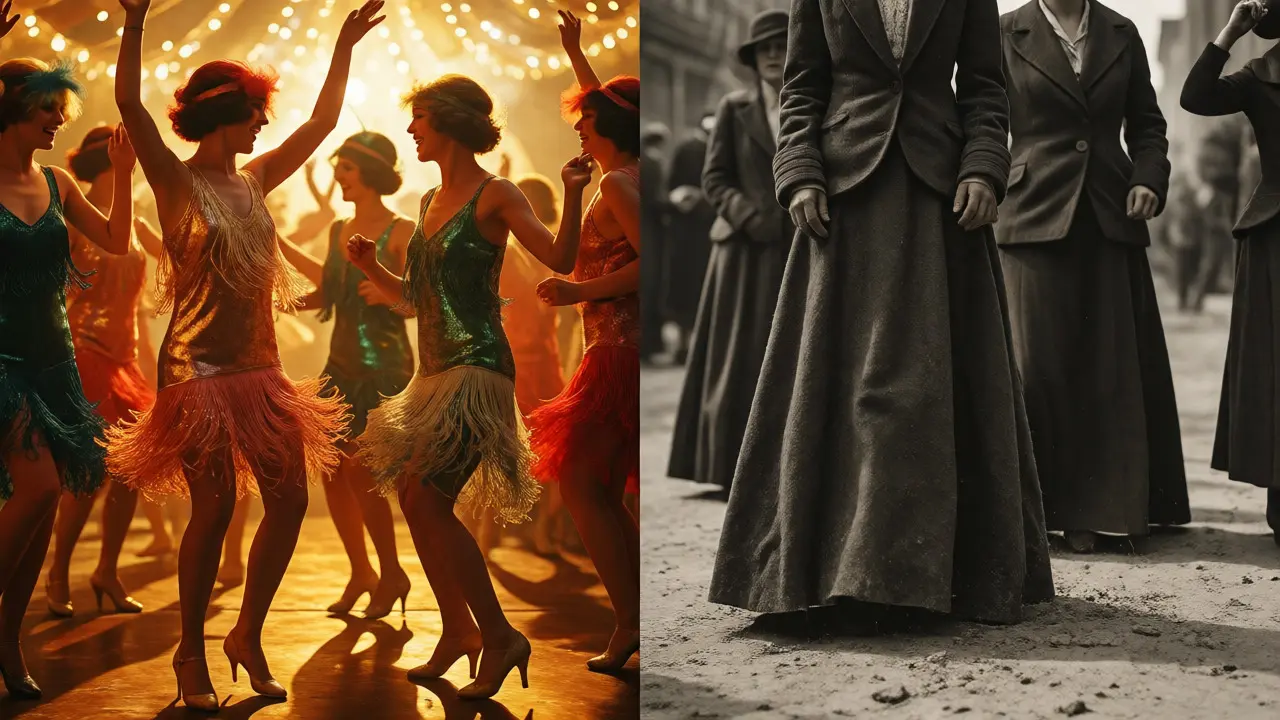
George Taylor, an economist at Wharton, first proposed the hemline index in 1926. His idea was simple: women expose more leg when they feel optimistic about their financial future. During the Roaring Twenties, the flapper era saw hems shoot up to the knee for the first time in modern history. It wasn’t just rebellion; it was prosperity signaling. When the Great Depression hit, skirts dropped below the knee. People had less money for fabric? No, actually, they had less confidence. Modesty became a safety blanket.
This pattern repeated itself consistently. The 1960s brought the mini skirt, invented by Mary Quant, right as consumer spending peaked. By the 1970s, amid oil crises and inflation, the maxi skirt took over. It wasn’t just about comfort; it was a visual retreat. Today, while global markets are complex, the psychological link between exposure and optimism remains. If you’re wondering why your favorite brand suddenly shifted from knee-length to ankle-length, check the stock market before you check the runway.
Decoding the Three Silhouettes
To navigate these cycles, you need to know exactly what defines each category. It’s not just about inches; it’s about proportion and context.
| Category | Length Definition | Best Occasion | Styling Challenge |
|---|---|---|---|
| Mini Skirt | Above the knee (mid-thigh) | Night out, casual daytime | Balancing top volume |
| Midi Skirt | Below knee to mid-calf | Office, brunch, smart casual | Cutting off leg line visually |
| Maxi Skirt | Ankle or floor-grazing | Events, vacation, formal | Overwhelming petite frames |
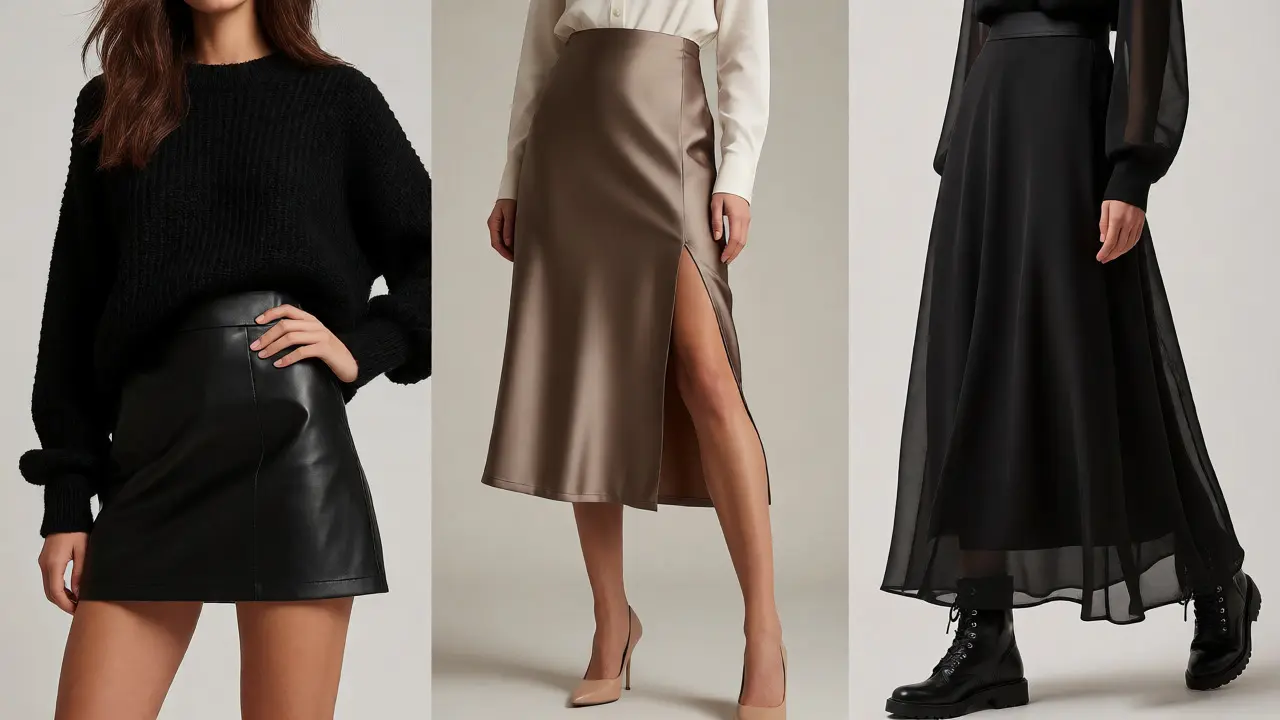
The mini skirt is the most high-maintenance but highest-impact option. It requires confident posture and careful shoe pairing. A black leather mini works with almost anything, but a pleated plaid mini needs a solid color top to avoid looking like a school uniform gone wrong. The key is balance. If you show leg, cover your torso. A chunky knit sweater over a denim mini creates a cozy yet sharp contrast.
The midi skirt is the workhorse of modern wardrobes. It hits the awkward spot between the knee and the ankle, which can shorten your legs if you aren’t careful. The trick? Show some skin. A slit in the side breaks up the fabric block. Or, pair it with nude heels that match your skin tone to extend the leg line. Satin slip mids are huge right now because they layer easily under blazers, turning a night-out piece into office attire.
Finally, the maxi skirt. This isn’t just for beach vacations anymore. In 2026, we see structured wool maxis worn with combat boots. The challenge here is weight. Heavy fabrics drag down your silhouette. Look for slits, asymmetrical hems, or lighter materials like chiffon or silk blends. If you’re under 5’4”, opt for a slit that reveals the ankle rather than pooling fabric at the feet.
Why the Cycle Never Stops
Fashion operates on a pendulum swing. Extreme minimalism leads to maximalism. Short hems lead to long ones. This is partly due to fashion fatigue. When everyone wears the same thing, it becomes invisible. To stand out, designers push the opposite extreme. Remember when skinny jeans dominated? Then wide-leg trousers exploded. The same happens with hemlines.
Social media accelerates this cycle. TikTok trends can make a specific length popular overnight, then obsolete in six months. However, the core three-mini, midi, maxi-are foundational. They don’t disappear; they just take turns being "the trend." For example, during the pandemic lockdowns of 2020-2021, comfort ruled. Sweatpants and loose fits were king. As people returned to offices in 2023 and 2024, structure came back. Now, in late 2026, we’re seeing a mix. The micro-mini is making a comeback in club scenes, while the tea-length midi dominates professional settings.
Building a Cycle-Proof Wardrobe
You don’t need to buy new clothes every season. You need a capsule approach. Here’s how to build a skirt collection that survives any trend shift.
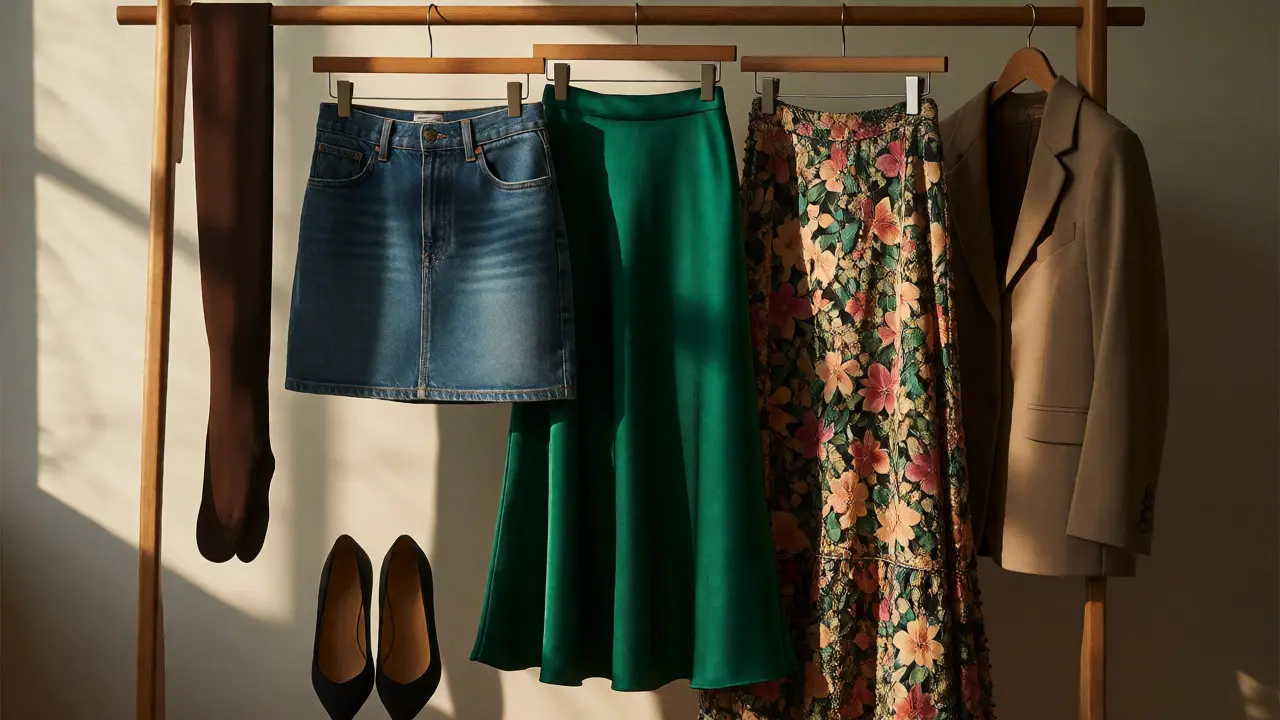
- One Classic Mini: Choose a neutral color like black, navy, or tan. Denim is durable and versatile. Avoid overly trendy details like excessive distressing.
- One Versatile Midi: A satin or silk blend in a jewel tone (emerald, burgundy) or classic black. This piece transitions from day to night effortlessly.
- One Statement Maxi: Pick something with movement. Floral prints, bold colors, or unique textures. Since it covers most of your body, the pattern matters less than the cut.
By owning one of each, you’re prepared regardless of which length is currently favored. If minis are trending, wear yours with tights and boots. If maxis are hot, throw yours over a fitted tee. The investment pays off because you’re not fighting the current; you’re adapting to it.
Common Styling Mistakes
Even with the right length, you can get it wrong. The biggest error is ignoring proportions. Wearing a bulky top with a voluminous maxi skirt makes you look shapeless. Always define your waist. Use a belt, tuck in your shirt, or choose a cropped jacket.
Another mistake is mismatching shoe heights with skirt lengths. Ankle straps on a midi skirt can chop your leg in half, making you look shorter. Instead, go for pointed-toe flats or heels without ankle straps. With minis, avoid socks that end abruptly above the boot unless you’re going for a specific retro look. Seamless lines create elegance.
Finally, consider the occasion. A denim mini might be too casual for a wedding, while a sequined maxi might be too much for a grocery run. Context is everything. The trend tells you what’s popular; your judgment tells you what’s appropriate.
The Future of Hemlines
Where do we go from here? Sustainability is changing the game. Consumers want clothes that last longer than a single season. This pushes brands toward timeless cuts rather than fleeting extremes. We might see fewer radical shifts in length and more focus on fit and fabric quality. The modest fashion movement is also growing, keeping midi and maxi styles relevant beyond traditional Western trends.
Technology plays a role too. Smart fabrics and adaptive clothing could change how we perceive length. Imagine a skirt that adjusts its hem based on temperature or activity level. While still niche, these innovations suggest that rigid categories like "mini" or "maxi" might blur in the coming decade. For now, though, stick to the classics. They’ve survived wars, recessions, and social revolutions. They’ll survive your next closet purge.
Is the hemline index still accurate today?
Not strictly. While George Taylor's original theory linked skirt length directly to GDP growth, modern fashion is influenced by many factors, including social media, sustainability concerns, and diverse cultural norms. However, the general correlation between economic optimism and revealing clothing often holds true psychologically, even if it doesn't predict stock prices perfectly.
What is the most flattering skirt length for petite women?
Generally, two lengths work best: either well above the knee (mini) or hitting just above the ankle (maxi). These lengths elongate the leg line. Midis can sometimes cut the leg visually, so if you wear them, ensure they have a slit or are paired with nude shoes to maintain continuity.
How do I transition a summer maxi skirt into winter?
Layer strategically. Pair lightweight maxi skirts with opaque black tights, chunky knit sweaters, and heavy boots like Chelsea or combat styles. Adding a structured coat or blazer adds warmth and balances the flowy nature of the skirt. Fabric choice matters; heavier materials like wool or corduroy are naturally better for cold weather.
Are mini skirts still professional in 2026?
It depends on the industry. In creative fields like tech or advertising, yes. In conservative sectors like law or finance, minis are often considered too casual. If you must wear one, keep it modestly short (just above the knee), pair it with closed-toe heels, and balance it with a tailored blazer or blouse.
What is the difference between a tea-length and a midi skirt?
A tea-length skirt typically falls between the calf and the ankle, often around 26-30 inches long. A midi skirt generally hits mid-calf, usually around 24-28 inches depending on height. Tea-length is slightly longer and often has a more vintage, romantic aesthetic, while midis are seen as more modern and versatile.